In financial markets, fear can lead to a temporary mispricing of assets.
That creates opportunity for people who understand that such mispricing exists.
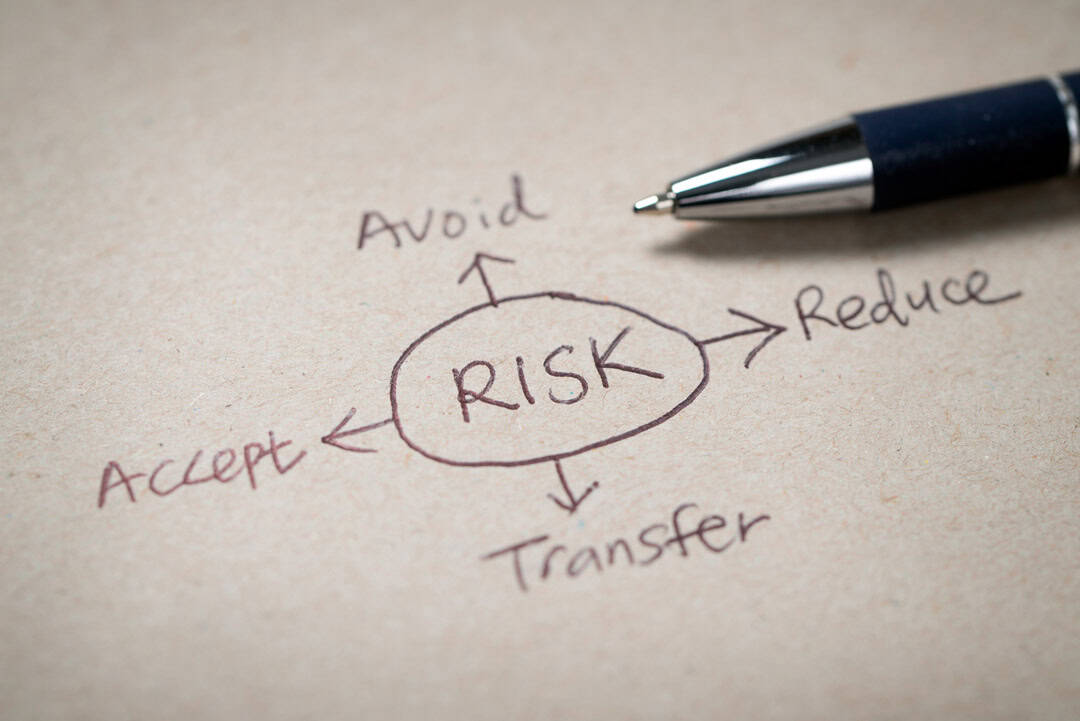
So how should you think about risk – and how can you make better investment decisions as a result?
Travel inspires writing
This article was triggered by my recent visit to Ukraine.
While much of Europe was heading to the beach or the mountains, I spent ten days in Kyiv, followed by two days exploring Odesa. In both cities, I was looking for investment opportunities.

Yours truly at the harbour terminal in Odesa.
Needless to say, visiting a country that is in a hot war means having to consider a number of additional risks.
For a start, you have to deal with friends, family and colleagues asking: “Should you really go there right now?“
Then there is the risk of how other people perceive you. People might see you as a thrill-seeker – a Dr Danger-type traveller drawn to crisis situations for the sake of an adrenalin rush or social-media clicks.
Obviously, that isn’t who I am, nor is it how I would want to be perceived.
As you can see, the risks and nuances you need to manage as a world-travelling investment sleuth are manifold!
When I last visited Ukraine, in February and April 2026, I shot lots of short video clips and published them on my LinkedIn profile. They generated strong engagement, but more importantly, people I meet in real life keep telling me how much they enjoyed getting insights from someone who was actually on the ground and not beholden to any particular organisation, agenda or ideology.
Naturally, this created a temptation to simply post more videos from my latest visit. We all enjoy getting likes on social media, right?
Alas, I didn’t shoot (or post) a single video during this visit.
Two reasons held me back.
First, the war has clearly escalated. During July, civilian casualties in Ukraine were up 70% compared with the previous year. I also wanted to avoid anyone worrying about me, so I kept the trip relatively quiet.
Second, I concluded there wasn’t much to say that I hadn’t already said. It’s not my calling to provide a running commentary on any particular country.
However, the questions surrounding Ukraine, the war and the idea of investing there at this point in time did lead me to the idea for this article.
I have written about many general subjects on this blog, but never dedicated much space to the concept of risk – what it is, how to manage it, and why investors need to look at risk from a particular angle.
In particular, I am interested in the mispricing of risk caused by fear.
What follows also ties in with a number of older articles that proved very popular, including my three-part series from 2020, “Riches among ruins“.
Let’s delve right in!
A real-world example
Investors tend to underprice risk during good times. But they also often overprice risk by panicking during rare events about which they lack experience or data.
My current favourite example – one that almost nobody has ever heard of – is wartime insurance for assets in Kyiv.
When I first visited Ukraine’s capital in April 2025, I researched the availability and pricing of war insurance. Incredibly, even in a country at war, you could still get insurance. There were fewer providers, and you probably needed to speak to specialised syndicates at Lloyd’s in London, but coverage remained available.
Speaking in slightly simplified terms, war insurance for real estate in Kyiv was priced on the assumption that 40% of the city could be laid to ruins.
At the time, I tried to find statistics on how much of the city had actually been damaged. To my surprise, nobody seemed to have any figures. Plenty of well-informed people in Kyiv thought they could find such data for me. But one after another, they drew a blank.
Eventually, a specialised Ukrainian research firm I commissioned managed to obtain the data. It filed a Freedom of Information request with the Ukrainian government, which led to the municipal government of Kyiv providing me (surprisingly quickly!) with a whole batch of data.
The data showed that during the initial four years of the war, just 0.6% of Kyiv’s real estate had been severely damaged.
The insurance companies that had sold such contracts probably made a ton of money. I doubt that very many contracts had been sold on the basis of this pricing, but kudos to the syndicates that did offer them. They had spotted a mispriced risk and found a way to monetise it, while providing a solution to other market participants who needed such coverage. This is what financial markets are for.
Since then, the pricing of war insurance in Kyiv has come down considerably.
To my mind, this is a perfect example of how fear, combined with a lack of widely available data, can lead to the mispricing of risk and assets.
And it creates opportunities for those who understand these mechanisms and have the data and expertise to judge such situations.
In financial markets, fear will always create mispricing.
Human beings are pretty bad at assessing probabilities, especially when acting from a position of fear. As a species, we tend to assign far too much probability to tail risks.
The Stoic philosopher Seneca summarised it 2,000 years ago: “We suffer more in imagination than in reality.“
As a disclaimer, none of this is meant to imply that I believe the war in Ukraine to be any less severe than it is. It is a terrible conflict with tremendous loss of life, and I am certainly not trying to diminish the tragedy.
However, looking at it through the lens of investing and financial-market behaviour, it is yet another example of the opportunities that can arise for people who understand mispriced risks and assets.
It begs the question: why are we so bad at calculating the likelihood of something bad happening?
Don’t take the answer from me. Take it from one of the world’s greatest investors in distressed situations.
A world-class mentor to learn from
Howard Marks is the 80-year-old chairman of Oaktree Capital Management, a firm managing more than USD 200bn that was built around distressed debt. Along the way, Marks became a billionaire.
Famous for his letters to investors, he has also produced a range of YouTube videos. His 36-minute video “How to Think About Risk” has racked up more than 700,000 views in just 12 months. Speak of making a seemingly dry subject interesting to a large audience!

Source: Oaktree (YouTube).
One of the misconceptions Marks addresses is the idea that you can quantify risk.
You can easily quantify volatility – but volatility isn’t the same as risk.
Marks argues that, to a large extent, risk is a matter of opinion. It isn’t just difficult to quantify in advance. Amazingly, risk can remain unquantifiable even after the fact.
He explains why we are not as smart as we like to think we are. Among our human quirks is a desire to seek certainty where none exists. But you can never eliminate risk. At every moment of our lives, we are walking into the unknown.
In Marks’ view, that’s not actually a problem.
In fact, he warns that risk avoidance should not be the goal in investing. Risk avoidance equates to return avoidance.
Venture capital investors are a good example of why Marks is right. Everyone knows that start-ups are inherently risky. Google AI says that 90% of start-ups fail. So why invest in an asset class where you know that 90% of all assets will end up getting crushed?
Because it’s not about avoiding risk. It’s about managing it.
Stacking the deck in your favour
As an investor, you want to carefully choose and manage your risks. This can include keeping a core of your portfolio invested in very safe assets designed to grow your wealth slowly but steadily. This core can track a benchmark. You then surround it with potential structural outperformers and special situations that can provide asymmetric upside for your portfolio.
The latter can include taking advantage of assets that are temporarily mispriced because their price is being driven by fear (and/or a lack of data).
You can also look at it from another perspective. If you wait until there is nothing left to be afraid of, the opportunity has probably already passed.
One example from the archives of Undervalued-Shares.com is the idea to invest in defaulted Venezuelan debt and legal claims.
When I introduced this opportunity to Undervalued-Shares.com Lifetime Members in 2023, it would have been considered “risky” from a conventional point of view. After all, Venezuela was in the hands of a dictator, Nicolás Maduro.
Fast-forward to 2026, and Maduro is rotting in a prison cell in Brooklyn.
Now it’s “safe” to venture into Venezuela, right?
The problem is that the price of these claims has since gone up nearly five-fold. The Maduro risk is gone, but instead, you now have to take the risk of paying an entry price that is five times higher. Could that be an even greater risk than Maduro ever was?

Gold Reserve Ltd.
There is no precise, measurable answer. It’s a matter of opinion.
What it does highlight, though, is the importance for investors developing viewpoints that differ from how everybody else sees things.
Variant perception as a risk-management tool
Michael Steinhardt is one of the greatest hedge-fund managers ever to have lived. He isn’t very visible anymore following several controversies, but he will forever be credited with coining the term “variant perception”.
It describes “the holding of a well-founded, deep-researched view on an asset or market that significantly differs from the general market consensus – and ultimately turns out to be correct.“
To be clear, this isn’t about being different for the sake of being different. It’s about spotting where the consensus view is wrong and seeing something that other people don’t see yet.
In a 2019 article, I called this concept “non-consensus viewpoints”:
“To succeed in investing, it’s not enough to be right. You have to be right AND outside the consensus. This is a little-understood quirk of the stock market. Imagine a group of one dozen analysts who follow a particular company. If they all expect earnings to increase next year, then the stock price will usually already reflect that. There is hardly ever a pay-off if you are right but merely within the existing consensus. The consensus will almost always be priced in already. To significantly outperform the market, you will have to come up with a prediction that you are not only proven right on but which others do not yet believe in.“
Why does this matter when assessing and managing risk?
Because it can help you buy assets at prices that make them less risky despite their outward appearance of being highly risky.
A low-quality, “risky” asset can actually be lower-risk if you buy it at a price that makes it cheap enough to be safe.
A major component of risk management is therefore not just what you buy, but what you pay.
Jason Wong of Flag Ventures provided a useful example in a LinkedIn post:
“People overvalue *perceived safety and credentials* over *thinking through the fundamentals independently*. … The ‘safe and big’ Blackrock private debt fund is down 60% in the last 5 years. Meanwhile various Uzbekistan corps have been paying out coupon every month since 2017 at near 30% YTM. Many backed by actual hard collateral (gold, cars, machinery, real estate). ‘But is the Uzbek Som safe?’ Well, USD loss is over 5% against UZS in the last 12 months, so you tell me:).“
Very early on, Jason had a very different perception of the outlook for the Uzbek economy, the country’s sovereign debt, and its currency, the “som”. His non-consensus viewpoint has paid off mightily. There is a strong argument that he achieved this while taking less risk than conventional investors might have assumed.
However, the precise quantification of that risk will forever remain subjective.
Perhaps the more relevant question is: how can investors come up with their own non-consensus viewpoints that they can use to beat the crowd?
There will be plenty of people trying to obtain such insights through AI.
This may be possible – or maybe it isn’t.
I continue to believe that one of the best ways to get ahead is to be on the ground in countries where information is not readily available.
Countries and markets that are not yet fully digitised and transparent can still offer the kind of opportunities that investors like Buffett and Steinhardt would have found in the 1960s and 1970s. As my current case in point, I like to cite real estate in Kyiv and the data I received from the city’s government.
Outlier markets and situations where fear drives market perceptions will often offer some of the best risk/reward ratios investors can find.
I wrote about this in another article, “Value investing in a global setting – risk perception versus reality“, which is a transcript of a presentation given by Pavel Begun of 3G Capital.
Don’t avoid – manage and control
Risk is a subject you could spend a lifetime learning about, and this article can only scratch the surface.
If you found any of this useful or interesting, I cannot recommend strongly enough that you spend the next 36 minutes watching Howard Marks’ masterclass on risk.
If you prefer to read, two of the best books published on the subject are:
And if you want to remember just one thing from this article, make it this: it’s also a risk to miss out when good things happen.
As an investor, you will repeatedly encounter opportunities where assets are deeply mispriced because our brains misfire in response to loud, dramatic headlines.
Risk is not something to be avoided, but something to be managed and controlled. Intelligent risk-bearing – the deliberate, calculated acceptance of uncertainty – is what enables you to generate good returns while keeping risk under control.
The best investors don’t avoid risk. They know how to stack the deck in their favour.