
Picking an LMS in 2026 isn’t regarding which one has the best demo. It’s about whether your team will actually utilize it, your admins can manage it without added issues, and your budget can handle it past the first year.
The market’s split into a few clear types now. Some tools are built to be fast and simple – sign up, get going, don’t overthink it. Others focus on AI and skills tracking for big companies. And a few are open source, so you own everything instead of paying rent on it forever.
Here’s the problem: the cheaper options on the pricing page isn’t cheaper later. Six months later, you’re stuck with paying for setup, add-ons, and extra admin work which no one ever told you about. What actually counts is your team size, how much tech support you have, what your budget really looks like, and if you want to manage the servers yourself or let someone else handle it.
How to Choose the Best LMS For Your Business
Start with team size, not features. A team of 20 is not the same as a company of two thousand employees with multibranch distribution. Midsize organizations need more streamlined processes. Big companies need governance, compliance, help moving data over, and skills tracking that won’t break when things get complicated.
Next, look at what you can actually support. If you don’t have IT staff, or nobody on your team likes fixing servers, open source can turn into a hobby you never signed up for. Hosting platforms can save you from all the work of server operation and maintenance, but you have to give up some flexibility – this is the most critical trade-off in the selection process. It’s not “free versus paid.” It’s control versus how much work you’re willing to do yourself.
For a broader look at how software categories like this stack up, our software comparisons hub covers similar buyer breakdowns across other tool categories.
1. TalentLMS
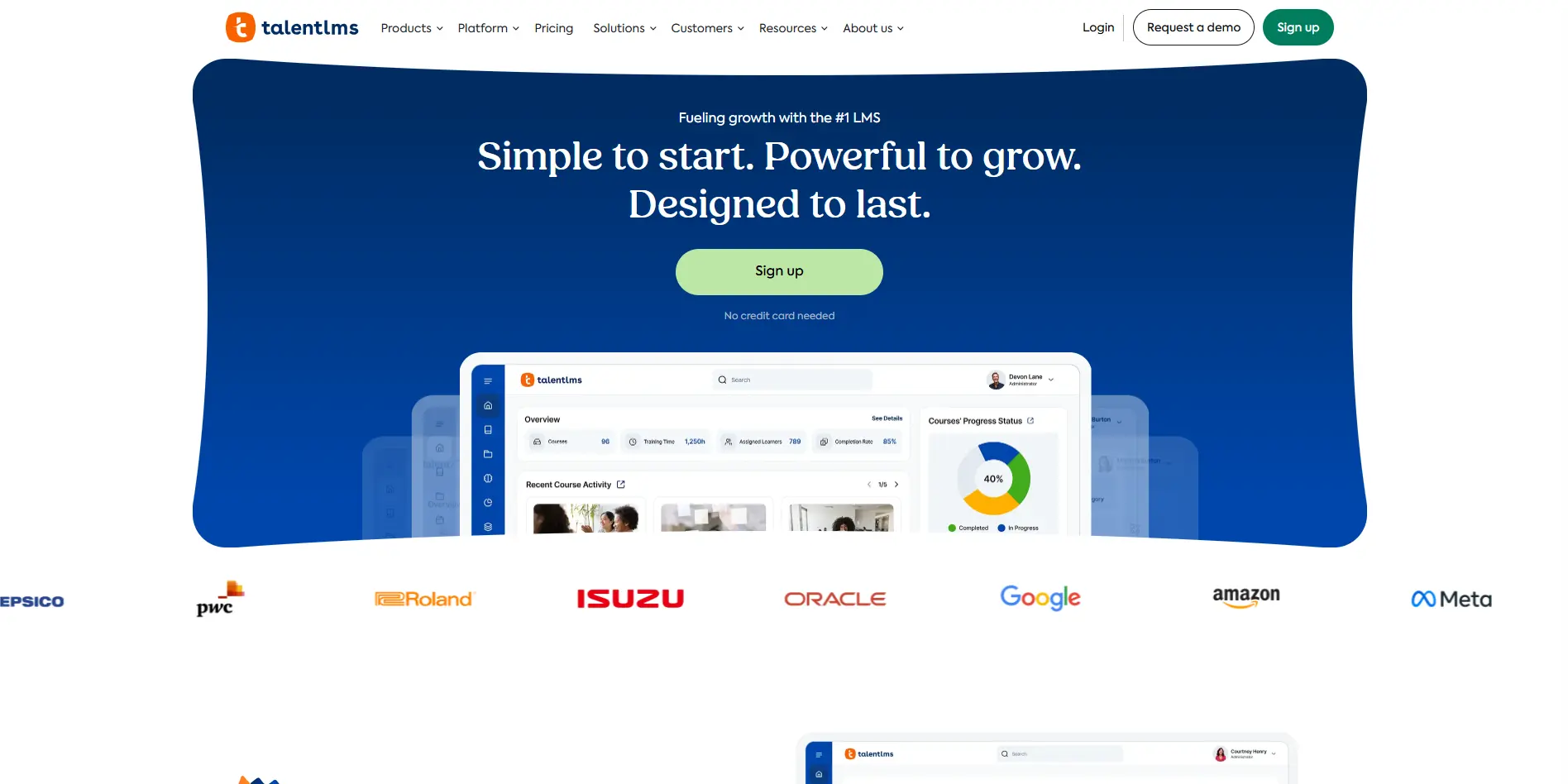
TalentLMS says it’s the #1 cloud LMS. It’s made for speed – you sign up, use AI to build courses, and start training people within days. It’s part of the Epignosis company, along with two other tools called eFront and TalentCards.
Pros:
- AI course builder (TalentCraft) genuinely cuts setup time
- ISO 27001, ISO 9001, and GDPR compliance, not just claims
- 70,000+ teams already on it, so the rough edges are mostly worked out
Cons:
- The good AI features live behind higher tiers
- Multi-portal branching gets expensive fast if you’re running several audiences
- TalentLibrary’s 1,000+ courses cost extra, they’re not bundled in
Key features:
- AI course builder
- multi-portal branching
- skills-based training paths
- add-on course library
Best for: SMBs who want to be live in days, not months
Pricing: From about $119/month for 40 users; free for up to 5
2. Moodle
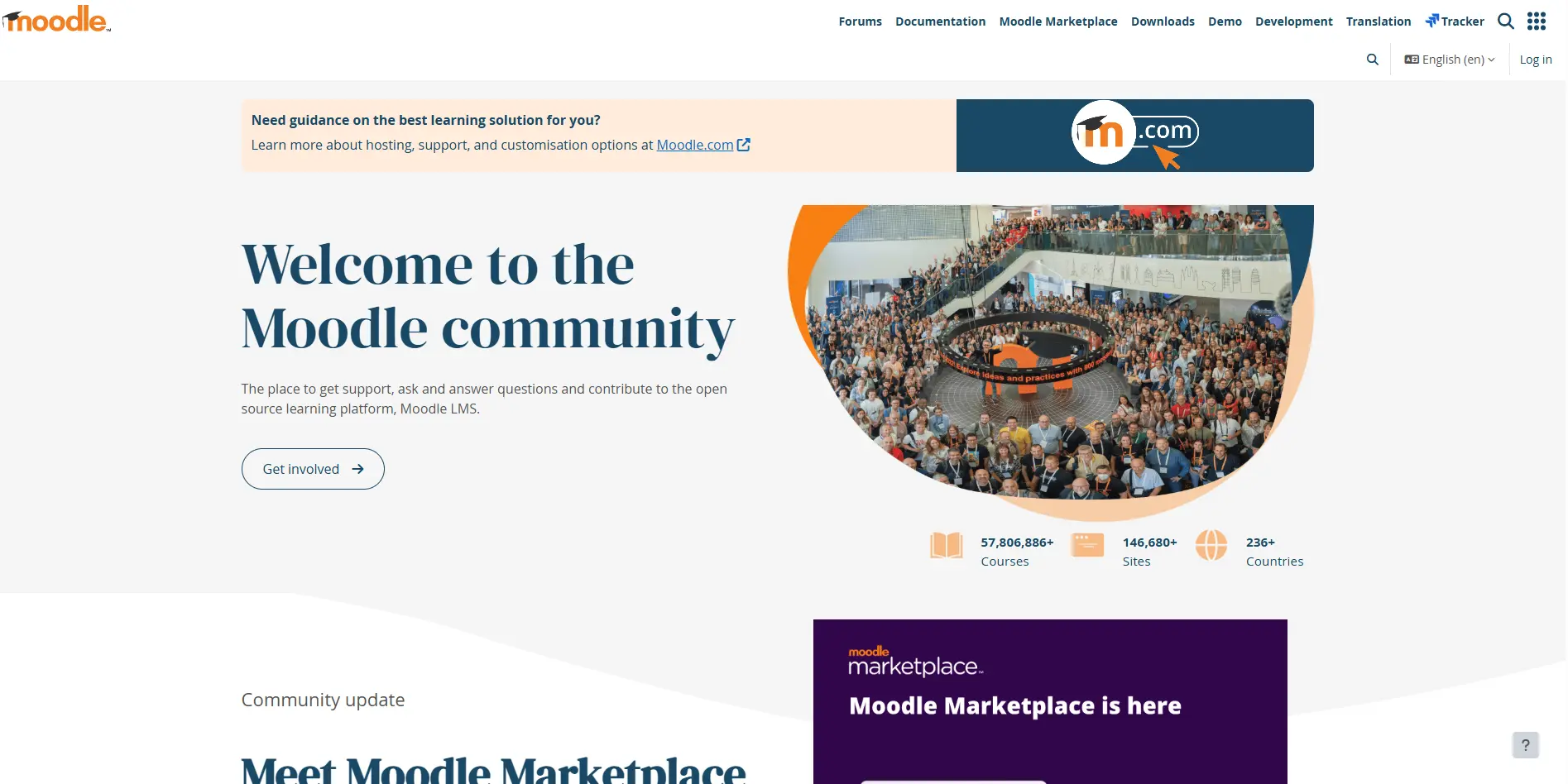
Moodle is another LMS solution well-known by many scholars. This learning platform is open-source and free for everyone who wants to use or improve it. More than 146,000 sites run Moodle in over 140 languages. For teams with the skills to manage computer servers, it can do practically whatever they need.
Pros:
- Zero license cost, forever
- Plugin ecosystem is enormous – whatever you need, someone’s probably built it
- You own your instance completely, no vendor can lock you out
Cons:
- Someone on your team needs to actually know how to run a server
- No support line to call when something breaks, unless you pay a partner
- The interface still looks like it’s from a different decade
Key features:
- Open-source core
- huge plugin marketplace
- 140+ languages
- scales from one classroom to 200,000 students
Best for: Institutions with an IT team and zero appetite for license fees
Pricing: Free to self-host; partner hosting varies
3. Chamilo LMS
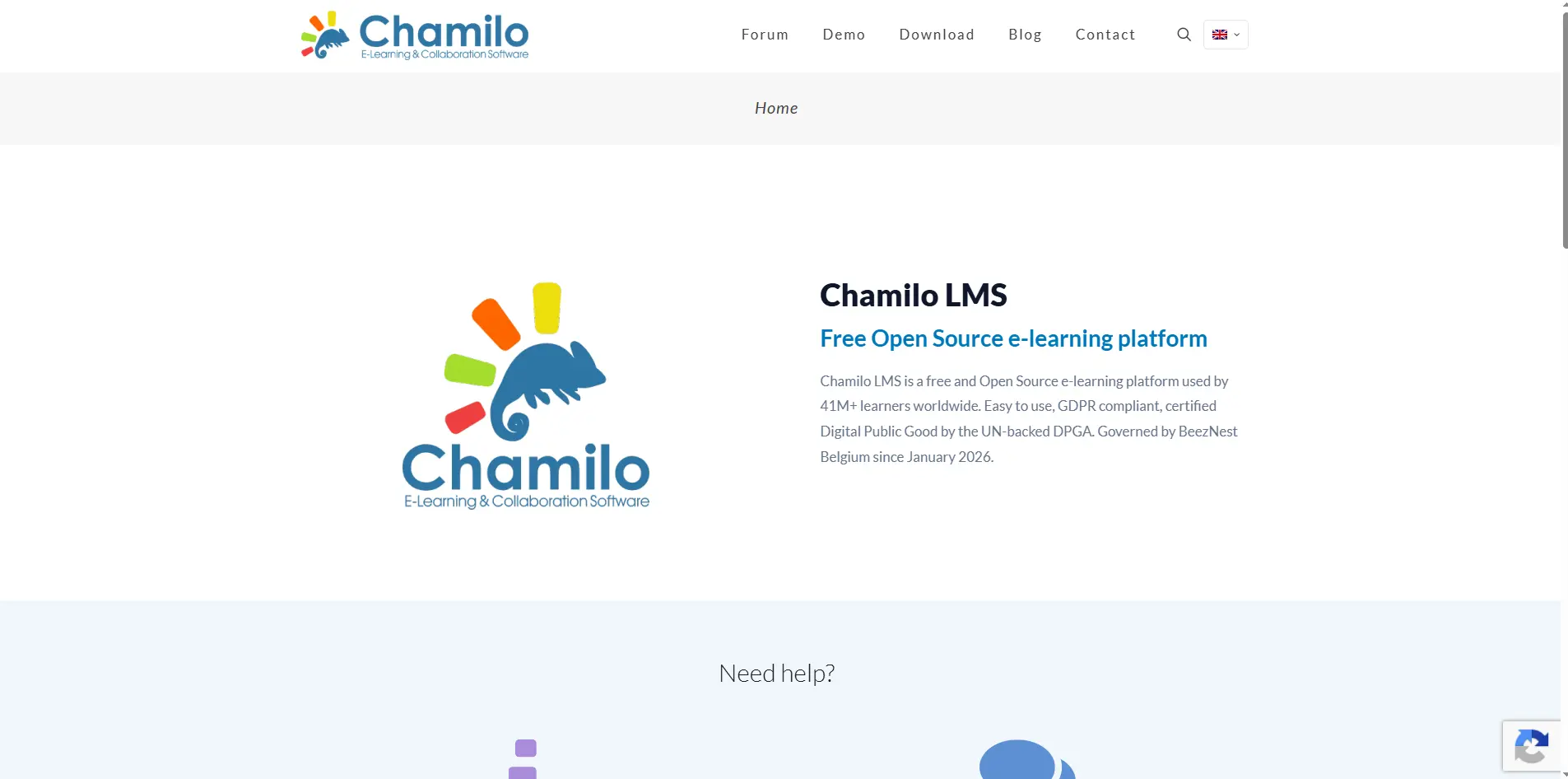
Chamilo is similar to Moodle in terms of being an open-source product. However, it is a smaller platform, which is used by about 41 million learners in the world. It has been awarded by the United Nations as a “Digital Public Good,” thus confirming its quality and accessibility. A nonprofit group in Belgium runs it, not a company trying to get bought out.
Pros:
- Completely free, no upsell tiers waiting to trap you
- GDPR-compliant by design
- Backed by a nonprofit, so the incentives aren’t purely commercial
Cons:
- Plugin selection is thin next to Moodle’s
- The UI feels a generation behind
- You’re on your own unless you hire a partner or lean on forums
- Key features: Free self-hosting, GDPR compliance, IMS certification, admin training program
Best for: Nonprofits and schools that need free and can’t spare much IT time
Pricing: Free, self-hosted
4. Sakai LMS
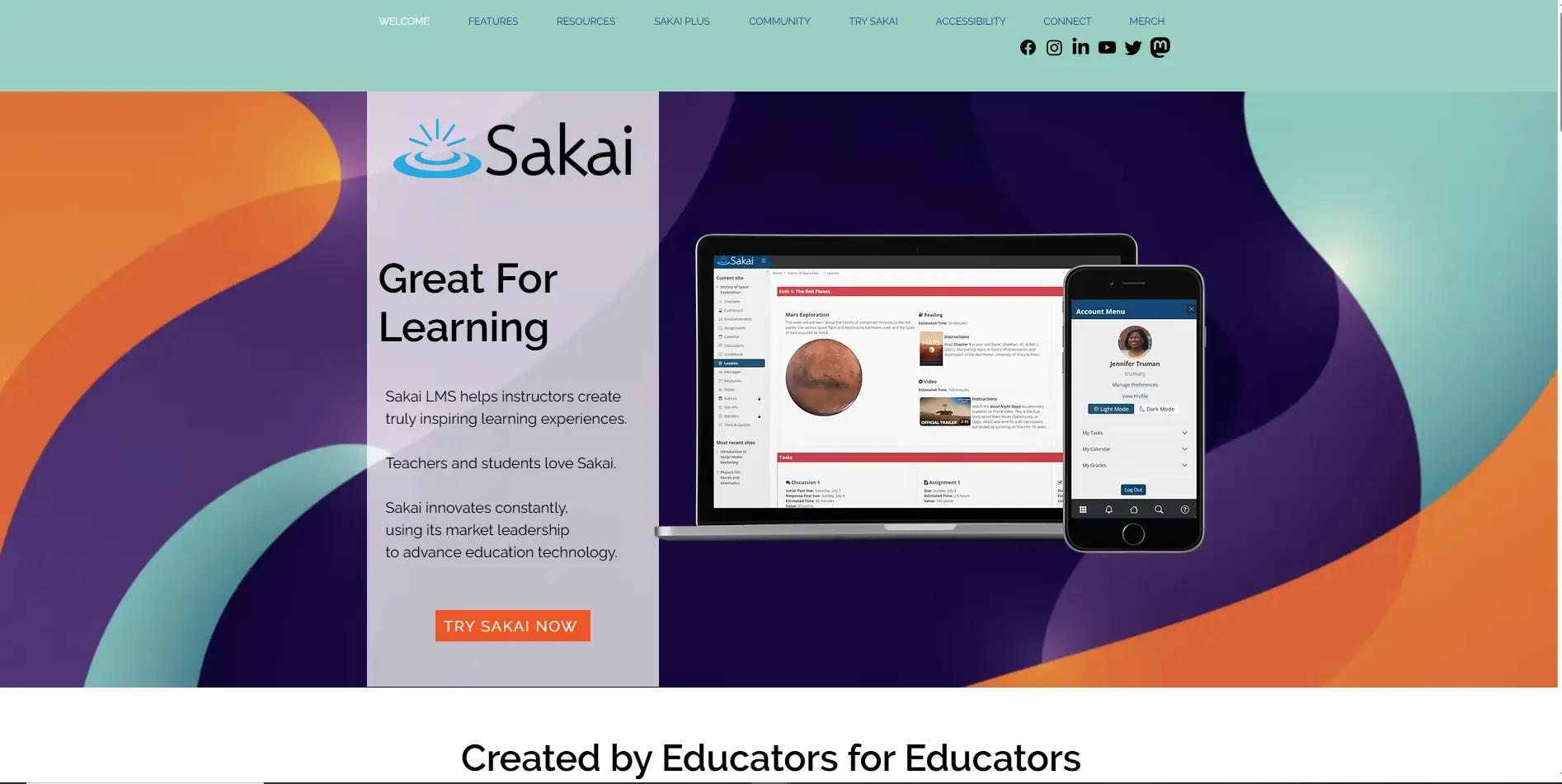
Sakai was built because universities got tired of companies telling them how their LMS should work. Teachers and professors actually help decide what gets added to it. That’s either exactly what you want, or a dealbreaker – depends on who’s buying.
Pros:
- Institutions govern the product, not a private company’s shareholders
- Data ownership is treated as non-negotiable, not a footnote
- Deep LTI support for plugging in outside tools
Cons:
- It’s built for classrooms, and it shows the moment you try to use it for corporate training
- You’ll still need a commercial host like Longsight for real support
- Community’s smaller, so fewer plugins than Moodle
- Key features: LTI leadership, group collaboration tools, conditional content release, community-built add-ons
Best for: Colleges that want faculty, not a vendor, steering the product
Pricing: Free self-hosted; commercial hosting through affiliates
5. BrainCert
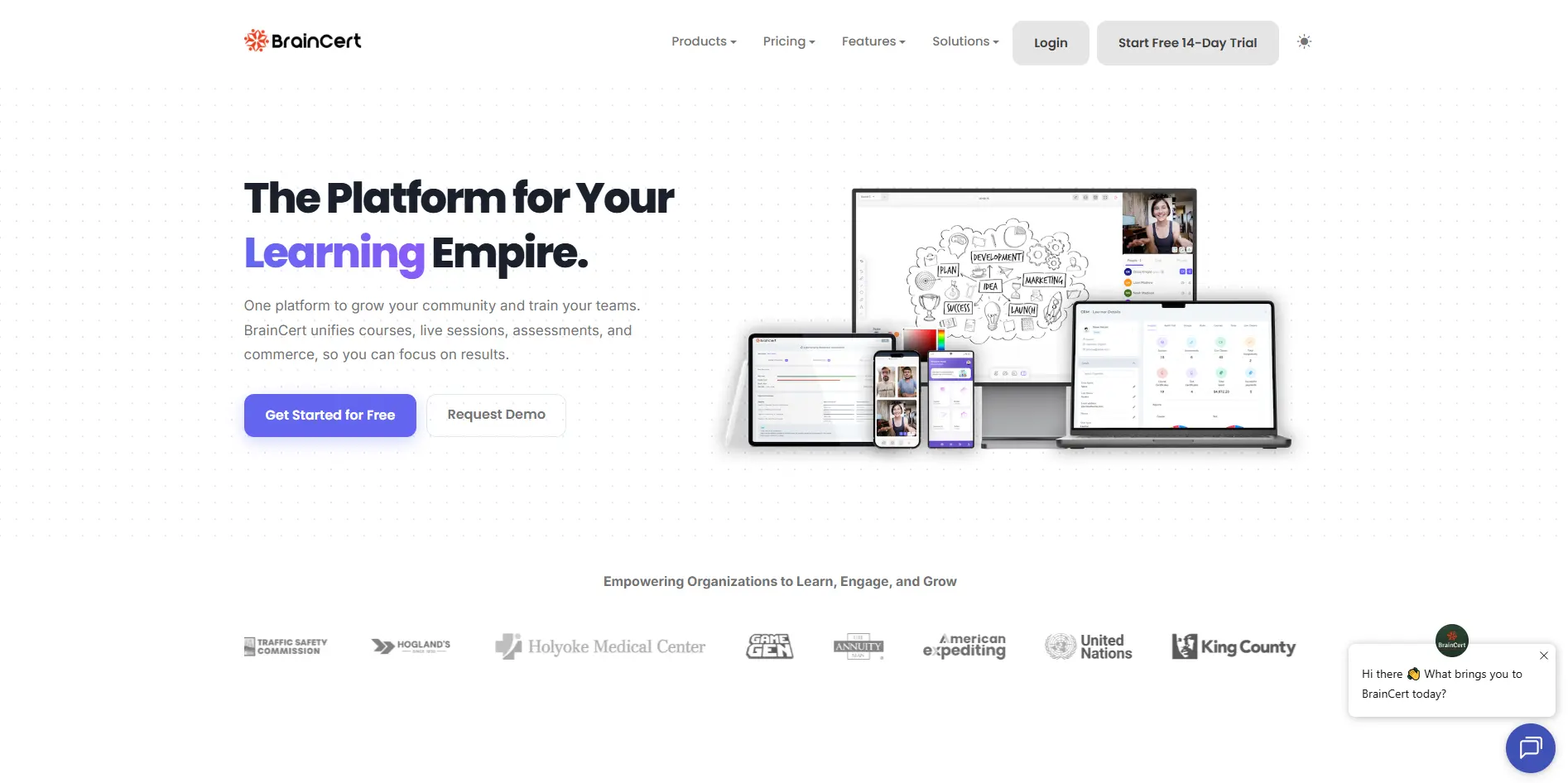
BrainCert tries to do a lot at once. It offers courses, live online classrooms, tests, and a store to sell courses – split into two plans called Creator Suite and Business Suite. Of all 11 platforms here, it has the most security certificates: SOC 2, ISO 27001, HIPAA, and GDPR.
Pros:
- Security stack is genuinely broad, not just a GDPR badge slapped on
- Virtual classroom is built in, so no bolting on Zoom
- Monetization options go well beyond simple course sales
Cons:
- Two separate suites make comparing plans more confusing than it should be
- No public enterprise pricing, so budgeting means a sales call
- There’s enough packed in here that onboarding takes actual time
- Key features: Native virtual classroom, gamification, global payments, white-label branding, HIPAA-ready tier
Best for: Creators and coaches who also need enterprise-grade security
Pricing: Custom quotes for Creator/Business suites; 14-day free trial
6. Schoox
Schoox is another LMS software built for “frontline” workers – think restaurant staff or hotel workers – companies with thousands of hourly employees spread across many locations.
Pros:
- Actually built for deskless workers, not an office LMS stretched to fit
- Real scale behind it: 4,500+ customers, 20 million learners
- Franchise-specific tools most competitors don’t bother building
Cons:
- Small teams will find it way more than they need
- No pricing anywhere – it’s demo or nothing
- If you’re not multi-location, half the platform is dead weight
- Key features: Franchise training tools, AI skill-gap detection, mobile-first delivery, built-in ROI calculator
Best for: Multi-location businesses running frontline or hourly teams
Pricing: Custom enterprise only
7. CoreAchieve
CoreAchieve stands out from the rest, and that’s a good thing. It has no contracts, no hidden fees, and – unlike almost everyone else on this list – it shows real prices in dollars right on its website.
Pros:
- Pricing you can see without a sales call
- No contract lock-in
- SCORM/xAPI support plus a VR training module nobody else on this list has
Cons:
- It doesn’t have the brand recognition the bigger names do
- International pricing still requires a phone call
- The site and marketing feel noticeably smaller-budget than the VC-backed competition
- Key features: Published SaaS/PaaS tiers, VR training scenarios, unlimited learning objects on paid plans, Azure/AWS hosting
Best for: Buyers who want real numbers before they’ll even talk to sales
Pricing: Free for 5 users; $175/mo for 50; $299/mo for 100; $798/mo for 300
8. 360Learning
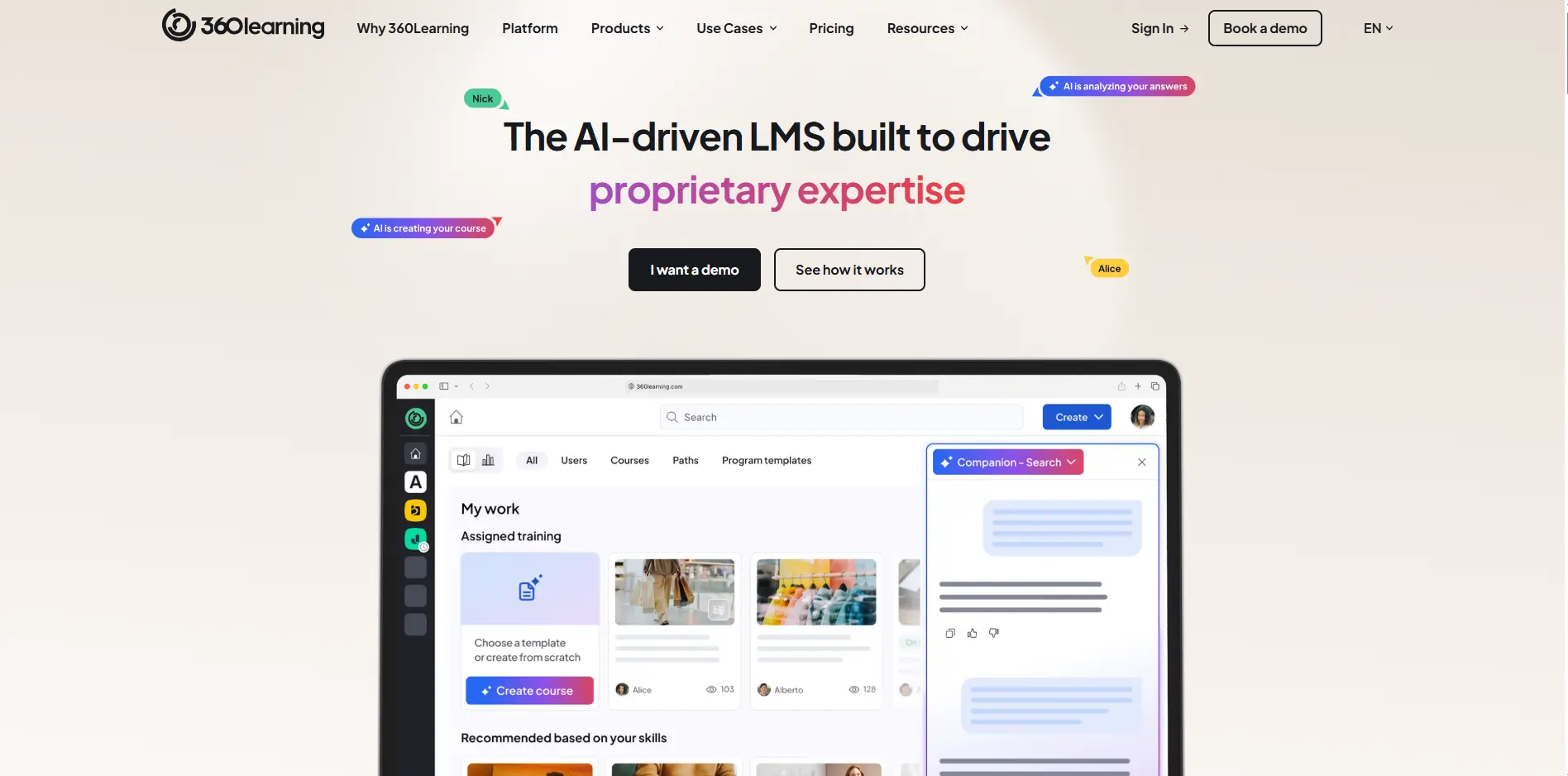
360Learning’s whole idea is simple: let the people who know the job best build the training, not just the HR or training team. It uses an AI helper called “AI Companion” to help put it all together.
Pros:
- Compliance is solid: GDPR, ISO 27001, SOC 2
- HRIS integrations run deep – Workday, SAP, BambooHR, 80-plus more
- 4.6/5 on G2 across 585+ reviews isn’t nothing
Cons:
- Peer-authored content only works if your culture actually supports it
- No pricing published, demo required
- Feels built for mid-market and up, not small teams
- Key features: AI Content Builder, skills gap detection, auto-translation, deep HCM/HRIS sync
Best for: Companies that want employees writing the training, not just instructional designers
Pricing: Custom, quote-based
9. Docebo
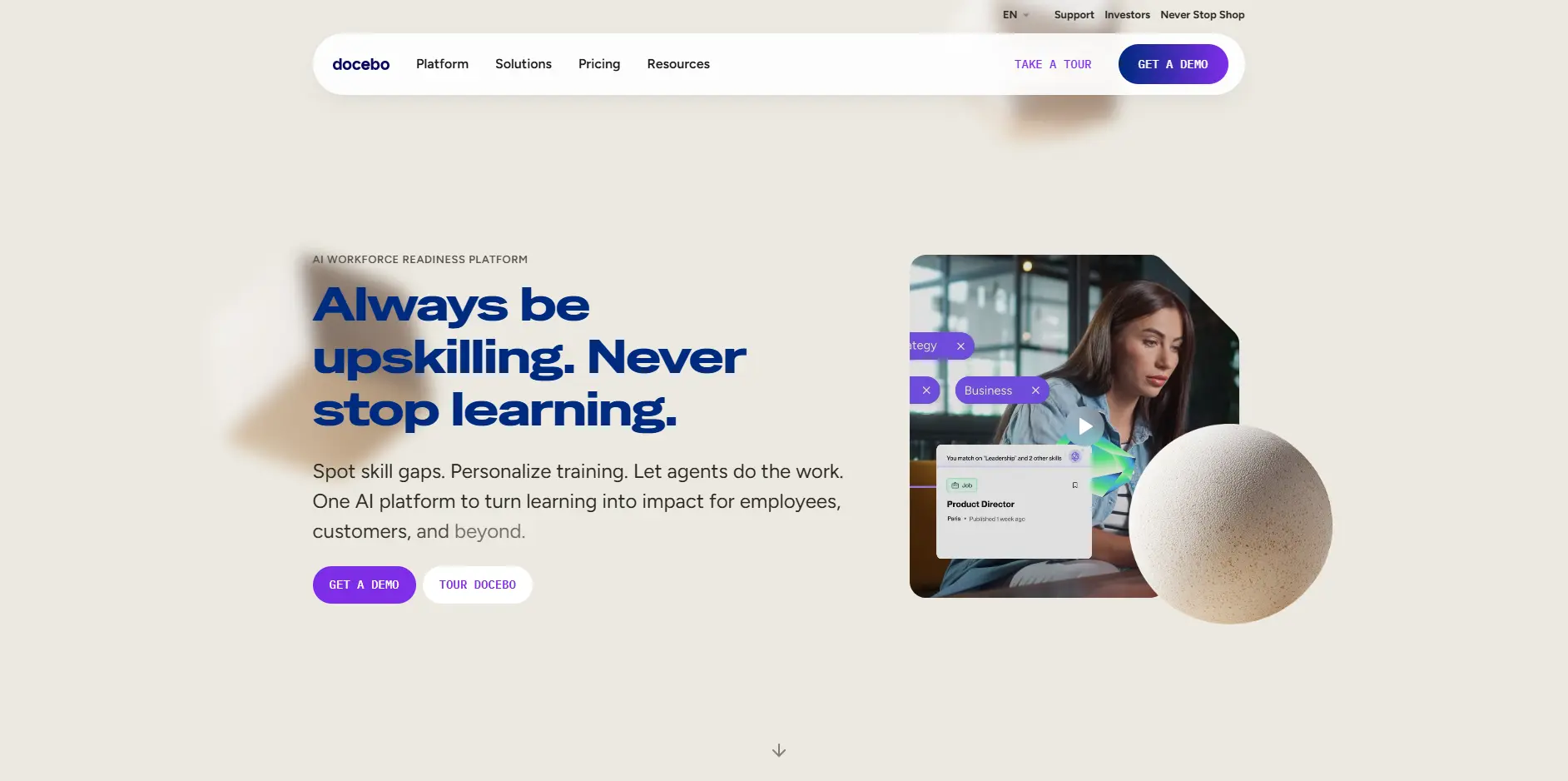
Docebo doesn’t call itself an LMS anymore. It calls itself an “AI Workforce Readiness Platform.” That means it combines course training, skill tracking, search tools, and AI helpers that can work without much setup – all in one place.
Pros:
- Genuinely ahead on AI – the agents do real admin work, not gimmicks
- ISO 27001, SOC 2, GDPR, CCPA all confirmed
- Booking.com, Zoom, and PwC are customers, which tells you something about scale
Cons:
- There’s a real learning curve for admins given how much is packed in
- Pricing is fully hidden behind a demo
- Way more platform than a small team needs
- Key features: AgentHub no-code agents, Enterprise Knowledge search, skills intelligence, MCP server for AI tools
Best for: Large enterprises consolidating several learning tools into one
Pricing: Custom enterprise only
10. Litmos
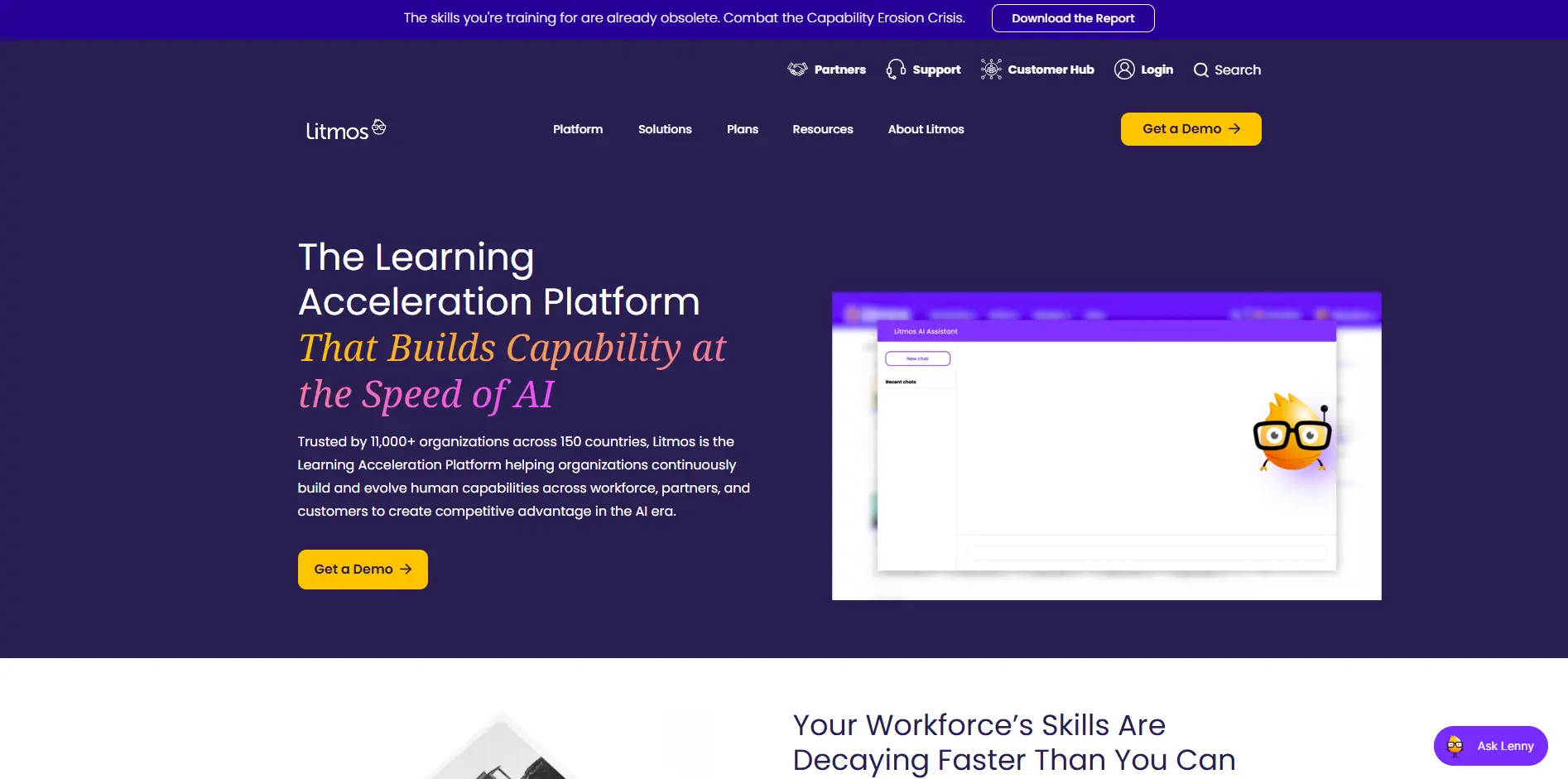
Litmos has renamed its whole category “learning acceleration.” The idea: workers forget skills faster than training teams can teach them again. More than 11,000 companies in 150 countries seem to agree with that idea.
Pros:
- Customer numbers are specific, not vague: 4x faster onboarding, 28% customer growth for one client
- Genuinely focused on embedding learning into daily workflow, not a separate destination
- Covers staff, partners, compliance, and customers from one platform
Cons:
- No pricing published anywhere
- The marketing leans hard on urgency framing over just listing what it does
- Might be more platform than a smaller org actually needs
- Key features: In-workflow microlearning, AI content creation, automated compliance recertification, content libraries
Best for: Mid-size to large orgs training multiple audiences at once
Pricing: Custom, quote-based
11. Absorb LMS
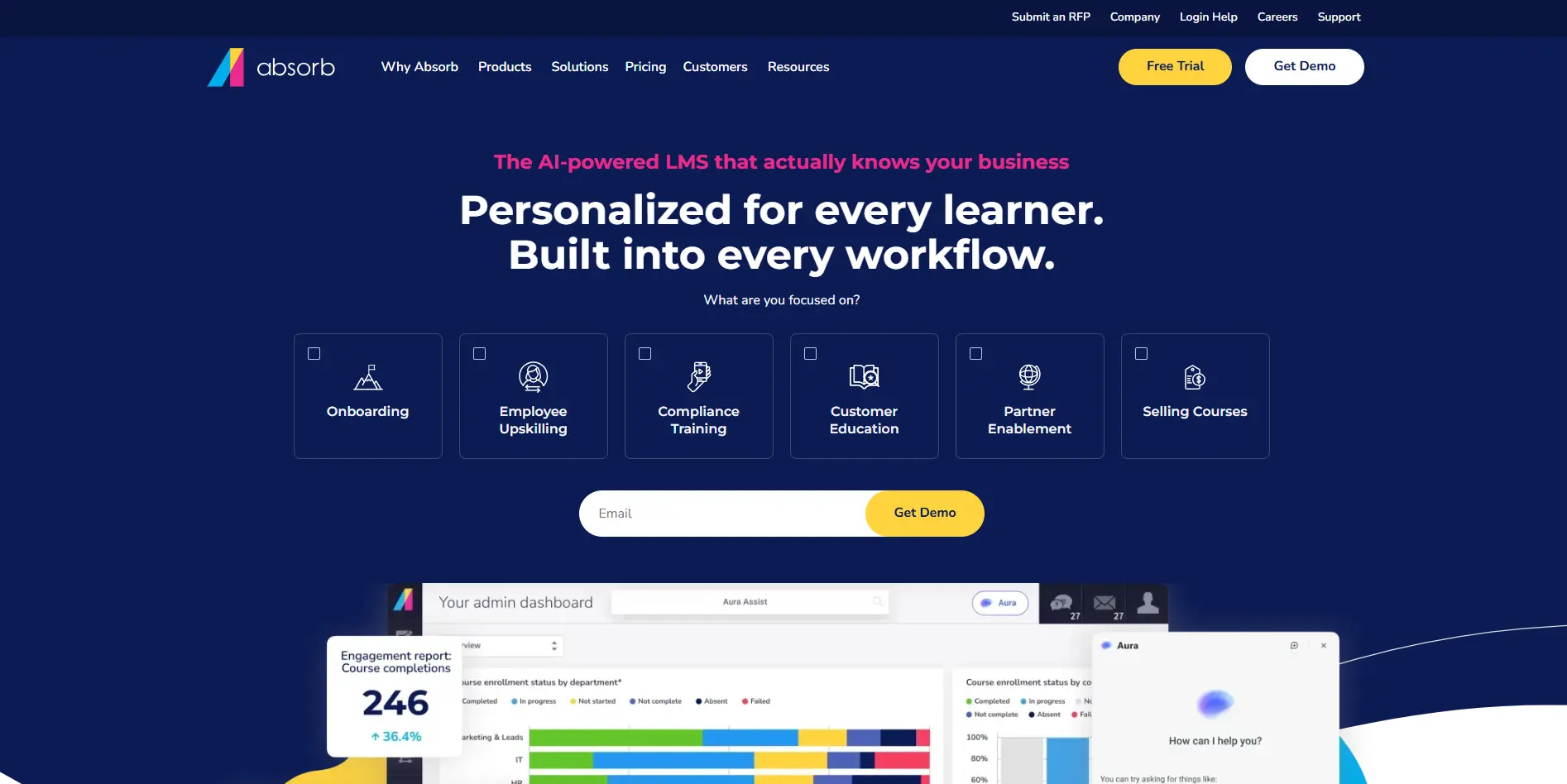
Absorb calls itself the #1 LMS in the industry, and points to its high rankings on the review site G2 as proof. What makes it different is “Aura,” its AI helper. Aura can write draft courses and answer learner questions right away, instead of sending them to a help desk.
Pros:
- Actually offers migration support for switching from another LMS – most vendors just shrug at this
- Aura’s agents do real work: drafting courses, answering questions live
- E-commerce is built in and commission-free
Cons:
- Pricing is nowhere on the site – demo only
- 12,000+ skills and 20,000+ courses is a lot to onboard into
- The AI agent features are new enough that nobody’s tested them for years yet
- Key features: Aura AI agents, 40+ integrations (ADP, Workday, Salesforce), PCI-compliant e-commerce, custom reporting
Best for: Enterprises that want AI agents baked into daily workflows
Pricing: Custom enterprise only
Final Take
If you want the fastest possible way for a small or growing business, TalentLMS is the best option. If you want free and full control, Moodle still owns that road. If you are looking for a clean low-cost open-source alternative, Chamilo is best. If you are in higher education, Sakai is the obvious academic fit.
If you sell courses, BrainCert is worth a serious look. For frontline enterprise training, Schoox is strong. For transparent pricing, CoreAchieve stands out. For collaborative internal learning, 360Learning is sharp. For enterprise AI and skills, Docebo and Absorb are the heavy hitters. For fast deployment at scale, Litmos remains a serious contender.