


HOA welcome packets play an important role in helping new residents settle into a community. A well-prepared packet answers common questions, sets expectations early, and helps homeowners feel informed from day one.
The First Step Toward Community Success
Moving into a new neighborhood can feel overwhelming. New residents often have questions about rules, amenities, assessments, parking, trash collection, and community services. Without clear guidance, misunderstandings can happen quickly.
This is where HOA welcome packets become essential. These packets provide homeowners with the information they need to navigate their new community confidently. Rather than searching through governing documents or contacting the management office repeatedly, residents can find answers in one convenient place.
A thoughtful welcome packet also helps establish trust. When homeowners receive organized and useful information, they often view the association as professional, transparent, and responsive.
Why HOA Welcome Packets Matter

Many associations focus heavily on governing documents and compliance. While those items are important, the onboarding experience deserves equal attention.
A welcome packet serves as an introduction to the community’s culture and expectations. It gives residents a clear understanding of how the association operates and what resources are available to them.
The benefits extend beyond convenience.
Benefits for Homeowners
New residents often experience information overload during a move. Utility transfers, address updates, school enrollment, and unpacking consume much of their attention.
A welcome packet simplifies the transition by providing:
- Important community information in one location
- Clear explanations of HOA policies
- Contact information for assistance
- Guidance on community amenities
- Information about events and activities
As a result, homeowners feel more comfortable and connected sooner.
Benefits for the HOA
Associations also gain significant advantages from distributing welcome packets.
These packets can:
- Reduce repetitive questions to management
- Improve compliance with community rules
- Minimize misunderstandings
- Strengthen resident engagement
- Create a positive first impression
When residents understand expectations from the start, conflicts become less likely.
What Should HOA Welcome Packets Include?
The contents of a welcome packet may vary depending on the size and type of community. However, several key components should always be included.
Welcome Letter
Every packet should begin with a friendly welcome letter.
This letter can come from the board of directors, community manager, or both. It should introduce the association, express excitement about the new resident’s arrival, and encourage participation in the community.
The tone should be warm and inviting while remaining professional.
A simple welcome message helps homeowners feel like valued members rather than just another address in the neighborhood.
Community Contact Information
One of the most useful sections of a welcome packet is the contact directory.
Residents should know who to contact for various concerns. Including the following information helps eliminate confusion:
- HOA management company contact details
- Community manager information
- Board member contact procedures
- Maintenance request contacts
- Emergency contact numbers
- Security office information, if applicable
Residents appreciate knowing exactly where to turn when questions arise.
Governing Documents Overview
While homeowners typically receive governing documents during the purchase process, many never read them thoroughly.
A welcome packet should provide a concise summary of the most important documents, including:
- Declaration of Covenants, Conditions, and Restrictions (CC&Rs)
- Bylaws
- Rules and regulations
- Architectural guidelines
The packet does not need to replace the official documents. Instead, it should highlight key topics that frequently generate questions.
This approach helps homeowners become familiar with community standards without overwhelming them.
Assessment Information
New residents should understand their financial obligations from the beginning.
The packet should clearly explain:
- Assessment amounts
- Payment schedules
- Accepted payment methods
- Late fees
- Collection policies
- Online payment options
Providing this information early can reduce missed payments and administrative issues.
Amenity Information
Many homeowners choose a community because of its amenities.
Whether the neighborhood offers a pool, clubhouse, fitness center, tennis courts, walking trails, or playgrounds, residents need to understand how these facilities operate.
Include details such as:
- Hours of operation
- Access procedures
- Reservation requirements
- Guest policies
- Facility rules
Clear guidelines help prevent misuse and encourage responsible enjoyment of community amenities.
Essential Community Policies to Highlight
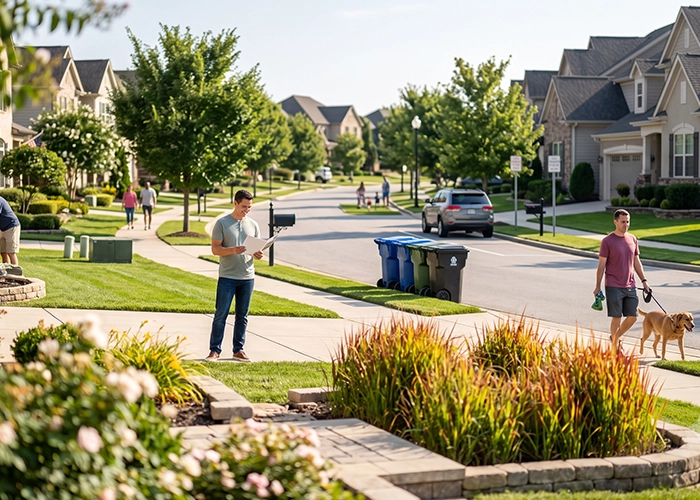
Not every rule needs to be listed in the packet. However, certain policies should receive special attention because they commonly affect daily life.
Parking Rules
Parking violations are among the most common HOA concerns.
New residents should understand:
- Guest parking regulations
- Street parking restrictions
- Commercial vehicle rules
- Towing policies
- Assigned parking procedures
Providing this information early helps avoid unnecessary violations.
Trash and Recycling Guidelines
Waste collection schedules often vary from one community to another.
The packet should explain:
- Pickup days
- Approved containers
- Recycling procedures
- Bulk item disposal rules
- Placement requirements
Residents who understand these guidelines contribute to a cleaner community.
Architectural Review Procedures
Many homeowners eventually plan improvements to their property.
Before making changes, they need to understand architectural approval requirements.
The packet should explain:
- Which projects require approval.
- How to submit requests.
- Review timelines.
- Where to obtain application forms.
- Contact information for assistance.
This guidance helps homeowners avoid costly mistakes.
Pet Policies
Pet-related concerns can become a source of neighbor disputes.
Including pet rules in the welcome packet helps residents understand expectations regarding:
- Leash requirements
- Waste disposal
- Breed restrictions, where applicable
- Noise concerns
- Common area usage
Clear communication promotes harmony among residents.
How to Make HOA Welcome Packets More Effective
Simply assembling documents is not enough.
The most successful welcome packets are designed with the homeowner’s experience in mind.
Keep Information Organized
Residents should be able to find information quickly.
Using sections, headings, and clearly labeled categories improves usability. A well-organized packet feels less intimidating and encourages homeowners to review the contents.
When information is easy to locate, residents are more likely to use the packet as a reference.
Use Plain Language
Legal language has its place in governing documents. A welcome packet is not one of those places.
Avoid technical terminology whenever possible. Instead, explain information in a straightforward manner that homeowners can understand immediately.
Simple language reduces confusion and improves communication.
Include Digital Access Information
Today’s homeowners often prefer digital resources.
The welcome packet should provide instructions for accessing:
- Community websites
- Resident portals
- Online payment systems
- Maintenance request platforms
- Community calendars
- Mobile applications
Digital access gives residents convenient ways to stay connected.
Add Frequently Asked Questions
A short FAQ section can be extremely valuable.
Common questions might include:
- How do I reserve the clubhouse?
- Where do I submit maintenance requests?
- What day is trash pickup?
- How do I obtain pool access cards?
- Who should I contact after business hours?
Addressing common concerns proactively can reduce calls and emails to management.
Printed vs. Digital HOA Welcome Packets

Many associations wonder whether they should provide printed packets, digital packets, or both.
The answer often depends on community demographics and preferences.
Advantages of Printed Packets
Printed packets offer several benefits.
Residents can review materials immediately without needing internet access. Physical documents are also easier for some homeowners to reference during their first few weeks in the community.
A professionally prepared packet can create a strong first impression.
Advantages of Digital Packets
Digital packets are becoming increasingly popular.
They offer advantages such as:
- Lower printing costs
- Easier updates
- Immediate distribution
- Environmentally friendly delivery
- Convenient storage
Digital formats also allow associations to include links, forms, and interactive resources.
Why Many Communities Use Both
Many associations choose a hybrid approach.
A printed packet provides an immediate welcome, while digital resources offer ongoing access to updated information.
This strategy accommodates different preferences and ensures residents can access information in the format they find most convenient.
Common Mistakes to Avoid
Even well-intentioned welcome packets can fall short when certain mistakes occur.
Including Too Much Information
A packet overloaded with documents may discourage homeowners from reading it.
Focus on the most important information and provide directions for accessing additional resources when needed.
A concise packet often delivers better results than an oversized binder.
Failing to Update Content
Community policies, contact information, and procedures change over time.
Outdated information can create confusion and frustration. Associations should review welcome packets regularly to ensure accuracy.
Annual reviews are often sufficient for most communities.
Making the Packet Too Formal
A welcome packet should feel welcoming.
While professionalism is important, overly rigid language can make the association seem unapproachable. Striking a balance between friendliness and professionalism helps residents feel more comfortable.
Ignoring Community Culture
Every neighborhood has its own identity.
A welcome packet should reflect the character of the community. Whether the association focuses on family activities, active adult living, luxury amenities, or urban convenience, the packet should help communicate that culture.
This creates a stronger sense of belonging from the start.
Using HOA Welcome Packets to Build Engagement

The best welcome packets do more than provide information.
They encourage participation and foster community involvement.
Consider including details about:
- Upcoming events
- Volunteer opportunities
- Committee participation
- Social groups
- Community traditions
When residents learn about opportunities to get involved, they are more likely to build relationships with neighbors and contribute to the community.
Strong engagement often leads to stronger communities.
A Thoughtful Welcome Goes a Long Way
HOA welcome packets are much more than informational handouts. They help homeowners understand expectations, access resources, and feel connected to their new neighborhood from the beginning.
A strong welcome packet can make all the difference for new homeowners. Explore our directory today to connect with HOA management experts who can streamline onboarding, improve communication, and foster a more connected community.
Related Articles:
- 6 Typical Rules For an HOA
- HOA Rules And Regulations 101
- Unenforceable HOA Rules: What Homeowners Should Know
{
“@context”: “https://schema.org”,
“@type”: “BlogPosting”,
“headline”: “HOA Welcome Packets: What to Include and Why They Matter”,
“image”: [
“https://www.hoamanagement.com/wp-content/uploads/2026/06/HOA-Welcome-Packets-What-to-Include-and-Why-They-Matter.webp”
],
“datePublished”: “2026-06-29T07:00:00+08:00”,
“author”: {
“@type”: “Person”,
“name”: “The HOA Management Team”
},
“publisher”: {
“@type”: “Organization”,
“name”: “HOA Management”,
“logo”: {
“@type”: “ImageObject”,
“url”: “https://www.hoamanagement.com/wp-content/uploads/2021/06/hoa-management-logo.png”
}
},
“description”: “The experts at HOA Management discuss HOA Welcome Packets: What to Include and Why They Matter”
}
{
“@context”: “https://schema.org”,
“@type”: “FAQPage”,
“mainEntity”: [
{
“@type”: “Question”,
“name”: “What is an HOA welcome packet?”,
“acceptedAnswer”: {
“@type”: “Answer”,
“text”: “An HOA welcome packet is a collection of documents and information provided to new residents to help them understand community rules, services, contacts, and expectations.”
}
},
{
“@type”: “Question”,
“name”: “Why are HOA welcome packets important?”,
“acceptedAnswer”: {
“@type”: “Answer”,
“text”: “They help new homeowners transition smoothly, reduce confusion, improve communication, and create a positive first impression of the community.”
}
},
{
“@type”: “Question”,
“name”: “What should be included in an HOA welcome packet?”,
“acceptedAnswer”: {
“@type”: “Answer”,
“text”: “A welcome letter, contact information, governing document summaries, assessment details, amenity information, and key community policies such as parking, trash, pets, and architectural rules.”
}
},
{
“@type”: “Question”,
“name”: “Should HOA welcome packets be printed or digital?”,
“acceptedAnswer”: {
“@type”: “Answer”,
“text”: “Both formats are effective. Printed packets are easy to access immediately, while digital versions are cost-effective, easy to update, and convenient for ongoing reference.”
}
},
{
“@type”: “Question”,
“name”: “What common mistakes should be avoided in HOA welcome packets?”,
“acceptedAnswer”: {
“@type”: “Answer”,
“text”: “Avoid including too much information, failing to update content, using overly formal language, and not reflecting the community’s culture.”
}
}
]
}
The post HOA Welcome Packets: What to Include and Why They Matter appeared first on Hoa Management .com.


