Everyone told me I needed to rent a car in Iceland.
“You can’t really see the country without driving yourself,” they said. “The tours are too rushed.” “You’ll miss everything good.”
Reader, I did not rent a car. And I had one of the best trips of my life.
I spent three days based in Reykjavik — arriving on an early flight, taking a shuttle straight to the city, and never once worrying about driving jet lagged in weather that changes every fifteen minutes. I did a Golden Circle tour, soaked in a fjord-side hot spring that Time Out named the best thing to do in the world, ate my way through Reykjavik on a food tour, hunted puffins from a harbor boat, and stumbled into a spontaneous sing-along at an old bookstore on a Tuesday night.
Not bad for a woman without car keys.
Here’s exactly what I did — and how you can do it too.
How I Arrived (And Why the FlyBus Is Your Friend)
I landed at Keflavík International Airport at 6 am after an overnight flight, which is the classic Iceland arrival scenario. There’s no train and no subway, but there is the FlyBus, which runs directly from the terminal to the BSÍ Bus Terminal in downtown Reykjavik. The ride takes about 45 minutes and costs around $30–35 USD. If you book the FlyBus+ upgrade, you’ll get a ticket to transfer to the local bus, which probably stops very close to your hotel— worth it if you’re dragging luggage and jet-lagged. Book FlyBus here.
I put my bag in a storage locker at the bus station, which was my Golden Circle departure point at 8:30 am. No stress, no navigation, no rental car agreements. Just Iceland.
(Of course, there is so much of Iceland that I didn’t see – I am already planning my return. I added a three-day layover to my trip to Scotland, where I was meeting nine women for one of my small group adventure tours (and possibly doing some recon for a future group trip!).

Day 1: The Golden Circle
All Day: Golden Circle Tour
I booked a small-group Golden Circle tour that departed at 8:30 am — just 15 passengers, which made a real difference (they take up to 19). We were back by 5:30 pm, having covered three of Iceland’s most iconic stops: Thingvellir National Park (where the North American and Eurasian tectonic plates meet above ground — and you can have a foot in each continent), the Geysir Geothermal Area where Strokkur erupts every few minutes, and the thundering Gullfoss waterfall.
Until we got to Gullfoss waterfall, Iceland was reminding me a lot of the Greater Yellowstone, where I live – big, open landscapes, cold wind, lava rock, waterfalls, hot springs, and geysers. But Gullfoss was amazing. The amount of water cascading and thundering over rock ledges was astounding.
The final stop was at Kerid volcanic crater.

We also had a snack stop at Estidalur Dairy for tea/coffee and ice cream, where you can look through the window at the cows that contributed to the ice cream. Another food stop was at Fridheimar, a huge tomato greenhouse and restaurant, which was surprisingly interesting.
Here’s the thing about doing this as a guided tour rather than a self-drive: you can look out the window instead of paying attention to the road. On this tour, I watched the lava fields roll by, listened to our guide explain the geology, and arrived at each stop already oriented and curious rather than stressed about parking. It’s also great for a first day after an overnight flight because you aren’t driving exhausted. I definitely dozed off between some of the stops, but still got a lot out of it.
The Golden Circle covers about 190 miles of southern Iceland. It’s very doable as a day tour — most guided options run 7–8 hours and include multiple stops. I’d recommend looking for small-group tours (under 20 people) over big buses if your budget allows.
Book a small group Golden Circle day tour here. Or a larger (and less expensive) Golden Circle bus tour here.

Evening: Sun Voyager + Groceries
After the tour, I walked down to the harbor to see the Sun Voyager — Jón Gunnar Árnason’s gleaming steel sculpture that looks like a Viking longship dreaming of faraway horizons. From there, you can see the Harpa Concert Hall, all glass and light, reflected in the water.
I stopped at Bonus — Iceland’s beloved budget grocery chain, identifiable by its cheerful pink pig logo — to grab dinner supplies and snacks for the next day. Shopping at a local grocery store is one of my favorite travel moves: the cheese salad section alone told me things about Iceland that no tour guide mentioned.

Day 2: Hvammsvik Hot Spring + Reykjavik Food Tour
This was the day Iceland won my heart completely.
Morning: Brauð & Co
Start here. Just trust me. Brauð & Co is a beloved Reykjavik bakery on Frakkastígur, and their cinnamon roll — pillowy, cardamom-laced, the size of your ambitions — is one of the best things I’ve eaten anywhere. Go early. The line moves fast, but the pastries go faster.

I went for something sweet, but they also serve savory pastries. The colorful building is worth a stop in itself.
Midday: Hvammsvik Hot Spring
I took an 11 am transfer to Hvammsvik, about 45 minutes north of Reykjavik, and I cannot overstate how right this decision was.
Hvammsvik is a collection of eight hot spring pools set along the shore of Hvalfjörður — Whale Fjord. The pools step down toward the water, ranging from pretty warm to hot. At high tide, cold Atlantic seawater mingles with the geothermal water in the lower pool, creating something surreal: you’re soaking in heat while actual ocean washes over you.

If you are up for a cold plunge, as I almost always am, you can walk into the ocean and then pop right into the hot spring pool. The water is painfully cold at 5 C, but I was glad I had the incredibly brisk experience – followed by an immediate warm up.
A brand-new sauna has just opened with floor-to-ceiling views over the fjord, plus a steam room — both worth building extra time into your visit for.
In 2023, Time Out Magazine named Hvammsvik the best thing to do in the world. Having been there, I have no notes.
What I love about Hvammsvik compared to the Blue Lagoon: it’s quieter, wilder, and more deeply connected to the landscape. It was the cozy/outdoor experience I am always looking for. Sitting in hot water is one of my favorite things, and having the view of snow-capped mountains across the still Whale Fjord was an absolute delight.

I booked my transfer from Reykjavik and my entrance to the hot springs together.
Book Hvammsvík entrance and transfer here.
Or you can get a transfer from Reykjavik through Puffin Taxis (yes, that’s the real name) and book your hot spring admission separately. This is a little more expensive since it’s a private taxi, but you can make your trip more bespoke.
Book Hvammsvik transfer from Reykjavik here. Book Hvammsvik admission here.
Either way, make sure you book your entrance to the hot springs before you go. They allow a limited number of people, which is part of what makes it so dreamy.
There is a swim-up bar and a lovely restaurant on site. They also rent swimsuits and towels, but I brought my own. And they give you the use of a locker, so you don’t need to worry about your stuff while you are watching seals play from your hot spring seat.
Tip: Check the tide tables on Hvammsvik’s website before you go — the ocean-mixing experience is best at high tide.
Late Afternoon: Reykjavik Food Tour
I timed my return from Hvammsvik to join a 4 pm food tour, and the timing was perfect: relaxed and glowing from the hot spring, hungry and curious, ready to eat.
A food tour is one of my favorite ways to arrive in a place. In three hours, you try six or eight things you’d never have ordered on your own, you learn context that makes everything taste better, and you end the evening with a mental map of the neighborhood and a list of places to go back to.

We started with Arctic char on a chickpea blini and ended with rye bread ice cream. In between there was Icelandic plokkfiskur (boiled cod mashed with potatoes, onion, garlic, celery, white wine, cream, and butter, which doesn’t sound amazing, but was so good! I might make it at home.), the famous Icelandic hot dog, traditional Icelandic lamb soup, and fermented shark chased with a local alcohol called “Black Death.” The fermented shark was gross, but not as bad as the Surströmming we had in Sweden.
The food definitely gives you an in to Icelandic culture, but the other part that makes it so special is chatting with your guide throughout the tour. “Bonnie” (real name Bara) was our guide, and she chatted us up the whole way. We asked her questions ranging from how to choose an authentic Icelandic sweater to what it’s like growing up in Reykjavik, to so much more.
The food tour doubled as dinner, which is logistically tidy and worth noting if you’re building your own itinerary.
Book a Reykjavik food tour here.
Evening: Sing Along
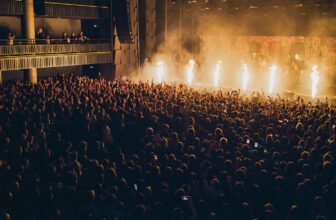
Then at 8 pm, I went the Old Bookstore (Hús máls og menningar) — which was recommended to me by a friend who had visited last summer. There’s live sing-along music every single night starting at 8, and by the time I arrived, the place was absolutely packed. I stood (go early if you want a seat — and honestly, standing is better because you can dance a little with all your new friends).

The whole room was singing together — strangers becoming a crowd becoming a community in about twenty minutes flat. It’s the kind of thing that happens in Iceland that makes you feel connected, and it costs nothing but the price of a drink. It was so fun – even as a solo traveler.
I knew the words to every song, and you will too. We belted out Abba, Johnny Cash, Bon Jovi, The Beatles, and many other upbeat, crowd-pleasing rock, pop, and folk cover songs. You don’t have to sing, of course, but it’s hard not to.

Day 3: Pastries, Puffins, and the City
Early Morning: 280 Bakery
Not as famous as Brauð & Co — yet — but 280 Bakery deserves your morning. I felt it was my duty to try at least a couple of pastry shops while in Reykjavik.
The cardamom rolls are exceptional, and the broader pastry selection makes you want to linger over a second cup of tea or coffee and pretend you have nowhere to be. Consider it the under-the-radar choice for people who did their homework. They also have a cooler with cheese salad, some other snacks, and drinks.
Like Brauð & Co, it’s a small shopfront with just a few seats along a window counter, but if it isn’t raining, it’s nice just to stand outside and munch on your cardamom roll, as I did.

Morning: Puffin Boat Tour
I’ve seen Atlantic puffins before in Scotland, and they are absurd. In the best possible way. They’re small and round, and they fly like they’re not entirely sure this is a good idea, and they look like tiny tuxedoed philosophers who have seen things.
I took a one-hour puffin viewing tour from the Old Harbour, and an hour turned out to be exactly right — long enough to really see them, short enough to leave wanting more. The boats are comfortable, the guides are enthusiastic, and the harbor itself is pretty great to be out on.
We went to two islands just a few minutes from the harbor. On Akurey Island, there were around 20,000 puffins! They were nesting on the ground, swimming around the boat, and flying through the air. We also saw black guillemots, cormorants, gulls, eider ducks, widgeons, and other birds. There is the possibility of seeing minke whales, but we didn’t.

The second island, Engey, had a smaller bird population, but there were still a lot! It was so fun to be up close to these adorable birds and watch them go about their morning.
There are different-sized boats you can go on to get out to the puffin islands. I took the RIB boat tour, which is a little, inflatable boat with seats that are more like saddles. They can get much closer to the islands than a traditional boat. And they sit lower on the water and closer to the puffins. They gave us insulated coveralls to wear, which were very cozy. If the weather had been raining hard or super cold, I might have preferred the bigger boat, but as it turned out, I was thrilled to be zipping around on the little boat.
Puffin season in Iceland runs roughly May through August — they arrive to breed in the spring and head back out to sea in late summer. If you’re visiting outside those months, skip this one and book a whale watching tour instead (same harbor, different wildlife).
Book a RIB boat puffin tour from Reykjavik here. Book a bigger boat puffin tour here.
Afternoon: Walking Reykjavik
Reykjavik is one of the most walkable, charming small capitals in the world. Spend your last afternoon just wandering — you’ll cover a lot of ground and stumble into things no itinerary would have found for you.

What to look for:
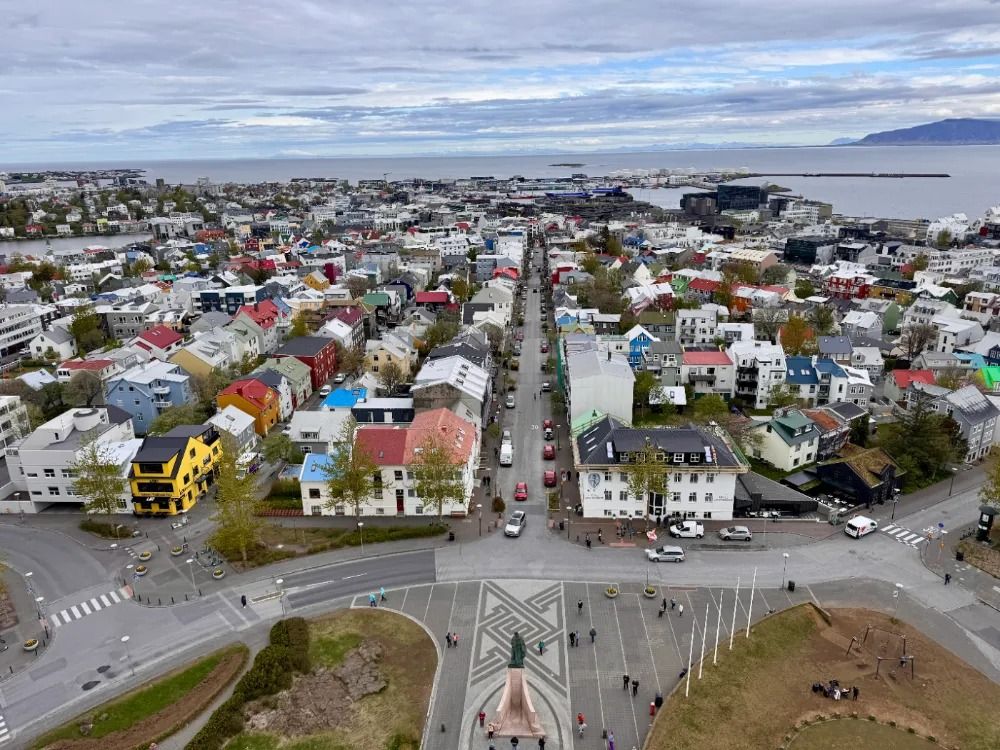
Hallgrímskirkja — The iconic Lutheran church that dominates the Reykjavik skyline. The exterior is all modernist drama, concrete columns inspired by Iceland’s basalt lava formations. Take the elevator to the top for views over the city. You can see this church from all over Reykjavik, and you can see all of Reykjavik from the church tower. I was glad I went to the top. Free to enter; around $12 for the lift to the tower.
Laugavegur — The main shopping street, lined with independent boutiques, design shops, Icelandic wool sweaters, and coffee. Don’t leave without at least browsing Geysir (clothing, not the water spout) or one of the handcraft stores for lopapeysa sweaters.
Verzlanahöllin — Iceland’s answer to a great thrift store, and one of the best secondhand shops I’ve encountered anywhere. Located on the second floor of Laugavegur 26 (enter from Grettisgata), it operates on a booth-rental model: up to 180 individual sellers curate their own small sections, meaning the selection is massive, constantly rotating, and genuinely eclectic — up to 25,000 items on any given day. It’s where you go to find a real lopapeysa (the traditional Icelandic wool sweater) at a fraction of retail price, alongside vintage 66°North gear, designer labels, handmade items, and things you can’t categorize. Give it real time — this is a treasure hunt, not a quick browse. I ended up with a beautiful Lopi sweater and could have easily purchased a bunch of other items. While the prices are much lower than at the retail shops, it’s still pricey.

The Old Harbour — The harbor is visually striking in a way that earns its postcard reputation: brightly painted fishing boats, historic wooden vessels, and converted industrial warehouses lining the docks. From the water’s edge, you get sweeping views across Faxaflói Bay toward the flat-topped Mount Esja, and on clear days, you can make out the glacier on the distant Snæfellsnes Peninsula. This is also your departure point for puffin tours and whale watching, and the warehouses have been converted into some of the city’s best cafes, bakeries, and seafood restaurants — I stopped at Höfnin café for a matcha to warm up after the puffin tour. Stretching west from the harbor is the increasingly hip Grandi neighborhood, worth a wander for its art galleries, artisan workshops, and food halls.
Outdoor art — Reykjavik takes its public art seriously. Beyond the Sun Voyager, keep your eyes open: murals, sculptures, and unexpected installations show up on building corners and quiet streets throughout the city. Looking for “The Unknown Bureaucrat” led me to Tjörin, a lake I enjoyed walking around.

Bookshops — If you celebrate Jólabókaflóð like we do (the Icelandic Christmas book flood tradition where everyone exchanges books on Christmas Eve), Reykjavik is going to be your happy place. Two shops worth seeking out: The Old Bookstore and Reykjavík Books & Chocolate — both carry books by Icelandic authors, books about Iceland, and books set in Iceland, in English. I came home with something from each. For a country of 370,000 people, Iceland publishes an extraordinary number of books per capita, and these shops are a lovely way to bring that home with you.
The Handknitting Association of Iceland — If you want an authentic lopapeysa straight from the hands that made it, this is the place. The sweaters are gorgeous — and priced accordingly. I didn’t pull the trigger on one (But I did get one at Verzlanahöllin thrift store) , but I left with a few skeins of Icelandic wool and a mitten pattern to make my own, which felt like the right compromise between my budget and my love of a good knitting project.

Other Things to Do in Reykjavik
If you have more time or want to swap out any of the above, here are experiences worth considering:
Sky Lagoon — The upscale geothermal spa experience closest to Reykjavik, with an infinity edge pool overlooking the ocean. It’s got a seven-step spa ritual (hot pool, cold plunge, sauna, steam room, body scrub, mist, warm pool) that’s quite restorative. A strong alternative to the Blue Lagoon, especially right now — the Blue Lagoon has faced repeated closures due to volcanic activity on the Reykjanes Peninsula. Sky Lagoon is unaffected. Book Sky Lagoon with transfer.
Blue Lagoon — The Blue Lagoon is Iceland’s most famous hot spring spa. It’s between Reykjavik and Keflavík (where the airport is located), so it could make a good stop on your way to or from the airport. There are various transfer options, some include entry to the hot spring, others are just a ride. See Blue Lagoon options here.
Whale Watching — Departing from the Old Harbour, whale watching tours run 2–3 hours and have strong odds of minke whale sightings (humpbacks and orcas are possible seasonally). Some people I talked to saw a lot of whales, dolphins, and porpoises on their tour! A great option if you’re visiting outside puffin season or you can book a combined whale and puffin watching tour. Book whale watching from Reykjavik.
FlyOver Iceland — An immersive motion ride that swoops you over Iceland’s landscapes — glaciers, waterfalls, volcanoes — in a way that’s genuinely thrilling and a good orientation to the country’s geography if you’re arriving fresh. Book a skip-the-line FlyOver Iceland entry.
Perlan — A glass dome museum and viewpoint on a hill above the city. The Northern Lights planetarium show is excellent, even if the lights themselves are playing hard to get or it’s summer. Book a Perlan entry with Hop-on Hop-off bus tour. Book a Perlan entry.
The Settlement Exhibition — A small, excellent museum built around an actual Viking-era longhouse excavated right in downtown Reykjavik. If you’re into history, this is one of the best 45 minutes you can spend. Book the Settlement Exhibition.
Sundhöllin — Reykjavik’s oldest public pool, open since 1937 and still one of the best “do what locals do” experiences in the city. It sits right in the center on Barónsstígur — a short walk from Hallgrímskirkja, which was also designed by the same architect, Guðjón Samúelsson. There’s an indoor pool, outdoor pool, geothermal hot pots, cold tub, sauna, and steam room. Affordable, unpretentious, and genuinely social in the Icelandic way. A great option before or after an evening on Laugavegur. This got great reviews from a German I was chatting with at Hvammsvík. I ran out of time on this trip — it’s first on my list for my return.

Where to Stay in Reykjavik
Stay downtown. This is not optional if you’re traveling without a car, because almost every guided tour picks up and drops off at city-center hotels or the BSI bus station. Being within walking distance of the harbor, Hallgrímskirkja, Laugavegur, and the tour departure points makes your whole trip smoother.
That said, there is a public bus system that’s easy to use and affordable. Just plug in your destination on Google Maps and choose the public transportation option to find the next bus. You can pay on the bus with a credit card or Apple Pay.
The neighborhood to aim for is Miðborg (the 101 postal code) — the central district. Here are a few reliable options across price points:
Splurge: Hotel Borg — Art Deco landmark right on Austurvöllur Square, the closest thing Reykjavik has to a grand classic hotel. Walking distance from everything.
Mid-range: Canopy by Hilton Reykjavik City Centre — Well-located, modern, consistently good reviews. Good breakfast.
Mid-range: Apotek Hotel — Housed in a beautifully converted old pharmacy building. Charming, central, well-regarded.
Mid-range – Budget: Oddsson Hotel — This is where I stayed, and I loved it. It’s a self-check-in, has a large, clean, modern bathroom… in fact, the whole room was meticulously clean and modern. The kitchenette made it easy to have budget meals from the nearby Bonus grocery store, and there is a bakery attached – yum! The only disadvantage is that it is about a 15-minute walk to Hallgrímskirkja (the big church) and Laugavegur (the shopping street), and almost 30 minutes to the Old Harbour. I am a walker, so it was no problem for me, and there are local buses. I will stay here again.
Budget: Kex Hostel — A beloved Reykjavik institution in a converted biscuit factory (kex = biscuit). Great common spaces, good bar, popular with solo travelers.
Budget: Loft Hostel — Rooftop terrace with views, central location, clean, and social. The rooftop is worth the price of admission on its own.
Search all downtown Reykjavik hotels:

Practical Notes for Planning Your Carless Iceland Trip
Getting from the airport: Book the FlyBus in advance, it saves you having to stand in line at the airport. It runs frequently and syncs with flight arrivals. The FlyBus+ upgrade drops you at your hotel; worth it on arrival day. I walked from the bus stop to my hotel and kind of regretted it.
Booking tours: Most guided day tours from Reykjavik pick up at city-center hotels. I used GetYourGuide for booking (I like that you can cancel up to 24 hours before your tour); you can also book directly through Reykjavik Excursions, one of the most established operators, or through individual operators. Book your Golden Circle tour well in advance in summer — they sell out.
What you can do without a car vs. what you genuinely can’t: You can absolutely see the Golden Circle, South Coast, Snæfellsnes Peninsula, and Hvammsvik as guided day tours. You cannot easily reach the Westfjords or the Highlands without either a car, a multi-day tour, or a domestic flight. For a 3–5 day trip, you will not feel like you’re missing anything.
When to go: Summer (June–August) gives you the midnight sun, puffin season, and the best hiking weather. Shoulder season (May and September) is quieter and cheaper, with puffins still present in May. Winter (October–March) brings the Northern Lights and dramatically shorter days. All seasons work beautifully for a carless Reykjavik-based trip.

FAQs About Visiting Iceland Without a Car
Q: Can you really visit Iceland without renting a car?
A: Yes, absolutely — especially for a 3–5 day trip based in Reykjavik. The city is very walkable, guided day tours cover all the major sights (Golden Circle, South Coast, Snæfellsnes Peninsula, and more) with hotel pickup and drop-off included, and the FlyBus handles the airport transfer. You won’t feel like you’re missing out.
Q: Is Iceland expensive without a car?
A: Iceland is expensive regardless of how you get around — it’s one of the pricier destinations in Europe. That said, skipping a rental car saves you a significant chunk: car rentals run $80–150+ per day before insurance, fuel, and parking. Day tours are not cheap either, but you’re paying for convenience, a knowledgeable guide, and the ability to actually look out the window instead of navigating. Eating lunch from a grocery store (Bonus is your friend), staying at a well-located mid-range hotel, and being selective about which tours you prioritize can keep costs somewhat reasonable.
Q: Does Iceland have public transportation?
A: Reykjavik has a city bus system (Strætó) that’s easy to use — just plug your destination into Google Maps and choose the public transit option. However, Iceland has no trains or subway system. Long-distance buses exist but are designed for commuters, not sightseers, and don’t stop at waterfalls or geysers. For anything outside the city, guided day tours are the practical carless option.
Q: Should I go to the Blue Lagoon?
A: It’s iconic and worth it if it’s open — but the Blue Lagoon sits on the Reykjanes Peninsula, which has been volcanically active since late 2023 and has forced temporary closures multiple times. If you go, book refundable tickets and check their website the morning of your visit. If it’s closed or you’d rather skip the crowds, Sky Lagoon is a beautiful alternative. My personal favorite is Hvammsvik — quieter, wilder, and more connected to the actual Icelandic landscape. Book Hvammsvík entrance and transfer here.
Q: Can you see the Northern Lights without a car?
A: Yes. Guided Northern Lights tours depart from Reykjavik every evening during aurora season (roughly September–April). Guides use real-time cloud-cover and solar-forecast data to take you to wherever the skies are clear — they’re often more effective than self-driving because they know where to go. Most operators offer a free retry if the lights don’t show.
Q: How many days do you need in Iceland?
A: Three days is enough for a genuinely satisfying first trip based in Reykjavik — as this itinerary proves. Five days give you room to add a South Coast tour (black-sand beaches, waterfalls, a glacier) or a Snæfellsnes Peninsula day trip. A week opens up the possibility of heading north to Akureyri and the Lake Mývatn geothermal area. Iceland rewards as much time as you can give it; I’m already planning my return.
Q: What’s the best time of year to visit Iceland?
A: Every season has its argument. Summer (June–August) brings the midnight sun, puffins, and lush green landscapes. Shoulder season (May and September) offers quieter crowds, lower prices, and — in May — puffins. Winter (November–March) is Northern Lights season, with dramatic snowy landscapes and cozy culture. I visited in late spring and found it close to ideal: light until 11 pm, puffins on the water, and manageable crowds.

Iceland Without a Car, Revisited
Here’s the deal: if you have two weeks in Iceland and want to drive the Ring Road, rent a car. That’s a different trip with different goals, and the Ring Road is magnificent.
But if you have 3–5 days, you want to actually see things rather than navigate them, and the idea of driving on icy volcanic roads in sideways rain sounds more like stress than adventure — you don’t need a car. You need good tour operators, a central hotel, and a willingness to let someone else worry about the roads.
Iceland without a car is not a compromise. It’s a choice. And it was one of the best I made.
Let me know what tips you have for visiting Iceland.