It’s a big year for Independent, the art world’s favorite contemporary art fair, and its more art-historically minded sister, Independent 20th Century. On the heels of Independent’s move earlier this year from Spring Studios in New York’s Tribeca to the much larger Pier 36 on the Lower East Side, its 20th Century edition, which opens to the public today, has also relocated, shifting from its Lower Manhattan location to Marcel Breuer’s 1960s brutalist building on Madison Avenue and East 75th Street, formerly home to the Whitney Museum and now headquarters for Sotheby’s auction house.
The move has allowed the fair to expand from 31 participating exhibitors in 2025 to this year’s 57 and to more closely approximate a museum experience, with discrete “galleries” rather than the usual corridors lined with booths. Despite nearly doubling in size, the fair remains viewer friendly, in contrast to the tired and bloated Armory Show, which is running concurrently with an exhausting 230-plus exhibitors.
While other New York art fairs like TEFAF and ADAA also deal in historical work, Independent 20th Century has a specific focus: art made in the 100 years between 1900 and 2000, with particular attention paid to expanding the art-historical canon. In this it reflects a growing art world impulse toward inclusivity, as witnessed by the increased presence of female artists, outsider artists, queer artists, and artists of the Global South at auctions, biennials, and museum exhibitions.
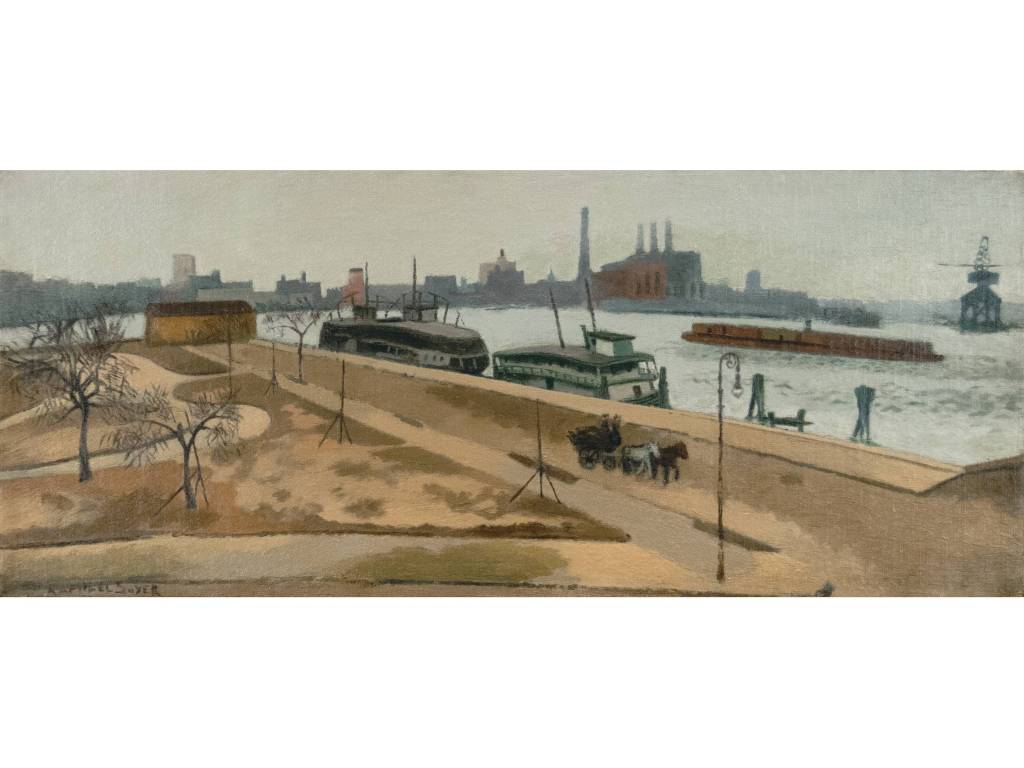
At the same time, the fair troubles the boundary between historical and contemporary, with booths devoted to Jenny Holzer (at Sprüth Magers) and Relational Aesthetics (at Esther Schipper) rubbing shoulders with those featuring works by Picasso (at John Szoke) and Raphael Soyer (at Forum Gallery).
Standout presentations this year include “Black Soho,” curated by galleries Ryan Lee and Salon 94 and featuring works made in NYC between 1961 and 1984 by African-American artists such as Emma Amos, Jean-Michel Basquiat, Camille Billops, Frederick J. Brown, Vivian Browne, Ed Clark, David Hammons, and Norman Lewis. Elsewhere, Berry Campbell is showing a selection of pieces by the women artists of the famed Stable Gallery (1953–1970), including Elaine de Kooning, Joan Mitchell, Charlotte Park, and Janice Biala. (More works by Joan Mitchell are on view in a pairing of her work and that of Kimber Smith at Bueno & Co.)
Among the solo booths, look for Nahmad Contemporary’s showing of punctured, Murano glass–encrusted, and sand-sprinkled works by Lucio Fontana, which predate his better-known slashed canvases; Alison Jacques’s presentation of surrealistic works by self-taught artist Bona de Mandiargues (1926–2000); and Mitchell-Innes & Nash’s grouping of the darkly humorous and always political work of Canadian artist collective General Idea.
See eight other not-to-be-missed presentations below.
The Independent 20th Century art fair runs from September 24–27 at 945 Madison Avenue, New York.
-
“The Obsessive Image” at David Nolan/Gió Marconi

Image Credit: David Nolan. While it might look a bit random at first, the exhibit “Obsessive Image” is far from it. In their joint booth, David Nolan and Gió Marconi bring together works by such disparate artists as Man Ray and Martin Kippenberger, all united by their craftsmanship, eccentricity, and lowbrow humor.
-
David Byrd at Anton Kern

Image Credit: Courtesy Anton Kern. Eighty-seven when he had his first show, the reclusive artist David Byrd (1926–2013) made faded views of his upstate New York environs and portraits of the psychiatric patients at the VA hospital where he worked. A selection of his haunting artworks is on view at Anton Kern.
-
Myron Stout and Cycladic Art at Craig Starr

Image Credit: Courtesy Craig Starr. Craig Starr gallery here pairs reductive black-and-white paintings by postwar master Myron Stout (1908–1987), an aficionado of ancient Greek art, with equally reductive Cycladic pottery and sculpture.
-
Emma Kunz at Hauser & Wirth

Image Credit: Artwork copyright © Emma Kunz Foundation, courtesy Emma Kunz Centre. Photo: Jon Etter Visionary artist Emma Kunz (1892–1963) started investigating her telepathic and prophetic skills at age 18. It was in middle age that she began making large-scale geometric drawings using colored pencils and oil pastels and a process that she called radiesthesia. Hauser & Wirth is exhibiting nine of the almost 600 undated drawings she left behind.
-
Gerhard Richter and Sigmar Polke at Sies + Höke

Image Credit: Copyright © Gerhard Richter. Photo: Tino Kukulies, Düsseldorf, courtesy Sies + Höke, Düsseldorf. At Sies + Höke, a selection of small-scale works on paper by Gerhard Richter and Sigmar Polke—cofounders of Capitalist Realism, Germany’s 1960s version of Pop art—includes squeegee paintings on postcards by Richter and photographs by Polke. But the real treasure here is a study related to Untitled (Table), 1962, one of Richter’s most famous early paintings. Like Table, this 1963 work appropriates an image from the design magazine Domus. It might be the hidden star of the fair.
-
Harold Stevenson at Andrew Kreps

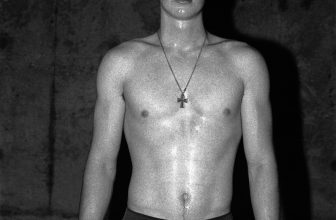
Image Credit: Courtesy Andrew Kreps. Invited to create a work for the Guggenheim’s 1963 Pop art exhibition “Six Painters and the Object,” artist Harold Stevenson (1929–2018) produced The New Adam (1962), a 40-foot-long wraparound painting of a naked model with a phallus “the size of a man,” in the words of curator Lawrence Alloway (who rejected it). Here, Andrew Kreps is presenting a group of Stevenson’s tightly cropped views of male bodies.
-
Rosalyn Drexler at Garth Greenan

Image Credit: Courtesy Garth Greenan. Photo: Christopher Burke. Rosalyn Drexler (1926–2025) was a novelist, playwright, Emmy-winning comedy writer, and, for a few months when she was in her 20s, a lady wrestler. She was also a major Pop artist who is only now getting the attention she deserves. This selection of Drexler’s work at Garth Greenan includes her rarely seen sculptures.
-
Winold Reiss at Hirschl & Adler

Image Credit: Courtesy Hirschl & Adler. Though white, German-born American modernist Winold Reiss (1886–1953) is famed for his empathetic portraits of those who would have been considered “other” in his day: African Americans, both famous and unknown, and members of the Indigenous tribes of North America. You will find examples of both at Hirschl & Adler Galleries’ booth, along with his paintings of fashion-forward women of his time.