
If you’re new to art making, the difference in quality between ‘professional’, ‘artist’, and ‘student’ grades for art materials might not be obvious until you use them. Before you invest in a set, this article can be used as a guide to the quality you can expect from each type, to help you choose the best. We explore the differences made by grades across wet and dry media and explain the purpose of grading art materials, combined with practical reviews from artists.
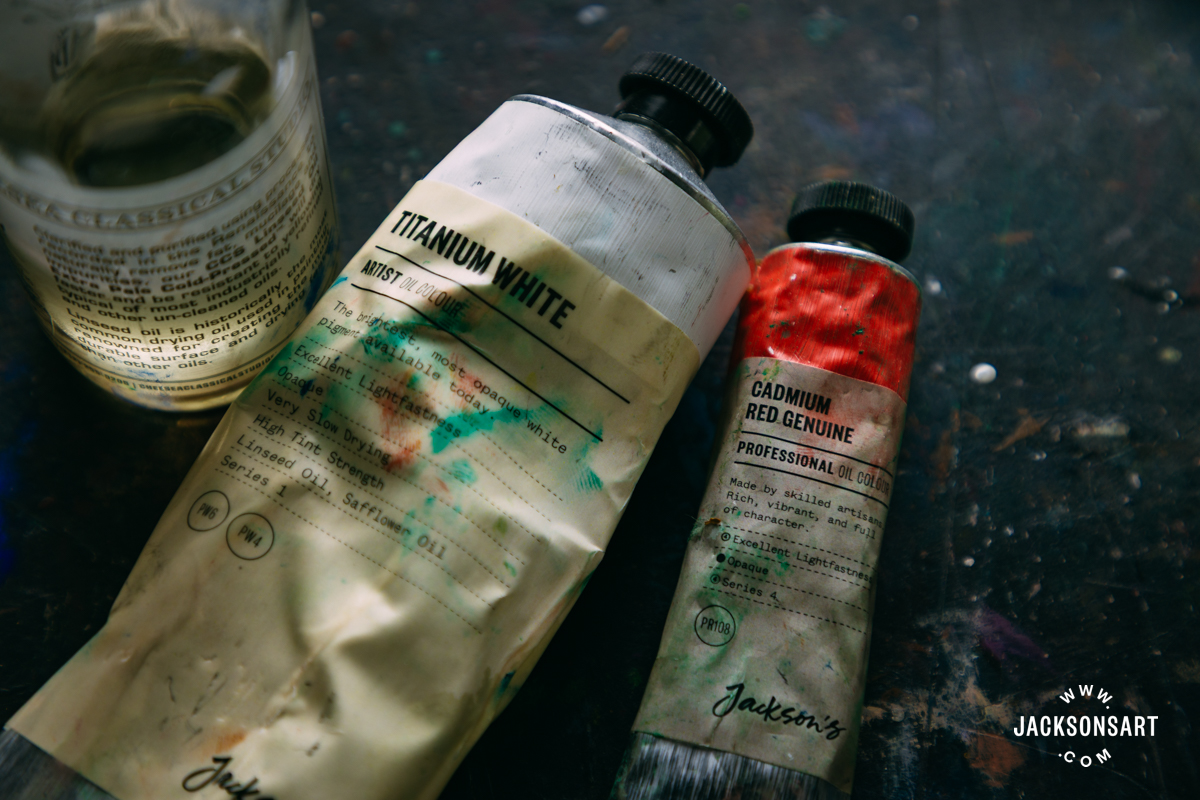
Why are Art Materials Made in Different Grades?
Manufacturers create products that are feasible for each price point and level of professionalism of their consumers. Grading these materials makes it easy for the artist to understand the quality they can expect to receive from each product. It makes sense that the materials you’d find in a school art class are lower quality than those in a professional artist’s studio – just as you’d expect the quality of materials to improve with experience in other art forms or professions.
As you gain confidence in your work, progressing from student-grade toward professional-grade materials is a natural process that results in making artworks with a higher quality material finish. They generally contain a superior quality and quantity of pigments, with binder but no added fillers, to guarantee the longevity of the work. Professional-grade is generally the expected standard of materials used in exhibited artworks, signifying that the artist cares about the quality and longevity of the work they sell to their collectors.
Due to the difference in price points, many professional artists still keep a combination of both grades of materials in their studio for experimentation. Most artists won’t ‘waste’ expensive professional paints or pastels on preparatory or preliminary works, and will instead reach for their student quality set for basic underpainting or sketching. In this sense, student, artist, and professional-grade materials remain useful for different purposes for artists at every stage in their career.

What Factors Affect the Grade of Art Materials?
Pigments
Pigments give colour to art materials. They are chemical compounds that impart colour by changing how it interacts with light. Pigments can be natural, meaning they occur in nature, or synthetic, meaning they’re made through a chemical process. Professional art materials contain a high quantity of pigment, whilst student grades contain a relatively small quantity.
Professional quality paints often contain single pigments, whereas student or artist quality paints contain multiple pigments, often designed to mimic the colour of expensive, single pigments. Look for the word ‘Hue’ in the title to indicate that your paint is imitating a genuine single pigment. For example, Jackson’s Artist Oil Paint range includes a Cobalt Blue Hue, whilst the Jackson’s Professional Oil range contains Cobalt Blue Genuine, which has a big difference in price. Whilst some hues come close, it’s impossible to perfectly replicate the colour and finish of single pigment professional paints.
To learn more about pigments, watch our film A Guide to Pigments and delve into our Pigment Stories series by Evie Hatch.

Binder or Vehicle
The binder or vehicle is the ingredient that holds the pigment together and, in paint, forms a film as it dries. Its composition varies by medium: oil paints use oils such as linseed oil, acrylics use acrylic polymer, while watercolours and gouache are traditionally bound with gum arabic.
High quality binders contribute to the consistency, adhesion, and durability of paint, pastels, and coloured pencils. Professional materials are carefully formulated to balance pigment and binder, providing reliable handling while allowing the individual qualities of each colour and medium to remain apparent. For example, professional quality soft pastels, such as those made by Unison Colour, contain a very low proportion of binder – making them as close to working with pure pigment as an artist can get.
Filler or Extender
Fillers or extenders are bulking materials that are added to student and artist-grade paints to compensate for the lower proportion of pigment they contain. These can be materials such as chalk, gypsum, or kaolin clay.

Discover how Jackson’s Professional Oil Paint is made in The Secrets of Making Jackson’s Professional Oil Paint.
Mixing and Milling
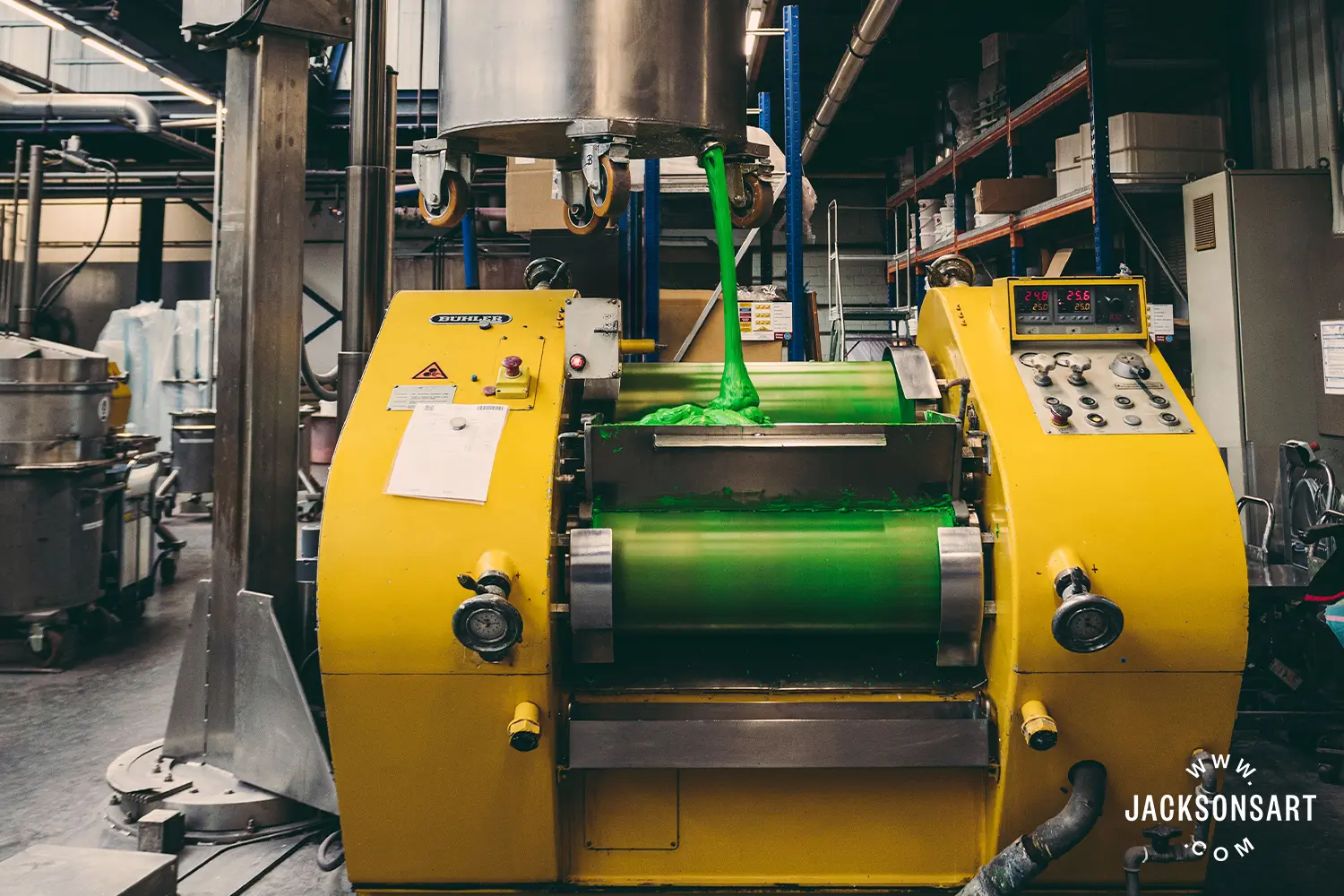
Mixing is when the pigment is combined with the binder, and milling describes the process of grinding the pigments to evenly disperse them into the binder to remove clumps and unwanted texture. Paints can be milled by hand with a muller, or by a system of rollers in factory-processed paint.
The process is adjusted to suit each pigment and paint type, with some colours requiring several passes to achieve the desired consistency and colour strength. Professional paints are carefully mixed and milled to disperse pigment evenly throughout the binder. Lower-cost paints may undergo less extensive processing to cut costs, which results in inconsistent paints.
Packaging
Professional paints are packaged with care to protect the product and help artists identify their colours accurately. Some ranges have painted colour swatches on their labels that show the appearance of the actual paint. Lower-cost paints more often use printed labels, which may offer a less precise indication of the colour inside.
Professional quality materials have more expensive packaging to protect their valuable contents. Student-grade materials often have cheap packaging components that may be prone to damage without care. Materials that are described as ‘handmade’ are often an indicator of quality too – where we’re guaranteed that a person has overseen the entire process.
For instance, Schmincke fills its Horadam watercolour pans in four separate liquid pours, allowing each layer to dry before the next is added, to produce a highly concentrated, long-lasting pan. On the other hand, student quality watercolours may be poured in a single layer by a machine.
You can learn more about the process of manufacturing art materials in our On Location series, where the Jackson’s team visit the factories of the best-loved brands.

On Location at Derwent
Defining the Grades of Art Materials
Professional
Professional artists’ materials generally contain a higher proportion of the best quality pigments, the perfect amount of binder for each pigment, and no fillers or extenders, to produce pure, bright colours. The drying time in wet media, texture, opacity, and staining vary between colours, which is most noticeable in professional materials.
These qualities are exciting for professional artists who know how to make the best of each pigment – but for the beginner artist, these varying factors can be overwhelming and hard to understand. These are generally the most expensive artist materials and have superior lightfastness and longevity provided by the quality of their ingredients.
Some professional ranges may be described as ‘artist quality’ since the terms aren’t completely standardised across brands. The formulation and price point are often more revealing than the title on the label. For example, if an oil paint is expensive, handmade, and milled with pure linseed oil with no filler, it’s probably professional quality.

Artist
Artist-grade materials are close to professional in composition – often using the same high quality materials – but just in more affordable quantities. This is done by adding fillers or extenders to the paint, which make up the missing proportion. These ingredients make the paints behave in a much more uniform way than the variation in finish and handling of professional paints. The natural characteristics of each colour may be muted by the filler material.
Student
Student-grade materials are designed to be the most affordable, with the lowest pigment-to-binder ratio. These filling agents add empty volume to the paint, which gives them lower saturation and often increased transparency. For instance, student oil paints may appear chalky when dry, and acrylics may be thin and inconsistent. Despite the drawbacks, student paints are the best option for learning, sketching, experimentation, and preparing large-scale work, since they are the cheapest.

Can I Use Professional-Grade Materials as a Beginner?
Of course you can. A small palette of professional materials will often serve you better than a large set of materials of poor quality. A large palette of poor colours can be overwhelming to choose from and lead to muddy colour mixing. When you use a few high quality paints, your mixing will be clearer, and choices predetermined, with the reassurance that your work will have longevity. Most professional brands have created starter sets of their materials for this purpose. They include:
Michael Harding Introductory Oil Set, Golden Heavy Body Acrylic Paint Intro Set, Daniel Smith Watercolour Essential Set, Unison Colour Soft Pastel Starter Set of 8, and Sennelier Oil Pastel Discovery Set.
Although student quality paints are less expensive, professional paints can often save both time and materials. Their higher pigment load delivers the colour strength and intensity you’re looking for from the first application, reducing the need to build multiple layers to achieve the same result.
The difference in quality becomes clear when diluted paint retains strong colour, noted here by Rachel S in her review of GOLDEN’s Heavy Body Acrylic Paint in Nickel Azo Yellow:
‘Golden acrylic paint has excellent pigment quality, it’s buttery and holds its colour well , love that you can add water without losing the quality of the paint’ – Rachel S.
Heather J also conveyed this sentiment in her review of Daniel Smith’s Perylene Violet watercolour:
‘Daniel Smith watercolour is always excellent, strong pigments mean a little goes a long way. Perylene Violet is a colour I could do without, it’s integral to my landscapes, and a versatile mixer.’ – Heather J.

How Do I Check the Grade of Art Materials?
Since the grading of materials isn’t standardised across brands, it can be challenging to find the true grade of a material. To solve this issue, the Jackson’s Art website allows you to filter each material by Quality – ranging between Exceptional, Excellent, Very Good, Mid-Range, and Economy. In general, you will find Professional-grade products labelled as Exceptional, Artist-grade products labelled as Excellent and Very Good, and Student-grade products labelled as Mid-Range and Economy.
Despite the usefulness of this filter, quality doesn’t always fall neatly into defined categories. For example, Gamblin 1980 Oil Colours are officially classed as student-grade, but use the same pure pigments and mixing, milling, and filling processes as Gamblin Artist’s Oils. The main formulation difference is the addition of marble dust – a traditional extender. The 1980 range therefore offers excellent value for painters seeking dependable colour and handling, while their Artist’s Oils provide the brand’s highest pigment concentration. Reading the spec and properties of individual materials will help you discover these anomalous products.

What Changes for Artists When They Switch Grades?
Moving from student or artist-grade materials to professional quality can be a memorable step for artists. Many experience a change in relationship with their medium through experiencing stronger colour, unique handling, texture, and finish. Colour mixing is often where many painters first notice the benefit of using professional-grade paints. The jump in quality of the material is immediately noticeable and becomes hard to sacrifice in the future.
Trying professional grade materials sometimes allows artists to rediscover a medium they haven’t enjoyed before, stated here by Michelle M, in her review of a Sennelier Olive Green Oil Pastel:
‘Color is beautiful, and I have never been that fond of oil pastels until I tried the Sennelier brand. They are extremely smooth and creamy to work with, yet they seem to set nicely and need minimal fixing to avoid being messy.’ – Michelle M.
And Steve C stated it plainly:
‘Once you use Michael Harding paints, no other paint will do.’ – Steve C.
Product reviews on Jackson’s website are great evidence of artists’ positive experiences with professional materials. For instance, Michael Harding Oil Paints hold a 4.9 average across over 700 reviews on our website, with 99% rated four or five stars. That breadth of satisfaction reflects a range that delivers reliably.
Advice for Using Professional-Grade Materials for the First Time
Start with a focused palette. Rather than buying dozens of colours, start with a limited selection or curated starter set. Better quality materials achieve more through mixing – a warm and cool version of each primary, plus a white and black, gives you a great range to work with. As you use them, you’ll soon realise that if there are any colours missing, you can add them to your kit later.
Research each pigment’s individual qualities. Most professional brands formulate their materials to highlight their pigment’s natural characteristics, which affect factors like drying time, opacity, and texture. Learning about their differences rather than expecting uniformity unlocks the full potential of professional-grade materials. You can read about the individual properties of pigments in Evie Hatch’s Pigment Stories series.

Store and clean your materials properly. By looking after professional-grade materials properly, they can be used longer with less product wastage. Keep pans, tubes, and jars tightly closed in a dry place, away from heat and direct sunlight. Make sure to squeeze the product from tubes without leaving pockets of air, and wipe off pans after use to keep colours clean. Pastels should be stored in an appropriate container where they won’t be easily broken and dirtied.
Further Reading
On Location: Michael Harding Handmade Artists Colours
In Conversation with Markus Baumgart of Schmincke
Fugitive Pigments: Why Do They Fade, and Does it Matter?
What is the Pigment Colour Index?
Shop Art Materials on jacksonsart.com