There are people who live at the edges of things, outside the centre of society, outside conventional ideas of success, belonging and respectability. They may be economically marginalised, socially isolated, geographically displaced, or simply unable to find a comfortable place within the world around them.
These are novels about such people. Some live in poverty or precarious circumstances; others are outsiders because of where they come from, the choices they have made, or the ways in which they experience the world. Their lives may be overlooked by society, but literature gives them space to be seen, heard and understood.
The books on this list explore poverty, loneliness, displacement, class, isolation, exile, alienation and the search for belonging. They are stories about people who exist on the periphery, and about the complicated, sometimes painful, sometimes liberating experience of looking at the world from its margins.
1 The Halfway House by Guillermo Rosales (Cuba)
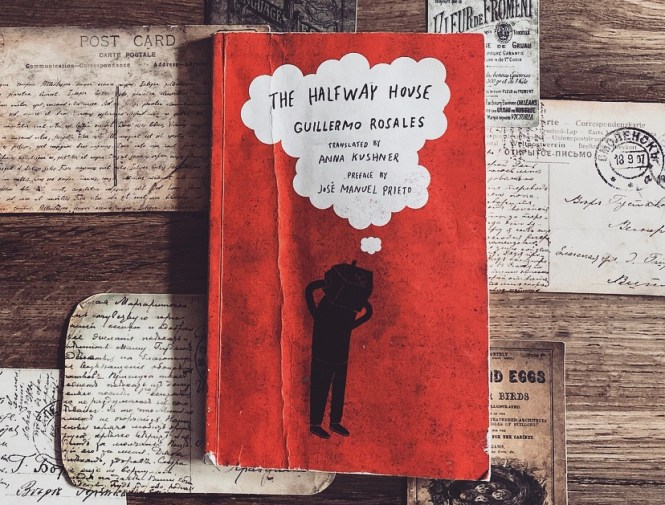
The Halfway House is a haunting exploration of the darkest corners of human nature and the tragic impact of the communist totalitarian regime on the Cuban people, as well as on those who managed to flee the regime: political exiles. This book is a truly timeless, frontierless masterpiece. It shines a light on the evils of totalitarianism in a way that only a few books have been able to express. It is as impactful as the works of Solzhenitsyn, Herling-Grudziński, and Shalamov. The degradation of human nature portrayed by Rosales also reminds me of Tadeusz Borowski’s This Way to the Gas Chambers, Ladies and Gentlemen, Tahar Ben Jelloun’s This Blinding Absence of Light, and Ken Kesey’s One Flew Over the Cuckoo’s Nest. The portrayal of the human condition in all these books, including The Halfway House, is bleak, revealing some of the worst aspects of humanity. In The Halfway House, we follow Guillermo Rosales’s alter ego, William Figueras, a victim of his unfortunate circumstances and the times in which he lived. We find out that William’s book was suppressed by the regime in Cuba, which had a devastating impact on his life. Twenty years later, he arrives in Miami dejected and beaten down by life and circumstances. William is described as a “toothless, skinny, frightened guy who had to be admitted to a psychic ward that very day” — the so-called halfway house. He has a history of mental illness, similarly to Rosales, and is placed in a home for people suffering from mental illness: the halfway house, located somewhere in Miami.BOOK REVIEW
2 Like a Mule Bringing Ice Cream to the Sun by Sarah Ladipo Manyika (Nigeria)

Like a Mule Bringing Ice Cream to the Sun by Nigerian writer Sarah Ladipo Manyika is a warm, life-affirming novel about ageing, independence, loneliness, friendship, immigration and the enduring importance of books. Its protagonist, 75-year-old Morayo da Silva, is a fiercely independent former professor living in San Francisco, with a love of literature, colourful clothes, vintage cars and new experiences. Morayo refuses to accept that growing older should mean giving up on adventure or living according to other people’s expectations. Even as she begins to experience health problems and the realities of ageing, she remains determined to live life on her own terms. Through her memories of Nigeria, India, London and other places she has called home, the novel also explores exile, belonging and the complicated relationship between nostalgia and home.
3 The Reluctant Fundamentalist by Mohsin Hamid (Pakistan)

This book offers beautiful writing and takes a very sharp approach to questions of identity, “cultural power,” and the cultural clash between the West and the East, particularly in the context of the dominance of a powerful country such as the United States, both before and after the attacks on the World Trade Center on 11 September 2001. The themes in The Reluctant Fundamentalist are diverse and portrayed in a very nuanced manner. In one of his interviews, Mohsin Hamid explained that his objective was for the book to act as a mirror for the reader — to create a sense of uncertainty and confusion and, in doing so, show that the characters are as complex and multidimensional as people in the real world. They can embody many things and hold many identities at once. The story revolves around a conversation in a café in the bazaar of Lahore between Changez, a young Pakistani man, and an American stranger. Changez recounts the story of his life, focusing mainly on his time living in the United States. We hear only the Pakistani protagonist; the narrative is told in a single voice, as we never hear the American interlocutor directly. Instead, we can deduce his reactions from Changez’s words. The American man speaks, but we cannot hear his voice in the novel. There is only one narrator and one speaker, and the story unfolds in real time. This is a remarkably unique narrative device, forcing the reader to confront both conscious and unconscious assumptions about the protagonists’ cultural, ethnic, and religious backgrounds. This is a very multilayered read, with a complex and nuanced portrayal of Changez.. FULL REVIEW
4 This Mournable Body by Tsitsi Dangarembga (Zimbabwe)

This Mournable Body by Zimbabwean writer Tsitsi Dangarembga tells the story of a middle-aged woman called Tambu, who lives in Harare and is trying to find her way in the world. Tambu leaves her stagnant job as a copywriter, hoping to find better employment where she will be treated with respect and appreciation. Yet every time there seems to be some hope for a better future and a better life, Tambu is faced with another disappointment and humiliation. Her life is far more depressing than she could have imagined. This book portrays the essence of the human condition in the present day, when there seems to be little hope, only despair and a constant struggle to survive. Dangarembga explores contemporary Zimbabwe and the impact that both the past and the present have on the life of an ordinary individual with high hopes and ambitions, and how those dreams can ultimately be shattered. It is also an excellent depiction of Zimbabwean society, exploring the contrast between urban and rural life, as well as traditional norms and the push towards modernity when it comes to social customs. This Mournable Body is also a very universal story; it tackles many social issues that people in other countries have to deal with as well. This is a powerful and thought-provoking piece of literature.
5 The Wonders by Elena Medel (Spain)

The Wonders by Spanish writer Elena Medel is a lyrical and deeply moving novel about class, gender, money and the ways poverty shapes women’s lives across generations. Moving between the stories of María, who leaves her rural home for Madrid in 1969 after becoming pregnant as a teenager, and her granddaughter Alicia, living in Madrid in the aftermath of her father’s suicide, the novel explores two women separated by almost fifty years but connected by similar struggles with financial insecurity, unstable work and the desire for independence. Set against the final years of Franco’s dictatorship, Spain’s transition to democracy and the 2018 feminist protests, Medel shows how dramatically the country has changed while highlighting the inequalities that persist. Poverty is portrayed not simply as a lack of money but as something that shapes relationships, opportunities, self-perception and even the choices women are able to make. The consequences of María’s poverty and separation from her daughter reverberate across generations, affecting Alicia decades later. A thoughtful and quietly powerful novel about working-class women, poverty, feminism, family, intergenerational trauma and the invisible labour of women, The Wonders gives voice to women whose intelligence, ambitions and struggles are often overlooked. FULL REVIEW
6 The Night Always Comes by Willy Vlautin (USA)

The Night Always Comes by American writer Willy Vlautin is a bleak, deeply moving novel about poverty, economic inequality, exhaustion and the elusive promise of the American Dream. Set in Portland and unfolding over just two days and nights, it follows thirty-year-old Lynette, who works multiple low-paid jobs while caring for her developmentally disabled brother and desperately trying to save enough money to buy the house her family has rented for years. When her mother unexpectedly changes her mind about buying the house, Lynette is pushed to the edge. As she frantically searches for the money she needs, Vlautin reveals how financial insecurity shapes every aspect of her life — her relationships, mental health, physical wellbeing and sense of the future. The novel also offers a nuanced portrayal of her relationship with her mother, showing how love, sacrifice and resentment can coexist when both women are exhausted by years of financial struggle. Devastating but compassionate, The Night Always Comes is a powerful portrait of the working poor, precarious employment, caregiving, mental health, family and economic inequality. Vlautin writes with remarkable empathy about people who work relentlessly yet remain unable to achieve the stability they have been promised. FULL REVIEW
7 The Country Will Bring Us No Peace by Matthieu Simard (Canada)

The Country Will Bring Us No Peace by Canadian writer Matthieu Simard is a profoundly haunting meditation on grief, isolation, memory and the emptiness that follows profound loss. The novella follows Simon and Marie, a couple who leave the city for a small rural community, hoping to escape their grief and begin again. Instead, they find themselves confronted by an unsettling landscape and strangely hostile locals, while the secrets and silences within their own relationship slowly surface. Simard’s sparse, melancholic prose is also poetic, atmospheric and deeply introspective, bringing to mind the work of Patrick Modiano. The alternating perspectives of Simon and Marie blur the boundaries between external reality and their inner emotional landscapes, while the eerie countryside and mysterious small-town community become reflections of their grief and psychological isolation. A beautifully written and unsettling exploration of grief, memory, loss, loneliness, relationships and the impossibility of escaping the past. Quiet, strange and deeply moving, it is particularly suited to readers who enjoy literary fiction with an atmospheric, almost dreamlike quality. FULL REVIEW
8 Flowers of Lhasa by Tsering Yangkyi (Tibet)

“People change over time. People’s lives, and loves, are ever shifting, never permanent. But everyone has one goal that never changes: the pursuit of that word “happiness”. Everyone has the right to pursue a happy life, and no matter what people do to pay the bills, it’s always a happy life they’re striving after.” By portraying the traumas of young women at the start of their so-called best years, who are trying to find their place in the world, Flowers of Lhasa by Tibetan writer Tsering Yangkyi offers a compassionate portrayal of fragile lives marked by a lack of opportunities, poverty, and resignation. Flowers of Lhasa is a powerful tale of four young women who work as migrant workers: three Tibetans and one Chinese. They leave their close-knit rural communities behind to look for a better life for themselves and to support their impoverished families in the city of Lhasa, the religious and cultural capital of Tibet. The ‘flowers of Lhasa’ — Drolkar, known as Dahlia; Xiao Li, known as Cassia; Yangdzom, known as Azalea; and Dzomkyi, known as Magnolia — live together in a small, rented room. It is their temporary shelter, but also their home, where they share their joys and sorrows. They are like a family, always looking out for one another. BOOK REVIEW
9 Red Waed Water by Jurica Pavičić (Croatia)

Red Water by Croatian writer Jurica Pavičić is a haunting crime novel set on the Dalmatian coast, beginning with the disappearance of seventeen-year-old Silva in 1989, just as Yugoslavia is approaching its collapse. What initially appears to be a mystery surrounding one missing girl gradually becomes a much broader exploration of family, memory, moral ambiguity and the disintegration of an entire society. Spanning twenty-six years, the novel follows Silva’s family, the police investigating her disappearance, and the inhabitants of her coastal town as Croatia undergoes war, political upheaval, economic transformation and the rise of mass tourism. Silva’s disappearance becomes a metaphor for the disappearance of a familiar world, while the unresolved trauma surrounding her case reverberates across generations. Bleak, atmospheric and rich in noir elements, Red Water explores loss, collective trauma, historical rupture, guilt, memory and the impossibility of finding simple answers in a fractured world. The novel is particularly compelling for readers interested in the former Yugoslavia and the ways large historical events reshape ordinary lives. FULL REVIEW
10 The Desert and The Drum by Mbarek Ould Beyrouk (Mauretania)

The Desert and the Drum tells the story of a young Bedouin woman from the Oulad Mahmoud tribe, Rayhana, who lives in the Sahara Desert with her people. When an international mining company arrives and sets up a camp nearby, she meets a young man called Yahya, an engineer from an allied tribe who takes advantage of Rayhana’s innocence. When Rayhana becomes pregnant with Yahya’s child, her mother, ashamed of the situation, decides to hide the pregnancy. Under the pretence of illness, she takes her daughter away so that she can give birth far from the eyes of their tribal community and ensure that no one finds out about the pregnancy. The so-called good name and honour of the family are at stake. Rayhana’s mother decides to leave the baby in the care of an older woman, Massouda. Once they return to their camp, she rushes Rayhana into an arranged marriage. When her new husband, Memed, learns about the baby, he sets out on a journey to find the child and adopt it as his own. However, he discovers that Rayhana’s mother has already moved the baby away from the older woman who was initially entrusted with its care, and no one knows where the child has been taken. Rayhana decides to steal the tribe’s sacred drum, a symbol of its religious beliefs, as an act of retribution for the disappearance of her child. She flees across the desert towards the city, searching for her “little soul”. During her journey, she encounters a variety of unconventional characters, creating a fascinating portrait of contemporary Mauritanian society. Memed is described as being “turned inwards, his eyes full of sadness, as if he carried the weight of the world on his shoulders”. He is one of the most educated members of the tribe. He reads books, speaks French, and is thoughtful, polite, and sensitive. Yet despite all these qualities, the women in the tribe find him “boring”, including Rayhana, who rejects his love. Memed does not think highly of the inhabitants of the cities or of the strangers who have set up camp next to them in the desert. At the same time, he does not feel inferior to these outsiders or believe that he is somehow lesser when dealing with them. In the story, Memed does nothing wrong, yet his suffering is immense. He is the inadvertent victim of circumstances created by others. All he ever wanted was to love and marry his soulmate. Instead, he ends up feeling lost and betrayed. Memed is almost a flawless character in the novel, yet his life is tragic in many ways. His character shows that even within a tribal community governed by strict norms, there is still room for compassion, understanding, and nuance. FULL REVIEW