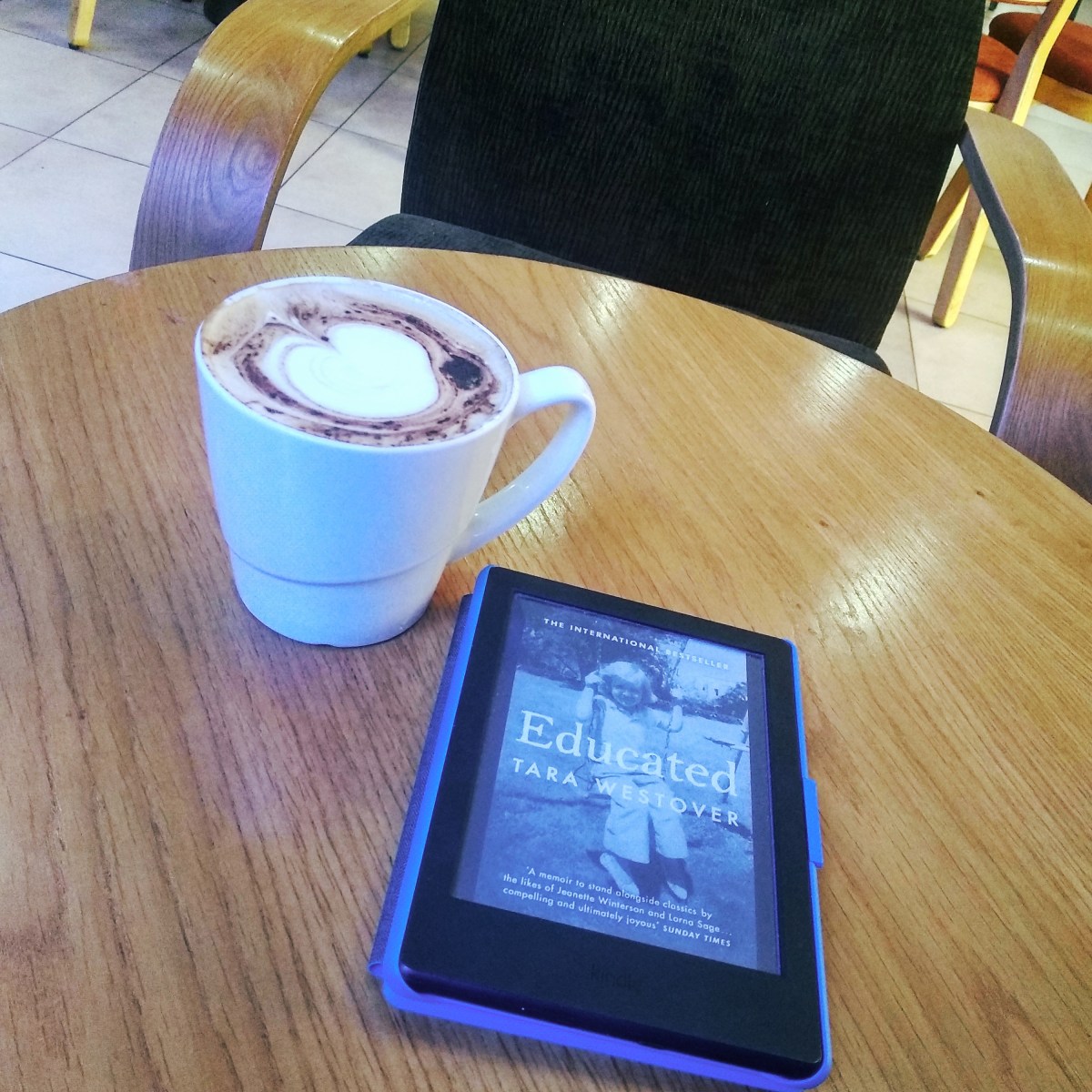
Educated by Tara Westover – Books Tea and More

Genre: Nonfiction (Memoir)
Publisher: Penguin Random House
Format: E book
About the book:
The book is a memoir of Tara Westover who grew up in an orthodox Mormon family on Buck Peak, Idaho. Tara Westover has a Ph. D. from Cambridge, while some may wonder that yes this is praiseworthy but what is the novelty in it? The fact is Tara never attended school and while she was home schooled, the education she got at home involved only on Mormon saints and religious beliefs and no actual education. How then did Tara get the Gates scholarship and a Ph. D. from one the most coveted universities of the world? This book follows the heart wrenching story of Tara and her journey of being educated and discovering her true being.
My takeaways:
The book more than anything makes you understand how empowering education is. Very often the privileged us take the good education we got thanks to our parents in a stride and do not give it the importance it deserves. Education not only empowers but it can liberate one and change ones being.
It also made me question and ponder on what can be called actual education? Education that is didactic where beliefs are forced upon one and there is no room for doubt can this be called education? True Education should allow one to question and find answers and form ones one opinion.
This book helped me realize how when we human beings suffer on a continuous basis and we do not have any form of support we become silent and internalize the pain. Very often we delude ourselves that we are actually not suffering at all.
An important theme the book touches upon is having people whose thoughts and beliefs are toxic for one. What if these people are our own family? We all know we need to get rid of people who are toxic but is this possible when it is family? The book shows how when we have toxic people and relations how often the impact is internal and we find fault in our self rather than the other person. Shunning relationships that are not good for one, needs gazillions of mental strength and the ruthless voice of the supportive people who scream at us saying this is the right thing to do.
One very important lesson I learned from this book is the need to seek help and advice from people. Very often I avoid taking advice and help for shame of ignorance. But, this book showed me how seeking help often actually opens opportunity. What would have happened if Tara never seeked help from the bishop or the professor? Would she be the women that penned this book today?
The book touches on many more theme like the nature of history, about historians, religious beliefs and fanaticism, and mental illness and their impact on family members if it remains unattended. But the above stated points were the ones that made me ponder and think a lot post reading this book.
Snippets from the book I am pondering on:
“Men like to think they’re saving some brain-dead woman who’s got herself into a scrape. All I had to do was step aside and let him play the hero!”
“From my father I had learned that books were to be either adored or exiled. Books that were of God—books written by the Mormon prophets or the Founding Fathers—were not to be studied so much as cherished, like a thing perfect in itself. I had been taught to read the words of men like Madison as a cast into which I ought to pour the plaster of my own mind, to be reshaped according to the contours of their faultless model. I read them to learn what to think, not how to think for myself. Books that were not of God were banished; they were a danger, powerful and irresistible in their cunning.”
“The most powerful determinant of who you are is inside you,” he said. “Professor Steinberg says this is Pygmalion. Think of the story, Tara.” He paused, his eyes fierce, his voice piercing. “She was just a cockney in a nice dress. Until she believed in herself. Then it didn’t matter what dress she wore.”