Things to do and see in Regensburg, Germany

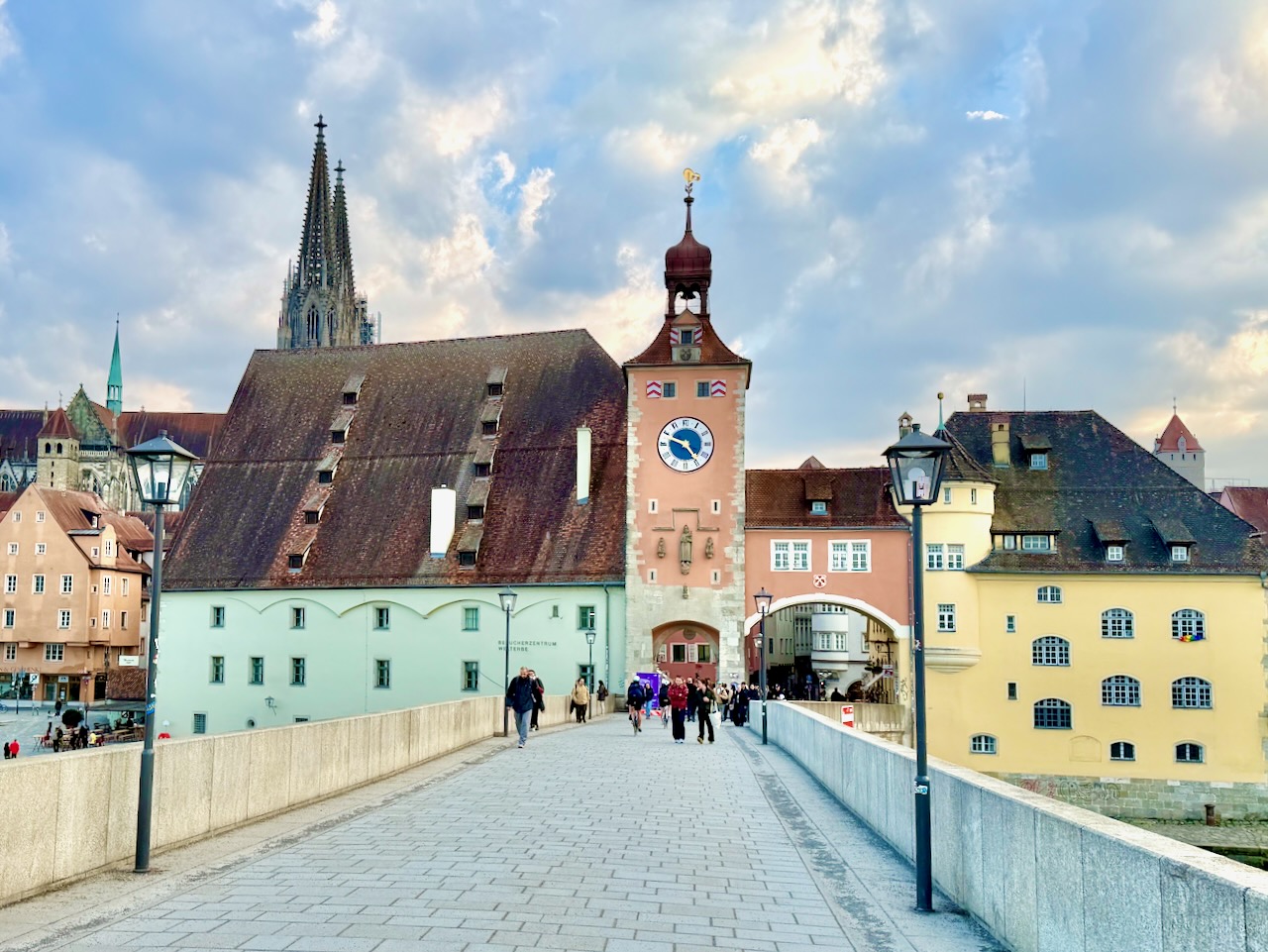
Regensburg is a historic city in Bavaria on the banks of the Danube River. Whilst there are cities that impress you with a few monumental sights, there are cities like Regensburg, where almost every turn reveals another layer of history. Walking through its old town feels a bit like taking a step back in time: medieval towers rise above narrow lanes, grand patrician houses line atmospheric squares and the Danube flows swiftly beneath one of Europe’s great medieval bridges. Yet Regensburg isn’t simply a museum. Its historic centre is filled with cafés, restaurants and shops, giving the city an easy-going vibe that makes it a pleasure to explore. There are many things to do in Regensburg: you can spend a morning admiring Gothic architecture, stop for coffee in a lively square, wander along the Danube in the afternoon and finish the day with a hearty Bavarian meal and a local beer.


Regensburg is one of my favourite cities in Bavaria for precisely this reason. I first visited the city during a Danube River cruise from Budapest to Nuremberg, but I got to see more of the city during my recent southern Germany rail tour, a partnership with Historic Highlights of Germany. This last visit to Regensburg reminded me why I love the city, and added a few more reasons.
A brief history of Regensburg
Regensburg’s history stretches back almost 2,000 years. The Romans established the military camp of Castra Regina here in AD 179 under Emperor Marcus Aurelius, strategically positioning it along the Danube frontier of the Roman Empire. Parts of the Roman fortifications can still be seen today, including the impressive Porta Praetoria.

After the Roman period, Regensburg grew into an important medieval trading centre thanks to its strategic position on the Danube. Long-distance trade brought enormous wealth to the city, and wealthy merchants built the tall patrician houses that still give the old town its distinctive skyline. Regensburg became a Free Imperial City in 1245 and later played an important political role within the Holy Roman Empire. From 1663 to 1806, the Perpetual Imperial Diet met in the city’s Old Town Hall, effectively making Regensburg a political centre of Europe for almost 150 years.

Remarkably, the historic centre survived WWII with much of its medieval fabric intact. Today, Regensburg’s Old Town and Stadtamhof form a UNESCO World Heritage Site, recognised in 2006 for their exceptional concentration of historic buildings and monuments. In 2021, the city’s Roman heritage gained additional recognition when the Danube Limes was added to the UNESCO World Heritage list.
When to visit Regensburg
My latest visit to Regensburg was in late-March. It was chilly but as you can see from the photos below, the weather was beautiful and it wasn’t crowded. April to June, and September, are considered to be the best months to visit Regensburg. The city is lively but generally less busy than in summer, temperatures are comfortable, and the parks and riverbanks are beautifully green. Great for walking and outdoor cafés. If you want to experience the city at its most atmospheric, December is also worth considering for the Christmas markets.
Regensburg is often described as Germany’s best-preserved medieval city, and with more than 1,000 monuments within the UNESCO area, it is easy to understand why. I loved strolling through the old town, with its charming cobbled streets and lanes, vibrant squares, colourful houses and medieval towers. Despite its deep history, Regensburg feels lively and welcoming, with cafés and squares full of energy.
Here are the top things to see and do in Regensburg – I’ve pinned the main attractions on the map below and included a suggested walking route. I’ve also added my restaurant recommendations.
1. Wander around the medieval Old Town
This is my favourite thing to do in Regensburg: simply wander. You’re welcome to follow the walking route in the map above but venture off the route into the atmospheric lanes, especially in the area between Bismarckplatz and the Cathedral. I can also recommend a guided walking tour filled with stories of Regensburg’s colourful past.

The UNESCO-listed old town is wonderfully compact, making it easy to explore on foot. There are narrow lanes, small courtyards, hidden passages and grand merchant houses around almost every corner. The city’s medieval prosperity is particularly evident in its tall patrician towers, built by wealthy merchant families who wanted their homes to reflect their status.


Wander along some of my favourite streets such as Wahlenstrasse (spot the Goldener Turm – ‘Golden Tower’), Goliathstrasse (with its famous Goliath House – a 13th century patrician house made famous by the painting of David and Goliath on its façade), Hinter der Grieb and Bachgasse.
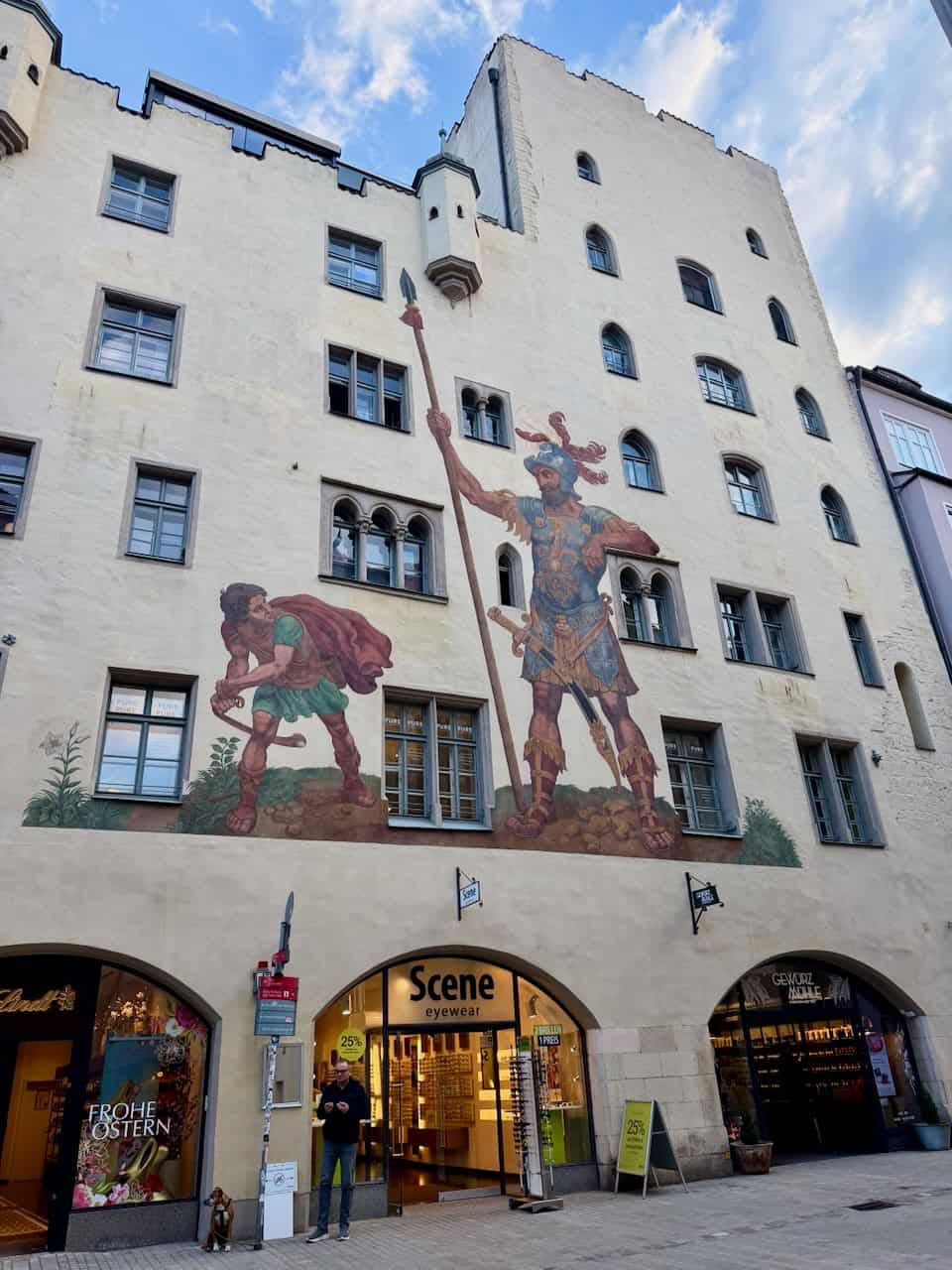
Just off Goliathstrasse, the 13th century Baumburger Turm towers high above a quiet lane. Further in the lane, you’ll find a plaque that marks the house (Watmarkt 5) where Oskar Schindler and his wife lived after WWII. Schindler, who saved 1,200 Jews during the war, lived in Regensburg for several years before migrating to Argentina.

Haidplatz and Neupfarrplatz are some of the most beautiful squares in the city, surrounded by historic buildings and lively cafés. Bismarckplatz is another good place to pause, particularly if you enjoy watching everyday life unfold around you. Near Bismarckplatz, you’ll find the 11th century St. James’ Church. Founded by Irish, and later Scottish monks, this Romanesque church is famous for its Scottish Doorway, an impressive stone archway adorned with elaborate carvings.

A detour to the east (and back)
At the eastern end of the old town stands the imposing Ostentor, a 13th century gate. If you’ve ventured to this corner of the old town, I suggest returning to the centre via the lush Villa Park. Then continue along the Danube River westwards on the Marc-Aurel-Ufer (a riverside path). Along the way, you’ll pass gardens and medieval towers, including the sinister Anatomy tower.

2. Walk across the Stone Bridge
One of the most famous monuments in Regensburg is the Stone Bridge, or Steinerne Brücke. Built between 1135 and 1146, this magnificent medieval bridge stretches for around 300m across the Danube. It was for centuries the only reliable bridge crossing the river in the region and is regarded as the oldest preserved stone bridge in Germany. Three towers once guarded the bridge but only one remains, the Bridge Tower (Brückturm) on the city side.
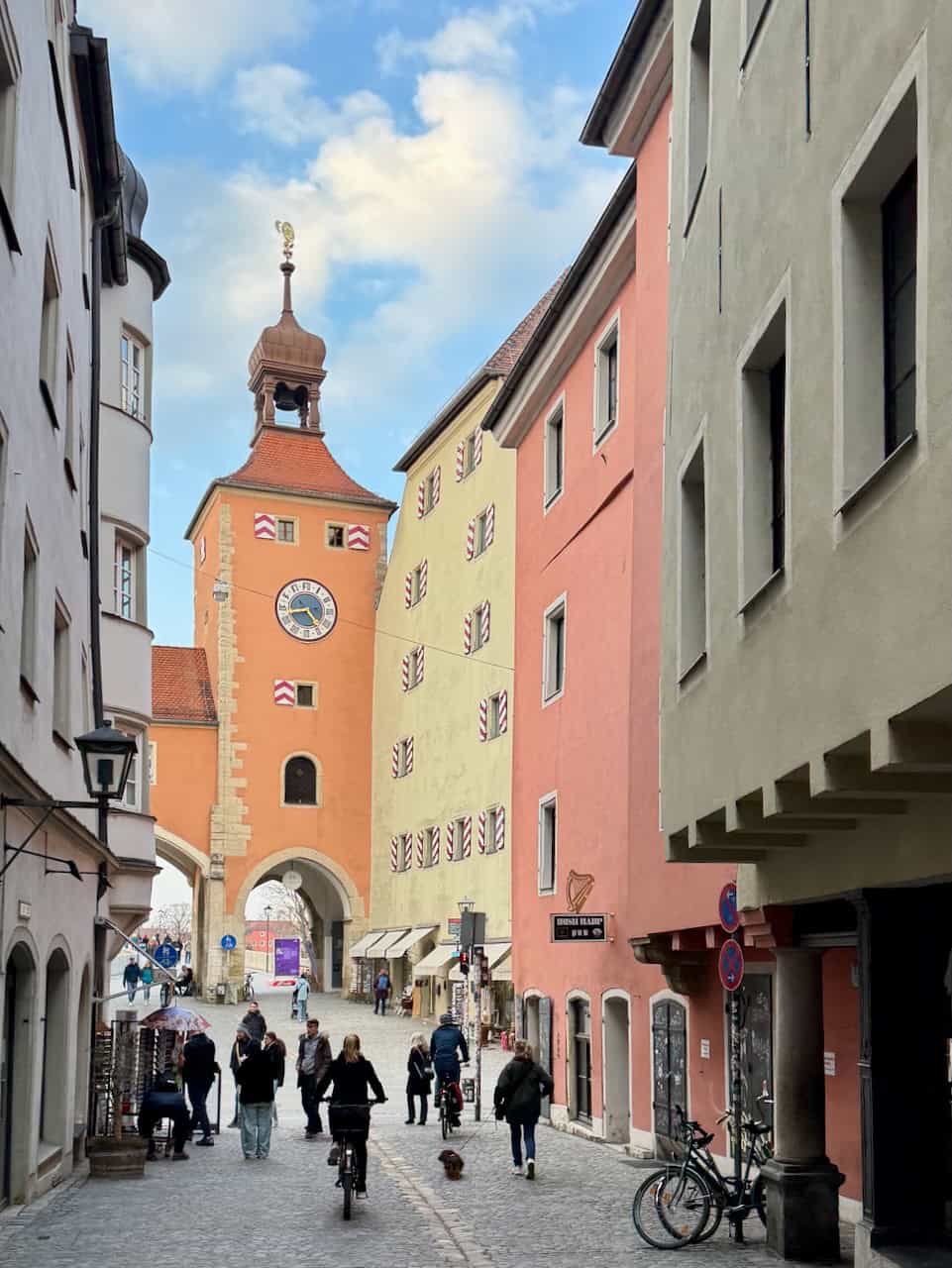
Walking across it – one of the top things to do in Regensburg – gives you one of the classic views of the city skyline. The bridge is particularly atmospheric in the early morning or late afternoon, when the light softens the old stone and the Danube takes on a silvery sheen.

Look back towards the old town and you’ll see the Cathedral towers rising above a jumble of medieval rooftops. Ahead lies Stadtamhof, a former independent settlement on the other side of the river.

Look out for the little figure known as the Bruckmandl, or bridge man, sitting on the highest point of the bridge. He gazes towards the cathedral and is associated with a wonderfully dramatic local legend involving a bet between the bridge and cathedral builders and, naturally, the Devil.
3. Admire St. Peter’s Cathedral
Dominating the old town is the magnificent St. Peter’s Cathedral, one of the great Gothic churches of Germany. Construction began in the 13th century, but work stalled in the early 16th century when funds ran out. For more than 350 years, the cathedral stood with unfinished towers. The soaring towers you see today were completed only in the 19th century, during a major restoration ordered under King Ludwig I of Bavaria.
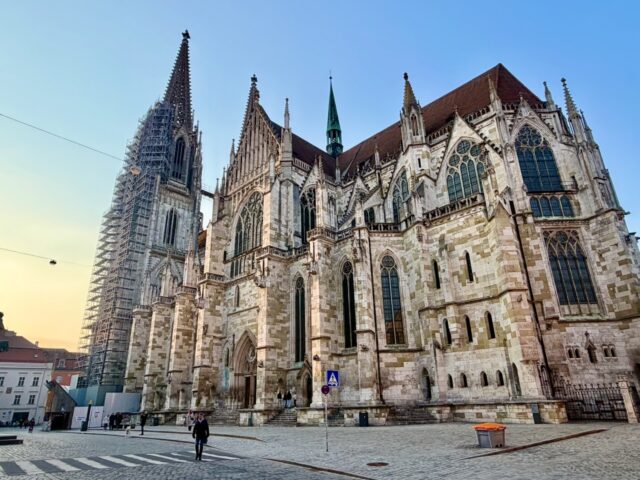
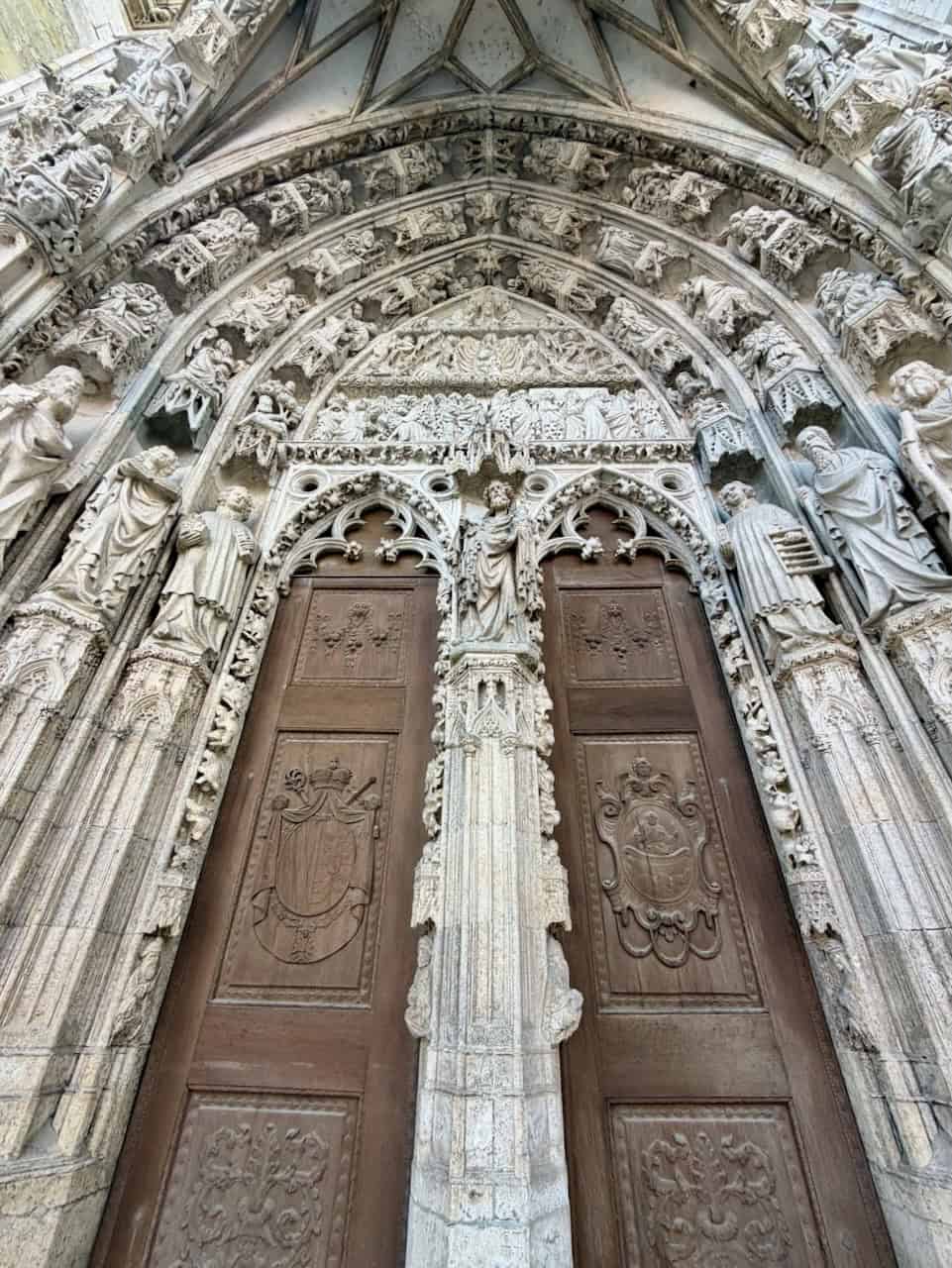
Step inside and the first thing you’ll probably notice is the extraordinary collection of medieval stained-glass windows. Dating mainly from the 13th and 14th centuries, they fill the cathedral with colourful light. Regensburg Cathedral has one of the largest surviving collections of medieval stained glass in Germany.

Take your time here. The cathedral is not merely an impressive Gothic monument; it is one of those places where the details reward a slower look. To learn more about its many stories, I suggest booking a guided cathedral tour at the Info Center (Domplatz 5).
4. Visit the Old Town Hall
At the heart of the old town stands the imposing Old Town Hall, with its distinctive tower overlooking Rathausplatz. The complex dates from different periods, with the oldest section of the tower dating to the 13th century and the Reichssaal, or Imperial Hall, added in the early 14th century.

This is where Regensburg’s political importance in Europe really comes to life. From 1663 until 1806, representatives of the territories of the Holy Roman Empire assembled in Regensburg – forming the Perpetual Imperial Diet – to debate and negotiate political matters. Today, guided tours take visitors through the historic rooms, including the Imperial Hall and the old deliberation rooms.
5. Find the Roman remains
It’s easy to think of Regensburg purely as a medieval city, but look a little closer and you’ll discover that Roman history is embedded in its foundations. I found it fascinating to chance upon the occasional slice of Roman history in the streets. The Porta Praetoria is the most striking reminder. This was the northern gate of Castra Regina, the Roman legionary camp established in AD 179. Its enormous stone blocks are incorporated into the medieval architecture centuries later, creating a wonderful juxtaposition of Roman and medieval history. It’s also one of the few surviving Roman gates north of the Alps, along with the impressive Porta Negra in Trier.
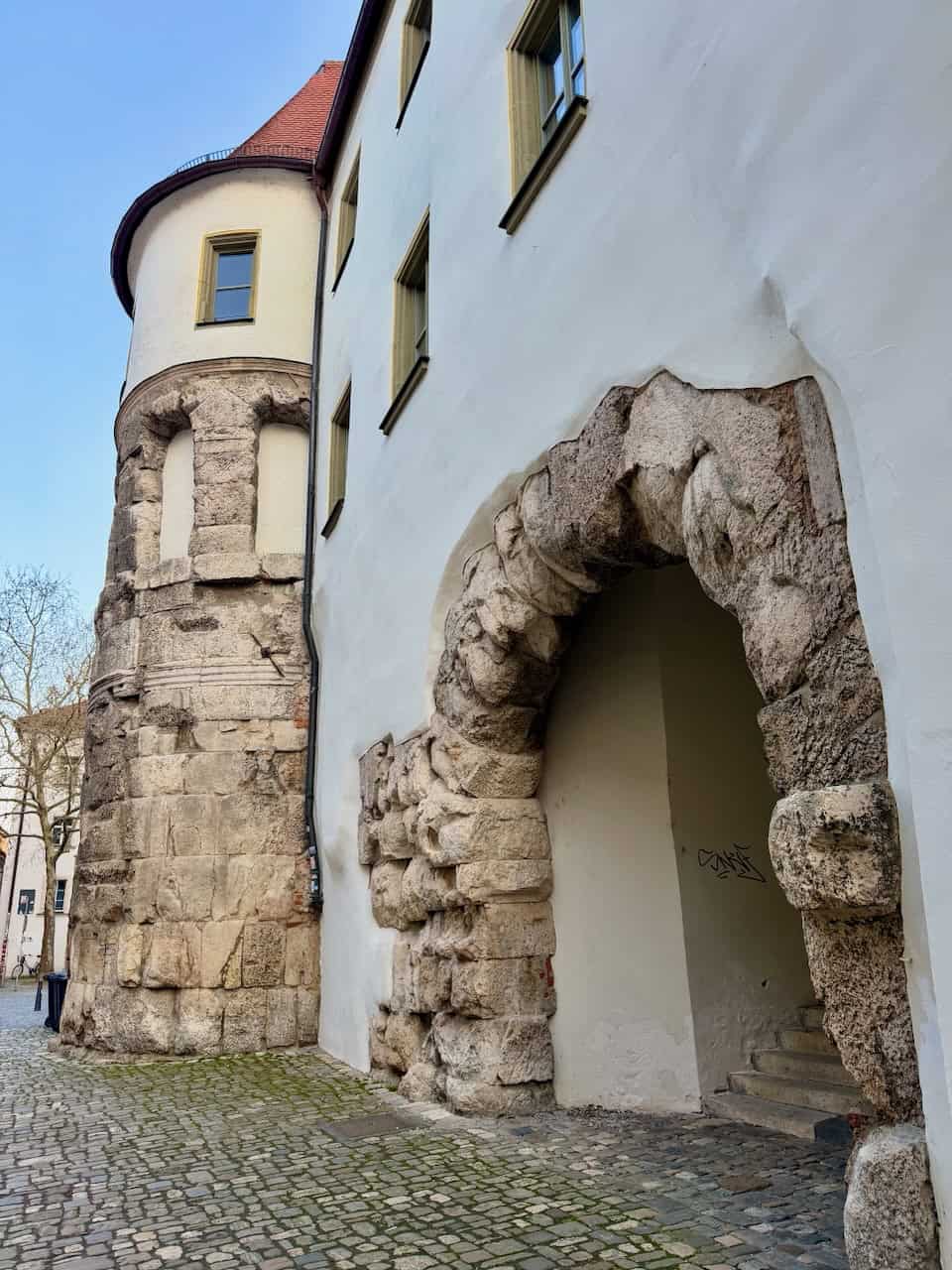
Continue along Unter den Schwibbögen (street) towards the House of Bavarian History and you’ll find more Roman remains, marked by Document Legionslagermauer (legion camp wall).

For a deeper look at the Roman past, visit the Document Neupfarrplatz or Document Niedermünster. At Niedermünster, archaeological remains beneath the church reveal successive layers of Regensburg’s history, from the Roman military camp through to the medieval period. At Neupfarrplatz, archaeological remains of Castra Regina lie several meters beneath the modern square. The site also has a fascinating connection to Regensburg’s Jewish history, with the medieval Jewish quarter documented here as early as around AD 1000.
6. Step into the churches
Many of Regensburg’s historic churches are a treasure trove for those – like me – who love Gothic, Baroque and Rococo architecture. One church I found particularly impressive was the Basilica of the Nativity of Our Lady. Built as part of an abbey in the 11th century, the basilica is one of the oldest and most important Catholic churches in Bavaria. In the 18th century, it received a Baroque/Rococo makeover, which is what visitors see today.
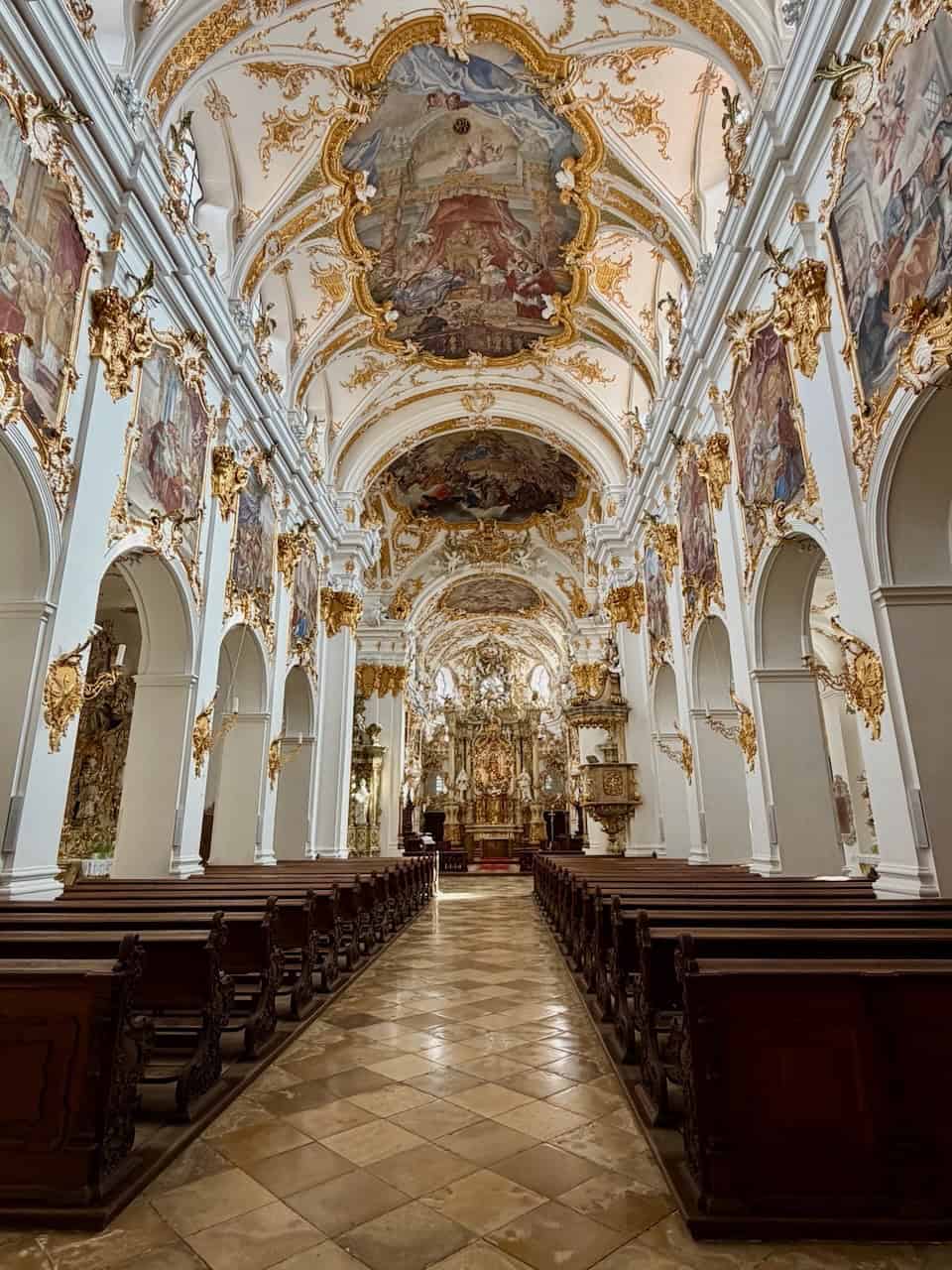
The Church of the Holy Trinity is a 17th century single-nave church in the early-Baroque style. What makes this church particularly interesting is its pillar-less nave and suspended wooden galleries. It’s also possible to climb the church tower for beautiful views of Regensburg.

During one of my walks across the Old Town, I stumbled upon the 9th century (!) Parish Church of St. Cassian. Its exterior is pretty unassuming but I stepped inside and found a stunning, elaborately decorated nave with Baroque/Rococo stuccowork and frescoes. It was simply breathtaking.


Another church that is worth a visit is the Lower Minster Parish Church, located behind St. Peter’s Cathedral. This 12th century church has an impressive nave, beautiful artwork and Roman ruins. It’s also the venue of the popular Candlelight concerts.

7. Indulge in Bavarian cuisine
No visit to Regensburg would be complete without eating a sausage or two, and trying other Bavarian specialties… with a beer or two.

The Historische Wurstkuchl, or Old Sausage Kitchen, has been around since the 12th century. It sits beside the Stone Bridge and is one of the city’s most famous culinary institutions. For centuries, it has fed travellers, workers and visitors crossing the Danube.

Order the grilled sausages with sauerkraut and mustard, find a seat outside if the weather is good, and enjoy one of those simple travel moments that somehow becomes a lasting memory.

Other Bavarian restaurants I can recommend include Gaststätte Gravenreuther (try their delicious ‘Bavarian tapas’, a platter with sausages, fried dumplings and vegetables) and Hacker-Pschorr Wirtshaus (roast pork, schnitzels, dumplings and beer in an ancient monastery). I’ve pinned more restaurant recommendations on the map above.

8. Visit the St. Emmeram Thurn und Taxis Palace
For something completely different, visit the magnificent Princely Palace of Thurn und Taxis. The palace occupies the former Benedictine monastery of St. Emmeram and was transformed into a residence for the Thurn und Taxis family. The family became enormously wealthy through their involvement in the European postal system, and their residence in Regensburg reflects that wealth.
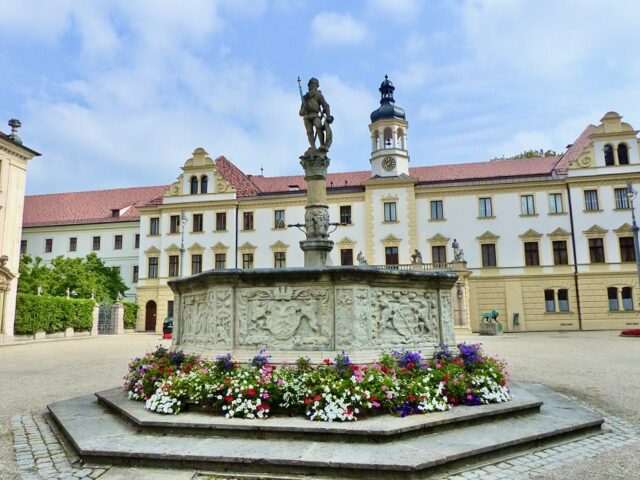
The contrast with the medieval streets outside is striking. Inside, you’ll find lavish rooms, ornate furnishings and an altogether more opulent side of Regensburg’s history. If you have time, I suggest going on a guided tour.
9. Visit a museum or two
A lovely museum to start with is the UNESCO World Heritage visitor centre. Located in a 17th century salt warehouse on the banks of the Danube (next to the Stone Bridge), this museum provides an interesting and interactive overview of Regensburg’s history. Admission is free and they also offer free guided tours.

If you’re interested in understanding Bavaria beyond its castles, beer gardens and clichés, the House of Bavarian History is worth a visit. Located near the Danube, this modern museum traces the history of Bavaria from the 19th century to the present day. The displays combine historical objects, multimedia and engaging storytelling, making it an excellent complement to Regensburg’s medieval monuments.

Down the road, the Historical Museum of Regensburg has an impressive collection of religious relics and art from the Stone Ages right up to modern times, with a special emphasis on the Roman times.
Document Kepler is another museum worth visiting. Dedicated to the life and work of Johannes Kepler, a 17th century astronomer and polymath, this small museum is absolutely fascinating.
For something a bit more lighthearted, head for the Dackelmuseum. This quirky museum is a must-visit for lovers of dachshunds (yes, the dog breed).

10. Walk along the Danube
Eventually, give yourself a break from sightseeing and simply follow the river. The Danube is such an important part of Regensburg’s identity that you shouldn’t leave without spending some time beside it. Walk along the riverbanks, sit on the grass and watch the boats glide past, or cross one of the bridges to Wöhrd (an island in the river) or Stadtamhof for a different perspective of the old town.

11. Take a trip to Walhalla
If you’re staying in Regensburg for more than a day (and I recommend that you do), consider making the short boat trip to Walhalla, a spectacular neoclassical memorial overlooking the Danube east of the city.

Commissioned by King Ludwig I of Bavaria, Walhalla was inspired by ancient Greek temples and is lined with busts and memorials to important figures from German-speaking history and culture. The building itself is impressive, but the setting is the real reason to visit. Perched high above the Danube, it offers expansive views across the surrounding countryside.
It is a wonderful contrast to the medieval streets of Regensburg and makes an easy half-day excursion.
12. Spend an evening in Regensburg
One of the things I enjoy most about Regensburg is that the city doesn’t empty out when the day-trippers leave. As evening approaches, the old town takes on a different atmosphere. The crowds thin, the façades are softly illuminated and the squares fill with locals enjoying dinner and drinks. Find a table at one of the restaurants in the old town, order some Bavarian specialities and a local beer, and let the day wind down.

Regensburg: a city made for slow exploration
Regensburg has an extraordinary concentration of history, yet it doesn’t feel frozen in time. This is a living city, with a young population, a lively café and restaurant scene and plenty happening beyond its historic centre.

Give yourself at least two days to explore Regensburg properly. Better still, slow down and stay a little longer. Walk without a map, sit beside the Danube, linger over lunch and allow the city to reveal itself at its own pace.
For me, that’s when Regensburg is at its best.
Two-day Regensburg itinerary
Regensburg can easily be covered in 2-3 days. Here’s a suggested 2-day itinerary:
Day 1:
- Morning: start the day at St. Peter’s Cathedral
- Morning – afternoon: follow my walking route across the old town. Stop for lunch at the Old Sausage Kitchen.
- Evening: soak up the evening ambiance in the old town and tuck into a hearty Bavarian meal (see my restaurant recommendations on the map above).
Day 2:
- Morning: enjoy a Danube cruise to Walhalla
- Afternoon: after lunch, join a guided tour of the St. Emmeram Palace
- Evening: if you’re spending an extra night in Regensburg, I suggest attending a classical concert in the Trinity Church or a Candlelight concert in the Lower Minster Parish Church. Check at the tourist office for info and tickets.
Where to stay in Regensburg
I stayed at the lovely Hotel Das Regensburg in the historic centre yet just a 7-minute walk from the train station. There’s also a parking garage next door to the hotel.
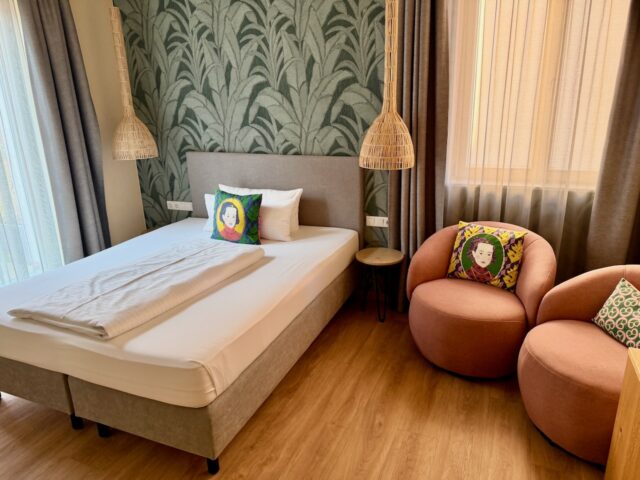
The hotel has spacious rooms with very comfortable beds, a lovely courtyard and a cheery breakfast room. I especially love how the hotel pays hommage to Barbara Blomberg, a Regenburger in the 16th century who rose to prominence from a simple background.
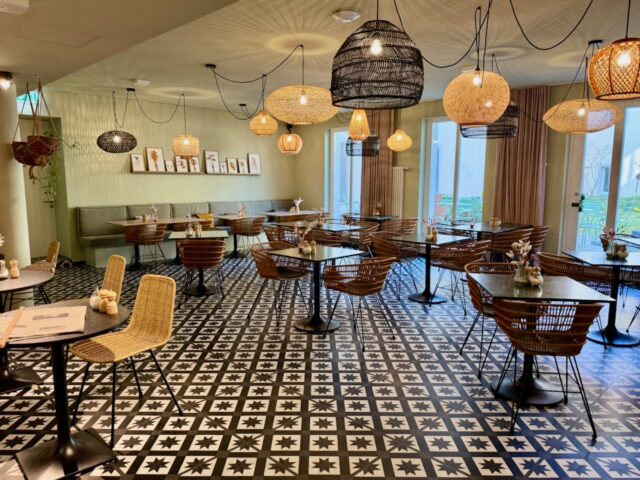
Other accommodations I can recommend in the city centre include Hotel Goldenes Kreuz (a historic hotel where European royals used to stay) and L’Ostello (a gorgeous hotel just a 5-minute walk from the Cathedral). Find your accommodation in Regensburg.

How to get to Regensburg
Regensburg is a ±2 hour train ride from Munich. If you’re driving, there are numerous parking garages at the edges of the old town. In addition, some hotels offer onsite parking.
Read more about other Historic Cities of Germany
Note: my visit to Regensburg was made possible in partnership with Historic Highlights of Germany. As always, all views expressed above are mine, and mine only.