As Asia’s foreign exchange (FX) markets open further to global capital, the need for safe, resilient and efficient post-trade infrastructure is growing.
Asia is a compelling yet complex destination for institutional FX participants, offering deep liquidity and strong economic fundamentals amid diverse regulatory frameworks and evolving market structures.
Three of the world’s five largest FX centers – Singapore, Hong Kong and Tokyo1 – are in Asia. Robust economic growth continues to drive cross-border investment and increased demand for FX trading and currency hedging2.
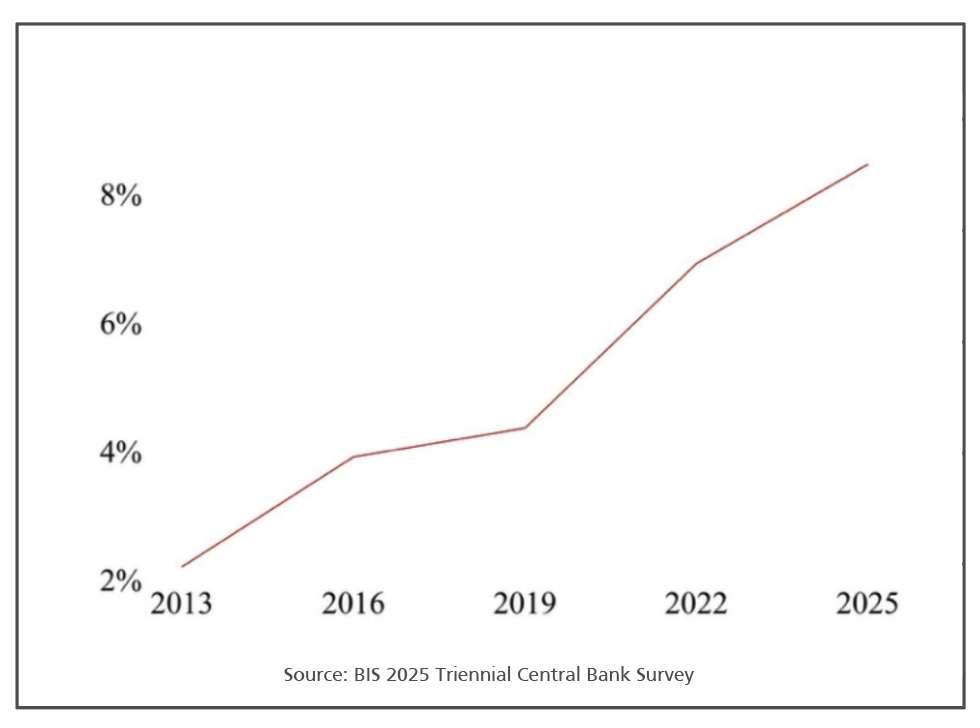
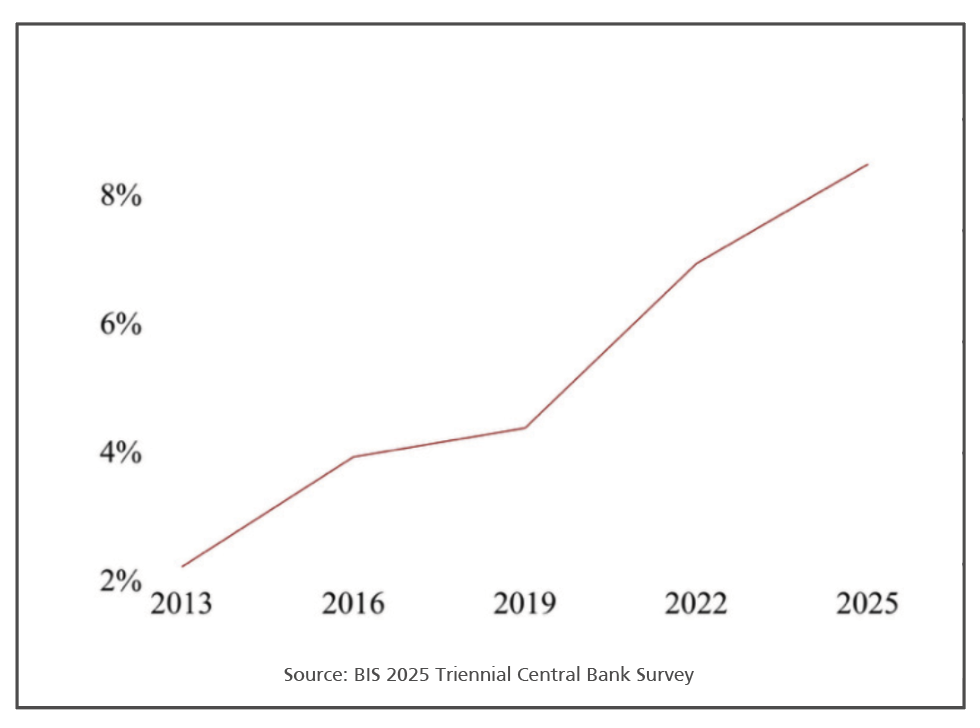
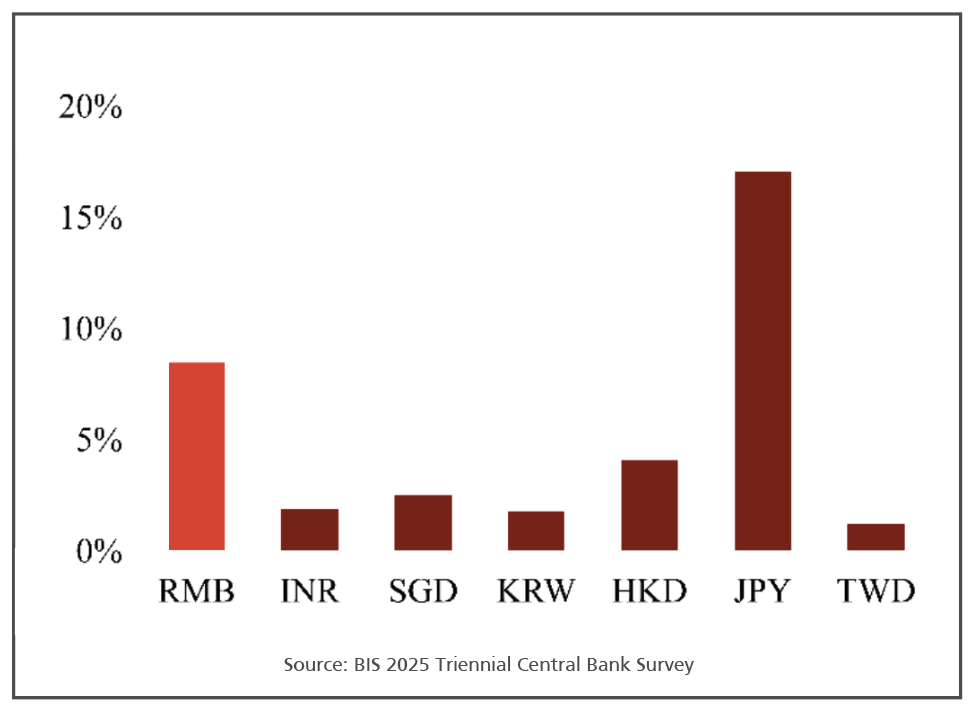
Asian currencies are also playing a more prominent role in global FX markets as their footprints continue to expand. CLSNet data shows sustained growth in trading volumes across Asian currencies, particularly offshore renminbi, mirroring trends identified by the Bank of International Settlements (BIS).
The latest BIS Triennial Survey shows that the renminbi accounted for 8.8% of global FX turnover in April 2025, up from around 7% three years earlier, making it the world’s fifth most traded currency.
A region opening on its own terms
As these dynamics evolve, authorities across Asia are assessing how to increase accessibility and participation in their FX markets while retaining control over their domestic economies.
Across the region, markets are upgrading infrastructure and updating regulatory frameworks to encourage foreign participation and capture growing capital flows. India, for example, continues to expand its bond markets and promote greater international use of the rupee3. Indonesia is deepening and strengthening its onshore FX and hedging markets to better manage foreign investors4. The most interesting example, perhaps, is South Korea.
Within just a few decades, South Korea has transformed into a G20 economy. Yet it remains classified as an emerging market in key global indices, largely due to limitations around market accessibility, particularly in FX. These indices significantly impact how global funds allocate trillions of dollars of investment across international markets.
To support reclassification as a developed economy, South Korea has embarked on a series of reforms to liberalize its currency, the won (KRW), and align its market infrastructure more closely with international standards. These reforms include extended trading hours and new frameworks to give offshore participants more direct access to KRW, addressing longstanding barriers identified by international investors.
As a result, many market participants are expanding operations to Seoul. Since KRW went live in the CLS settlement system in 2003, CLS has supported its settlement member banks to onboard the currency for FX settlement, and when requested enabling new onshore submission centers from which settlement instructions can be submitted to CLS. Singapore-based United Overseas Bank, for example, an existing settlement member is now onboarding KRW, extending settlement risk mitigation in the CLS settlement system to its onshore and offshore activity.
Safety at scale
The full extent of KRW’s liberalization on foreign investment flows remains to be seen, but the direction of travel is clear. South Korea reflects a broader regional trend towards expanding market participation and addressing the growing need for a standardized operational and settlement infrastructure that can support it safely.
Opening markets is one step; ensuring that they function safely at scale is another. Across Asia, the operating environment for FX is becoming more complex. Trading volumes are increasing, participation is broadening and liquidity is becoming more interconnected across markets and currencies.
At the same time, regulatory approaches remain diverse, reflecting different stages of market development and policy priorities.
Asia’s fragmented and complex landscape highlights the need for operational resilience and effective risk management.
Automated post-trade solutions are therefore critical, enabling efficiency and strengthening resilience while helping firms mitigate settlement risk and optimize liquidity as they scale across markets.
Infrastructure as a growth enabler
Growing adoption of CLS post-trade services across Asia reflects these changing market dynamics. Regional uptake of CLSNet, CLS’s bilateral payment netting calculation service, continues to increase with four large banks joining. Standard Chartered has recently gone live on the service, while Maybank, CTBC Bank Hong Kong and Taishin Bank have all committed to joining.
In H1 2026, CLSNet recorded average daily netted values of USD183 billion, an 8% year-on-year increase on H1 2025. Growth was driven by expanded participation and increased activity in Asian currencies, particularly USD/CNH, as market participants sought more efficient ways to reduce payments exposed to settlement risk and improve intraday liquidity.
In Asian markets including South Korea, direct trading against CNH is becoming more common as governments encourage its use. CLSNet can support the bilateral payment netting calculation process for these trades, helping participants improve operational efficiency while reducing settlement risk and enhancing intraday liquidity.
These developments point to a broader objective for FX market participants operating in Asia: strengthen operational resilience as markets evolve.
In the past year, CLS has continued to engage with Asian central banks, regulators and standard-setting bodies to strengthen market stability and reduce systemic risk.
Growing participation in CLSSettlement and CLSNet demonstrates demand from the industry for solutions that support risk mitigation, automation and operational resilience.
As Asia’s FX markets evolve, resilient infrastructure is just as important as market access.
1 https://data.bis.org/topics/DER/tables-and-dashboards/BIS,DER_D11_5,1.0
2 https://www.imf.org/en/blogs/articles/2025/10/16/asias-economic-growth-is-weathering-tariffs-and-uncertainty
3 https://www.reuters.com/world/india/indias-central-bank-proposes-boost-international-usage-rupee-2025-10-01/
4 https://www.bis.org/publ/bppdf/bispap113_j.pdf