50 places to visit on an Antarctic Peninsula cruise

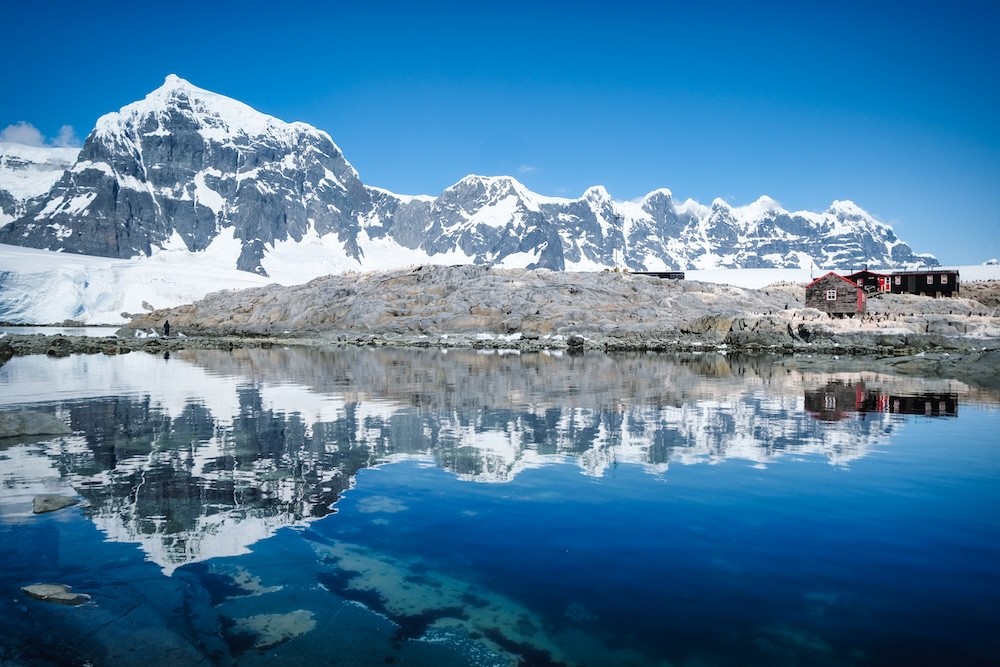
From immense penguin colonies to abandoned research stations, these are the most memorable places to visit on an Antarctic Peninsula cruise
I first travelled to Antarctica in 2022, sailing across the Drake Passage and down the Antarctic Peninsula on a short expedition voyage. My second visit was rather different. Instead of spending a few days travelling between landing sites, I spent an entire season living and working at Port Lockroy as a wildlife monitor for the UK Antarctic Heritage Trust.
For over three months, Goudier Island was home. I counted gentoo penguins, recorded nesting success and watched expedition ships arrive from across the world. That season at Port Lockroy also inspired my debut book, Counting Penguins, which tells the story of life on the island and what I learned from spending a summer among its gentoo penguins.
Between these experiences, I have been fortunate enough to visit many of the places below. Others remain firmly on my Antarctic wish list.

50 of the best places to visit on an Antarctic Peninsula cruise
No two voyages follow exactly the same route. Landings depend on weather, sea ice, wildlife, operational restrictions and the decisions of the expedition team. Some destinations appear on most classic Antarctic Peninsula itineraries, while others are reached only on longer voyages to the Falkland Islands, South Georgia, the Weddell Sea or south of the Antarctic Circle.
Here are 50 of the best places to visit on an Antarctic Peninsula cruise.
Gateways and settlements
1. Ushuaia, Argentina
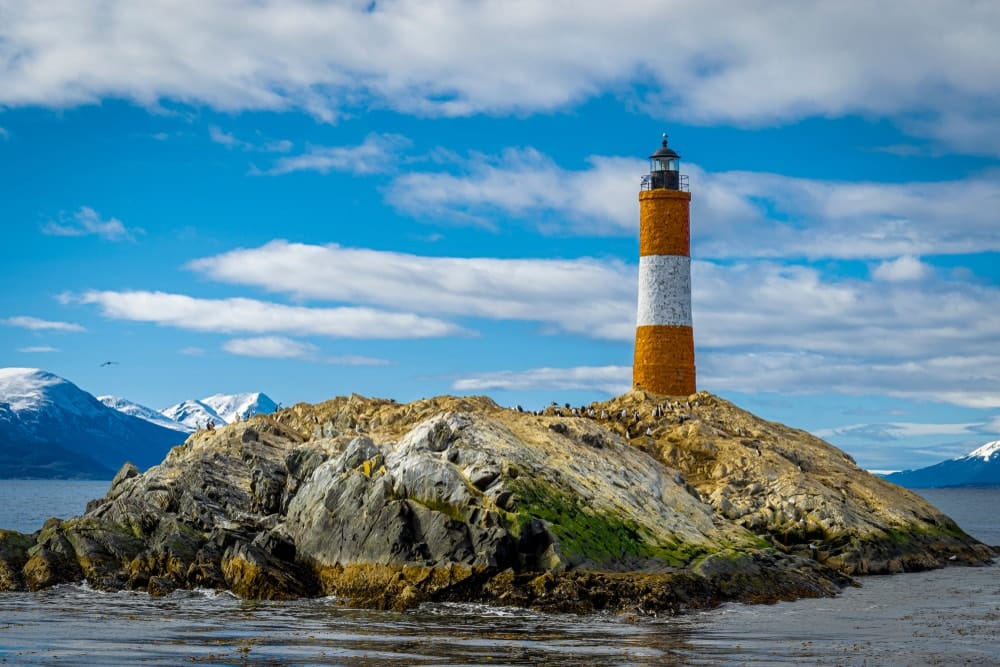
Most Antarctic Peninsula cruises begin in Ushuaia, the self-proclaimed southernmost city in the world. Expedition ships leave its harbour and sail east through the Beagle Channel before turning south towards the Drake Passage.
Surrounded by the mountains and forests of Tierra del Fuego, Ushuaia is worth exploring for at least a day before departure.
2. Punta Arenas, Chile
Punta Arenas is the principal gateway for Antarctic fly-cruises. Passengers typically fly from the city to King George Island, where they board an expedition ship and begin exploring the Antarctic Peninsula.
This option allows travellers to avoid at least one crossing of the Drake Passage.

3. Stanley, Falkland Islands
Stanley is the compact and colourful capital of the Falkland Islands. Attractions include Christ Church Cathedral, the Historic Dockyard Museum, the waterfront and the town’s distinctive British-style architecture.
Visits are usually included on longer itineraries combining Antarctica with the Falklands and South Georgia.
4. King George Island and the Fildes Peninsula
King George Island is home to several international research stations and the airfield used by most Antarctic fly-cruises.
Passengers generally travel through the Fildes Peninsula while transferring between the runway and their expedition ship. It provides an unusual introduction to Antarctica, with station buildings, vehicles and infrastructure standing against an otherwise wild polar landscape.
Historic Antarctic sites
5. Port Lockroy, Goudier Island
Port Lockroy is one of the best-known historic destinations on the Antarctic Peninsula. Established by Britain in 1944 during Operation Tabarin, the former research station is now operated by the UK Antarctic Heritage Trust.
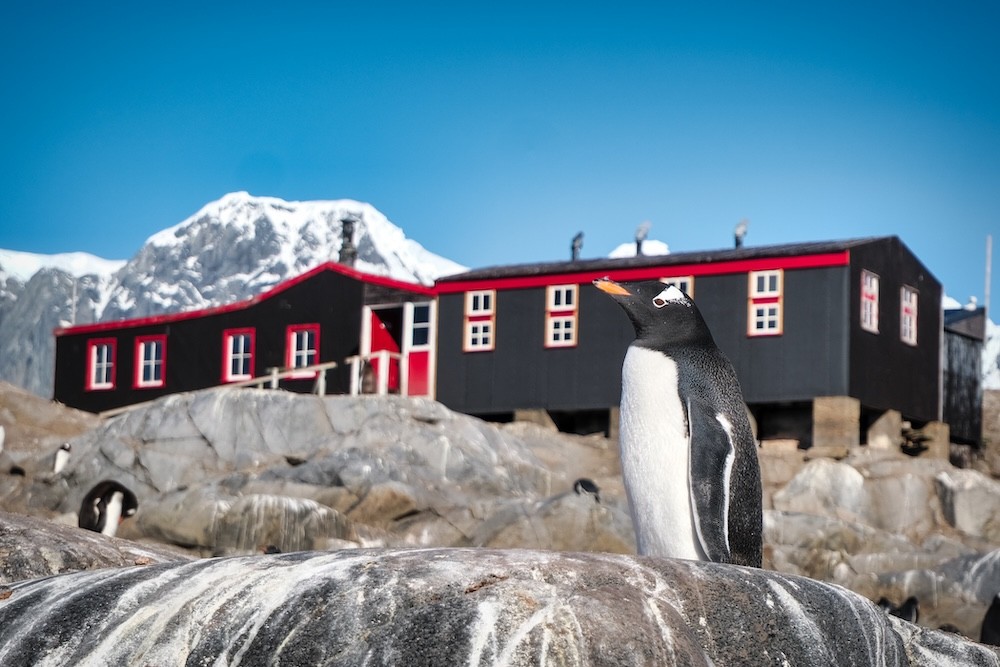
Visitors can explore the museum inside Bransfield House, send postcards from the world’s southernmost post office and visit the small shop. The island is also home to a substantial gentoo penguin colony.
6. Damoy Point and Damoy Hut
Damoy Hut once served as a British summer air-transit station for scientists travelling farther south. Personnel arriving by ship would wait here before being flown to Rothera Research Station when sea ice prevented vessels from reaching the base.

Today, visitors can explore the restored hut, see gentoo penguins and enjoy superb views across Dorian Bay.
7. Detaille Island
Detaille Island is home to Base W, a remarkably well-preserved British scientific station from the 1950s.
The base was evacuated hurriedly in 1959 when worsening sea ice threatened to trap the relief ship. Many everyday objects were left behind, giving the buildings the atmosphere of a genuine time capsule.
8. Stonington Island
Stonington Island was once an important centre of British scientific research, sledging, surveying and early aviation.
Base E operated during two separate periods and played a significant role in the exploration and mapping of the Antarctic Peninsula. The island also contains the remains of the former United States East Base.

9. Wordie House, Winter Island
Wordie House stands on Winter Island near Ukraine’s Vernadsky Research Base. The hut was named after Sir James Wordie, a geologist and member of Ernest Shackleton’s Imperial Trans-Antarctic Expedition.
Its modest wooden interior offers a glimpse of life at a small British Antarctic base during the late 1940s and early 1950s.
10. Horseshoe Island
Base Y on Horseshoe Island is one of the most complete surviving examples of a British scientific station from the 1950s.
The site contains living quarters, scientific equipment and personal possessions left by former occupants. It is generally visited on deep-south itineraries exploring Marguerite Bay.
11. Blaiklock Island Refuge
Blaiklock Island Refuge is a small British field hut connected to surveying and sledging expeditions around Marguerite Bay.
Its remote location means visits are uncommon, but the refuge remains an important reminder of the difficult field journeys undertaken by early Antarctic scientists and explorers.
12. Whalers Bay, Deception Island
Whalers Bay lies inside the flooded volcanic caldera of Deception Island. Rusting boilers, abandoned buildings, a makeshift graveyard and old storage tanks mark the remains of a former whaling settlement.

The site also contains the ruins of British Base B, which was damaged and eventually abandoned following volcanic eruptions during the late 1960s.
13. Grytviken, South Georgia
Grytviken is South Georgia’s leading historical destination. The former whaling station contains rusting industrial remains, a museum, a church and a cemetery.
It is also the burial place of Sir Ernest Shackleton, whose grave is visited by expedition passengers travelling around the island.
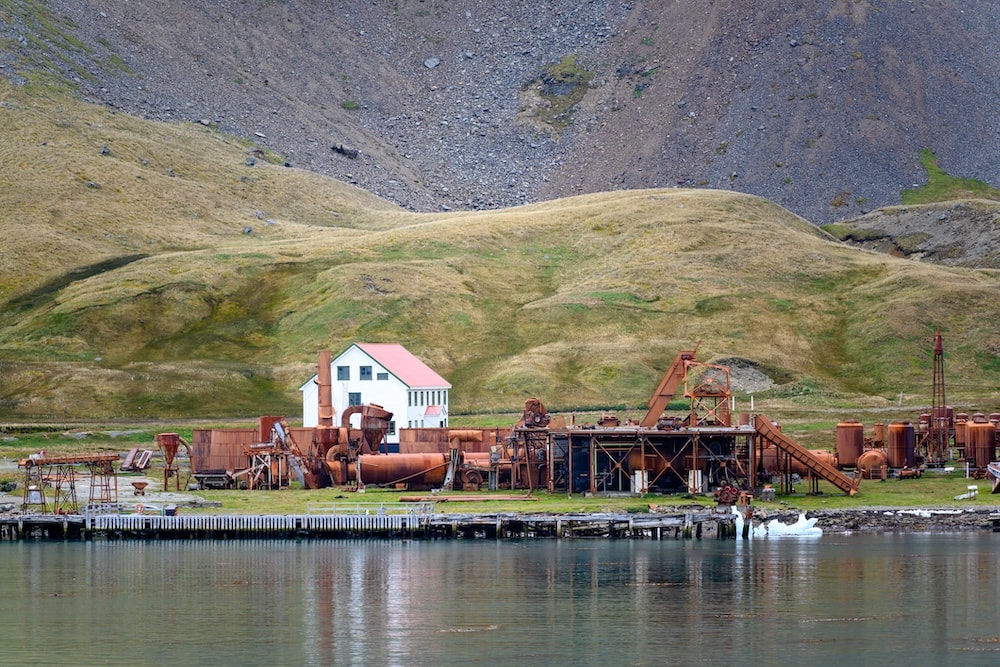
14. Stromness, South Georgia
The abandoned whaling station at Stromness is closely associated with Shackleton’s famous journey to rescue the men of the Endurance expedition.
After crossing South Georgia’s unmapped interior, Shackleton, Frank Worsley and Tom Crean descended towards Stromness in May 1916 and finally reached help.
15. Point Wild, Elephant Island
Point Wild is the bleak headland where 22 members of Shackleton’s Endurance expedition survived for more than four months.
The site is exposed and difficult to access, so most visits take place from the ship or by Zodiac rather than through a conventional landing.
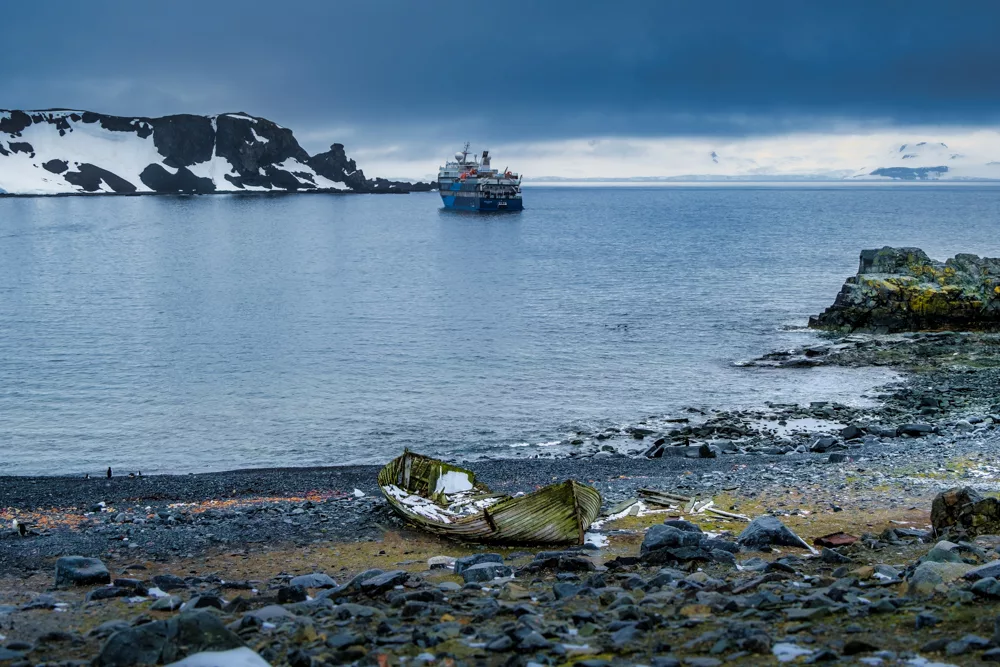
16. Paulet Island
Paulet Island contains the remains of a stone hut built by survivors of the Swedish Antarctic Expedition of 1901–04.
After their ship, Antarctic, was crushed by ice, the stranded men spent the winter on the island. Today, the historic ruins are surrounded by a vast Adélie penguin colony.
17. Port Charcot, Booth Island
Port Charcot was used as the winter anchorage of Jean-Baptiste Charcot’s French Antarctic Expedition from 1903 to 1905.
A cairn and other historic remains mark the expedition’s presence, while a climb above the landing offers outstanding views over Booth Island and the surrounding channels.
18. Snow Hill Island and Nordenskjöld’s Hut
Snow Hill Island contains the wooden hut used by Otto Nordenskjöld and members of the Swedish Antarctic Expedition.
The site lies in the Weddell Sea and is difficult to reach because of heavy sea ice. It is generally visited only by specialist vessels or expedition ships equipped with helicopters.
Wildlife destinations and island landings
19. Cuverville Island
Cuverville Island supports one of the largest gentoo penguin colonies on the Antarctic Peninsula. The island lies in the Errera Channel, surrounded by steep mountains, glaciers and iceberg-filled water. Shore landings and Zodiac cruises are both common.

20. Danco Island
Danco Island is a popular gentoo penguin landing in the Errera Channel.
A steady climb from the beach leads to panoramic views over the surrounding mountains, glaciers and islands. The elevated viewpoint makes Danco one of the region’s most rewarding short hikes.
21. Neko Harbour
Neko Harbour offers the rare opportunity to step onto the Antarctic mainland.
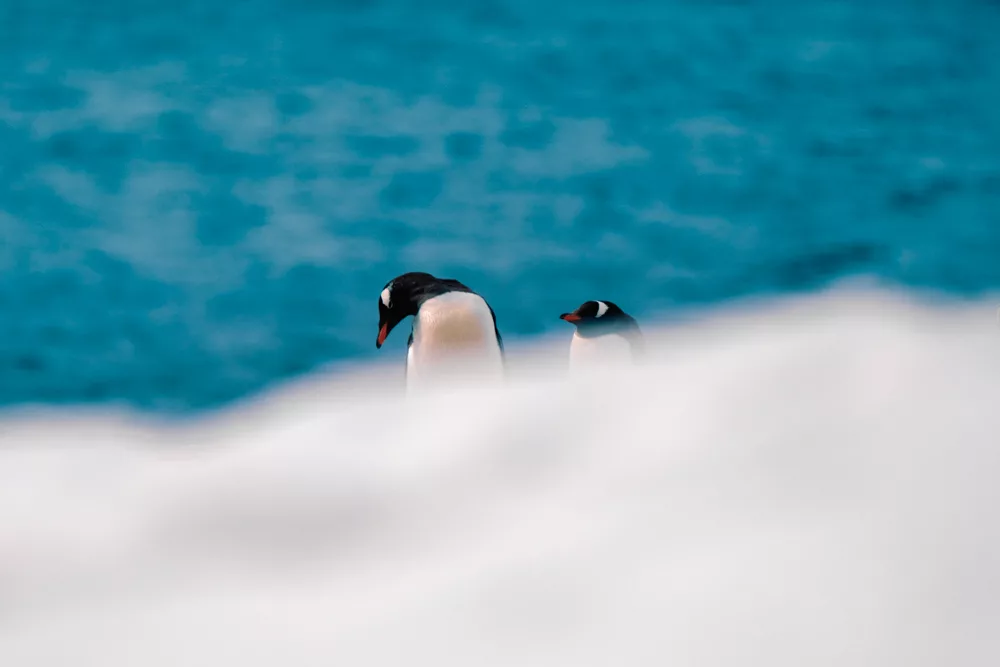
Gentoo penguins nest near the landing beach, while glaciers descend towards Andvord Bay. A climb above the shore provides sweeping views, although visitors must follow local guidance because of the risk of calving ice and waves.
22. Petermann Island
Petermann Island lies south of the Lemaire Channel and is home to gentoo and Adélie penguins.
The island has associations with early French exploration and offers striking views across the Penola Strait. It is often among the southernmost landings on a standard Peninsula itinerary.
23. Pléneau Island
Pléneau Island is another important gentoo penguin site, but the surrounding ice is often the main attraction.
Nearby shallows collect large grounded icebergs, creating an area sometimes known as the iceberg graveyard. Zodiac cruises weave between immense blocks of blue and white ice.
24. Jougla Point
Jougla Point sits across Alice Creek from Port Lockroy and is frequently included in the same visit. The site has gentoo penguins, historic whale bones and views towards Goudier Island. It also offers more space for walking than neighbouring Port Lockroy.

25. Half Moon Island
Half Moon Island is one of the most accessible places to see chinstrap penguins in the South Shetland Islands. The crescent-shaped island has rugged ridges, sweeping coastal views and dramatic scenery towards Livingston Island. Argentina’s seasonal Cámara Station also stands on the island.
26. Barrientos Island, Aitcho Islands
Barrientos Island is part of the Aitcho archipelago between Greenwich and Robert Islands. It supports colonies of both gentoo and chinstrap penguins, making it an excellent place to compare the two species at close quarters.
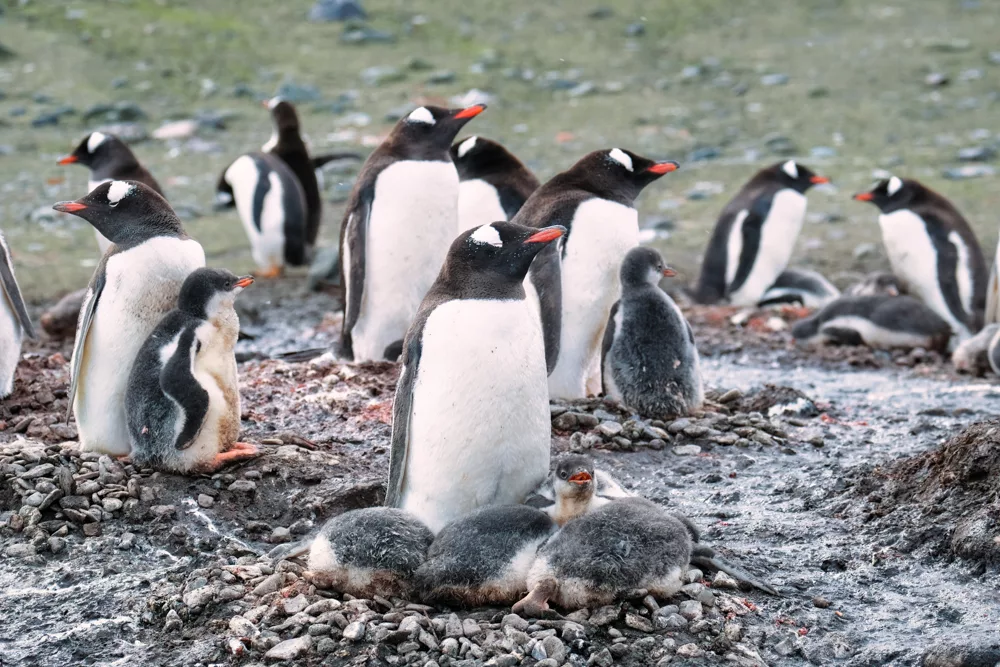
27. Yankee Harbour, Greenwich Island
Yankee Harbour is formed by a long, curved pebble spit on Greenwich Island. Gentoo penguins nest around the landing area, while seals are often seen resting along the shore. The harbour is surrounded by glaciers and low mountains.
28. Brown Bluff
Brown Bluff is dominated by a vast volcanic cliff rising above the beach on the Antarctic mainland.
Large colonies of Adélie and gentoo penguins nest beneath the rust-coloured rock face. The landing also offers views across Antarctic Sound.
29. Mikkelsen Harbour and D’Hainaut Island
Mikkelsen Harbour is a sheltered anchorage off Trinity Island. Visitors generally land on the small D’Hainaut Island, where gentoo penguins nest among historic whaling remains. A small Argentine refuge stands near the landing site.

30. Volunteer Point, Falkland Islands
Volunteer Point is home to the Falkland Islands’ largest accessible colony of king penguins.
The journey from Stanley involves a lengthy drive across uneven terrain, but visitors are rewarded with thousands of king penguins gathered near a broad white-sand beach.
31. Saunders Island and The Neck
The Neck is a narrow white-sand isthmus on Saunders Island and one of the Falklands’ finest wildlife sites.
King, gentoo, Magellanic and southern rockhopper penguins can all be seen here, along with black-browed albatrosses and other seabirds.
32. West Point Island
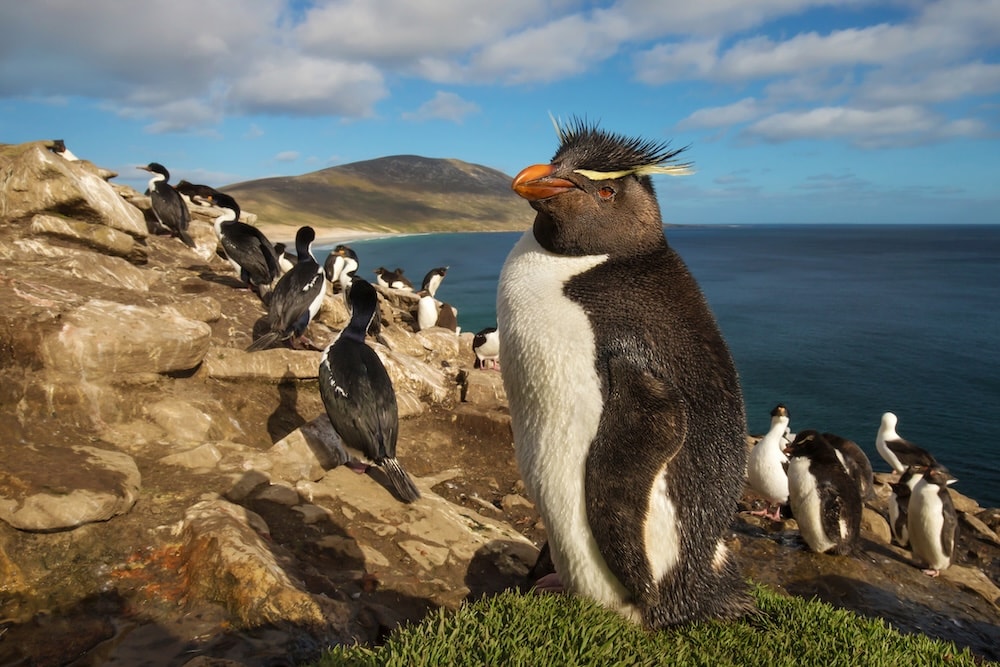
West Point Island is known for the wildlife colony at Devil’s Nose.
Black-browed albatrosses nest among tussac grass alongside southern rockhopper penguins. The walk to the colony crosses open countryside with wide views over the surrounding ocean.
33. New Island
New Island combines rugged coastal scenery with exceptional wildlife.
Its cliffs support black-browed albatrosses, southern rockhopper penguins and numerous seabirds, while seals can often be seen around the beaches and sheltered bays.
34. St Andrews Bay, South Georgia
St Andrews Bay contains one of the largest king penguin colonies on Earth.
Hundreds of thousands of birds gather across the broad glacial plain, joined by elephant seals during the breeding season. Mountains and glaciers rise dramatically behind the colony.
35. Salisbury Plain, South Georgia
Salisbury Plain is another of South Georgia’s great king penguin destinations.
The enormous colony spreads across a wide coastal plain beneath steep mountains. The scale, noise and density of wildlife can be overwhelming.
36. Gold Harbour, South Georgia
Gold Harbour is one of South Georgia’s most photogenic landing sites.
King penguins and elephant seals gather beneath hanging glaciers and the steep peaks of the Salvesen Range. Early and late light can give the surrounding cliffs a distinctive golden glow.
Scenic cruising and natural wonders
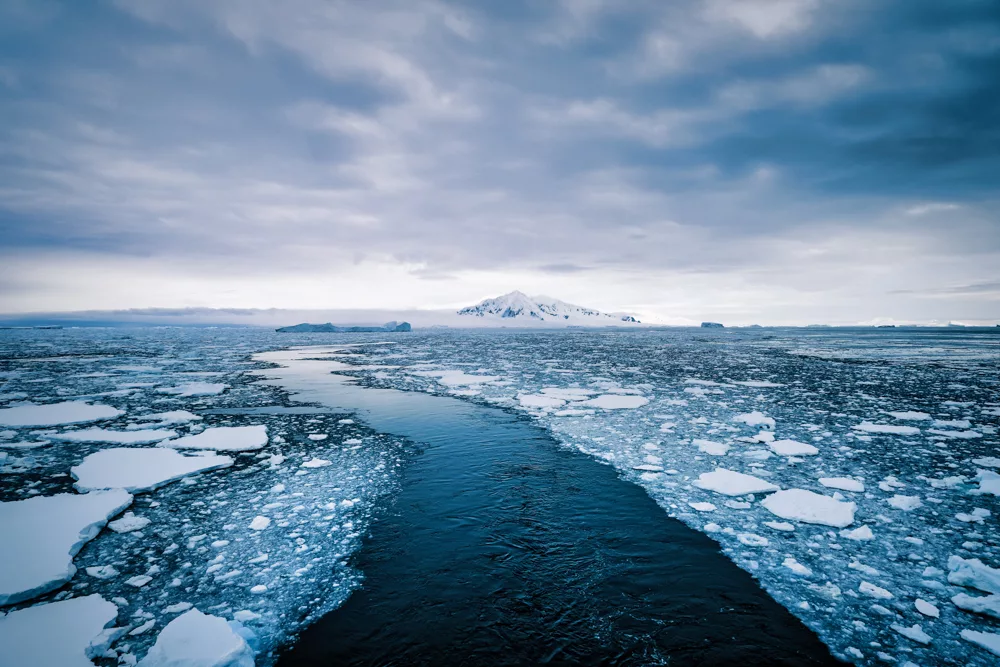
37. Lemaire Channel
The Lemaire Channel is a narrow waterway between Booth Island and the Antarctic Peninsula.
Towering mountains rise almost vertically from the sea on either side, earning it the nickname “Kodak Gap”. Ice can sometimes block the channel, but successful transits are unforgettable.
38. Paradise Bay
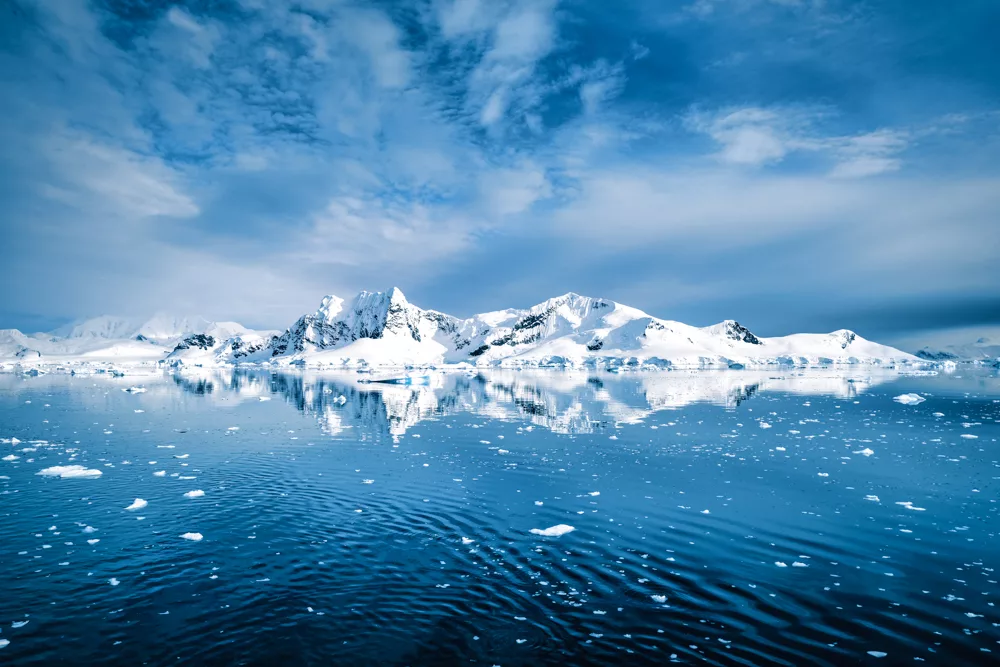
Paradise Bay is a vast natural harbour surrounded by mountains and glaciers.
Many itineraries include a continental landing here, often near Almirante Brown Station, as well as Zodiac cruises beneath glacier fronts and towering ice cliffs.
39. Cierva Cove
Cierva Cove is best explored by Zodiac.
The bay is filled with icebergs, glacier fronts and sculpted ice formations. Seals, whales and seabirds are also frequently encountered in the surrounding water.
40. Orne Harbour
Orne Harbour is a steep-sided inlet overlooking the Gerlache Strait.
A climb from the landing site leads towards a ridge used by chinstrap penguins. The elevated route provides superb views over the harbour and surrounding mountains.
41. Portal Point
Portal Point is a popular continental landing overlooking Charlotte Bay.
The site once supported a small British field base. Today, visitors come for its broad snow slopes, mountain views and the chance to walk on the Antarctic mainland.
42. Melchior Islands
The Melchior Islands form a maze of narrow channels, rocky outcrops and snow-covered islands. The area is especially well suited to Zodiac cruising, with opportunities to explore sculpted ice, sheltered waterways and wildlife along the shoreline.
43. Neptune’s Bellows and Port Foster
Neptune’s Bellows is the narrow entrance through which ships enter Deception Island’s flooded caldera.
The passage is hemmed in by steep volcanic cliffs before opening into the vast sheltered waters of Port Foster.
44. Telefon Bay
Telefon Bay reveals Deception Island’s volcanic character. Walking routes cross dark ash slopes, craters and landscapes created by relatively recent eruptions. The contrast with the snow and surrounding sea makes it unlike almost anywhere else in Antarctica.
45. Wilhelmina Bay
Wilhelmina Bay is a broad, glacier-lined inlet sometimes nicknamed “Whale-mina Bay”. Humpback whales frequently gather here later in the summer, when feeding activity increases. Zodiac cruises can offer superb views of whales, icebergs and surrounding peaks.

46. Antarctic Sound and Iceberg Alley
Antarctic Sound forms one of the principal approaches to the Weddell Sea. The area is famous for immense tabular icebergs that drift north from the Larsen Ice Shelf region. Their size and geometric shapes can make them resemble floating cliffs or fortresses.
Operating Antarctic research stations
Visits to working research stations are never guaranteed. Access may be cancelled because of scientific operations, staffing, medical precautions, weather, sea ice or logistical demands.
47. Vernadsky Research Base, Ukraine
Vernadsky is one of the Antarctic Peninsula’s most frequently visited operating research stations.
The station was formerly Britain’s Faraday Station before being transferred to Ukraine in 1996. Visitors may be able to tour parts of the historic interior, learn about current science and visit its famously small bar.
48. Almirante Brown Station, Argentina
Almirante Brown is a seasonal Argentine station in Paradise Bay. Even when the station buildings are closed, expedition passengers may be able to land nearby and climb the hill behind the base for outstanding views across the bay.

49. Eduardo Frei and Bellingshausen station area
Chile’s Eduardo Frei Montalva Base and Russia’s Bellingshausen Station stand on King George Island near the airfield used by Antarctic fly-cruises.
Passengers arriving or departing by air commonly travel through the station area, although formal tours are not guaranteed.
50. Palmer Station, United States
Palmer Station is a year-round United States research base on Anvers Island.
A limited number of expedition ships may visit by prior arrangement. When access is permitted, passengers can learn about the station’s scientific programmes and daily life at a modern Antarctic base.
Other research stations you may encounter
Several other operating stations occasionally receive expedition visitors, although they are less likely to appear on a standard itinerary.
Arctowski Station, Poland
Arctowski Station stands on King George Island. Visits are sometimes arranged, but access depends on operational approval and advance coordination.
King Edward Point, South Georgia
The British Antarctic Survey operates a research station at King Edward Point beside Grytviken.
Visitors to Grytviken may encounter station personnel or attend talks about the scientific work taking place around South Georgia.
Cámara Station, Argentina
Cámara is a small seasonal station on Half Moon Island.
Passengers frequently land elsewhere on the island to visit the chinstrap penguin colony, but access to the station itself is not routine.
Orcadas Base, Argentina
Orcadas Base is located on Laurie Island in the South Orkney Islands.
Only specialist and longer expedition itineraries tend to visit this region, and station access must be arranged in advance.
Carlini Base, Argentina
Carlini Base is another active station on King George Island.
Visits are possible but much less common than encounters with the research stations and airfield around the Fildes Peninsula.
Rothera Research Station, United Kingdom
Rothera is the British Antarctic Survey’s principal research and logistics hub in Antarctica.
Although it is one of the continent’s most important operating stations, it is not a regular cruise attraction. Most expedition passengers will not visit unless travelling on an unusual deep-south or specialist itinerary.
Planning an Antarctic Peninsula cruise
An Antarctic itinerary should always be treated as a guide rather than a fixed schedule. Expedition leaders continually adjust plans according to weather, wind, sea ice, wildlife activity and the number of other ships in the area.
That uncertainty is part of Antarctica’s appeal. A planned landing may be cancelled, only to be replaced by a whale encounter, an unexpected penguin colony or a Zodiac cruise through spectacular ice.
Whether your voyage lasts 10 days or several weeks, the landscapes, wildlife and stories of the Antarctic Peninsula have a way of staying with you long after you sail north.
Enjoyed this post? pin it for later…