Harry Kane’s outstanding international break settles the Ballon d’Or race – Back Page Football

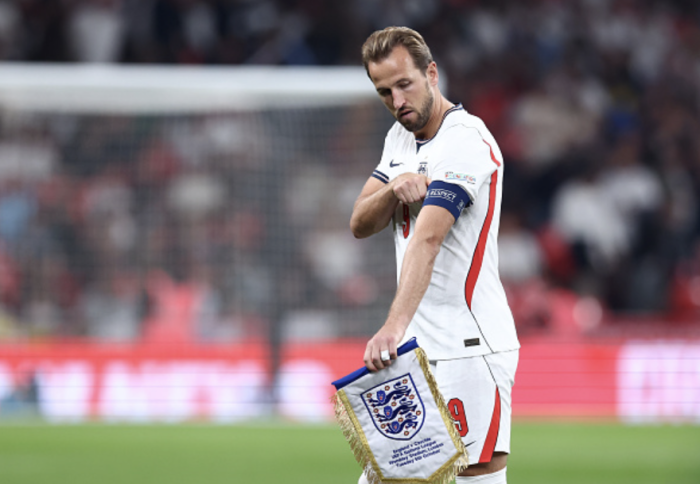
Two weeks ago, I began writing an article explaining why Kylian Mbappé deserved to win the 2026 Ballon d’Or. My argument rested upon his terrific goalscoring record for Real Madrid, the magnitude of the history he made at the World Cup, and the trajectory of those accomplishments for a player of his age, with potentially several more World Cups ahead of him.
And while I still believe Mbappé has a stronger case than Lamine Yamal, for some reason, as I completed that article, I paused and ultimately decided to rescind it before publication.
After watching Harry Kane and England throughout the latest international break, I am glad I did.
With league football back, I am confident that Kane should, and will, win the 2026 Ballon d’Or, becoming the first English player to receive the award since Michael Owen in 2001.
Embed from Getty Imageswindow.gie=window.gie||function(c){(gie.q=gie.q||[]).push(c)};gie(function(){gie.widgets.load({id:’UHi8_RSmT8RfJMgLb5Z0hg’,sig:’VteLo5uVA2SgqlzIlrFrhs_UAesbjrPB7VXOQYslHAQ=’,w:’594px’,h:’435px’,items:’2299114275′,caption: true ,tld:’com’,is360: false })});
The foundation of Kane’s case is his extraordinary season with Bayern Munich, where he scored 61 goals in 51 appearances across all competitions, including 36 in the Bundesliga and 14 in the Champions League. His performances helped Bayern capture the Bundesliga and German Cup double, while his 36 league goals earned him the European Golden Shoe for the second time in his career.
Although Bayern did not win the Champions League, they reached the semifinals, and Kane performed admirably in that competition as well.
Another important part of Kane’s case has been the exceptional quality of his overall play. As other writers have alluded to, his work rate, willingness to come back and help his teammates, and involvement in link-up play are integral parts of Bayern’s success. He is not simply a prolific goalscorer, but one of the most complete footballers in the world.
And what we saw from England during the international break provided another excellent illustration of that versatility.
There was a fluidity to England’s attacking play, with Kane, Jude Bellingham, Anthony Gordon, Morgan Rogers and others moving interchangeably into different roles, creating an explosive and unpredictable attack. Kane’s ability to drop deeper, link up with his teammates and create opportunities while remaining an extraordinary goalscoring threat is an integral part of that success.
England’s World Cup campaign ended in disappointment at the semifinal stage, although they subsequently secured third place. Kane contributed admirably throughout the tournament, scoring six goals and helping England achieve their best World Cup finish since 1966.
His iconic performance against DR Congo, in which he scored both goals in a come-from-behind victory, was particularly memorable. It was a match England should never have needed to make so difficult, but Kane delivered when his country needed him most.
The performance even prompted Thierry Henry to dub him “Sir Harry Kane.”
Kane also contributed a nifty assist in England’s victory over Mexico, once again demonstrating the quality of his all-around play.
There is certainly a strong argument for Lamine Yamal, whose excellent club season, impressive start to the new campaign and supporting role in his country’s World Cup triumph deserve recognition.
But I believe we have gone too far in allowing tournament victories to determine the outcome of individual awards.
Being part of a team that wins a major tournament is not necessarily more significant than playing a more central role for a team that does not. The Ballon d’Or is an individual award, and the quality and magnitude of a player’s contribution should remain the primary consideration.
And while England did not win the World Cup, Kane’s performances throughout the year, both for Bayern Munich and his country, were extraordinary.
Embed from Getty Imageswindow.gie=window.gie||function(c){(gie.q=gie.q||[]).push(c)};gie(function(){gie.widgets.load({id:’kyoftWqVTX9tk_-mtpKOjQ’,sig:’do17vYVNMYQSISvxQ10EmMueIniqVhK6HePjV1ZjW1c=’,w:’594px’,h:’396px’,items:’2294688544′,caption: true ,tld:’com’,is360: false })});
As I wrote following England’s defeat to Spain, there was a wild swing in the betting odds between Lamine Yamal and Kane. Kane’s missed penalty may well have handed Spain the match, while Leão’s early goal contributed to England’s difficulties.
But I also wrote that an early defeat can sometimes help focus a team, and that is precisely what appears to have happened.
Kane and England responded exactly as I had hoped.
England could probably have won all three of their subsequent matches regardless. But the manner in which they responded, persevering through a difficult moment and emerging with three triumphant performances, was considerably more meaningful than simply winning the encounter against Spain would have been.
Kane scored six goals in four matches during the international break, most notably in England’s extraordinary 7–0 demolition of Croatia in Rijeka, where he scored twice and assisted another.
That result, in my mind, was far more significant than the defeat to Spain, particularly given the nature of the competition and what it suggests about the future of the English national team.
England followed that performance with a convincing 3–0 victory over Czechia, with Kane once again scoring twice and contributing an assist.
England may not emerge from this international break as the odds-on favorite to win the next major tournament, but they have certainly established themselves as a team nobody will want to face.
And that is precisely the dynamic, optimistic England that supporters have wanted to see, including Thomas Tuchel himself.
Rather than allowing the disappointment against Spain to derail their progress, England responded with confidence, determination and increasingly impressive football.
Kane was central to that response.
His goalscoring was outstanding, but so was his leadership, his work rate and his willingness to contribute throughout the pitch.
The international break also saw Kane equal Peter Shilton’s record of 125 appearances for England. He now has 91 international goals, further extending his record as England’s all-time leading scorer.
It was another reminder of why Kane remains such an exceptional professional and why his influence cannot be measured exclusively through his goalscoring statistics.
Embed from Getty Imageswindow.gie=window.gie||function(c){(gie.q=gie.q||[]).push(c)};gie(function(){gie.widgets.load({id:’Lj0YR55bQQ97gMUJreHERA’,sig:’6NmdmQG_Mx6kEmnbmvxogmE4_1buvUUAeUBG9hWhr-0=’,w:’594px’,h:’396px’,items:’2299517893′,caption: true ,tld:’com’,is360: false })});
Mbappé has enjoyed a fantastic year, and I do not wish to diminish his accomplishments. His performances at the World Cup and his remarkable goalscoring record for Real Madrid made him a thoroughly deserving candidate.
But taken in totality, I now believe Kane’s year was better.
And with Mbappé’s injury limiting his participation during the international break, I do not believe there is sufficient time remaining for him to close the gap.
Kane has combined historic goalscoring with exceptional all-around play, consistency and leadership for both club and country. Across the 2025/26 season, he scored an extraordinary 73 goals in 63 appearances for Bayern Munich and England.
His contribution to Bayern’s success and England’s increasingly encouraging trajectory has established the strongest case for football’s most prestigious individual award.
The last Englishman to win the Ballon d’Or was Michael Owen in 2001, three years after his unforgettable wonder goal against Argentina at the 1998 World Cup.
Twenty-five years later, another English striker has produced a season worthy of joining him.
The World Cup did not “come home” to England in 2026, and ultimately, that is what mattered most.
But I believe the Ballon d’Or will return to an English player for the first time in 25 years.