Currencies vs Commodities: What’s the Difference for Traders?

Key Differences for Traders
Currencies vs Commodities
Currencies and commodities are two of the most actively traded asset classes in global financial markets. They often react to many of the same economic forces, including inflation, interest rates, economic growth, geopolitical developments, and changes in risk sentiment.
However, currencies and commodities are fundamentally different.
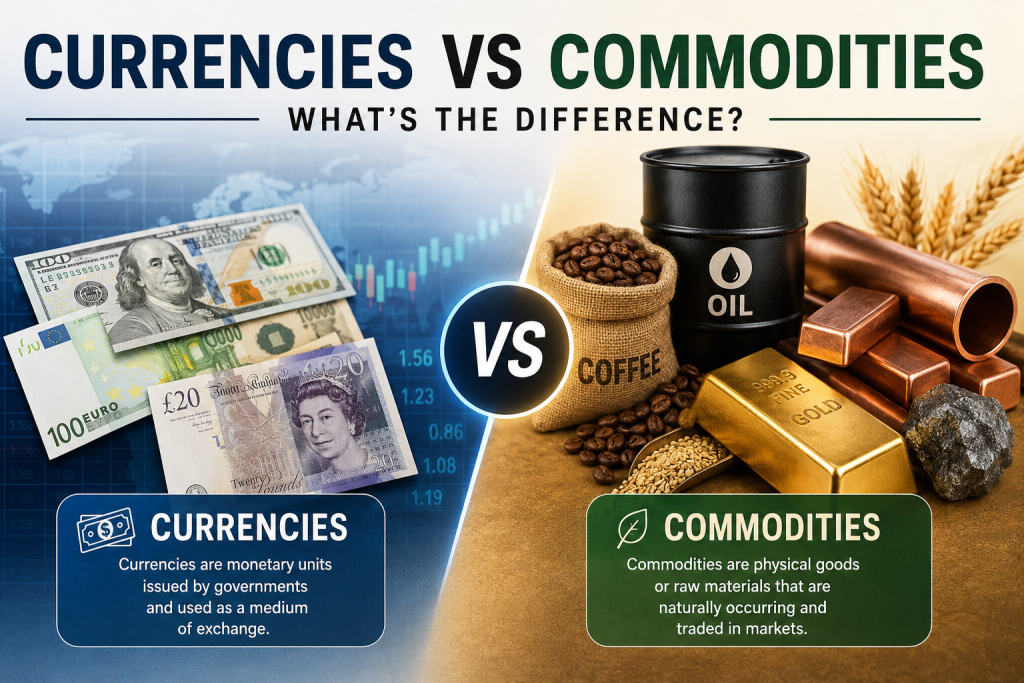
A currency is primarily a medium of exchange and unit of account within a monetary system. Commodities are generally physical resources or raw materials that have economic value and can be bought, sold, produced, consumed, or stored.
For traders, however, the distinction can sometimes appear less obvious. Gold can behave like a monetary asset. The currencies of major commodity-producing countries can react sharply to changes in commodity prices. Meanwhile, currencies themselves are actively bought and sold in the foreign exchange market just as traders speculate on oil, gold, copper, and other assets.
Understanding currencies vs commodities therefore requires looking beyond a simple definition. Traders need to understand what determines their value, what moves their prices, how they are traded, and why the two markets are sometimes closely connected.
What Is a Currency?
A currency is a recognized form of money used as a medium of exchange, a unit of account, and a store of value.
Examples include:
- U.S. dollar (USD)
- Euro (EUR)
- British pound (GBP)
- Japanese yen (JPY)
- Swiss franc (CHF)
- Canadian dollar (CAD)
- Australian dollar (AUD)
Modern currencies such as these are generally known as fiat currencies. Their value is not directly backed by a physical commodity such as gold. Instead, their value depends largely on confidence in the issuing country or monetary system and its economy.
Central banks play an important role in managing monetary conditions. The Federal Reserve influences U.S. dollar liquidity and interest rates, the European Central Bank conducts monetary policy for the euro area, the Bank of England performs a similar role for the British pound and the Bank of Japan is responsible for monetary policy that impacts the Yen.
This gives currencies an important characteristic that distinguishes them from most commodities: their supply and value can be heavily influenced by monetary policy.
What Determines the Value of a Currency?
Currencies trade relative to one another rather than having an independent market price.
For example, EURUSD represents the value of the euro relative to the U.S. dollar. USDJPY represents the value of the U.S. dollar relative to the Japanese yen.
Currency prices can be influenced by numerous factors, including:
- Central bank interest-rate policy (CME FedWatch)
- Inflation
- Economic growth
- Employment
- Government fiscal policy
- Capital flows
- Trade balances
- Political developments
- Geopolitical risk
- Market expectations
- Investor risk appetite
One of the most important concepts for traders is that currencies often react not simply to economic conditions but to changes in expectations about those conditions.
A strong economic report does not automatically cause a currency to rise. If traders were expecting an even stronger number, the currency could fall.
Likewise, a central bank interest-rate cut may not weaken a currency if the market had already fully priced in the move.
Expectations are a major part of currency valuation.
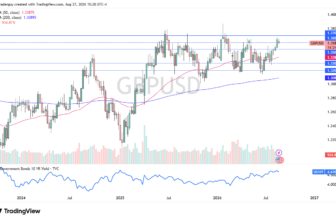
EURUSD Daily Chart (Sept 1, 2026

What Is a Commodity?
A commodity is generally a basic good or raw material that can be bought and sold and is sufficiently standardized to be traded in a market.
Major commodities include energy products, metals, and agricultural goods.
Examples include crude oil, natural gas, gold, silver, copper, wheat, corn, coffee, sugar, and soybeans.
Unlike fiat currencies, commodities usually have a physical supply that cannot simply be increased through a monetary-policy decision.
Oil must be extracted. Copper must be mined. Wheat must be grown. Gold must be mined or supplied from existing inventories.
As a result, commodity markets are particularly sensitive to changes in physical supply and demand.
What Determines Commodity Prices?
The price of a commodity can be influenced by many factors, including:
- Global economic growth
- Production levels
- Inventories
- Weather
- Transportation and supply-chain disruptions
- Geopolitical conflicts
- Government policies
- Producer decisions
- Consumer demand
- Currency movements
- Speculative positioning
Different commodities can respond to very different forces.
A drought can send agricultural prices sharply higher without having much direct impact on gold. An escalation in Middle East tensions could push crude oil higher because traders fear a disruption in energy supplies. Copper may strengthen when expectations for global industrial activity improve.
This means there is no single factor that determines commodity prices.
The Main Difference Between Currencies and Commodities
The simplest distinction between currencies vs commodities is their primary economic function.
A currency exists primarily as money and a medium of exchange. It is used to price goods and services, settle transactions, store value, and facilitate economic activity.
A commodity is primarily an economic good or raw material.
This distinction remains important even when both are traded for speculative purposes.
When a trader buys euros against dollars, the trader is exchanging one currency for another.
When a trader buys crude oil, the trader is taking a position based on the expected price of a commodity.
The motivation of the trader does not change the underlying nature of the asset.
How Currencies Are Traded
The foreign exchange market is built around currency pairs.
A trader does not simply buy the euro. The trader buys the euro against another currency.
For example:
EURUSD
EUR is the base currency and USD is the quote currency.
If EURUSD rises, the euro is strengthening relative to the dollar.
If EURUSD falls, the dollar is strengthening relative to the euro.
This relative-value structure is one of the biggest differences between forex and commodity trading.
A currency can be strong against one currency and weak against another at the same time.
The euro, for example, could rise against the U.S. dollar while falling against the British pound.
How Commodities Are Traded
Commodity exposure can be traded in several ways depending on the market and trader.
These may include futures, options, exchange-traded products, CFDs in jurisdictions where they are available, and shares of companies whose businesses are closely tied to particular commodities.
Commodity futures are especially important because they allow market participants to buy or sell contracts based on a specified commodity for delivery at a future date.
Commercial participants may use these markets to hedge their exposure.
An airline, for example, may hedge against rising fuel costs. A producer may hedge against the risk of falling prices.
Speculators take the other side of many trades in an attempt to profit from price movements without intending to take physical delivery of the commodity.
Why Gold Creates Confusion
Gold is one of the best examples of the grey area between commodities and monetary assets.
Gold is unquestionably a commodity. It is mined, has a finite physical supply, and has commercial uses in areas including jewelry and electronics.
However, gold also has a long history as money and as a store of value.
For centuries, gold coins circulated as currency. Later, many currencies were directly or indirectly linked to gold through various forms of the gold standard.
Modern fiat currencies are no longer generally convertible into gold at a fixed rate, but gold has retained an important monetary role.
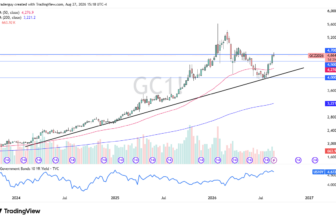
XAUUSD (GOLD) Daily Chart (sept 1, 2026

Gold as a Monetary Asset
Central banks around the world hold gold as part of their reserves. Investors may also turn to gold during periods of inflation concern, financial instability, geopolitical uncertainty, or declining confidence in financial assets.
As a result, gold can sometimes trade more like a monetary asset than a traditional industrial commodity.
This makes gold unusual.
It is a commodity, but its price can be driven by factors commonly associated with currencies and monetary policy, including:
- U.S. interest rates
- Real yields
- Federal Reserve policy
- Inflation expectations
- U.S. dollar movements
- Central-bank demand
- Risk sentiment
For traders, understanding this dual role is more useful than simply debating whether gold should be called money or a commodity.
Is Bitcoin a Currency or a Commodity?
Bitcoin makes the distinction even more complicated.
Its name and original design suggest a form of digital money, and Bitcoin can be transferred directly between participants and used for some transactions.
However, many market participants primarily treat Bitcoin as an investment or speculative asset rather than as an everyday medium of exchange.
It also differs significantly from fiat currencies.
There is no central bank controlling Bitcoin’s monetary policy. Its supply follows rules built into its protocol, and the total potential supply is limited.
Bitcoin therefore shares some characteristics with currencies, some with scarce assets such as gold, and others that are unique to digital assets.
Its legal and regulatory classification can also differ by jurisdiction and purpose.
For traders, it is more useful to recognize Bitcoin as a separate crypto asset class rather than trying to force it completely into the traditional currency or commodity category.
Are Currencies Commodities When They Are Traded?
This is another area where confusion can arise.
A trader may buy euros because they expect EURUSD to rise. In that sense, the trader is speculating on price movements just as someone might speculate on gold or crude oil.
That does not turn the euro into a commodity.
The underlying instrument remains a currency.
What changes is its use in that particular transaction.
The forex market exists because currencies constantly need to be exchanged for international trade, investment, hedging, tourism, financing, and speculation.
Speculative trading is therefore one function of the currency market, but it does not redefine currencies as commodities. Speculation has a another role, which by providing liquidity needed to execute commercial transactions.
Commodity Currencies: Where the Two Markets Meet
One of the most important connections between currencies and commodities can be seen in so-called commodity currencies.
A commodity currency is generally the currency of a country whose economy and exports have significant exposure to commodities.
Three commonly cited examples are:
- Canadian dollar
- Australian dollar
- New Zealand dollar
Canada is a major energy producer, making movements in crude oil potentially important for the Canadian dollar.
Australia is a major exporter of commodities including iron ore, coal, and natural gas. Changes in commodity demand, particularly from major trading partners, can therefore influence the Australian economy and AUD.
New Zealand has significant agricultural exports, giving commodity prices an important role in its trade outlook.
Commodity Prices Do Not Control Commodity Currencies
Traders need to be careful not to assume that a commodity currency must always move in the same direction as the country’s major exports.
The Canadian dollar does not automatically strengthen every time crude oil rises.
Currencies are affected by many variables simultaneously.
For example, oil could rise while the Bank of Canada is expected to cut interest rates aggressively. In that situation, monetary-policy expectations could outweigh the positive effect of higher energy prices.
This is a recurring lesson in financial markets: correlations are relationships, not guarantees.
The U.S. Dollar Connects Currency and Commodity Markets
Another major connection between the two asset classes is the U.S. dollar.
Many globally traded commodities are priced in dollars.
Crude oil, gold, silver, copper, and numerous agricultural commodities are commonly quoted in USD.
This can create an important relationship between the dollar and commodity prices.
All else being equal, a stronger dollar can make dollar-denominated commodities more expensive for buyers using other currencies, potentially weighing on demand. A weaker dollar can have the opposite effect.
This is one reason traders frequently watch the dollar when analyzing gold and other commodity markets.
However, the relationship is not automatic.
Gold and the dollar can occasionally rise together during periods of extreme uncertainty because both may attract defensive flows. Oil can rise despite a stronger dollar if a major supply disruption overwhelms the currency effect.
Once again, traders need to understand why a market is moving, rather than relying blindly on historical correlations.
Currencies vs Commodities During Inflation
Inflation provides another useful way to understand the differences between the two markets.
Commodity prices can contribute directly to inflation.
Rising oil prices increase transportation and energy costs. Higher agricultural prices can increase food costs. Rising raw-material costs can increase expenses for manufacturers.
Currencies respond to inflation differently.
When inflation rises, traders begin evaluating how the relevant central bank is likely to respond.
If higher inflation causes markets to expect higher interest rates, a currency may strengthen.
But if inflation becomes so severe that investors lose confidence in the economy or the central bank’s ability to control prices, the currency could weaken.
The market reaction therefore depends on expectations, policy, and context.
Currencies vs Commodities – Supply and Demand Affect Both Markets Differently
Supply and demand ultimately drive both currencies and commodities, but the source of that supply and demand differs.
Commodity supply is often physical.
A hurricane can reduce energy production. A drought can reduce crop output. A mine closure can restrict metal supplies.
Currency supply is largely monetary and financial.
Central-bank policy, credit conditions, capital flows, international trade, and investor positioning can all influence the supply and demand for a currency.
These differences explain why traders need different analytical frameworks for each market.
Supply and Demand: The Force Behind Every Market Move
Fundamental Analysis of Currencies vs Commodities
Currency traders tend to focus heavily on macroeconomic and monetary-policy factors.
These include inflation reports, employment data, GDP, central-bank meetings, interest-rate expectations, bond yields, and political developments.
Commodity traders must often add another layer of analysis.
Oil traders may monitor production decisions, inventories, geopolitical risks, and global demand.
Agricultural traders may watch weather forecasts and crop conditions.
Gold traders may concentrate on real yields, the dollar, central-bank purchases, inflation expectations, and geopolitical risk.
The basic principle is the same, price is determined by supply and demand, but the forces behind that supply and demand can differ substantially.
What both have in common is the use of technical analysis that influence speculative trading as well as capital flows and hedging decisions.
Why the Difference Matters for Traders
Understanding the distinction between currencies and commodities helps traders avoid oversimplifying market relationships.
A trader who assumes that oil must rise whenever the dollar falls may eventually be caught by a supply-driven collapse in crude prices.
A trader who assumes gold must rise whenever inflation increases may overlook rising real yields.
A forex trader who buys the Canadian dollar simply because crude oil is rising may ignore a major shift in Bank of Canada expectations.
Markets rarely move because of one factor alone.
Successful analysis involves determining which factor the market currently considers most important.
Conclusion: Understanding Currencies vs Commodities
The distinction between currencies vs commodities is straightforward at its core but becomes more interesting once we examine how the markets actually trade.
Currencies are monetary instruments used as mediums of exchange, units of account, and stores of value. Their prices are heavily influenced by central-bank policy, interest rates, economic expectations, and international capital flows.
Commodities are primarily physical goods and raw materials whose prices are strongly influenced by production, consumption, inventories, weather, geopolitical events, and global economic demand.
There are also important areas of overlap.
Gold is both a physical commodity and a monetary asset. Commodity-producing economies can have currencies that are sensitive to commodity prices. The U.S. dollar plays an important role because many global commodities are priced in dollars. Bitcoin and other crypto assets have introduced an additional category that does not fit neatly into traditional definitions.
For traders, the most important lesson is not simply knowing how an asset is classified.
It is understanding what is driving its price at any particular moment.
Currencies and commodities may react to many of the same global events, but they can react for very different reasons. Recognizing those differences and knowing when the two markets are influencing each other can give traders a much clearer understanding of global price action.