

Every grill goes through a quiet stretch. Maybe it sat under a cover all winter and you’re only now getting back to it. Maybe a packed summer of travel and long weekends meant it went untouched for a month at the height of the season. Maybe it followed you to a new house and spent the move in the garage.
However the gap happened, the reunion tends to look the same: crusted-over grates, sputtering burners, and something that has clearly taken up residence in there since the last cook.
Before you write off the whole grill and start pricing out a new one, take a breath. Nine times out of ten, what your barbecue needs isn’t a replacement. It needs a reset.
A grill reset is exactly what it sounds like: a deep clean that takes your cooker from “I’m a little scared of it” back to “fire it up.” It’s a spring ritual for some people and a mid-summer rescue for others, and honestly, it’s worth doing any time your grill has been sitting longer than it should.
The good news is you don’t need a cabinet full of gadgets to pull it off. You need the right five tools, each one handling a specific job, working from the cooking surface down to the gas path.
This guide walks through all five, why each one matters, and how they fit together into a kit you’ll reach for whenever your grill needs to come back to life.
Why a Reset Beats a Replacement
Here’s what most people don’t realize: the stuff that makes an old grill feel broken is almost always surface-level. Carbonized grease on the grates. A layer of ash and debris over the burners. A spider web tucked inside a venturi tube throwing off your flame. None of that means the grill is finished. It means the grill is dirty.
Cleaning it properly does three things at once:
- It gets your cooking surface back to safe, non-stick condition.
- It restores even heat by clearing whatever’s blocking the burners.
- It lets you actually see the parts underneath, so if something *is* worn out, you’ll spot it now instead of mid-cookout. A reset is part cleaning, part inspection, and it’s the cheapest thing you can do for your grill all year.
The Five-Tool Reset Kit
Think of these in order, because that’s how you’ll use them: scrape the worst of it off, brush the grates back to bare, clear the gas path, and keep your hands safe through all of it.
1. The Scraper — for heavy, baked-on buildup
Our pick: Dek 19-Inch Hardwood Grill Scraper ($14.99)
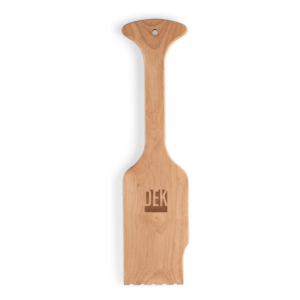
When buildup has gone from “grimy” to “geological,” you don’t start with a brush. You start with a scraper. The Dek 19-inch hardwood scraper is a single piece of solid wood with a long handle, and the clever part is what happens the first time you use it: the leading edge wears into grooves that match your exact grates, so every pass after that rides right in the channels where the gunk lives. No wire bristles to shed, no metal to gouge your porcelain.
Best for: Season-opening cleans, or any grill that’s been ignored long enough to need real muscle before the brushes come out.
Before you buy: The 19-inch handle keeps your hand well back from a still-warm grill, but let the grates cool before you go at heavy buildup so nothing chips.
2. The Coated-Grate Brush — soft on porcelain
Our pick: GrillSpot 14-Inch Nylon Bristle Cool-Use Grill Cleaning Brush ($5.99)
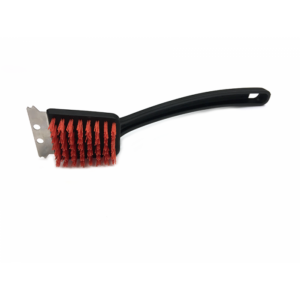
If your grates are porcelain-coated, wire is the enemy. One aggressive scrub with a steel brush and you’ve got chips in the coating that turn into rust spots by midsummer. This is where the nylon-bristle brush earns its keep. The soft bristles lift debris without touching the finish, and there’s a built-in steel scraper on the head for the occasional stubborn spot. A 10-inch handle keeps your knuckles off the grate.
Best for: Porcelain-enameled grates, and anyone who wants a gentle everyday brush that won’t shorten the life of the coating.
Before you buy: This one is cool-use only — brush the grates while they’re cool, before you light the grill. It’s not just about protecting the bristles; brushing cool actually helps build up the seasoning that keeps food from sticking.
3. The Natural-Bristle Brush — muscle for bare steel
Our pick: GrillSpot 18-Inch Palmyra Bristle Grill Cleaning Brush ($9.99)
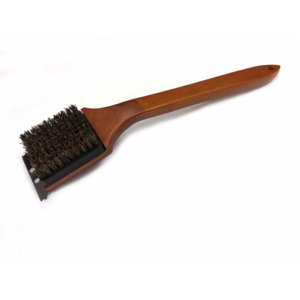
For bare steel or cast-iron grates that can take a firmer hand, the 18-inch Palmyra brush is the one you want. Palmyra is a stiff natural plant fiber — it scrubs like a wire brush but without the wire, so there are no metal bristles to break off and end up somewhere they shouldn’t. The wide 3-inch head covers more grate per stroke, and the long wooden handle gives you leverage without putting your hand near the heat.
Best for: Uncoated steel and cast-iron grates, and grillers who want a wire-free scrub with some real bite to it.
Before you buy: Like the nylon brush, this works best on cool grates before lighting. Pair the two and you’ve got the right brush for whatever grates you’re running.
4. The Burner & Venturi Kit — the part everyone forgets
Our pick: Flexible BBQ Venturi Brush and Wire Burner Brush Cleaning Kit ($10.99)
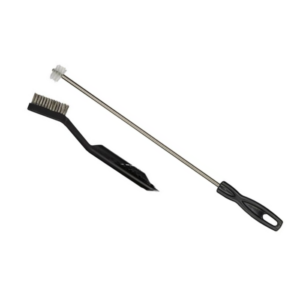
Here’s the step that separates a real reset from a quick grate-scrub: cleaning the gas path. Over a season, burners get crusted with grease and debris, and the venturi tubes that feed them air are a favorite hiding spot for spiders and their webs. A blocked venturi tube doesn’t just weaken your flame — it can push gas back toward the control panel and cause a flare-up. Not the fun kind.
This two-piece kit handles both ends of the job. The 6-inch stainless brush scrubs debris off the outside of the burners, and a slide-out port-hole cleaner clears blocked flame ports. The 9-inch venturi brush has a flexible coil-spring shaft that snakes down inside the burner tube to clear out webs and gunk you can’t even see. If your flame has been running yellow, uneven, or just weak, this is very often the fix.
Best for: Any gas grill, but especially one that’s sat unused — and any grill with a lazy or uneven flame.
Before you buy: Always shut off the gas and let the grill cool completely before cleaning burners. For the full walkthrough, GrillSpot’s own guide to clearing spider webs from grill burners is worth a read.
5. The Glove — because the whole job runs hot
Our pick: Heat Resistant Grilling/Oven Glove ($12.99, on sale)

A reset means handling grates, lifting out burners, and reaching into places that may still be warmer than they look. The heat-resistant glove is the quiet hero of the kit. It’s built from aramid fiber — the same material used in aerospace and firefighting gear — with a soft cotton lining and a silicone grip that keeps a secure hold on hot grates and slippery parts. One size fits either hand, and it hangs on a loop right next to your other tools.
Best for: Every step of the reset, plus everyday grilling, smoking, and pulling hot pans in the kitchen.
Before you buy: It’s a single glove, sized to fit left or right. Grab it for the hand you work with most.
The Reset Kit at a Glance
Five tools, five jobs. Here’s how they line up:
| Tool | Best for | Why it earns a spot | Price |
|---|---|---|---|
| Dek 19″ Hardwood Grill Scraper | Heavy, baked-on buildup | Shapes itself to your grates as you scrape — no wire bristles | $14.99 |
| GrillSpot 14″ Nylon Bristle Cool-Use Brush | Porcelain-coated grates | Soft nylon cleans without chipping the coating | $5.99 |
| GrillSpot 18″ Palmyra Bristle Brush | Bare steel & cast-iron grates | Natural stiff bristles, wide 3″ head, no wire | $9.99 |
| Flexible Venturi & Wire Burner Brush Kit | Burners & venturi tubes | Clears the gas path — the part most people forget | See site |
| Heat Resistant Grilling/Oven Glove | Handling hot grates & parts | Aramid fiber; keeps the whole job safe | $12.99 |
How to Run the Reset, Start to Finish
With the kit in hand, the actual reset is straightforward. The order is what makes it easy:
- Scrape first. On cool grates, use the Dek scraper to knock off the heavy, carbonized buildup.
- Brush to bare. Switch to the nylon brush for coated grates or the Palmyra brush for bare steel, and work the surface back to clean metal.
- Clear the gas path. With the gas off and the grill cool, pull the burners and run the venturi and burner brushes through them.
- Inspect while you’re in there. This is the moment to check for parts that are rusted through or warped past saving.
- Glove on the whole time. Keep the heat-resistant glove on for anything you’re lifting, moving, or reaching for.
When a Reset Turns Up Something Worse
Sometimes you get the grill clean and discover the real problem was hiding under the grime. Grates rusted thin enough to flake. A burner that’s cracked or corroded past the point a brush can help. Heat plates that have burned through. That’s not a failure of the reset — it’s the reset doing its second job, which is showing you exactly what needs replacing.
The good news is that a matching replacement part almost always costs a fraction of a new grill. If your reset turns up a worn part, you can find exact-fit replacements by browsing cooking grates, heat plates and flame tamers, or the full parts catalog by type to match your grill.
Give Your Grill a Fresh Start
A grill reset is the most satisfying hour you’ll spend on your barbecue all year. You go in dreading it and come out with a cooker that lights clean, heats evenly, and honestly feels new again — for the price of five tools instead of a whole new grill. Build your kit once and you’ll have it ready every spring.
Ready to build yours? Start with the full lineup of cleaning brushes and grilling accessories at GrillSpot. Then fire it up. Happy grilling!


