Keffe D Sentenced to 40 Years to Life in 2Pac Murder Case
Duane “Keffe D” Davis has received a sentence of 40 years to life in prison for the 1996 murder of Tupac Shakur. A Las Vegas judge handed down the sentence on October 13, 2026, nearly 30 years after the legendary rapper’s death.
Davis, 63, faced a first-degree murder charge in connection with Shakur’s fatal shooting. A jury found him guilty in August 2026, making him the first person convicted in the case. His sentencing marks a major development in one of hip-hop’s most infamous murder investigations.
The case attracted worldwide attention for decades. Shakur died at just 25 years old, but his music and cultural influence continue to reach new generations. Davis’ conviction also brings renewed attention to the circumstances surrounding the rapper’s death.
Keffe D receives 40 years to life in prison
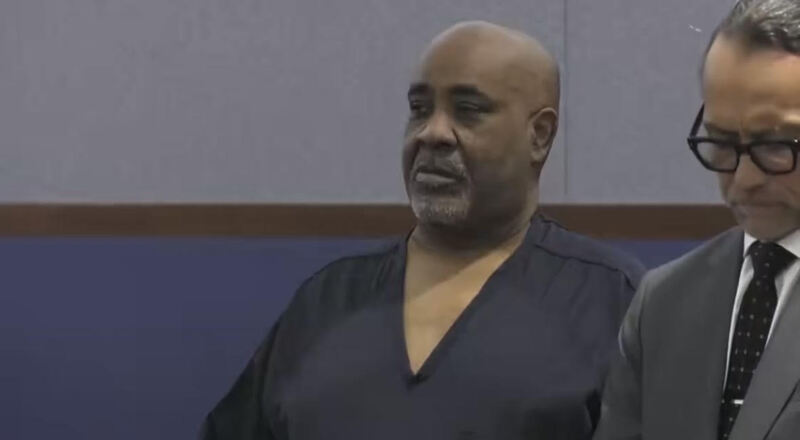
Davis appeared in a Las Vegas courtroom on Tuesday to learn his fate. The judge sentenced him to 40 years to life in prison for his role in Shakur’s murder.
Prosecutors argued that Davis organized the attack that killed the rapper. They did not accuse him of personally firing the fatal shots. Instead, they maintained that he helped arrange the retaliation and supplied the weapon used in the shooting.
During the sentencing hearing, Davis briefly addressed the court. He requested the return of some belongings that authorities seized from his home. He otherwise had little to say before the judge imposed the sentence.
Shakur’s sister, Sekyiwa “Set” Shakur, attended the hearing. The rapper’s family has spent years seeking accountability for his death.
Davis’ attorneys have indicated that they plan to appeal his conviction. That legal process could bring further attention to the evidence prosecutors presented during the trial.
What happened to Tupac Shakur in 1996?
Shakur suffered multiple gunshot wounds on September 7, 1996, in Las Vegas. He rode in a black BMW driven by Marion “Suge” Knight, the co-founder of Death Row Records.
Earlier that evening, Shakur and members of his entourage attended a Mike Tyson boxing match. Afterward, an altercation involving Orlando “Baby Lane” Anderson occurred at the MGM Grand hotel.
Anderson was Davis’ nephew and a member of the South Side Compton Crips. Prosecutors argued that the confrontation motivated Davis and others to retaliate against Shakur.
Later that night, a white Cadillac pulled alongside the BMW at a red light near the Las Vegas Strip. Gunmen inside the Cadillac opened fire, striking Shakur several times. Knight also suffered an injury but survived the attack.
Emergency personnel transported Shakur to a hospital. He remained there for six days before dying on September 13, 1996.
His death shocked the music industry and devastated his fans. At the time, Shakur ranked among the biggest stars in hip-hop. He had also established himself as an actor, poet and influential cultural figure.
For years, investigators struggled to bring the case to trial. Authorities finally arrested Davis in September 2023, nearly 27 years after the shooting.
How prosecutors connected Keffe D to the murder
Davis’ own statements played an important role in the prosecution’s case. Over the years, he discussed his alleged involvement in the shooting during interviews and public appearances.
He also described his account of the events in his 2019 memoir, Compton Street Legend. Prosecutors used his statements to support their argument that he helped organize the attack.
According to the prosecution, Davis participated in planning the retaliation and obtained the firearm used in the shooting. They argued that he then passed the weapon to someone inside the Cadillac.
Davis acknowledged being inside the vehicle involved in the shooting. However, he maintained that he did not fire the gun himself.
His defense team challenged the prosecution’s reliance on his previous statements. The attorneys argued that Davis sometimes exaggerated his stories for attention and financial gain. They also questioned whether prosecutors had enough physical evidence to prove his guilt.
The jury ultimately rejected the defense’s arguments. After hearing the evidence, jurors found Davis guilty of first-degree murder in August 2026.
The verdict marked the first conviction in Shakur’s murder case. It also represented a major breakthrough after years of speculation, conflicting accounts and unsuccessful investigative efforts.
Could anyone else face charges in the 2Pac murder case?
Davis’ conviction has raised questions about whether prosecutors will pursue other people connected to the shooting.
Anderson, whom Davis identified as the gunman, died in 1998. Authorities never charged him in connection with Shakur’s murder. Other men whom prosecutors linked to the alleged attack have also died.
As a result, Davis remains the central figure in the criminal case.
The investigation has also generated speculation about other prominent figures in hip-hop. Sean “Diddy” Combs has faced allegations involving Shakur’s murder, but authorities have not established those claims as fact in Davis’ case. Combs has denied involvement in the rapper’s killing.
Prosecutors would need sufficient evidence to pursue additional charges. Davis’ conviction alone does not establish the criminal responsibility of anyone else.
His planned appeal could also shape the next chapter of the case. His attorneys may challenge the jury’s verdict and raise questions about the evidence presented at trial.
For now, Davis’ sentence represents a significant legal milestone. However, it does not necessarily end every question surrounding the events of September 1996.
Tupac Shakur’s legacy continues nearly 30 years later
Shakur remains one of the most influential artists in hip-hop history. His music explored poverty, violence, social inequality, family relationships and the challenges facing Black communities.
His catalog includes acclaimed albums such as Me Against the World and All Eyez on Me. Songs like “California Love,” “Dear Mama” and “Changes” continue to resonate with listeners decades after their release.
Beyond music, Shakur built a career in film and developed a reputation for his outspoken personality. His artistic work and public statements helped make him one of the defining cultural figures of the 1990s.
His death also became closely associated with the East Coast-West Coast tensions that dominated hip-hop discussions during that era. However, prosecutors focused on the specific confrontation and alleged retaliation that preceded the Las Vegas shooting.
For Shakur’s family and supporters, the case has represented decades of grief and unanswered questions. Davis’ conviction provides a measure of legal accountability, although it cannot undo the loss of a young artist whose career ended far too soon.
With Davis now facing 40 years to life in prison, the case has reached another major milestone. His appeal remains ahead, while questions about potential additional charges remain unresolved.
Nearly three decades after Shakur’s death, his music continues to influence artists and fans around the world. The sentencing brings renewed attention to the search for justice in one of hip-hop’s most enduring criminal cases.