Undercarriage Rust on Salvage Cars

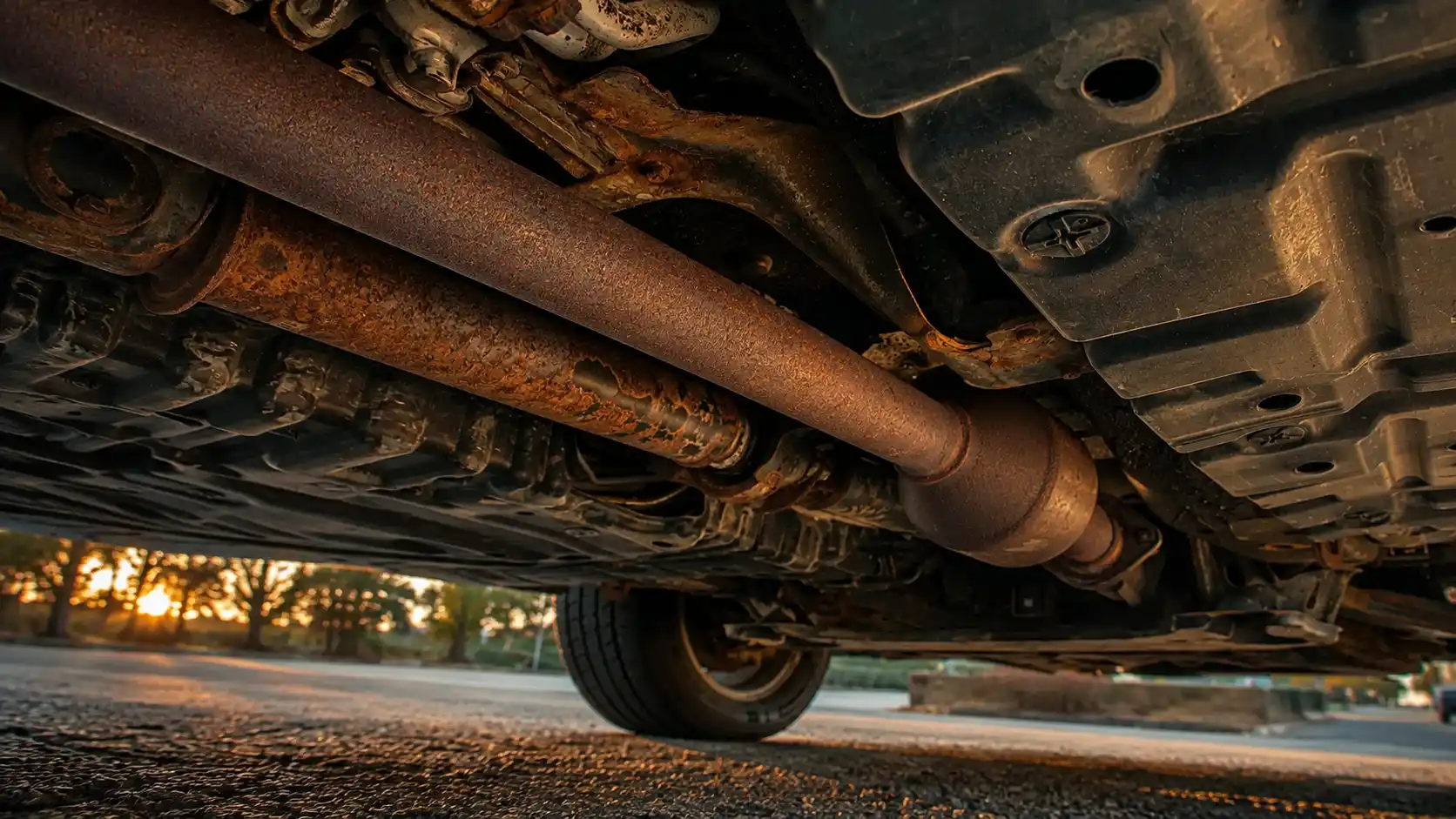
Salvage car projects can offer excellent value. However, undercarriage rust can negatively affect restoration economics and safety.
You might be viewing a salvage auction lot, see no mention of rust, and assume that corrosion isn’t present. However, the absence of rust within a listing doesn’t mean that the vehicle is rust-free.
Fortunately, you can take steps to investigate potential rust beyond primary damage information. These steps include reviewing photos, getting a ClearVin report, and doing physical inspections.
Before we discuss these investigative steps in detail, we’re going to explain:
- Why undercarriage rust matters on salvage cars in the first place.
- Specific types of undercarriage corrosion and their impact on repair costs.
- How undercarriage rust becomes a vehicle safety problem.
By the end, you’ll have a clearer sense of how undercarriage corrosion should affect a salvage car’s value for more informed bidding.
Key Takeaways:
- A salvage car with undercarriage rust isn’t automatically a bad purchase. What matters is recognizing how underbody corrosion affects the time and money you’ll spend on repairs.
- Severity, location, and the parts affected influence how much time and money you’ll spend on undercarriage rust repairs.
- Rust-related repair expenses, both known and potential, should be factored into your maximum salvage car bid.
- Auction photos and a ClearVin vehicle history report can clue you into whether a salvage car has rust. However, this information shouldn’t replace an up-to-date physical inspection.
- Undercarriage rust has three primary stages. From least-to-most severe, these stages include surface, scale, and penetrating.
| Undercarriage Rust Type | What It Means for Repairs | Potential Safety Impact |
| Surface Rust | Usually limited cleanup or treatment. Generally lower repair cost. | Little to no structural threat. |
| Scale Rust | May require removal or replacement of affected components. Repair difficulty and cost increase. | Can weaken components as corrosion progresses. |
| Penetrating Rust | May require component replacement, welding, or fabrication. Repair costs can be significant. | Can undermine structural components and critical systems. |
Why Undercarriage Rust Matters on Salvage Cars
Understanding the type and extent of undercarriage rust on salvage cars is essential because it shapes a vehicle’s structural safety and repair costs.
Corrosion location also affects repairs, especially with structural rust in a salvage car.
Rust location and severity can tell you:
- If the car can be rebuilt.
- Whether remaining metal is structurally viable.
- How difficult repairs will be (ex: bolt-on part replacement versus fabrication).
Recognizing rust severity starts with recognizing corrosion that’s mostly cosmetic and rust affecting key vehicle components or structural regions. Identifying these differences requires understanding how rust progresses on a car.
Car undercarriage corrosion stages, from least-to-most severe, include:
1. Surface rust: typically shows up as small spots.
2. Scale rust: the rust starts flaking, weakening metal and expanding.
3. Penetrating rust: Physically and chemically irreversible damage. This stage can result in holes or weak spots.
The appearance of undercarriage corrosion doesn’t always indicate its damage level.
Undercarriage components are particularly vulnerable to rust because they’re directly exposed to contaminants causing corrosion. Trapped moisture and road salt are the biggest culprits.
Car undercarriage components feature protective coatings like other vehicle areas, such as painted body panels. Still, their increased, direct exposure to rust-causing contaminants makes them more prone to corrosion.
Rust Damage Repair Cost and Time Considerations
Let’s assess a few areas where undercarriage rust is common, along with their time and financial impact on repairs.
Frame and Suspension Rust on Salvage Vehicles
Suspension mount and frame rust on salvage vehicles typically require specialized welding and fabrication instead of more straightforward bolt-on replacement.
Control Arm Rust on Salvage Vehicles
Certain undercarriage components, like control arms, are easier and less expensive to repair than frame and suspension rust with their bolt-on design.
Rusted Brake Lines Repair Cost and Time
Like all undercarriage parts, rust repair cost estimates for brake lines depend on whether the damage is localized or impacts the full system.
A full replacement is needed for brake lines when there’s widespread, deep corrosion, such as scaling and pitting.
Localized rust repair for brake lines can include replacing affected sections. Surface-level rust can be cleaned off existing lines.
These basic brake line service strategies also apply to rusted fuel lines.
Rusted Exhaust Parts
Exhaust surface rust producing problems like small holes can be fixed for a relatively low amount.
In comparison, extensive corrosion can mean replacing entire exhaust parts like catalytic converters. While many exhaust components are bolt-on, severe rust may require welding.
Rusted Electrical Car Connections
Rust can form on metal contacts inside electrical car connectors or pins due to moisture or water exposure.
Replace corroded electrical car connections when pins or terminals are completely rusted. Light connector rust can be cleaned with surface cleaning.
A certified mechanic or DIYer with specialized training must de-energize electric and hybrid vehicles before starting electrical connection repairs.
How Fasteners Impact Undercarriage Rust Repair Price and Time Estimates
Cars contain thousands of fasteners, many of which are under the vehicle. Rusted fasteners may escalate undercarriage rust repairs by requiring specialized tools and techniques.
These tools and techniques can turn a task that typically takes minutes into an hour or more of labor. For example, if an exhaust manifold stud seizes (becomes stuck), the repair would require drilling, tapping, and rethreading.
Safety Risks: Salvage Car Rust
Undercarriage rust can threaten critical components, such as the ones listed above, and weaken structural integrity.
Safety Impact of Rust on Suspension Mounts, Control Arms, and the Frame
Corrosion on suspension mounts, the control arms, and the frame can negatively impact handling and responsiveness. Untreated rust in these areas may also result in strange noises and vibrations. Preventing frame rust is especially important for maintaining collision protection.
Safety Impact of Rust on Brake and Fuel Lines
Brake and fuel line rust can eventually cause leaks, even from a small spot. A brake line could leak brake fluid, reducing stopping power. In contrast, a fuel line leak can lower mileage, produce a gas smell, hiss, or create a fire hazard.
Safety Impact of Rust on Exhaust Components
An exhaust system is generally divided into several primary parts, and all of them can rust.
Primary undercarriage exhaust system components vulnerable to rust include, but aren’t limited to:
Exhaust system corrosion can cause leaks, loud noises, reduced fuel efficiency, and worse engine performance. Leaks may allow carbon monoxide into the cabin or increase emissions.
Safety Impact of Rust on Servicing
Identifying underbody rust service needs is crucial, but so are safety considerations during repairs. Corrosion can deteriorate vehicle support or lifting points, creating potential hazards during service.
How to Check Undercarriage Rust Before Bidding

There are a number of ways you can gather information about a salvage car’s undercarriage condition before bidding.
Looking for corrosion in lot photos is the first source of visual evidence. However, the portions of a vehicle’s undercarriage that can actually be seen may be limited in images.
Even if a certain underbody portion is shown, its clarity may be impacted by obstructions like poor lighting or dirt.
We make it easy for you to order a ClearVin instant vehicle history report directly through an AutoBidMaster salvage listing. These reports can provide additional historical information that may offer clues about the car’s condition.
Examples of ClearVin data that could clue you into whether there’s rust include:
- Previous photos not in the listing.
- Ownership history (accidents, registration).
- Auction and sales history.
Still, ClearVin reports offer context rather than a physical salvage car rust inspection.
Before bidding, we help you complete an in-person inspection for underbody corrosion by coordinating your in-person visit to the vehicle’s auction yard. We can also help your third-party evaluator complete an assessment, which is especially helpful for car lift undercarriage inspections.
Conclusion: How Rust Should Affect a Salvage Car’s Value
A salvage car with corrosion isn’t automatically a bad purchase. What matters is understanding what that rust means for the time and money you’ll spend on repairs.
Evaluating photos, ordering a ClearVin, and completing a physical inspection will help you spot rust. You may find salvage car hidden rust damage through an inspection or identify corrosion via photos.
In either case, noting the rust’s location and severity will help you budget time and money for repairs.
Small spots of surface rust on a control arm would require less expensive and time-consuming repairs, unlike a salvage auction with frame rot.
A quality inspection will reduce uncertainty, but a rust damage bid adjustment should factor in potential corrosion-related repair costs.
Follow these tips when browsing and buying rusted salvage cars on AutoBidMaster to maximize your purchase’s value.
FAQs
Can you tell if a salvage car has undercarriage rust from photos?
Photos may reveal examples of surface or severe underbody rust.
However, whether the images show this damage depends on the number and quality of the photos. Images can also miss hidden structural rust damage, underscoring the importance of an inspection.
How can undercarriage rust affect salvage car repair costs?
Severity, location, and the parts affected are the most significant factors shaping undercarriage rust repair costs. These elements influence service accessibility and the type of labor required.
When does undercarriage rust become a safety concern?
Like repair costs, underbody rust severity and location shape safety risks. Surface corrosion doesn’t pose a structural threat, but severe rust can impact key undercarriage components such as the frame, suspension mounting points, and brake and fuel lines.
Sources (accessed August, 2026):
- Krown Akron — Understanding Rust and Its Stages on Vehicles
- Used Cars — How to Remove Rust from a Car
- Time-It Xpress Car Wash — Why You Need To Clean Underneath Your Vehicle
- Restoration Sector — Floor Pan Rust Repair: Why This Area Changes Everything
- Autopia Bloomington — Why Corrosion Under Your Vehicle Can Lead to Structural Damage
- 4LifetimeLines — Why Do Brake Lines Rust? How to Prevent and Fix Rusted Brake Lines
- Sunbit — Exhaust System Repair Cost: Complete Guide to Pricing
- National Engineered Fasteners Inc. — Ever thought about how many fasteners go into building a single car?
- MacLane’s Automotive — Rusty Nuts and Bolts: A Silent Threat to Your Car’s Condition
- Zuch Tech — Automotive Electrical Connector Repair
- ALLDATA — The Importance of De-Energizing EV and Hybrid Vehicles
- Walker Exhaust — Parts of the Exhaust System
- Kamphaus — Why Is Rust a Major Threat to Your Car’s Exhaust System?