Solve Talent Shortages with Smarter Hiring Strategies



Leadership is being reshaped by a challenge that spans every industry: the growing skills gap. Organizations in finance, engineering, IT, and logistics are struggling to find candidates with the necessary capabilities to keep pace with change. At the same time, leaders are expected to do more than simply fill roles; they must develop workforce strategies that directly support long-term business performance. Today, hiring is no longer just an HR function; it has become a core leadership responsibility.
The Leadership Shift: Hiring as a Strategic Priority
Leaders today play a crucial role in talent decisions, aligning workforce strategies with business goals, innovation, and growth. This shift highlights the need for leaders to balance human judgment with data-driven insights, including AI.
Organizations recognize that hiring impacts performance, productivity, and culture. Those who treat hiring as a strategic function are better prepared to navigate uncertainty and maintain a competitive edge.
The Reality of Talent Shortages and Selective Hiring
Talent shortages are growing across various industries. In finance, finding experienced professionals is tough due to modernization. Engineering and manufacturing are in high demand due to infrastructure investments. IT roles are competitive as organizations adopt cloud, AI, and cybersecurity solutions.
Logistics and supply chain sectors also struggle to recruit skilled talent. Hiring has become cautious, focusing on candidates with technical expertise and adaptability to new technologies. This trend highlights ongoing challenges in filling roles and leads to more targeted hiring strategies.
What Leaders Must Do Differently
To address these challenges, leaders need to rethink traditional hiring approaches. The strategies that were effective just a few years ago are no longer sufficient.
Prioritize Skills Over Credentials
A significant shift in hiring is the move toward skills-based evaluation. Organizations are increasingly focusing on candidates’ abilities rather than just degrees or job titles. This allows for a broader talent pool and helps employers find adaptable candidates who can grow with evolving business needs.
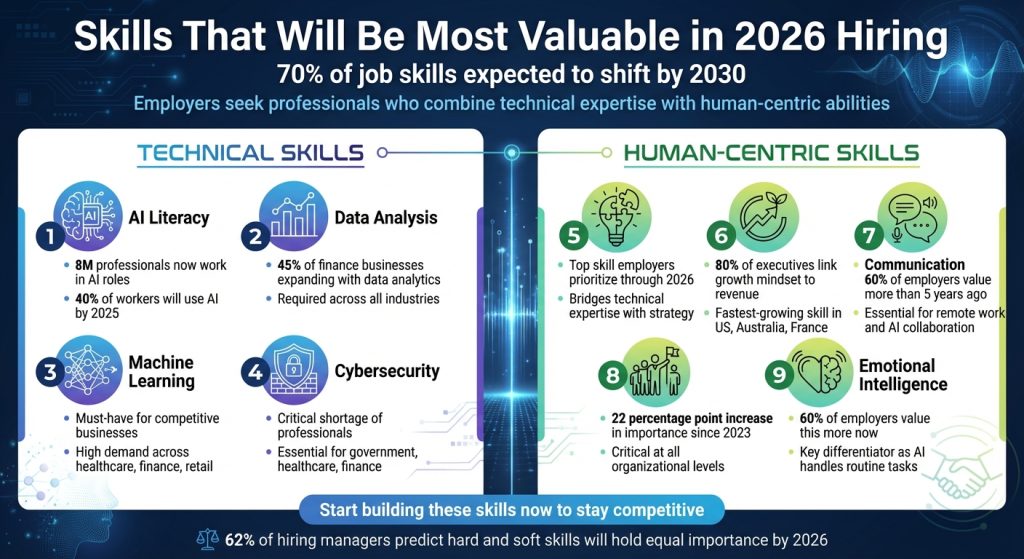
Courtesy of LockedIn AI
Integrate AI Thoughtfully into Hiring
AI is now a key part of hiring, but it needs to be implemented carefully. It can aid in identifying candidates, streamlining screening, and lessening administrative tasks. Successful organizations view AI as a collaborative partner rather than a replacement for human judgment.
Leaders should ensure that AI enhances hiring while maintaining fairness, transparency, and a positive candidate experience. Many organizations are redesigning workflows to ensure greater human oversight as technology becomes more integrated.
Build Flexible Workforce Models
As hiring becomes more complex, flexibility is essential. Organizations are increasingly blending full-time hires with contract and project-based talent. This approach allows companies to scale quickly, respond to market shifts, and access specialized skills when needed.
Flexible workforce strategies are particularly valuable in fields like engineering, IT, and logistics, where project cycles and skill demands can change rapidly. IT leaders, for example, are focusing on building adaptable teams that can evolve with technology, emphasizing continuous learning and new workforce design models.
Industry Implications Across Specialties
Engineering roles increasingly require a blend of technical expertise and collaborative problem-solving skills, especially as teams become more cross-functional and technology-driven. The skills gap varies across industries:
- Finance: The shift towards automation and analytics has created a demand for professionals who can combine financial expertise with data and technology skills.
- Engineering and Manufacturing: Talent shortages persist due to the growing need for professionals proficient in advanced systems and digital tools.
- Information Technology: Organizations are challenged to balance innovation with compliance, necessitating professionals who can manage both technological advancement and associated risks.
Partnering with Specialized Recruiting Group for Success in Hiring
Leaders don’t have to face these challenges alone. With nearly 40% of core job skills expected to change in the coming years, leaders must prioritize adaptability and continuous workforce development to stay competitive. Partnering with a specialized staffing firm like Specialized Recruiting Group can help organizations maintain their edge. Here are the ways leaders can benefit from such partnerships:
- Access to specialized talent networks
- Support for skills-based hiring strategies
- Faster access to contract and project-based professionals
- Insights into local and industry-specific workforce trends
Leadership should focus on adaptability in talent management. Organizations that succeed will embrace skills-based hiring and integrate technology. By treating hiring as a strategic lever, leaders can turn the skills gap into a growth opportunity.
About Specialized Recruiting Group
Specialized Recruiting Group (SRG) delivers top-tier professional talent solutions. SRG supports local business communities and professionals seeking new career opportunities by offering a consultative and collaborative approach to professional staffing. For more information, visit SRGPros.com or SRGPros.ca. Find the location nearest you in the U.S. or Canada.