The Complete Guide for Landlords


Learning how to evict a tenant is probably one of the most challenging situations you’ll face as a landlord. And it’s easy to see why. The eviction process for landlords involves several legal steps, and you’ll need to follow them carefully because every step has its own rules and deadlines.
In the worst-case scenario, one mistake could delay the eviction process, force you to start over, or even lead to legal consequences.
That’s why you need to take time to understand the process before making your next move. For that reason, we have put together this guide for you. We’ll walk you through how to evict a tenant from start to finish. We’ll explain the typical eviction timeline, discuss the legal grounds for eviction, explore alternatives that may help you avoid court, and highlight important differences in eviction laws across Maryland, Pennsylvania, Virginia, and Washington, DC.
Let’s get into it.
Main Takeaways
- Eviction is a legal process, not a landlord decision. Every state requires landlords to follow specific notice, filing, and court procedures before a tenant can be removed.
- Many evictions can be avoided. Payment plans, lease termination agreements, and Cash for Keys may resolve disputes faster and at a lower cost than going to court.
- The best way to avoid eviction is to prevent it. Careful tenant screening, clear lease agreements, consistent documentation, and proactive communication reduce the likelihood of landlord-tenant disputes.

Table of Contents
What Is the Legal Eviction Process?
No landlord wants to evict a tenant. If you ask any experienced property management company in Baltimore today, they will tell you that it can be time-consuming, expensive, and stressful for everyone involved. However, there are times when it becomes the only realistic option. Whether a tenant has stopped paying rent, repeatedly violated the lease, or refuses to move out after their lease ends, landlords have the legal right to regain possession of their property. The key is following the proper legal process.
The Eviction Process at a Glance
Although timelines vary by state, most eviction cases follow these steps:
- Determine whether you have legal grounds for eviction.
- Serve the required eviction notice.
- Wait for the required notice period.
- File an eviction lawsuit with the appropriate court.
- Attend the court hearing.
- Receive the judge’s decision.
- If necessary, law enforcement removes the tenant.
Each step has its own legal requirements, which we’ll explain throughout this guide.
What Is an Eviction?
An eviction is the legal process a landlord uses to regain possession of a rental property through the court system.
It typically begins when a tenant violates the lease, fails to pay rent, or remains in the property after their legal right to occupy it has ended.
Unlike simply ending a lease, an eviction requires landlords to follow specific legal procedures before they can remove a tenant.
However, eviction doesn’t mean you can simply ask a tenant to leave or change the locks. In most states, you must follow specific legal procedures before you can remove a tenant. Trying to take matters into your own hands through a “self-help eviction” could result in fines, lawsuits, or costly delays.
When Is Eviction Necessary?
Eviction should usually be your last option. In many cases, you may be able to resolve the issue by talking with your tenant, setting up a payment plan, or agreeing on a voluntary move-out date. However, if those efforts don’t work, eviction may be necessary to protect your property and rental income.
Some of the most common reasons you may need to evict a tenant include:
- Nonpayment of rent
- Repeated lease violations
- Significant property damage
- Illegal activity on the property
- Unauthorized occupants
- Refusing to move out after the lease expires
The legal reasons you can evict a tenant depend on where your rental property is located. That’s why it’s important to understand your state’s eviction laws before starting the process.
How Does the Eviction Process Work?
Although eviction laws vary from state to state, the overall process is usually very similar. Think of it as a series of steps that build on one another. Skipping a step or doing something out of order could delay your case or even force you to start over.
Here’s what the eviction process usually looks like:
- Confirm you have a legal reason to evict the tenant.
- Serve the required eviction notice.
- Wait for the notice period to expire.
- File an eviction case with the court.
- Attend the court hearing and present your evidence.
- Receive the judge’s decision.
- If necessary, law enforcement carries out the eviction.
Now that you have a high-level understanding of the eviction process, let’s look at the situations where the law actually allows a landlord to remove a tenant.
When Can a Landlord Legally Evict a Tenant?

Before you begin the eviction process, ask yourself one simple question:
Do I have a legal reason to evict my tenant?
Even if you’re frustrated, you can’t remove a tenant simply because you want the property back or you’ve changed your mind. Every state has laws that specify when an eviction is allowed, and filing for the wrong reason could result in your case being dismissed.
While the exact rules vary depending on where your rental property is located, the situations below are some of the most common reasons landlords can legally pursue an eviction.
Nonpayment of Rent
If your tenant stops paying rent, you may have legal grounds to begin the eviction process. However, you usually can’t file with the court immediately.
In most states, you’ll first need to serve the required notice, giving your tenant an opportunity to pay the overdue rent or move out. Only if they fail to comply can you typically move to the next step.
We’ll cover notice requirements later in this guide because they vary by state.
Lease Violations
Your lease agreement outlines the rules your tenant agrees to follow while living in your rental property. If those terms are repeatedly or seriously violated, you may have grounds for eviction.
Common lease violations include:
- Keeping unauthorized pets
- Allowing unauthorized occupants to live in the property
- Smoking where the lease prohibits it
- Creating repeated noise disturbances
- Damaging or neglecting the property
- Any other violation outlined in the lease agreement
In many cases, you’ll need to allow your tenant to correct the violation before moving forward with an eviction. If they fail to do so, you may be able to file an eviction case.
Holding Over
A holdover tenancy happens when your tenant remains in the rental property after the lease has expired without your permission or without signing a new lease.
For example, let’s say Sarah’s lease ends on June 30. You’ve already informed her that you won’t be renewing the lease, but when July 1 arrives, she’s still living in the property and hasn’t made plans to leave. In that situation, she may be considered a holdover tenant.
In many cases, landlords must still follow the formal eviction process, even after the lease has expired. A lease ending doesn’t automatically give you the right to remove a tenant or change the locks.
Property Damage
Normal wear and tear is part of owning a rental property. Scuffed paint, worn carpet, or a few nail holes in the wall usually aren’t reasons to evict a tenant. However, intentional or excessive damage is another story.
For example, imagine you inspect your rental and discover broken interior doors, large holes punched through the drywall, and damaged kitchen cabinets. Those issues go far beyond everyday wear and tear and may give you grounds to begin the eviction process, depending on your state’s laws.
Keep in mind that normal wear and tear is different from tenant-caused damage. Faded paint, loose door handles, or worn carpeting are generally expected over time. Intentional destruction, negligence, or major damage may justify legal action depending on your state’s laws.
Unauthorized Occupants vs. Wrongful Detainer
Although these terms are often used interchangeably, they don’t mean the same thing.
An unauthorized occupant is someone living in your rental property without your approval or without being listed on the lease.
In some jurisdictions, a wrongful detainer refers to legal action used when someone remains in a property without the legal right to stay.
Because the legal process varies by state, it’s important to determine whether your situation involves an eviction or a wrongful detainer before taking action. Attempting to remove an occupant without following the proper legal procedure could delay your case or expose you to legal liability.
Selling the Property
In some states or local jurisdictions, you may be able to ask a tenant to leave if you plan to sell your rental property. But this isn’t a universal eviction reason, and many areas have specific notice requirements or tenant protections that apply.
Take Maryland, for example: selling a rental property doesn’t automatically end a tenant’s lease. In many cases, the new owner must honor the existing lease unless another legal basis for ending the tenancy applies. That’s why it’s important to check your state and local laws before asking a tenant to move out.
Major Renovations
In some states, you will find that major renovations may provide a legal basis for ending a tenancy. That is, if you can’t reasonably complete the work while the property is occupied. We are talking about serious structural repairs or renovations that require the home to be vacant, which may qualify under certain laws.
But this isn’t a universal reason for eviction. You need to be keen on notice periods, relocation assistance, or proof that the renovations are necessary.
So, before relying on renovations as a reason to end a tenancy, check whether your state or local laws require permits, relocation assistance, or proof that you can’t reasonably complete the work while the tenant remains in the home.
What Reasons Cannot Be Used to Evict a Tenant?
 Having a reason to evict a tenant isn’t enough—it also has to be a legally valid reason. Federal, state, and local laws protect tenants from certain types of evictions, even if disagreements arise between the landlord and tenant.
Filing for eviction for a prohibited reason can delay your case, result in legal penalties, or expose you to discrimination claims. Here are some situations where landlords generally cannot legally evict a tenant.
Retaliatory Eviction
You generally can’t evict a tenant simply because they exercised a legal right. This is known as a retaliatory eviction and is prohibited in many states.
For example, filing an eviction because your tenant reported a safety issue to the local housing authority, requested necessary repairs, or joined a tenant organization may be considered retaliatory. If your tenant can show the eviction was motivated by retaliation rather than a legitimate lease violation, your case may not move forward.
Fair Housing Violations
Federal, state, and local Fair Housing laws prohibit discrimination against tenants based on protected characteristics. That means you can’t evict someone because of who they are rather than something they did.
If it looks like discrimination motivated the eviction instead of a legitimate legal reason, it could violate Fair Housing laws and lead to serious legal consequences.
It’s important to understand that belonging to a protected class does not prevent a tenant from being evicted. Instead, it means you cannot base an eviction decision on that protected characteristic. A tenant can still be evicted for legitimate reasons, such as nonpayment of rent or a lease violation.
Protected Classes
Under the federal Fair Housing Act, protected classes include:
- Race
- Color
- Religion
- Sex
- National origin
- Familial status
- Disability
Many states and local governments provide additional protections, such as sexual orientation, gender identity, age, military status, or source of income. Before starting an eviction, make sure you’re familiar with the laws that apply where your rental property is located.
For example, if two tenants commit the same lease violation but only one is evicted because of a protected characteristic, that could raise Fair Housing concerns.
Lawful Rent Withholding
Not every missed rent payment automatically gives you grounds for eviction. In some states, tenants may have the legal right to withhold rent under specific circumstances, such as when a landlord fails to address serious health or safety issues after receiving proper notice.
Because the rules for lawful rent withholding vary by state, it’s important to understand whether your tenant has a legal defense before filing an eviction case.
For example, if a rental property has serious health or safety issues and the landlord fails to address them after proper notice, some states allow tenants to withhold rent until the problem is resolved. Because these rules vary significantly, landlords should confirm whether rent withholding is legally permitted before treating missed payments as grounds for eviction.
Legal vs. Illegal Reasons for Eviction
| Generally Allowed | Generally Prohibited |
| Nonpayment of rent | Retaliation for exercising legal rights |
| Serious lease violations | Discrimination based on protected characteristics |
| Holding over after lease expiration | Evicting because a tenant requested repairs |
| Significant property damage | Violating Fair Housing laws |
| Unauthorized occupants | Ignoring lawful rent withholding protections |
Once you’ve confirmed that your reason for eviction is legally valid, the next step is making sure you have the documentation to prove it. Good records can make the difference between a smooth eviction process and a delayed or dismissed case. Let’s look at that next.
What Should You Do Before Filing for Eviction?
Before filing with the court, make sure you have the documents and evidence needed to support your claim. But don’t stop there. You also need to make sure you’ve followed all the required legal steps. So, if your tenant contests the eviction, you’ll need to show not only that you had a valid reason for eviction, but also that you followed the correct legal process.
Before filing an eviction case, make sure you can answer “yes” to these questions:
✓ Do I have a legal reason for eviction?
✓ Did I serve the correct notice?
✓ Has the notice period expired?
✓ Have I documented the lease violation?
✓ Do I have copies of all relevant records?
Here are some of the most important records to have ready.
Payment Records
If you’re evicting a tenant for nonpayment of rent, make sure you keep a complete record of their payment history. This may include bank statements, rent ledgers, receipts, or accounting reports. And if you’ve sent payment reminders or notices, keep copies of those too.
Lease Agreement
Your lease agreement is one of the most important pieces of evidence in an eviction case. It outlines the responsibilities you and your tenant agreed to, including rent payments, occupancy limits, pet policies, maintenance responsibilities, and other lease terms.
If you’re claiming your tenant violated the lease, you’ll need to show exactly which provision was broken.
Inspection Reports
Inspection reports help establish the condition of your rental property before, during, and after the tenancy. They can be especially useful if the eviction involves property damage, unauthorized occupants, or lease violations.
If possible, keep dated inspection reports along with any notes documenting the issues you observed. And whenever possible, compare move-in and recent inspection reports to clearly show what changed during the tenancy.
Photos and Videos
Clear photos or videos can provide valuable evidence if your eviction involves property damage, unauthorized pets, lease violations, or health and safety concerns. Make sure your photos are dated whenever possible and accurately reflect the condition of the property.
Communication Records
Save copies of any emails, text messages, letters, or written notices exchanged with your tenant. These records can help demonstrate that you communicated the issue, provided any required notices, and allowed your tenant to resolve the problem before pursuing eviction.
Even friendly conversations can become important evidence later. Keeping communication organized helps demonstrate that you gave the tenant notice, explained the issue, and made reasonable efforts to resolve the problem before filing for eviction.
Copies of Eviction Notices
One of the most important documents in an eviction case is the notice you served before filing with the court. Keep a copy of every notice you issue, along with any supporting documents that show when and how you delivered it.
Depending on your state’s requirements, this may include certified mail receipts, affidavits of service, photos of posted notices, or signed acknowledgments from the tenant.
If you can’t demonstrate that the required notice was properly served, your eviction case may be delayed or dismissed.
Now, once your documents are organized, the next step is serving the eviction notice correctly. Even if you have a strong case, using the wrong notice or delivering it improperly can delay the entire eviction process.
How Do You Serve an Eviction Notice?
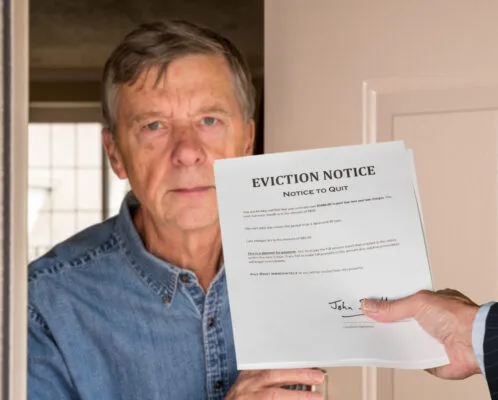
Before a court will consider your eviction case, you’ll usually need to give your tenant formal notice that there’s a problem. This notice gives the tenant an opportunity to fix the issue, move out voluntarily, or prepare for the next step in the legal process.
Although serving an eviction notice may seem straightforward, it’s one of the most common places landlords make mistakes. Using the wrong notice, leaving out required information, or serving it incorrectly could delay your case or require you to start the eviction process over.
Let’s look at what you need to know before moving to the next step.
What Is a Notice to Quit?
A Notice to Quit is a formal legal notice informing your tenant that they’ve violated the lease or that their tenancy is ending. In most states, serving this notice is a required step before you can file an eviction lawsuit. If you skip this step when your state requires it, the court may dismiss your case.
The name of the notice, and the situations where it’s required may vary depending on your state. Some jurisdictions use different notices for nonpayment of rent, lease violations, or lease termination.
What Should an Eviction Notice Include?
Although requirements vary by state, an eviction notice should generally include the following information:
- The tenant’s name
- Rental property’s address
- Reason for the notice
- Amount of rent owed (if applicable)
- Deadline to pay, correct the violation, or move out
- Date the notice was issued
- Your name and signature, if required by state law
Double-check your state’s requirements before preparing the notice. Leaving out required information could invalidate the notice.
How Should an Eviction Notice Be Served?
Each state has its own rules for how an eviction notice must be delivered. Acceptable delivery methods vary by state, so always verify what your jurisdiction allows before serving a notice. That said, some of the acceptable methods may include:
- Personal delivery to the tenant
- Leaving the notice with another qualified occupant at the property
- Posting the notice at the rental property when permitted by law
- Mailing the notice using an approved delivery method
Not every state allows every delivery method. Before serving an eviction notice, make sure you’re following the rules that apply in your jurisdiction.
How Do You Document Service?
After serving the notice, keep records showing when and how it was delivered. If your tenant later claims they never received the notice, these records may become critical evidence during the court hearing.
Helpful records may include:
- A copy of the completed Notice to Quit
- A certificate or affidavit of service, if required
- Certified mail receipts or tracking information
- Photos showing where the notice was posted, when permitted
- Notes recording the date, time, and method of service
Keeping thorough records can help avoid disputes and make it easier to demonstrate that you followed the proper procedures if your case proceeds to court.
Notice to Quit Checklist
Before Serving an Eviction Notice, Confirm That You:
✓ Are using the correct notice for your state
✓ Included all legally required information
✓ Verified the notice period
✓ Used an approved delivery method
✓ Kept proof of service
✓ Saved a copy for your records
Once the notice has been served, the next step depends on how your tenant responds. They may correct the problem, move out voluntarily, challenge the notice, or remain in the property, each leading to a different stage in the eviction process.
Common Notice Mistakes
- Serving the wrong notice for the situation
- Miscalculating the notice period
- Leaving out required information
- Using an unapproved delivery method
- Failing to keep proof of service
What Happens After an Eviction Notice Is Served?

Serving an eviction notice doesn’t automatically result in an eviction. Instead, it begins a waiting period during which your tenant has an opportunity to respond. What happens next depends on the reason for the notice, your state’s laws, and how your tenant chooses to act.
In most cases, one of the following outcomes will occur.
The Tenant Cures the Violation
In some situations, your tenant may be able to resolve the issue before the notice period expires. For example, they may pay the overdue rent, remove an unauthorized pet, or correct another lease violation if state law allows.
If the tenant complies with the notice within the required timeframe, you may not be able to move forward with the eviction. Instead, the tenancy typically continues as normal unless another violation occurs. Keep records showing that the violation was corrected, as they may be helpful if similar issues arise again later in the tenancy.
The Tenant Moves Out
Some tenants choose to move out before the notice period expires rather than contest the eviction. If this happens, inspect the property after they leave, document its condition, and determine whether any deductions from the security deposit are appropriate under your state’s laws.
Even if the tenant leaves voluntarily, keep copies of all notices and documentation for your records.
The Tenant Contests the Eviction
If your tenant believes the eviction is unlawful or disagrees with the reason you’ve given, they may choose to challenge it in court. They may argue that they didn’t violate the lease, that the required notice wasn’t properly served, or that the eviction is retaliatory or discriminatory.
If your tenant contests the eviction, avoid communicating emotionally or taking matters into your own hands. Continue following the legal process and rely on your documentation to support your case.
The Tenant Holds Over
Sometimes, a tenant simply remains in the property after the notice period expires without correcting the issue or moving out. This is commonly known as holding over.
If your tenant remains in the property after the notice period expires, resist the temptation to remove them yourself. Changing the locks, shutting off utilities, or removing belongings may be considered an illegal self-help eviction. Instead, file your eviction case with the appropriate court and allow the legal process to continue.
Possible Outcomes After Serving an Eviction Notice
| If the tenant… | Then you should… |
| Pays the rent or fixes the violation | Continue the tenancy if allowed by law |
| Moves out | Inspect the property and document its condition |
| Challenges the notice | Prepare your evidence for court |
| Does nothing | File an eviction case after the notice period expires |
How Does the Court Eviction Process Work?

If your tenant doesn’t comply with the eviction notice, the process usually moves from your rental property to the courtroom. At this stage, a judge, and not the landlord, decides whether the eviction can legally proceed.
Although court procedures vary by state, most eviction cases follow the same general sequence outlined below.
Court Eviction Timeline
Most eviction cases follow this order:
- File the eviction complaint.
- The court schedules a hearing.
- Both parties present evidence.
- The judge issues a decision.
- If you win, the court issues an Order of Possession (or similar order).
- If necessary, law enforcement completes the eviction
Filing the Complaint
The eviction process officially begins when you file a complaint, sometimes called an unlawful detainer or eviction action, with the appropriate court. You’ll typically need to provide information about the tenancy, the reason for the eviction, and any supporting documents, such as the lease agreement, payment records, and copies of the eviction notice you served.
Once you file your complaint, the court will schedule a hearing and notify your tenant of the date and time.
Before filing, double-check that you’ve met every legal requirement, including serving the correct notice and waiting the required notice period. Filing too early can cause the court to dismiss your case.
Court Hearing
At the hearing, both you and your tenant have an opportunity to explain your side of the case. The judge will review the facts, ask questions if necessary, and consider any evidence you and your tenant present before making a decision.
Keep your presentation focused on the facts. Bring organized documentation, answer the judge’s questions honestly, and avoid letting frustration or personal disagreements distract from the legal issues being considered.
If your tenant doesn’t appear for the hearing, the court may issue a default judgment in your favor, depending on your state’s laws and court procedures.
Presenting Evidence
Your evidence tells the story of what happened. The more organized and complete your documentation is, the easier it will be for the judge to understand your case. Be prepared to present any records that support your claim, such as:
- The signed lease agreement
- Payment records or rent ledgers
- Copies of the Notice to Quit and proof of service
- Inspection reports
- Photos or videos of property damage, if applicable
- Emails, text messages, or other written communication with your tenant
The judge will review the evidence from both parties before determining whether the eviction is legally justified.
Judge’s Decision
If the court rules in your favor, the court will typically issue a judgment that allows you to continue the eviction process. However, if the court determines that the legal requirements weren’t met, the court may dismiss your case, and you may need to correct the issue before filing again.
Should that happen, don’t assume the issue is over. In many situations, you’ll have the opportunity to correct the problem, such as serving the proper notice and filing again.
Order of Possession
If the court grants the eviction, it may issue an Order of Possession (sometimes called a writ of possession or similar document, depending on the state). This court order allows law enforcement to take the next step in the eviction process and gives your tenant a final opportunity to leave the property voluntarily before law enforcement becomes involved.
The exact name of this document and the timeframe for enforcement vary by jurisdiction.
Sheriff’s Removal
If your tenant still refuses to leave after the court issues an Order of Possession, the sheriff typically carries out the final step, or another authorized law enforcement officer.
At this stage, the sheriff schedules the physical eviction and removes the tenant from the property if necessary. As the landlord, you generally cannot carry out the eviction yourself by changing the locks, removing belongings, or forcing the tenant to leave. Those actions must be handled through the legal process.
Stage |
What You Can Expect |
What You Should Do |
| File the Eviction Complaint | The court officially opens your case and schedules the next steps. | Submit all required forms, copies of the lease, payment records, notices, and any supporting evidence. |
| Attend the Court Hearing | Both you and your tenant have the opportunity to explain your side of the case. | Arrive prepared, stay professional, and bring organized documentation to support your claim. |
| Present Your Evidence | The judge reviews the facts before making a decision. | Clearly explain what happened and provide documents, photos, inspection reports, payment records, and communication records. |
| Receive the Judge’s Decision | The judge decides whether the eviction can move forward. | Follow the court’s instructions carefully. If your case is dismissed, determine what must be corrected before refiling. |
| Order of Possession | If the court rules in your favor, it authorizes the tenant’s removal if they don’t leave voluntarily. | Wait for the required timeframe and follow the court’s procedures. |
| Sheriff’s Removal (If Necessary) | Law enforcement completes the eviction if the tenant still refuses to leave. | Never attempt to remove the tenant yourself or change the locks before the sheriff carries out the eviction. |
Once the court process is complete, the next question many landlords have is how long everything takes. The answer depends largely on where your rental property is located, since each state has its own notice requirements, court procedures, and enforcement timelines.
How Do Eviction Laws Differ by State?

While the overall eviction process follows the same general pattern across the United States, the specific rules vary by state. Notice requirements, filing procedures, court timelines, and tenant protections can all affect how long an eviction takes and what steps landlords must follow.
That’s why it’s important to understand the laws that apply where your rental property is located. Below is a general overview of the eviction process in the states and jurisdictions we serve.
State Eviction Process at a Glance
| Location | Notice Requirements | Court Process | Unique Considerations |
| Maryland | Varies by reason for eviction | District Court | Different notice rules depending on the violation |
| Pennsylvania | Varies by lease and reason | Magisterial District Court | Philadelphia has additional local requirements |
| Virginia | Depends on the lease violation | General District Court | Strict statutory notice requirements |
| Washington, DC | Extensive tenant protections | Landlord and Tenant Branch | Additional protections and procedural requirements |
Maryland Eviction Process
Maryland landlords must follow the state’s notice requirements before filing an eviction case with the District Court. The type of notice you’ll need depends on the reason for the eviction, such as nonpayment of rent or a lease violation.
Once the required notice period has passed, you can file your case with the court. If the judge rules in your favor and the tenant still doesn’t leave, the court may issue a Warrant of Restitution, which authorizes law enforcement to carry out the eviction.
Many landlords consider Maryland’s eviction process relatively straightforward; following the correct procedures at every stage is essential. Even small mistakes, such as serving the wrong notice or missing a filing requirement, can delay your case.
If your rental property is located in Pennsylvania, you’ll follow a similar overall process, but notice requirements and court procedures differ from Maryland.
Pennsylvania Eviction Process
Pennsylvania’s eviction process begins with serving the appropriate notice to your tenant. The required notice period depends on the reason for the eviction and, in some cases, the length of the lease.
If the tenant doesn’t comply with the notice, you can file an eviction complaint with the appropriate court. After a hearing, the judge will decide whether an Order for Possession should be issued.
If your rental property is located in Philadelphia, you may also need to comply with additional local requirements before filing an eviction. Because local rules can differ from statewide procedures, it’s important to confirm the requirements that apply to your property.
Virginia’s eviction laws also follow the same general framework, although statutory notice requirements and filing procedures have their own distinctions.
Virginia Eviction Process
In Virginia, landlords generally begin the eviction process by serving the appropriate notice based on the reason for the eviction. If the tenant doesn’t comply, you can file an unlawful detainer action with the General District Court.
After reviewing the evidence, the court may issue a Writ of Eviction if it rules in your favor. That writ allows law enforcement to remove the tenant if they remain in the property after the required timeframe.
Virginia has specific notice requirements and filing procedures that landlords must follow. Taking the time to understand those rules before filing can help prevent unnecessary delays.
Washington, DC has some of the strongest tenant protections in the country, making strict compliance with local eviction laws especially important.
Washington, DC Eviction Process
Washington, DC has some of the most comprehensive tenant protections in the country. As a result, landlords must follow several legal steps before a tenant can be removed.
Once you’ve served the required notice and filed your eviction case, the court will schedule a hearing. If the court rules in your favor, it may issue a Writ of Restitution, which authorizes the eviction to move forward. However, only the appropriate authorities can carry out the eviction, meaning you cannot remove the tenant yourself.
Following the required procedures from the beginning can help reduce delays and keep your case moving forward. That said, let’s take a look at how much an eviction typically costs.
How Much Does an Eviction Cost?
The cost of evicting a tenant can vary significantly depending on your location, the reason for the eviction, and whether the tenant contests the case. While some evictions are resolved quickly, others require multiple court appearances, legal assistance, and additional enforcement costs.
Understanding the potential expenses ahead of time can help you budget appropriately and avoid unexpected financial surprises.
Common Eviction Costs
| Expense | What It Covers |
| Court filing fees | Filing the eviction lawsuit |
| Service of process | Delivering court documents to the tenant |
| Attorney fees | Legal representation, if used |
| Lost rental income | Rent lost while the property remains occupied |
| Property repairs | Damage beyond normal wear and tear |
| Sheriff or enforcement fees | Carrying out the eviction order, where applicable |
Lost Rental Income
One of the biggest financial impacts of an eviction is lost rental income. Think about it: Your mortgage still needs to be paid, property taxes don’t stop, and insurance premiums are still due. Yet the property isn’t bringing in any income.
If your tenant stops paying rent while the eviction works its way through the legal system, you could lose weeks or even months of rental income before you’re able to regain possession of your property.
The longer the process takes, the more money comes out of your pocket.
Court Costs
Filing an eviction case typically involves court filing fees and, depending on your situation, additional costs such as service fees, attorney’s fees, or fees for enforcing the court’s judgment.
These expenses vary by state and local jurisdiction, so it’s important to understand the costs before filing your case.
Property Repairs
Not every eviction results in property damage, but some do. If your tenant leaves behind broken fixtures, damaged walls, missing appliances, or excessive cleaning, you’ll need to restore the property before it can be rented again.
Documenting the property’s condition before and after the tenancy can help support any claims for damages.
Vacancy Costs
Even after the tenant moves out, your rental property may sit vacant while you clean, repair, inspect, and prepare it for the next resident. During that time, you’re still responsible for expenses such as mortgage payments, property taxes, insurance, and utilities, even though the property isn’t generating rental income.
Marketing Expenses
Once your property is ready, you’ll need to attract a new tenant. Depending on how you market the vacancy, you may incur costs for online listings, professional photography, yard signs, or tenant screening services.
While these expenses are often necessary, they add to the overall cost of replacing a tenant.
Turnover Costs
Preparing a rental for a new tenant often involves more than a quick cleaning. You may need to repaint walls, replace flooring, repair damage, change locks, service appliances, or complete other maintenance tasks before the property is move-in ready.
These turnover costs can add up quickly, particularly if the previous tenant didn’t leave the property in good condition.
Opportunity Costs
An eviction also costs you something that’s harder to measure—your time. Instead of focusing on growing your rental portfolio or managing other investments, you may spend hours communicating with tenants, gathering evidence, attending court hearings, coordinating repairs, and preparing the property for its next occupant.
Although opportunity costs don’t appear on an invoice, they can have a significant impact on your business over time.
Can You Avoid Eviction?

In some situations, yes. Eviction isn’t always the best—or only—solution to a landlord-tenant dispute. If your tenant is willing to cooperate, resolving the issue outside of court may save time, reduce costs, and help you regain possession of your property more quickly.
Of course, alternatives aren’t appropriate in every case. Serious lease violations, repeated noncompliance, or illegal activity may leave you with no practical option other than a formal eviction. However, before filing with the court, it’s worth considering whether one of the following approaches could resolve the situation.
Alternatives to Eviction at a Glance
| Option | Best When… |
| Cash for Keys | You need the property back quickly, and the tenant is willing to negotiate. |
| Mutual Lease Termination | Both parties agree the tenancy should end. |
| Payment Arrangement | The issue is temporary financial hardship. |
| Open Communication | The problem is minor or based on misunderstanding. |
| Voluntary Move-Out | The tenant is willing to leave without court involvement. |
Open Communication
Not every lease violation requires immediate legal action. In some cases, a conversation with your tenant may be enough to resolve misunderstandings or address minor issues before they become more serious.
Maintaining professional and respectful communication can help preserve a positive landlord-tenant relationship while reducing the likelihood of future disputes.
Payment Arrangements
If the issue is unpaid rent, consider whether a temporary payment arrangement is a realistic option. Some tenants experience short-term financial difficulties but are willing and able to catch up if given a little flexibility.
Before agreeing to a payment plan, make sure the terms are documented in writing, including payment amounts, due dates, and what will happen if the agreement isn’t followed.
Mutual Lease Termination
Sometimes, both you and your tenant recognize that continuing the tenancy isn’t in either party’s best interest. In those cases, you may be able to sign a mutual lease termination agreement.
This allows both parties to end the lease on agreed terms without going through the eviction process. Be sure to document the agreement in writing and keep a signed copy for your records.
Voluntary Move-Out
If your tenant understands that the tenancy is coming to an end, they may decide to move out voluntarily rather than go through the eviction process. This can save both parties the time, expense, and uncertainty of a court case.
If your tenant agrees to move out, confirm the agreement in writing and document the move-out date to avoid future misunderstandings.
Cash for Keys
A Cash for Keys agreement is exactly what it sounds like. That is, you offer your tenant money in exchange for voluntarily moving out by an agreed-upon date. Paying a tenant to leave may seem unusual, yes, but it can sometimes cost less than going through a lengthy eviction.
If you choose this option, you need to put the agreement in writing and clearly outline the move-out date, payment amount, and any conditions that must be met before payment is made.
Honestly, no single solution works in every situation. The right approach depends on why the tenancy is breaking down, whether the tenant is willing to cooperate, and how quickly you need to regain possession of the property.
And if these alternatives aren’t successful, following the formal eviction process may be the safest and most appropriate next step.
Is Cash for Keys Always the Best Option?
A Cash for Keys agreement can be an effective alternative to eviction, but it isn’t the right solution for every situation. While offering a tenant money to move out may seem unfair at first, it can sometimes save you more money than a lengthy court battle.
The key is understanding when this approach makes sense—and when it doesn’t.
Pros of Cash for Keys
When handled properly, a Cash for Keys agreement can benefit both landlords and tenants. Some of the biggest advantages include:
- Avoiding lengthy court proceedings.
- Regaining possession of your property more quickly.
- Reducing legal fees and court costs.
- Minimizing lost rental income.
- Lowering the risk of property damage during a contested eviction.
- Ending the tenancy on mutually agreed terms.
In many cases, paying a tenant a modest amount to move out voluntarily can cost less than waiting weeks or months for an eviction case to work its way through the court system.
Cons of Cash for Keys
Like anything else, Cash for Keys has its downsides.
For starters, you’re paying a tenant to leave a property they were already legally required to vacate. Some landlords also worry that offering money may encourage tenants to negotiate for a larger payment or delay moving out.
There’s also no guarantee the tenant will honor the agreement unless you document everything clearly and make payment conditional on the agreed terms.
When Does Cash for Keys Make Sense?
Cash for Keys may be worth considering when:
- The eviction process is expected to take a long time.
- The tenant is cooperative and willing to negotiate.
- You want to avoid legal expenses.
- You need possession of the property quickly.
- The cost of the agreement is likely to be lower than the overall cost of an eviction.
In these situations, reaching an agreement can often save both time and money.
When Is It Better to Proceed With an Eviction?
Cash for Keys isn’t always the right choice. You may decide that a formal eviction is the better option if:
- The tenant refuses to negotiate.
- The tenant has repeatedly violated the lease.
- Illegal activity has occurred on the property.
- You believe the tenant won’t honor the agreement.
- Paying the tenant would likely cost more than completing the eviction process.
Ultimately, the best approach depends on the circumstances of your situation, the costs involved, and your state’s eviction laws.
What Are the Most Common Eviction Mistakes?

Even landlords with a valid legal reason for eviction can run into problems if they don’t follow the required process. Many eviction cases are delayed, and sometimes even dismissed, not because the landlord was wrong, but because a critical step was missed.
Before filing or continuing with an eviction, review these common mistakes to help ensure your case stays on track.
Skipping Required Legal Steps
The eviction process exists for a reason, and each step builds on the one before it. Skipping required notices, filing with the wrong court, missing deadlines, or failing to obtain the necessary court order can delay your case and increase your costs.
Taking the time to follow each step carefully can help the process move forward more efficiently.
Serving an Improper Notice
An eviction case can quickly fall apart if the required notice isn’t served correctly. Using the wrong notice, leaving out required information, or failing to give the tenant enough time to respond may result in the court dismissing your case.
Before serving an eviction notice, verify that you’re using the correct form and following your state’s notice requirements.
Failing to Keep Documentation
Every step of the eviction process should leave a paper trail. Without organized records, it may be difficult to prove that you served the required notice, documented the lease violation, or followed the proper legal procedures.
Keep copies of your lease agreement, payment records, inspection reports, photos, written notices, and communications with your tenant throughout the tenancy.
Self-Help Eviction
One of the biggest mistakes landlords make is trying to remove a tenant without a court order. This is known as a self-help eviction and is illegal in most jurisdictions.
Examples of self-help eviction include:
- Changing the locks.
- Shutting off utilities.
- Removing the tenant’s belongings.
- Threatening or forcing the tenant to leave.
Regardless of the circumstances, removing a tenant without following the legal process can expose you to significant legal liability. Always wait for the court and, where required, law enforcement to complete the eviction.
Retaliating Against a Tenant
Evicting a tenant because they exercised a legal right can lead to serious legal problems. For example, attempting to evict a tenant after they reported unsafe living conditions or requested legally required repairs may be considered retaliatory.
If you have a legitimate reason for eviction, make sure you can support it with evidence and that it is unrelated to the tenant’s protected legal activities.
Violating Fair Housing Laws
Eviction decisions should always be based on legitimate lease violations or other lawful reasons—not on a tenant’s membership in a protected class.
Even the appearance of discrimination can create legal challenges. Apply your lease terms consistently and treat all tenants fairly throughout the eviction process.
Quick Mistake Checklist
| Before Filing for Eviction, Ask Yourself: |
| ✓ Did I serve the correct notice? |
| ✓ Do I have documentation supporting my claim? |
| ✓ Am I following the required legal process? |
| ✓ Could this eviction be viewed as retaliatory or discriminatory? |
| ✓ Have I avoided any form of self-help eviction? |
How Do You Evict Squatters or Unauthorized Occupants?
Not everyone living in your rental property is necessarily a tenant. In some cases, the person occupying the property may never have signed a lease, may have remained after the lawful tenant moved out, or may have entered the property without permission.
That’s why the first step is figuring out who is actually occupying your property. Whether the person is a tenant, unauthorized occupant, squatter, or trespasser will determine which legal process applies.
Removing Unauthorized Occupants: General Process
- Identify who is occupying the property.
- Determine whether they’re a tenant, unauthorized occupant, squatter, or trespasser.
- Confirm which legal process applies under your state’s laws.
- Avoid removing the occupant yourself unless law enforcement has authority to do so.
- Follow the appropriate legal procedure before taking possession of the property.
Squatters vs. Trespassers
Squatters and trespassers are often confused, but they aren’t the same thing.
A trespasser enters or remains on a property without permission and generally has no legal claim to occupy it. Depending on the circumstances, law enforcement may be able to remove a trespasser without going through the eviction process.
A squatter, on the other hand, occupies a property without the owner’s permission but may remain there for an extended period. Once someone has established occupancy, removing them may require legal action rather than simply calling the police.
Understanding the difference is important because it determines which legal process applies.
Wrongful Detainer
If someone remains in your property without a legal right to stay, you may need to pursue a wrongful detainer action rather than a traditional eviction. This often applies when an occupant never signed the lease or remains after the tenant who had the legal right to occupy the property has left.
Because wrongful detainer procedures vary by state, don’t assume the standard eviction process automatically applies. In some jurisdictions, different notices, court filings, or legal remedies may be required depending on how the occupant came to possess the property.
Adverse Possession
In rare situations, a squatter may attempt to claim ownership of a property through adverse possession. Although the requirements vary by state, adverse possession generally requires someone to occupy a property openly, continuously, and without the owner’s permission for a legally specified period.
These claims are uncommon and usually involve strict legal requirements. In most cases, taking prompt action when you discover an unauthorized occupant can help prevent more complicated legal issues from developing.
Before Taking Action
Cases involving squatters and unauthorized occupants can be more complicated than standard landlord-tenant disputes. Before attempting to remove anyone from your property, consider:
- Determine whether the person is legally considered a tenant, an unauthorized occupant, a squatter, or a trespasser.
Identify which legal process applies, whether eviction, wrongful detainer, or another legal process applies. - Check whether local laws provide additional protections or procedures.
Consult a qualified attorney if ownership or occupancy rights are disputed.
Because these situations can involve complex questions about occupancy rights, it’s important to identify the correct legal process before taking action. When ownership or occupancy rights are unclear, seeking qualified legal advice can help you avoid unnecessary delays and legal complications.
How Can Landlords Prevent Future Evictions?

The best eviction is the one you never have to file. While some evictions are unavoidable, many landlord-tenant disputes can be prevented long before they reach the courtroom. Setting clear expectations, enforcing your lease consistently, maintaining good communication, and choosing qualified tenants can significantly reduce the likelihood of future eviction proceedings.
Think of the following practices as preventive measures that help protect both your rental property and your investment over the long term.
Eviction Prevention Strategies at a Glance
| Strategy | How It Helps |
| Communicate with tenants | Resolves issues before they escalate. |
| Enforce the lease consistently | Creates clear expectations and reduces disputes. |
| Perform regular inspections | Identifies problems early. |
| Keep thorough documentation | Protects you if legal action becomes necessary. |
| Screen tenants carefully | Reduces the likelihood of future lease violations. |
Screen Tenants Carefully
One of the best ways to reduce the risk of future evictions is to choose qualified tenants from the start. A thorough tenant screening process can help you identify applicants who are more likely to pay rent on time, follow the lease agreement, and take good care of your property.
While no screening process can eliminate every risk, choosing qualified applicants from the beginning is often the most effective way to reduce future lease violations, late payments, and evictions.
Use a Tenant Screening Checklist
Having a consistent tenant screening checklist helps ensure every applicant is evaluated using the same criteria. Depending on your screening process and applicable Fair Housing laws, your checklist may include:
- Rental history
- Employment verification
- Income verification
- Credit history
- Background checks, where permitted
- References from previous landlords
- Verify that the information provided on the application is complete and consistent
Using the same screening standards for every applicant can help you make more informed decisions while reducing the risk of discrimination claims.
Establish a Clear Rental Application Process
A well-defined rental application process helps set expectations before a tenant even moves into your property. Make sure applicants understand your screening criteria, required documentation, lease terms, and any applicable fees before making a decision.
A transparent application process not only helps attract qualified tenants but also creates a stronger foundation for a successful landlord-tenant relationship.
Communicate With Your Tenants
Good communication sets clear expectations from the beginning of the tenancy. Responding promptly to maintenance requests, addressing concerns early, and keeping tenants informed about important issues can help prevent small problems from turning into larger disputes.
While communication won’t solve every issue, maintaining a professional relationship often makes it easier to resolve concerns before legal action becomes necessary.
Enforce Your Lease Consistently
Your lease agreement only works if it’s enforced consistently. Ignoring lease violations for one tenant while enforcing them against another can create confusion and even expose you to legal challenges.
Whether it’s unauthorized occupants, pet policies, late rent payments, or property maintenance responsibilities, apply your lease terms fairly and consistently to every tenant.
Perform Regular Property Inspections
Routine property inspections can help you identify maintenance issues and lease violations before they become more serious.
Inspections may reveal unauthorized occupants, unapproved pets, property damage, or deferred maintenance that could eventually lead to larger problems. Just remember to provide any legally required notice before entering the property.
Keep Thorough Documentation
Maintaining accurate records throughout the tenancy can make managing your rental property much easier. Keep copies of lease agreements, inspection reports, maintenance requests, payment records, notices, and written communication with your tenants.
If an eviction ever becomes necessary, organized records can make it much easier to demonstrate that you’ve consistently enforced the lease and followed the proper legal process.
FAQs About Evicting a Tenant
 By now, you should have a solid understanding of how the eviction process works, when landlords can legally evict a tenant, and how to avoid common mistakes. However, you may still have a few specific questions. Below, we’ve answered some of the most frequently asked questions about evicting a tenant to help clarify common concerns.
What should I do immediately after a tenant stops paying rent?
Start by reviewing your lease agreement and documenting the missed payment. Communicate with the tenant to determine whether the issue can be resolved, and if payment isn’t made, follow your state’s notice requirements before considering legal action. Avoid taking self-help measures, such as changing the locks or shutting off utilities.
Can a landlord evict a tenant without going to court?
In most cases, no. Landlords generally must follow the legal eviction process, which includes serving the required notice and obtaining a court order before a tenant can be removed. Attempting to force a tenant out by changing the locks, shutting off utilities, or removing their belongings is often considered an illegal self-help eviction.
How long does the eviction process take?
The timeline depends on your state’s laws, the reason for the eviction, whether the tenant contests the case, and how busy the local courts are. Some cases are resolved within a few weeks, while others may take several months.
Can a tenant stop an eviction by paying the rent?
Sometimes. Depending on your state’s laws and the reason for the eviction, paying the overdue rent within the required timeframe may resolve the issue and prevent the eviction from moving forward. However, this isn’t true in every situation, so it’s important to understand the laws that apply to your rental property.
Can I evict a tenant for being late on rent once?
It depends on your state’s laws and the terms of your lease agreement. In many cases, landlords must first provide the required notice, giving the tenant an opportunity to pay the overdue rent before an eviction case can be filed.
What’s the difference between an eviction and a wrongful detainer?
An eviction generally involves removing a tenant who has violated the lease or failed to pay rent. A wrongful detainer action typically applies when someone remains in a property without the legal right to occupy it. The exact definitions and procedures vary by state.
Can I evict a tenant for violating the lease if they have already fixed the problem?
It depends on your state’s laws and the type of lease violation involved. In some situations, tenants have the right to correct certain violations within the notice period, while other violations may still allow the eviction process to continue. Review your state’s requirements before taking legal action.
What happens if a tenant refuses to leave after losing the eviction case?
If the court rules in your favor and the tenant still refuses to leave, you’ll typically need to obtain the appropriate court order allowing law enforcement to complete the eviction. Landlords generally cannot remove tenants themselves.
Can I refuse to renew a tenant’s lease instead of evicting them?
In many situations, yes. If a fixed-term lease is ending, landlords may choose not to renew it, provided they comply with state laws, lease terms, notice requirements, and Fair Housing regulations. However, if the tenant has the legal right to remain in the property, you may still need to follow the formal eviction process.
Protect Your Rental Property Before Problems Escalate

Evictions are often time-consuming, stressful, and expensive—but many landlord-tenant disputes can be prevented with the right systems in place. From screening qualified tenants to enforcing lease terms consistently and responding to issues early, proactive property management can reduce the likelihood of costly legal disputes.
At Bay Property Management Group, we help rental property owners throughout Maryland, Pennsylvania, Virginia, and Washington, DC manage their investments with confidence. Our team handles tenant screening, lease enforcement, rent collection, maintenance coordination, inspections, and day-to-day property management—helping owners stay ahead of problems before they become costly.
Whether you own a single rental property or a growing portfolio, we’re here to help you protect your investment, reduce risk, and simplify the day-to-day responsibilities of being a landlord. Learn more about our comprehensive property management services and discover how we can help you achieve your long-term rental goals.