Salmon gives clear signals when it’s ready — you just need to know what to look for. Whether you’re aiming for silky medium-rare or fully cooked, these visual and tactile cues tell you exactly when to pull it from the heat.
🔥 1. The Flake Test
Press gently with a fork or your finger:
- Separates into clean, defined flakes: ~130–135°F (fully cooked)
- Soft, resists flaking: still medium-rare
- Falls apart instantly: overcooked
This is the easiest doneness cue for beginners.
🔥 2. Color Changes You Can Trust
| Doneness | Internal Temp | Visual Cue |
|---|---|---|
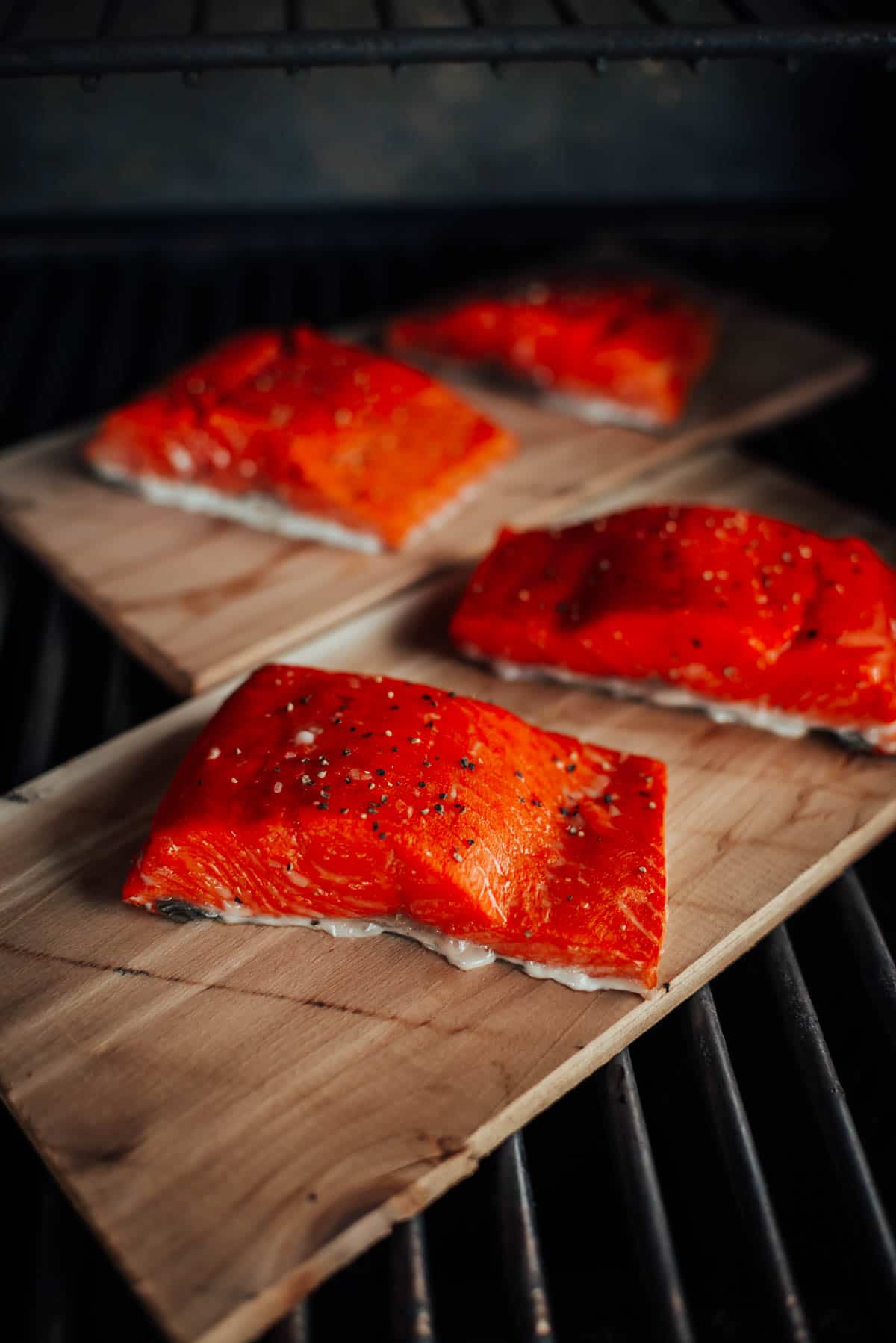
| Medium-Rare | 115–125°F | glossy, slightly translucent center |
| Medium | 125–130°F | center just barely translucent |
| Fully Cooked | 130–135°F | opaque pink, moist |
| Well-Done | 140–145°F | fully opaque, firm |
Color + texture gives you the fastest read once you know what to expect.
🔥 3. Albumin (the White Protein)
Albumin is the white protein that rises to the surface when salmon cooks.
- A little showing: you’re in the 130°F range
- A lot showing: the heat was too high or the salmon was overcooked
It’s harmless — just a sign your temperature ran hotter than needed.
🔥 4. The Gentle Press Test
Touch the thickest part of the fillet:
- Soft + springy: medium-rare
- Firm but still yielding: fully cooked
- Very firm: well-done
This is the technique chefs use on the line when thermometers aren’t an option.
🔥 5. When in Doubt, Pull Early
Salmon continues cooking from carryover heat, especially:
- in cast iron
- on the grill
- in the oven
If you’re unsure, pull it a minute early. You can always return it to the heat — you can’t undo overcooked fish.
🔥 Bonus: With a Thermometer
For absolute certainty:
- 115–125°F: medium-rare
- 130–135°F: fully cooked
- 140–145°F: USDA recommendation for well-done
Full chart: Salmon Internal Temperature Guide
🍽️ Want to Practice?
Start with a clean pan-sear where you can see all the cues in action: Pan-Seared Salmon
❓ FAQs: How to Tell If Salmon Is Done
It will look glossy and slightly translucent in the center and feel very soft when pressed. If it’s cold in the middle, it needs more heat.
Yes. Pink or slightly translucent salmon typically indicates medium-rare (115–125°F). Fully opaque salmon is 130–135°F.
Yes — clean flakes mean you’re around 130°F. If it falls apart instantly, it’s overcooked.
Absolutely. Overcooked salmon turns dry, firm, and produces excess white albumin on the surface.
Medium-rare: 115–125°F
Fully cooked: 130–135°F
Well-done: 140–145°F (USDA recommendation)
Yes. Carryover heat can raise the internal temp by 2–5°F, especially in cast iron or thick cuts.
More Salmon Basics
Want dishes that use these techniques? Explore all our Seafood Recipes.