
(Senior Editor)

Broccoli is delicious, packed with nutrients, and a true all-rounder. This superfood is the perfect addition to your meal plan and helps support a balanced diet. Find tasty recipe ideas and the best tips for cooking broccoli here.
The most common and healthiest way to cook broccoli is to boil it in salted water or vegetable broth. But you can also blanch, steam, fry, bake, or even eat it raw.
The possibilities are endless. To give you a better overview, we’ll explain everything you need to know about cooking broccoli.
Buying and Prepping Broccoli

Buying and Prepping Broccoli
Whether as a side dish, in casseroles, or in savory pastries – there are countless ways to prepare broccoli deliciously. You’ll find tips for prepping broccoli right now.
Cooking Broccoli: Fresh vs. Frozen

Fresh vs. Frozen Broccoli
Whether you prefer fresh or frozen broccoli, both options are healthy and tasty.
However, fresh broccoli has the advantage of usually being crispier. The frozen version, with its softer texture, is better suited for soups or stews.
Choosing High-Quality Broccoli
When buying broccoli, definitely pay attention to the quality. The main thing is to make sure the florets are green and firm, and the stems look smooth and not fibrous. Avoid wilted or yellowish broccoli, as this is a sign it’s losing freshness.
Prepping Broccoli Correctly

Prepping Broccoli Correctly
First of all, you’ll cut off the main stalk of the broccoli, as it’s not usually eaten.
But did you know you can definitely use it for certain dishes, like broccoli soup? This way, you also avoid unnecessary food waste.
If you want to use the stalk, cut it into smaller pieces and remove any tough outer layers.
Storing Broccoli
For optimal storage, it’s best to keep the broccoli unwashed and in an airtight container in the fridge. Note that fresh broccoli should be eaten within three to five days of purchase.
Washing and Cutting Broccoli

Washing and Cutting Broccoli
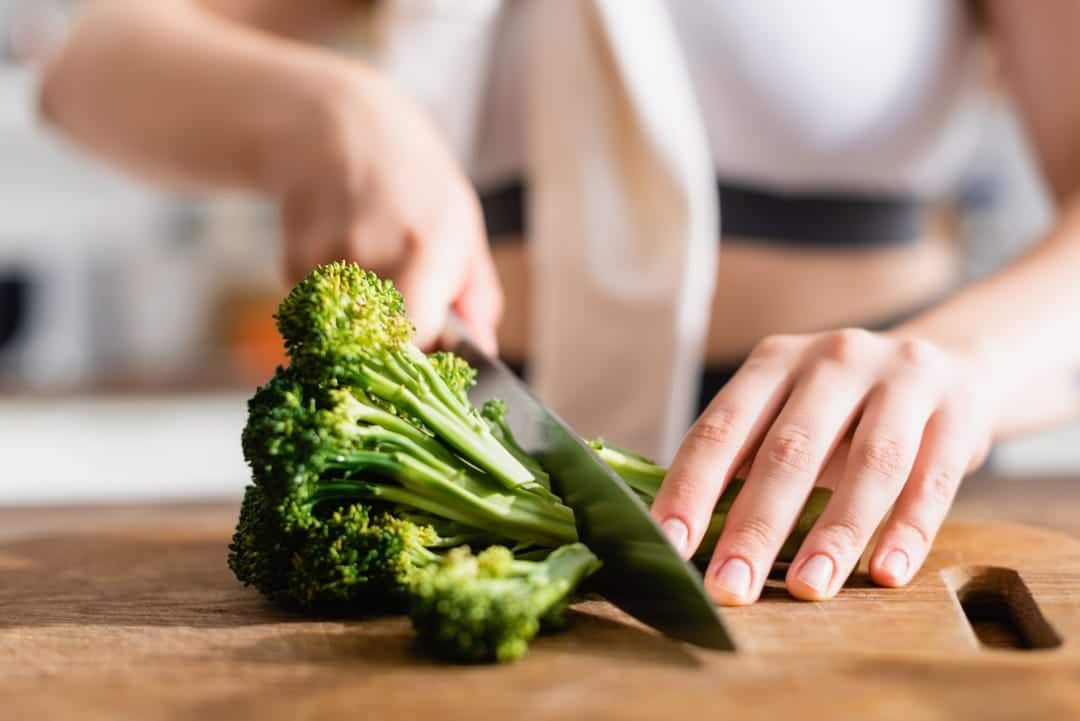
You should wash off any dirt, small insects, and other residues from your broccoli. After washing, shake off some of the water and then break the broccoli down into smaller florets.
You can now use the florets directly or, if desired, cut them into even smaller pieces.
Tip: You can also easily use the stems by cutting them into small pieces. They are, after all, just as nutritious as the florets themselves.
How Long Broccoli Should Be Cooked

How Long Broccoli Should Be Cooked
The cooking time for broccoli depends entirely on the size of the florets, your personal taste, and the preparation method.
In this section, we’ll explain how long you should cook broccoli to get a perfect result.
Tip: If you like it crunchy and want to use it for salads, blanch the broccoli for three to four minutes.
To do this, simply bring water with a pinch of salt to a boil in a pot and add the florets. For a softer result, you can let the broccoli cook for five to ten minutes.
The cooking time also varies depending on whether you want to cook the entire broccoli (florets and stem) together or just the florets.
The florets alone are usually done in three to five minutes, while the stem needs about six to eight minutes due to its density and texture.
If you want to cook both together, it’s recommended to put the stem in the water first and add the florets a minute or two later.
In any case, don’t cook your broccoli for too long, as it will lose its flavor, color, and nutrients.
For the best result, you should always adjust the cooking time to your personal preferences and, if necessary, cook it for a few seconds longer or shorter. That way, you’ll get the broccoli in the exact texture you like best.
Did you know? Broccoli is a member of the cabbage family and contains many valuable nutrients like vitamins, minerals, and antioxidants.
Different Methods on How To Cook Broccoli

Different Methods for Preparing Broccoli
In this section, we’ll give you specific instructions on how to prepare broccoli. Each method has its own pros and cons, which you’ll ultimately have to decide on.
Boiling and Blanching Broccoli
To blanch broccoli, bring well-salted water to a boil and add the broccoli florets for about three to four minutes.
After that, drain the broccoli and plunge it into a bowl of cold water with ice cubes to stop the cooking process. This helps maintain the bright green color and crisp texture of the broccoli.
Sautéing Broccoli

Sautéing Broccoli
Sautéing broccoli is a gentle way of preparing it. You can heat some oil or butter in a pan and add the broccoli florets.
Also, add a little water to the pan, cover it, and let the broccoli cook over low heat for eight to ten minutes. After cooking, season the broccoli with salt, pepper, and a pinch of nutmeg.
Frying Broccoli
To fry broccoli, heat some oil in a pan and add the florets. Fry them for six to eight minutes, stirring constantly, until they are lightly browned and cooked through.
Tip: Add a few flakes of butter during frying to make the broccoli especially aromatic.
Steaming Broccoli
Steaming broccoli requires a steamer or a pot with a steamer insert. Steam the broccoli over medium heat for about eight to ten minutes until it’s tender-crisp.
Steaming best preserves the valuable nutrients and the bright green color of the broccoli.
Baking Broccoli in the Oven
To bake broccoli, place the florets in a baking dish and drizzle them with some olive oil.
Season the broccoli as desired, for example with salt, pepper, and nutmeg. Then bake it at 200 degrees Celsius for about 15 to 20 minutes, until it’s lightly browned. You can then serve the baked broccoli as a side dish or a main course.
Cooking Broccoli in a Wok

Cooking Broccoli in a Wok
Cooking broccoli in a wok is a quick and tasty way to prepare the vegetable. Heat some oil in the wok over medium heat, add the broccoli, and stir constantly.
You can also add other vegetables and spices to vary the flavor. Cook the broccoli for about four to six minutes, until it’s tender-crisp.
With any of these methods, you can enhance your broccoli with various spices and herbs to your liking. If needed, you can also freeze the cooked broccoli to use later.
Common Mistakes When Cooking Broccoli

Common Mistakes When Cooking Broccoli
When cooking broccoli, there are some common mistakes that can affect the taste and texture of the vegetable. In this section, you’ll learn more about these mistakes and how to avoid them.
Overcooking
One of the most common mistakes when cooking broccoli is overcooking it. If you let the vegetable cook for too long, it becomes mushy and loses its green color as well as valuable nutrients.
You can easily avoid overcooking by not boiling the broccoli for more than ten minutes.
Tip: Put the cut stalk into the water first and only add the florets a few minutes later.
Cooking Broccoli and Overheating It

Cooking Broccoli and Overheating It
If you heat broccoli too much, it can lead to an unpleasant smell that affects the taste.
Therefore, it’s important to cook at a medium heat and aim for a short cooking time. A well-known trick against the strong cabbage smell when cooking is to add a slice of bread to the cooking water.
Cooking Broccoli and Seasoning it Wrong
Seasoning gives every dish that certain something. That makes it all the more important to choose the right amount and, above all, the right ingredient. For example, if you don’t use enough salt, the vegetable will taste bland.
Conversely, too much salt can overpower the flavor and be unhealthy. That’s why it’s important to season broccoli carefully and gradually to achieve the optimal taste.
Using herbs or other spices can help to further enhance the aroma of the broccoli.
Remember that the right preparation of broccoli affects both the taste and the nutrients the vegetable offers.
Cooking Broccoli: Recipe Ideas and Combinations

Cooking Broccoli: Recipe Ideas and Combinations
In this section, we’ll introduce you to various broccoli recipes that are both delicious and easy to prepare. We’ll show you how to create tasty and versatile dishes with broccoli.
Broccoli Salad

Broccoli Salad
A refreshing broccoli salad is perfect as a side dish or even as a main course. You can combine broccoli with apples and walnuts to create a crunchy and sweet-nutty flavor.
Adding almonds and red cabbage is also a tasty alternative. Season the salad to your liking with salt, pepper, and vinaigrette.
Or how about a light broccoli salad with bell peppers, apple, and pine nuts? Let your creativity run wild.
Broccoli Soup with Shrimp

Broccoli Soup with Shrimp
Broccoli, shrimp, and curry are an excellent combination for a warming and incredibly delicious soup.
The broccoli soup is a nutritious option that is naturally creamy, and the shrimp add a special touch to the dish. Add some lemon juice and spices to round out the flavors.
Broccoli Casserole

Broccoli Casserole
The classic broccoli casserole is a hearty meal that you can prepare with a wide variety of ingredients.
One variation is the chicken and broccoli casserole, where broccoli is mixed with shredded chicken, cheese, and a cream sauce. You can serve the casserole with rice or noodles.
To finish it off, you can garnish the cooled casserole with nuts like pine nuts or parsley.
Pasta with Broccoli

Pasta with Broccoli
Pasta and broccoli are also a delicious combination. A vegetarian option is farfalle with green pesto, cherry tomatoes, and broccoli.
Here, you simply coat the cooked pasta and broccoli with pesto and garnish with fresh cherry tomatoes. You can also add chicken or fish if you’d like.
Broccoli and Cheese Gratin

Broccoli and Cheese Gratin
Broccoli in a cheese gratin is a delicious and warming dish that can perfectly complement meat or fish.
For this classic, you prepare a cheese sauce from butter, flour, milk, and grated cheese and pour it over the cooked broccoli before baking the gratin in the oven until golden brown.
Broccoli Fritters (Rösti)
Broccoli fritters are a delicious alternative to traditional potato rösti. You shred the broccoli, mix it with breadcrumbs, eggs, cheese, and spices, and then form small fritters.
Then you fry them in a pan until they are crispy and golden brown. Enjoy these fritters as a side dish or even as a main course.
Salmon with Broccoli

Salmon with Broccoli
Broccoli with salmon is a healthy and tasty combination that is perfect for a light dinner.
To prepare the dish, cook the salmon in the oven or on the grill while you steam or blanch the broccoli.
You can season the dish with lemon, herbs, and spices to make it special.
Serve the salmon and broccoli with a vegetable side and a light sauce to enjoy a balanced and delicious meal.
Nutritional Value and Health Benefits of Broccoli

Nutritional Value and Health Benefits of Broccoli
Broccoli is a nutrient-rich vegetable that offers many health benefits. It contains important vitamins, minerals, and fiber that contribute to a balanced diet.
In this section, you’ll learn more about the specific nutritional values and health benefits of broccoli.
Vitamins and Minerals
Broccoli is an excellent source of vitamins and minerals.
Here are some of the key nutrients in broccoli:
- Vitamin C: An important nutrient for a healthy immune system and strong bones. Broccoli is rich in Vitamin C, which also helps to keep skin and eyes healthy.
- Folic Acid: Especially important for pregnant women and their unborn children, as it helps prevent neural tube defects.
- Vitamin A: Another essential vitamin for healthy eyes, skin, and a strong immune system.
- Calcium: An important mineral for strong bones and teeth.
- Iron: A mineral needed for the body’s oxygen supply.
- Potassium: A mineral that helps maintain normal blood pressure.
In addition to the nutrients mentioned above, broccoli also contains magnesium, zinc, and fiber, all of which help support digestion and a healthy gastrointestinal tract.
Scientific Health Studies

Scientific Health Studies
There are numerous scientific studies investigating the health benefits of broccoli. Here are some of the key findings:
- Glucosinolates: These phytochemicals are found in broccoli and may help reduce the risk of certain types of cancer.
- Antioxidants: Broccoli contains a variety of antioxidants that can help reduce cell damage caused by free radicals.
- Support for Brain Function: Studies have shown that broccoli can improve cognitive function and memory by reducing inflammatory processes in the brain.
- Improvement of Blood Sugar Levels: Broccoli can help control blood sugar levels and reduce the risk of type 2 diabetes.
To enjoy the many health benefits of broccoli, you should regularly include it in your meals or as a healthy snack.
Myths and Questions About Broccoli

Myths and Questions About Broccoli
There are several well-known myths surrounding broccoli, some of which you’ve surely heard before.
In the following, we’ll clear up some long-standing myths and answer questions that you’ve probably asked yourself at some point.
Cooking Broccoli: Why does broccoli get mushy?
Broccoli gets mushy when it’s cooked for too long or at too high a temperature. To avoid this, you should blanch the broccoli in salted water for about three to four minutes.
You can also steam or sauté the broccoli to keep it crisp and fresh. Don’t forget to briefly shock it in ice-cold water. This stops the cooking process and helps preserve the green color.
Can you eat broccoli raw?

Can you eat broccoli raw?
Actually, you can eat broccoli raw. In fact, it’s a healthy and delicious ingredient in salads and as a snack.
Raw vegetables, like broccoli and cauliflower, actually contain more vitamins and nutrients than cooked vegetables.
Make sure to wash the broccoli thoroughly before eating to remove dirt and bacteria.
Cooking Broccoli: How long can you store broccoli?
You can store cooked broccoli in the refrigerator for about three to four days. Don’t forget to store it in an airtight container to preserve its flavor and nutrients.
If you want to store it longer, you can also blanch and freeze the broccoli. This way, it will last for several months. To prepare frozen broccoli, simply thaw it and use it in your favorite recipes.
Tip: To reheat cooked broccoli, you can briefly heat it in the microwave or sauté it in a non-stick pan for a few minutes. This will keep it crisp and tasty.

 (30 votes, average: 4.80 out of 5)
You need to be a registered member to rate this. Loading…