when a mechanical technician designs beers instead of trade show booths – The Italian Craft Beer

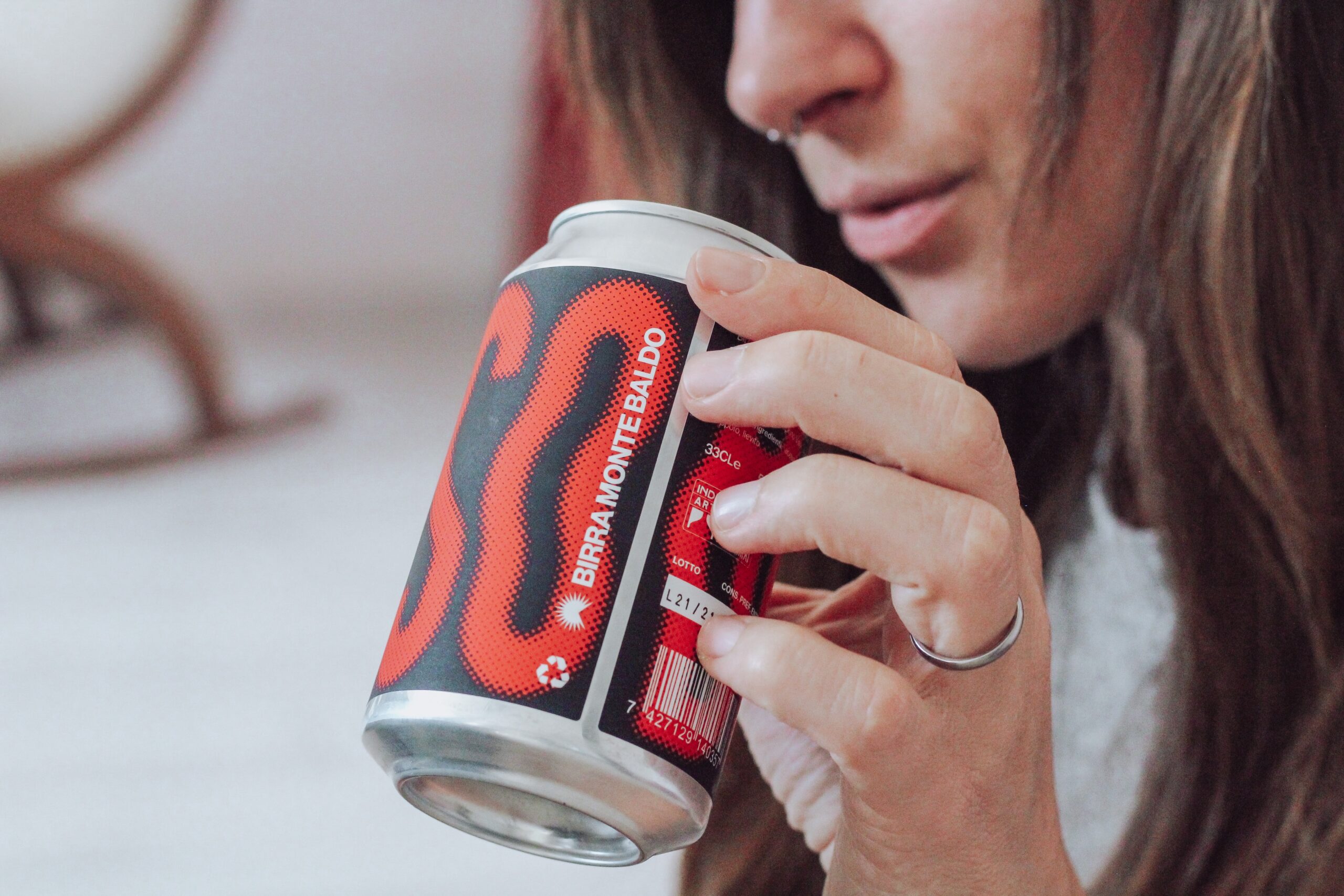
There is one detail that usually never appears in a brewery’s technical specifications, yet says more than any other about the way it operates: before opening a brewhouse in Caprino Veronese, Mattia Maimeri designed exhibition stands after graduating as a mechanical engineering technician. No homebrewing phase, no garage batches that gradually became a profession; just a 600-hour professional brewing course and hands-on experience working alongside other brewers before taking over, together with his partner (now wife), Natascia Lorenzi, a former mini-market in the center of town at the foot of Monte Baldo.

That is where Birra Monte Baldo was born in 2017: a brewery that does not use the mountain simply as a graphic backdrop, but as a true measuring system. Every beer in the core range, Navene, Tratto Spino and Naole, takes its name from a peak or location on the Monte Baldo massif. During our conversation, Maimeri explains this without any rhetoric: the name and the recipe often emerge together, from the same story and the same scent experienced in a specific place on the mountain, rather than one preceding the other.
It is the same approach that, from a technical perspective, leads him to clearly separate two distinct phases: creativity upstream, when designing a new beer style, and precision downstream, in the brewhouse and fermentation cellar where, as he says, “there should be no room for miracles, random events, or simply saying ‘I tried it’.”
In this conversation, Maimeri explains what it means to apply the mindset of a technical designer to the living matter of fermentation. He discusses a project that still exists only on paper: a Monte Baldo “vertical tasting” series capable of expressing altitude in a glass through hops and botanicals harvested from different slopes of the Hortus Europae, as the mountain is known because of its extraordinary biodiversity. He also shares the two wet-hop vintages that surprised him the most, W21 brewed with Lotus and W24 brewed with Sultana.
This interview is for those who look for a method in a glass of craft beer before they look for flavour.
1. You graduated as a mechanical engineering technician and worked as a trade show stand designer before becoming a brewer, a path built on professional training and a deep study of production technology. How much has that technical background shaped a rigorous brewing and fermentation methodology? How does this engineering mindset translate into your work today?
Choosing a mechanical engineering diploma is one of those decisions you make when you’re 14 or 15 years old. It was certainly a good technical choice, perhaps not essential, but it helps you understand the reasons behind everything without leaving too much room for miracles, random events, or simply saying “I tried it.”
The distance between a designer and a brewer is not as great as it seems. In both cases, you create something on paper that eventually becomes something tangible, or almost. So, stretching the concept a little, it is nearly the same job. In both cases, you have to like what you create, but more importantly, other people have to like it.
A technical approach allows you to understand how something works and replicate it consistently using the same methods and timing, without leaving room for speculative interpretations. Creativity belongs upstream in the production process, when you’re creating something new. Once you move into execution, the technical side; precise and methodical; should be fundamental.
2. Every one of your core beers is named after a peak or location on Monte Baldo: Navene, Tratto Spino and Naole. When choosing a name for a new recipe, does the process work “in reverse”, first defining the flavour profile and then searching for a matching place, or does the mountain itself, through its history and aromas, suggest the beer style?
There is rarely a clear “before” or “after.” Perhaps that was true for the first two beers, NAOLE and TRATTOSPINO, which represent the two extremes of Monte Baldo, the first and last peaks. In all other cases, the beer and the name developed together, inspired by stories, aromas, or emotions experienced in a specific place at a specific moment.
The same thing applies to the label design. More or less, every graphic element represents colours or emotions associated with that particular location.
3. Beer as a sensory map of the territory. You describe Monte Baldo not as a graphic inspiration, but as a genuine sensory landscape made up of aromas and memories unique to each slope. Have you ever considered translating the mountain’s biodiversity literally into beer, perhaps through hops or botanicals collected from different slopes, to create a true Monte Baldo “vertical series” that tells the story of altitude in the glass rather than only on the label?
That would be incredibly fascinating. Monte Baldo is also known as the “Hortus Europae” because of its extraordinary biodiversity, including species that grow naturally almost exclusively here.
It could certainly become a future project, at least on paper initially, to understand what might emerge from it. We would definitely need qualified people who could guide us and work together on developing the idea. Come on, you should join us too!
There are many possibilities, ranging from gentian to juniper and even Monte Baldo chestnuts. These are areas we have not yet explored, partly because, in my opinion, they are often approached in a predictable way or without sufficient technical depth.
4. Is there a hop variety or a particular vintage that has surprised you more than others, perhaps revealing an unexpected aromatic profile in your one-shot beers.
We have a one-shot project called WXX, where W stands for Wet Hop and the numbers indicate the vintage year. It is becoming increasingly difficult to find suppliers able to provide fresh hops. However, so far we have always varied both the hop variety and the beer style.
The two editions that impressed me the most were the very first version, W21 brewed with Lotus, and W24 brewed with Sultana. Both hops were in exceptional condition and delivered remarkable results. The latter was especially interesting because it evolved significantly over time, continuously changing its aromatic expression and intensity.
(I loved their EXUBERANCE with NZ hops! here the video)
5. Which three of your own beers do you love the most, or have loved the most, including one-shots and limited editions? And can you name one Italian craft beer and one Italian craft brewery that you truly admire? Why?
I’ve spent quite a lot of time thinking about this, and I’ve left a little piece of my heart with Luppolajo. Enrico and Carlo are not only extraordinary people; they also know how to make exceptional use of their cereals and spices while constantly experimenting with unconventional ideas.
Among their beers, I would definitely mention Castellana, a bitter brewed with bitter herbs, and Georgica, a remarkeble blanche.
🙂
P.S. Having a technical background and analytical mindset can save your ass when one of the 4,326 pieces of equipment in a brewery suddenly breaks down.
P.P.S. Having a technical background and analytical mindset also means ending up answering questions like these.
Discover their beers here, in the blog.