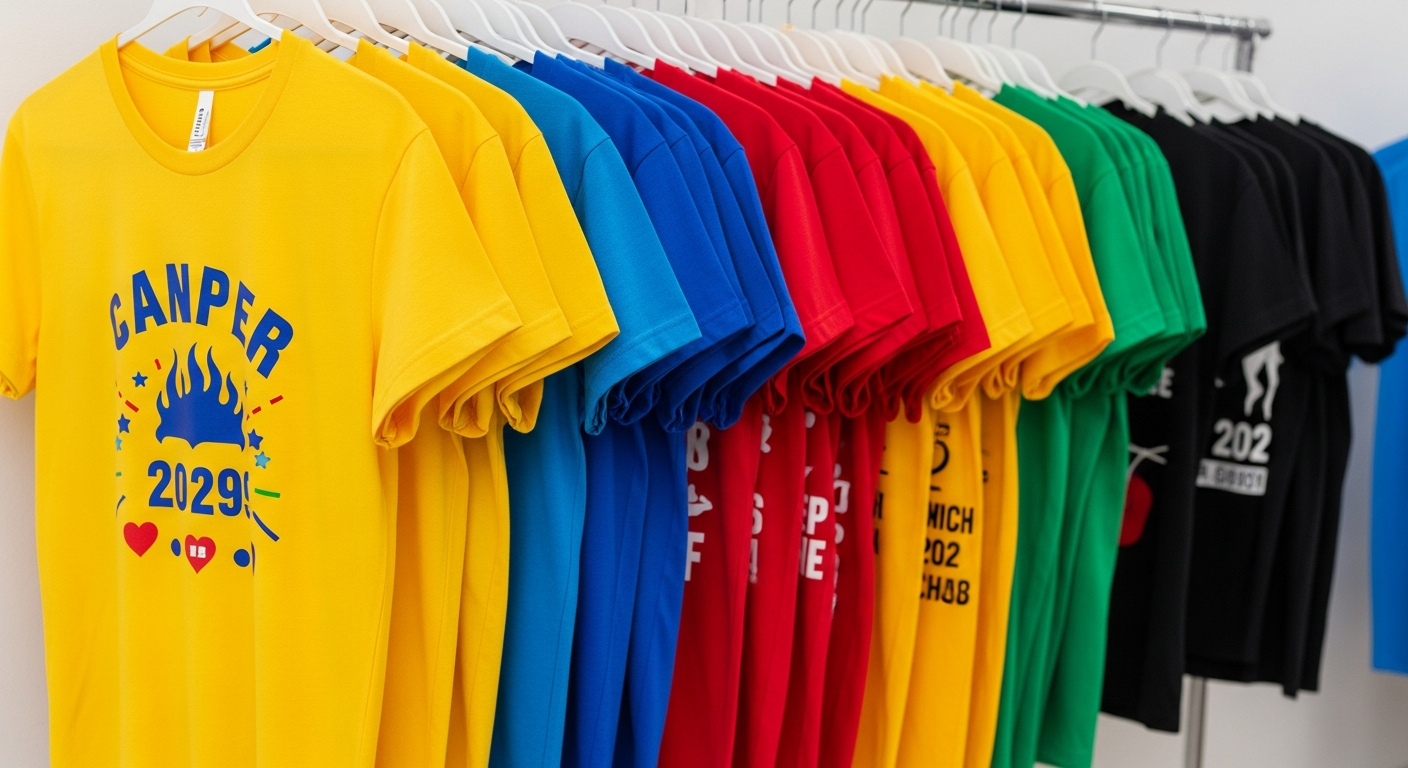
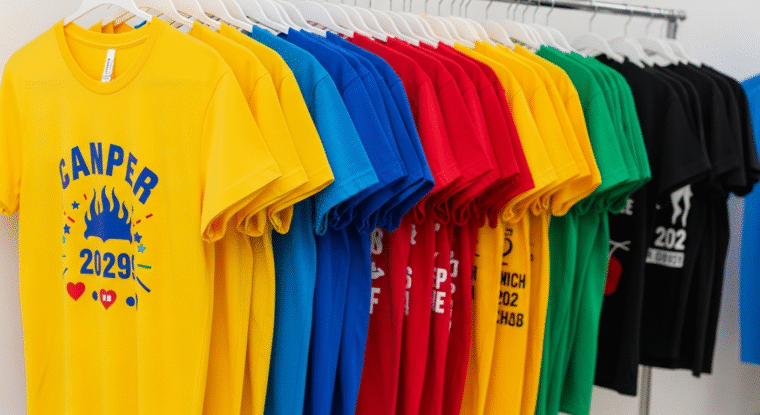
Matching shirts turn a crowd into a team. You have seen it at birthday parties where every cousin has the same silly graphic, at family reunions where four generations wear the same last name, at little league fields, and outside church vans on a mission trip. The moment everyone matches, the group feels like it belongs together, and the photos come out better too. The catch is that outfitting a whole group usually sounds expensive. Order twenty finished, printed shirts from a shop and you are paying that shop to design, print, and press every single one, then marking it up on top. But there is a quieter way to do this that a lot of budget-conscious organizers have figured out, and it comes down to buying the artwork separately from the shirt.
Buy the Print, Not the Whole Shirt
The trick is a product called a DTF transfer, short for direct-to-film. Instead of ordering finished shirts, you order just the designs as ready-to-press transfers, then apply them yourself to blank garments you buy on sale or already own. When you press a transfer, the ink and the adhesive layer underneath it bond into the fabric, and the clear carrier film that held the design peels away, leaving only the print behind.
That separation is what makes group orders so much friendlier on a budget. Blank shirts are cheap and easy to buy in bulk, especially when you catch a sale. The custom part, the artwork, is the only piece you actually need printed. Order the artwork on its own and you skip paying a shop to stock, press, and mark up every finished garment.
There is a real flexibility bonus here too. DTF works on a wide range of fabrics, including cotton, polyester blends, tri-blends, fleece, denim, and canvas, and because each transfer carries its own white ink layer underneath the design, it prints just as cleanly on a dark shirt as it does on a light one. That matters for a group. You are not forced to make everyone wear the same color. Dad can have a navy tee, the toddler can have a pale yellow onesie, grandma can have a lavender shirt, and the exact same design still shows up crisp on all of them.
Put Every Design on One Gang Sheet
Here is where the budget math really tips in your favor. When you are ordering multiple designs at once, you can group them all onto a single sheet called a gang sheet. A gang sheet is one printed sheet, typically about 22 inches wide, that holds many designs printed together instead of one design per order. There is no fixed limit on how many designs you can fit. You just leave enough space between them to cut each one apart after the sheet arrives. The reason this is such a smart move for groups is how gang sheets are priced. They are priced by how much length of the sheet you use, not by how many separate designs you pack into that length. So a reunion shirt with a family crest, a set of numbered jerseys for a rec team, and a
row of individual first names for a classroom party can all ride on the same sheet, and you are paying for the space used rather than for each design as its own order. Suppliers that sell custom DTF gang sheets this way let you nest a whole event’s worth of artwork together, which is exactly what you want when the guest list keeps growing.
It also handles the odd-request problem that groups always have. One kid wants his nickname, one wants a number, the coach wants the team logo three times in different sizes. Rather than treating each of those as a separate purchase, you lay them out together and cut them apart at home. DTF Dallas is one supplier that builds orders around this gang-sheet approach, which is a practical real-world example of how the pricing works in your favor when you are ordering for more than one person.
Pressing a Batch at Home
You do not need a print shop to apply these. A home heat press that reaches the right temperature will do it. Standard DTF transfers press in the range of about 270 to 300 degrees for roughly 4 to 12 seconds, and the exact numbers depend on the film and the press, so follow the instructions that come with your transfers. Some films are made to peel right after pressing, others want a short cool-down first, and the supplier will tell you which kind you have. One thing to keep in mind when you are working through a stack of shirts: a transfer can be repositioned as much as you like before you press it, but once it is heat-pressed it is permanent. Line up placement carefully before you commit, especially on the first few, so the whole batch stays consistent.
Make Them Last Past the Event
A group shirt is only a bargain if it survives more than one wash. Turn each shirt inside out and wash it in cold water with a mild detergent. Skip the bleach, fabric softener, and harsh chemicals, since those wear a print down faster than everyday use. Hang dry when you can, or tumble dry on low. If a shirt ever needs ironing, flip it inside out or lay a pressing cloth over it so the iron never touches the design.
Getting a whole group to match does not have to mean a whole group’s worth of expense. Buy the artwork instead of finished shirts, batch every design onto one gang sheet, and press them yourself, and you turn a long invoice into one organized afternoon at the heat press.