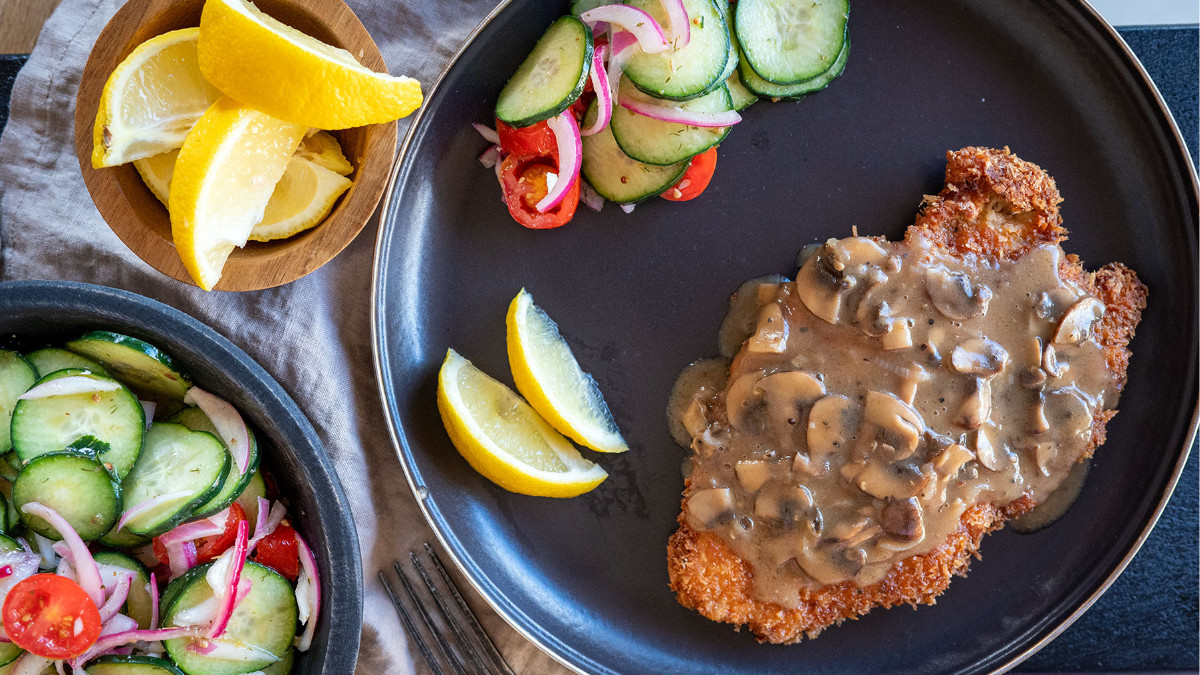
This schnitzel recipe turns pork chops into crispy, golden cutlets with a light, crunchy panko crust and a tender, juicy center. It comes together with pantry staples and about 30 minutes, no special equipment required.
I learned to make this traditional German schnitzel recipe from my father-in-law, who was stationed in Germany for several years while serving in the Army. Years later, when I lived in Belgium, my husband was on an international soccer team. One of the German players taught me his family’s technique.
Between that and the trips I took to Germany while we lived in Europe, sampling schnitzel at eatery after eatery, this recipe is the version I keep coming back to.
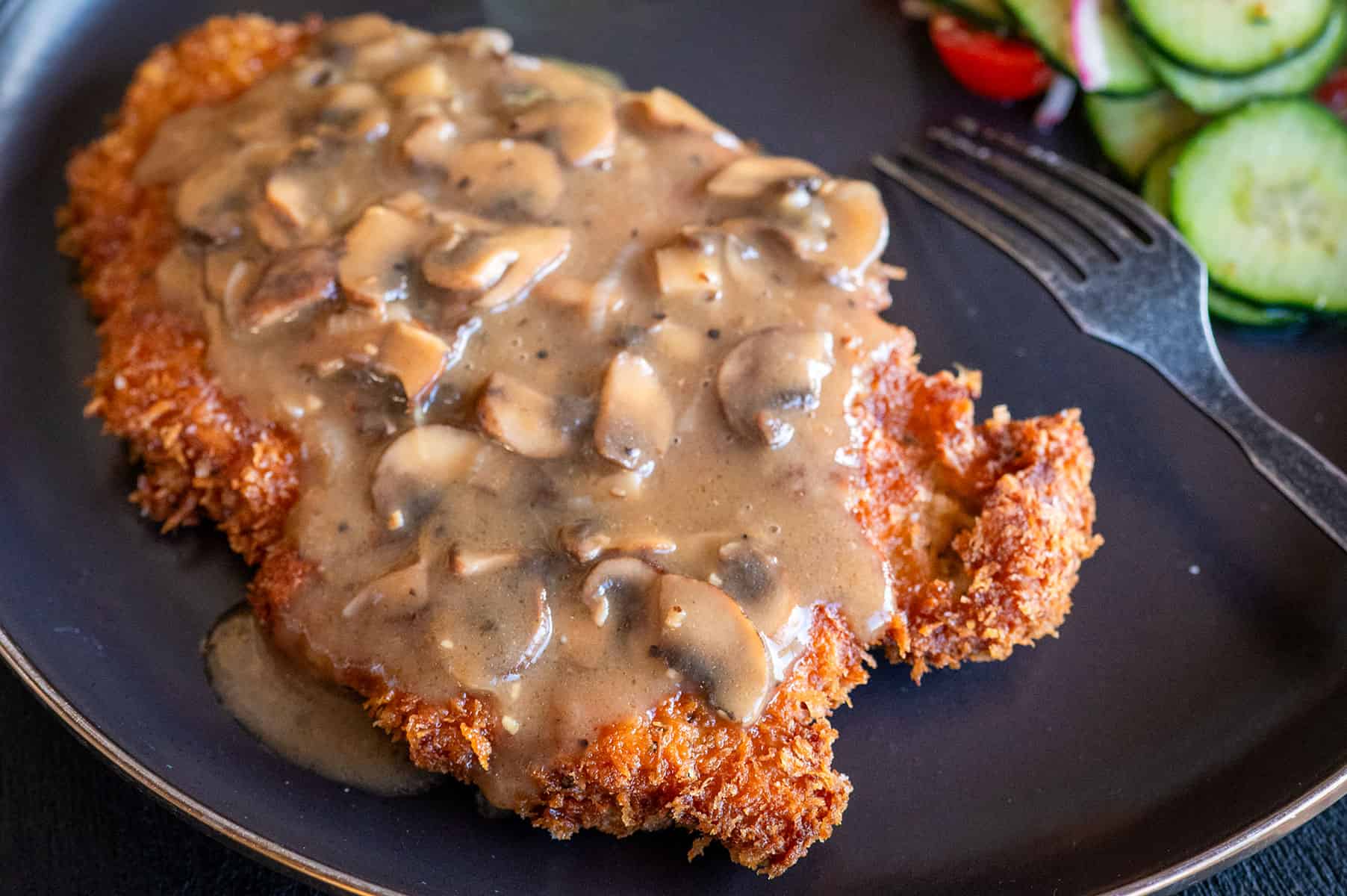
Serve it as-is with a squeeze of lemon, or top it with my Mushroom Gravy for a classic jägerschnitzel-style plate.

What is schnitzel
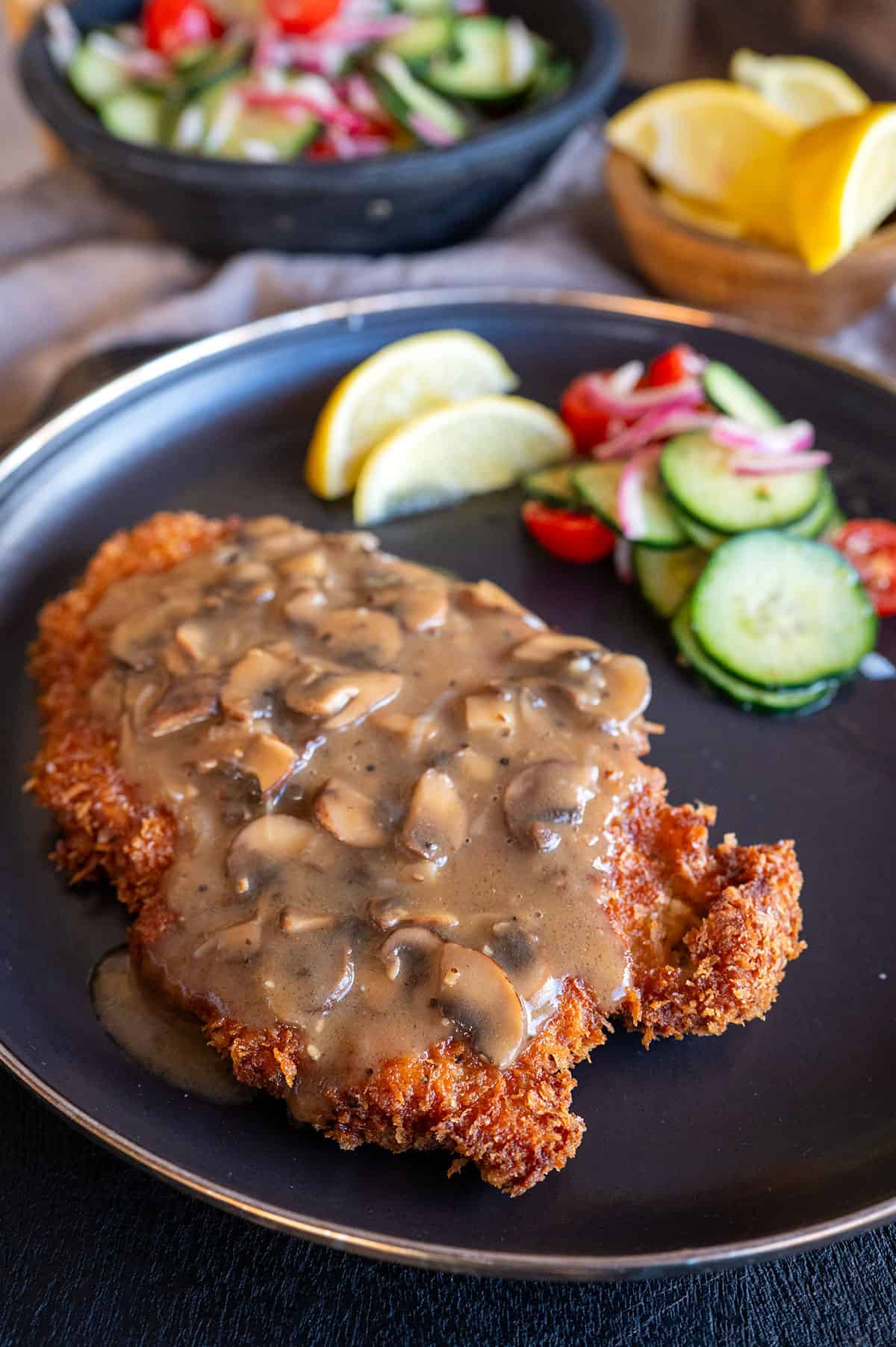
Schnitzel is a thin, breaded cutlet of meat that’s pan-fried until crispy and golden. It originated in Austria, traditionally made with veal, though pork and chicken versions are just as common today. The key to great schnitzel is pounding the meat thin so it cooks quickly and evenly, then coating it in a classic three-step breading of flour, egg, then breadcrumbs before frying in hot oil.
This version uses center-cut pork chops and panko breadcrumbs for extra crunch.
GCG BBQ TIP: Need help remembering the order for the dredge? I learned this tip a long time ago on Food Network. Just remember February or FEB, which stands for flour, egg, breadcrumbs.
Types of schnitzel
Schnitzel isn’t just one dish. It’s a whole category, and the type of meat and the toppings change the name entirely. Here are a few of the versions I’ve come across, both in Germany and in the years since:
- Wiener Schnitzel: The original, made with veal. In Austria and Germany, this name is protected. If it’s not veal, it legally can’t be called Wiener Schnitzel.
- Schnitzel Wiener Art: “Viennese-style schnitzel,” made the same way as Wiener Schnitzel but with pork, chicken or turkey instead of veal. This is closer to what most home cooks, myself included, actually make.
- Jägerschnitzel: “Hunter’s schnitzel,” topped with a mushroom gravy. This is one of the most common ways I was served schnitzel while traveling through Germany.
- Zigeunerschnitzel: Topped with a paprika-forward sauce of bell peppers, onions and tomatoes.
- Rahmschnitzel: Served with a creamy sauce, sometimes made with mushrooms similar to jägerschnitzel, but built on cream instead of broth.
- Holsteiner Schnitzel: Topped with a fried egg, anchovies and capers.
This recipe is a classic pork schnitzel, the base for all of these variations. Once you’ve got the technique down, topping it with a different sauce is an easy way to change up the dish.
Seasoning for the Dredging
-
Pound and season: Pound the pork chops to an even thickness. Season with salt and pepper.
-
Set up the dredge: Place the flour in one shallow dish, whisk the eggs in a second dish and add the panko to a third dish. Mix ½ tsp salt, ¼ tsp paprika and ¼ tsp garlic powder into each of the three dishes.
-
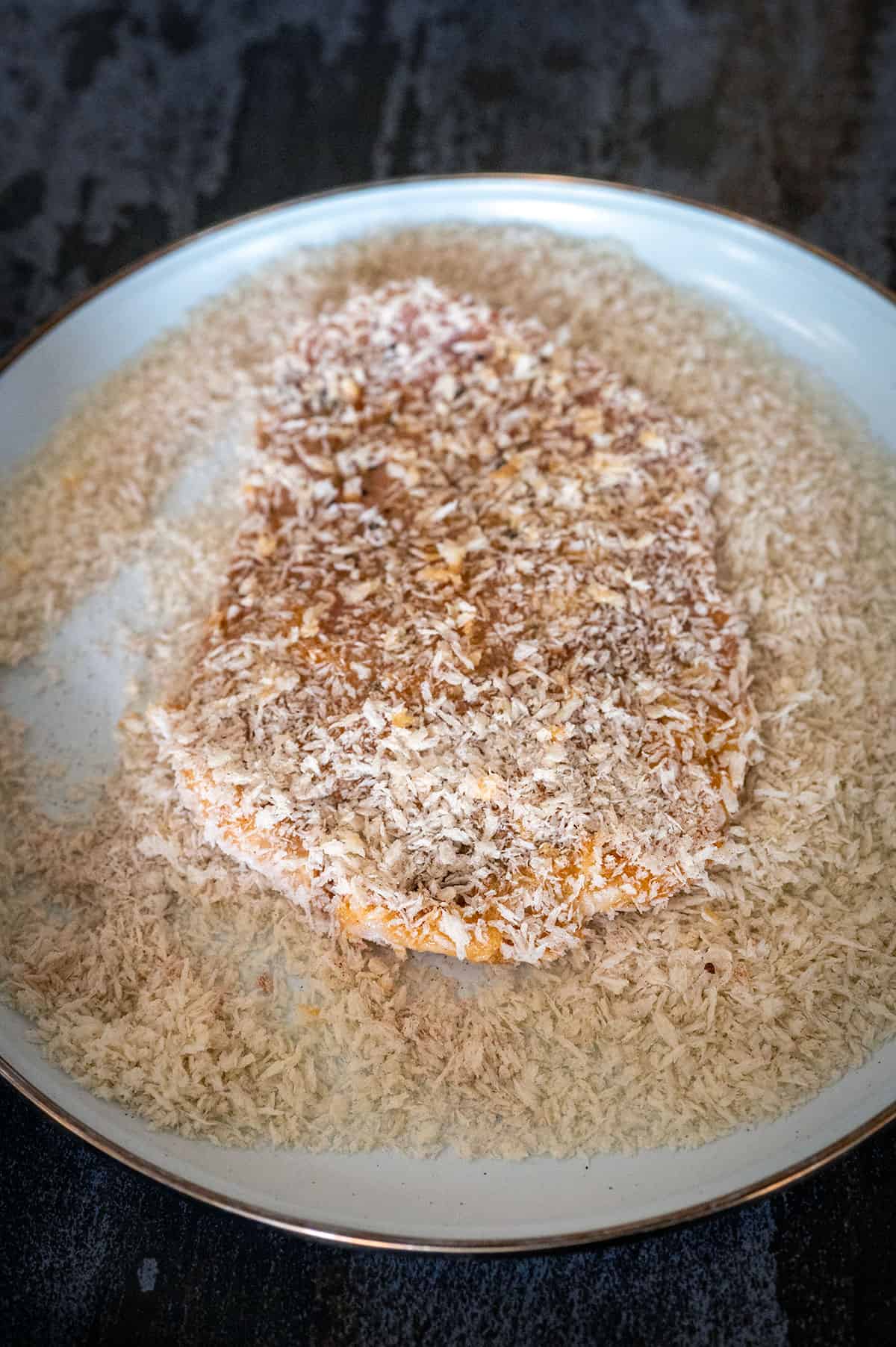
Dredge: Coat each pork chop in the seasoned flour, shaking off the excess. Dip in the egg wash, letting the excess drip off. Then press into the seasoned panko, coating both sides evenly.
-
Heat the oil: Heat the oil in a large skillet to 375F.
-
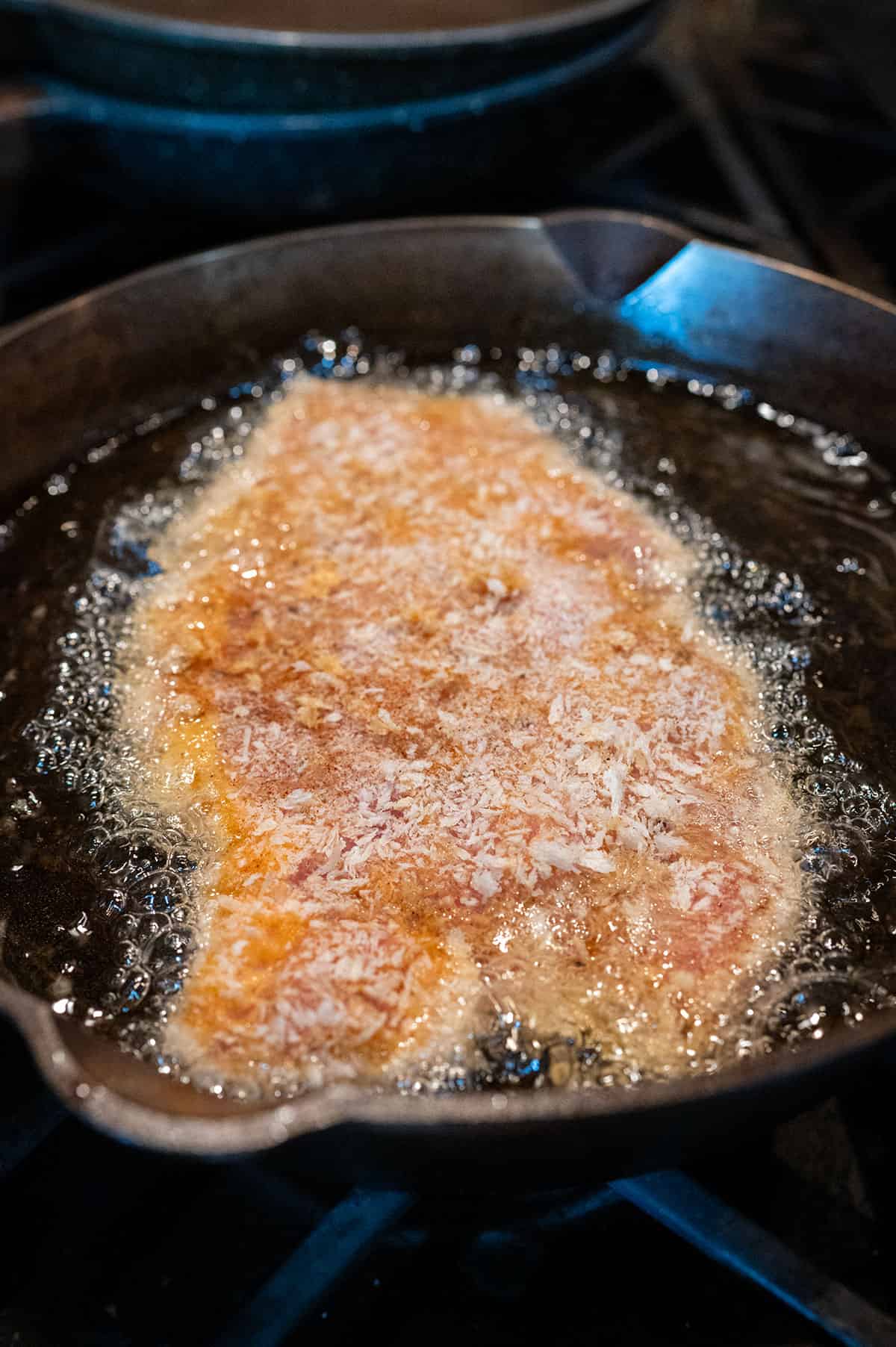
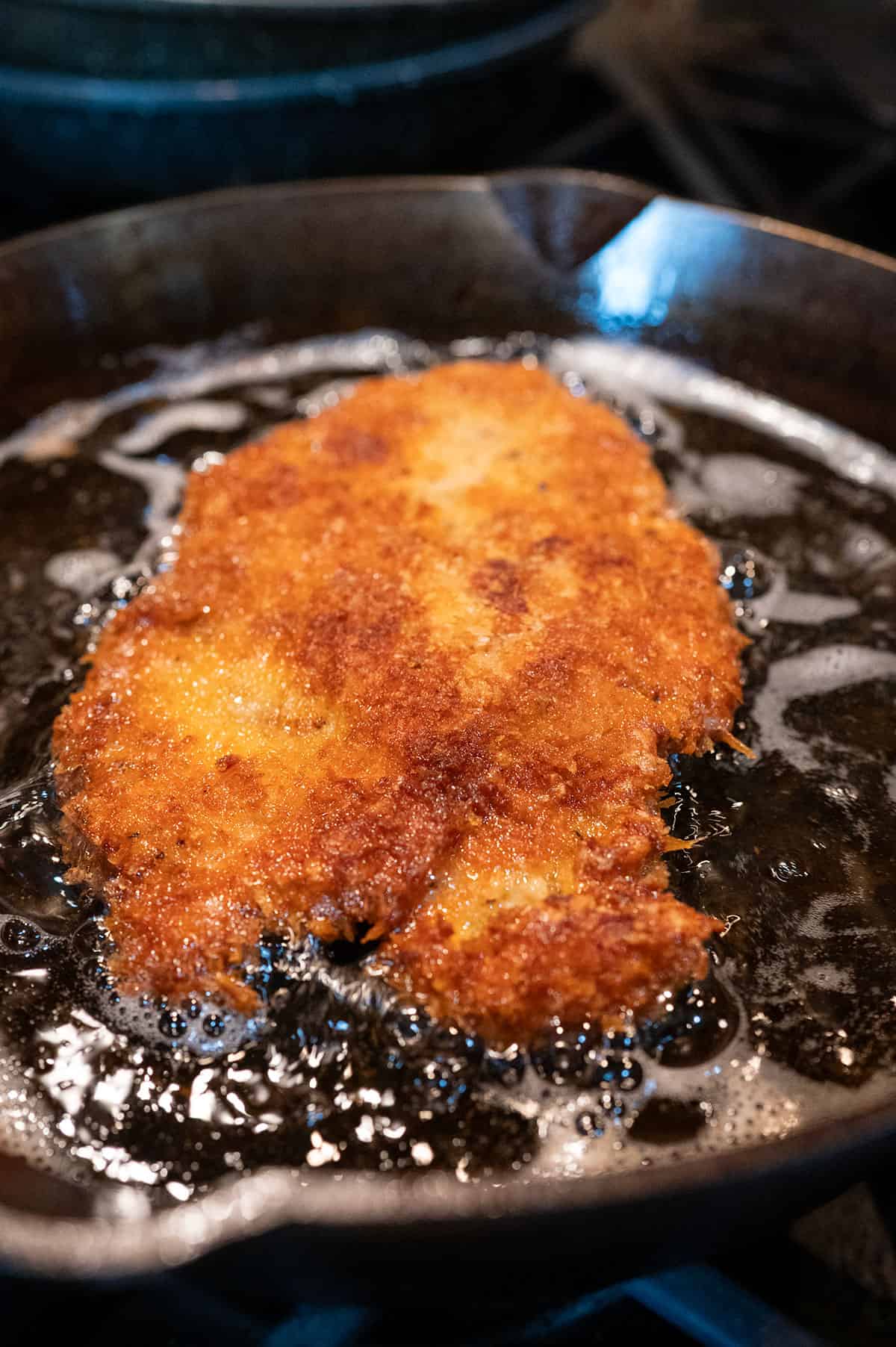
Fry: Cook the pork for 4-5 minutes per side, until golden brown and cooked through to an internal temperature of 145F.
-
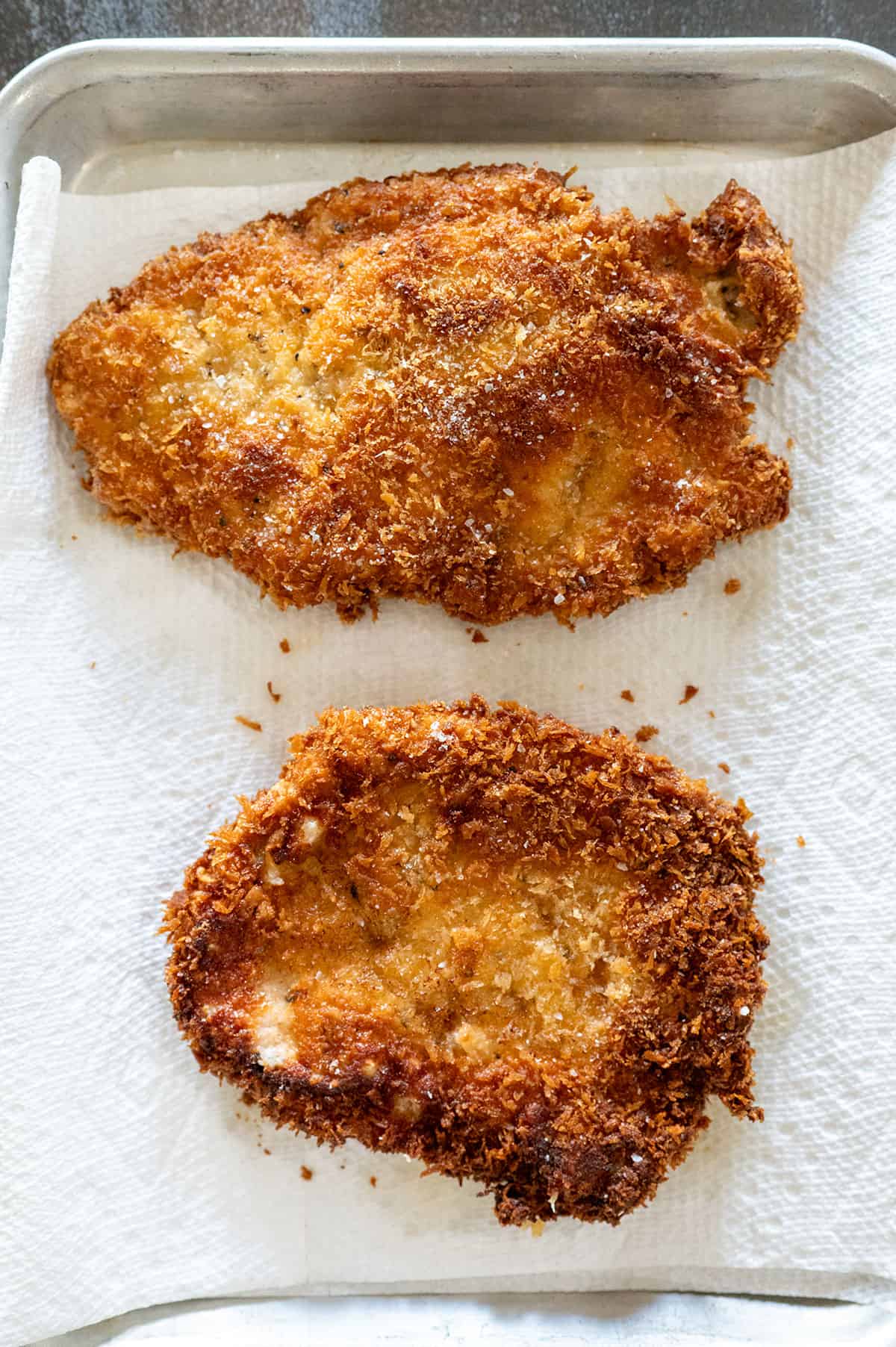
Rest: Transfer to a paper towel-lined plate and season with a pinch of salt while hot.
For jägerschnitzel, top with mushroom gravy after frying.
Calories: 997kcalCarbohydrates: 41gProtein: 46gFat: 71gSaturated Fat: 9gPolyunsaturated Fat: 18gMonounsaturated Fat: 42gTrans Fat: 0.3gCholesterol: 196mgSodium: 1732mgPotassium: 765mgFiber: 2gSugar: 2gVitamin A: 313IUVitamin C: 0.01mgCalcium: 75mgIron: 4mg
Nutrition information is automatically calculated, so should only be used as an approximation.
What you’ll need
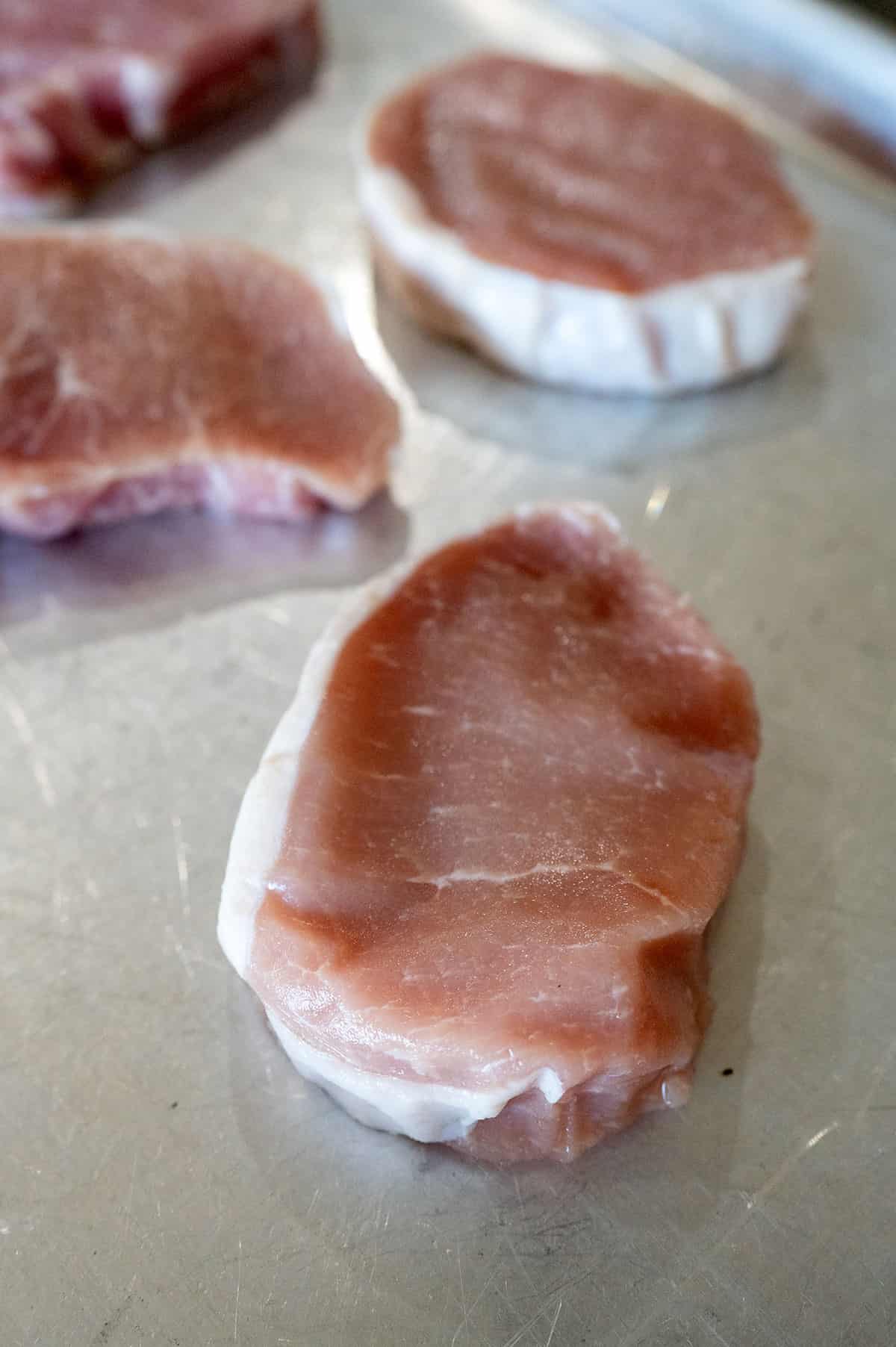
- Pork Chops: Use boneless center cut pork chops. Pounded thin, these cook quickly and stay tender. Center-cut chops give you an even, uniform cutlet.
- Flour: The first layer of the dredge. It helps the egg wash stick to the meat.
- Panko Breadcrumbs: Gives the schnitzel its signature crispy, craggy crust. Regular breadcrumbs will work, but panko fries up crunchier.
- Eggs: Binds the panko to the pork.
- Salt, Paprika, Garlic Powder: Seasonings the breading.
- Oil For Frying: A neutral oil with a high smoke point, like vegetable or canola oil, works best.
Substitutions: You can swap the pork chops for boneless chicken breast or veal cutlets. If you don't have panko, regular plain breadcrumbs will work, but the texture won't be quite as crunchy.
See the full recipe card above for servings and a full list of ingredients.
How to Cook Schnitzel
Get your dredging station set up before you start frying. This moves fast once the oil is hot.
Step 1: Pound and season the pork
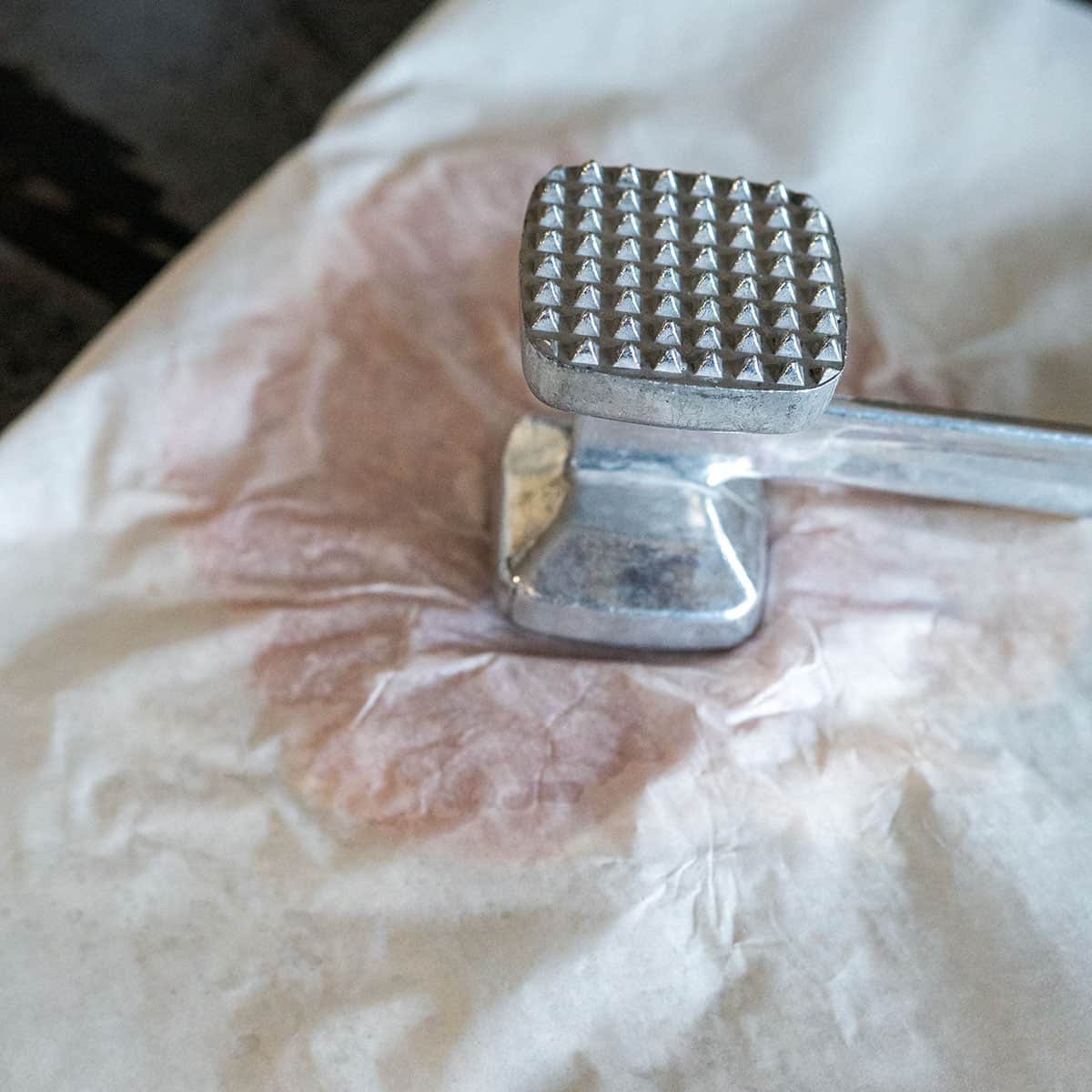
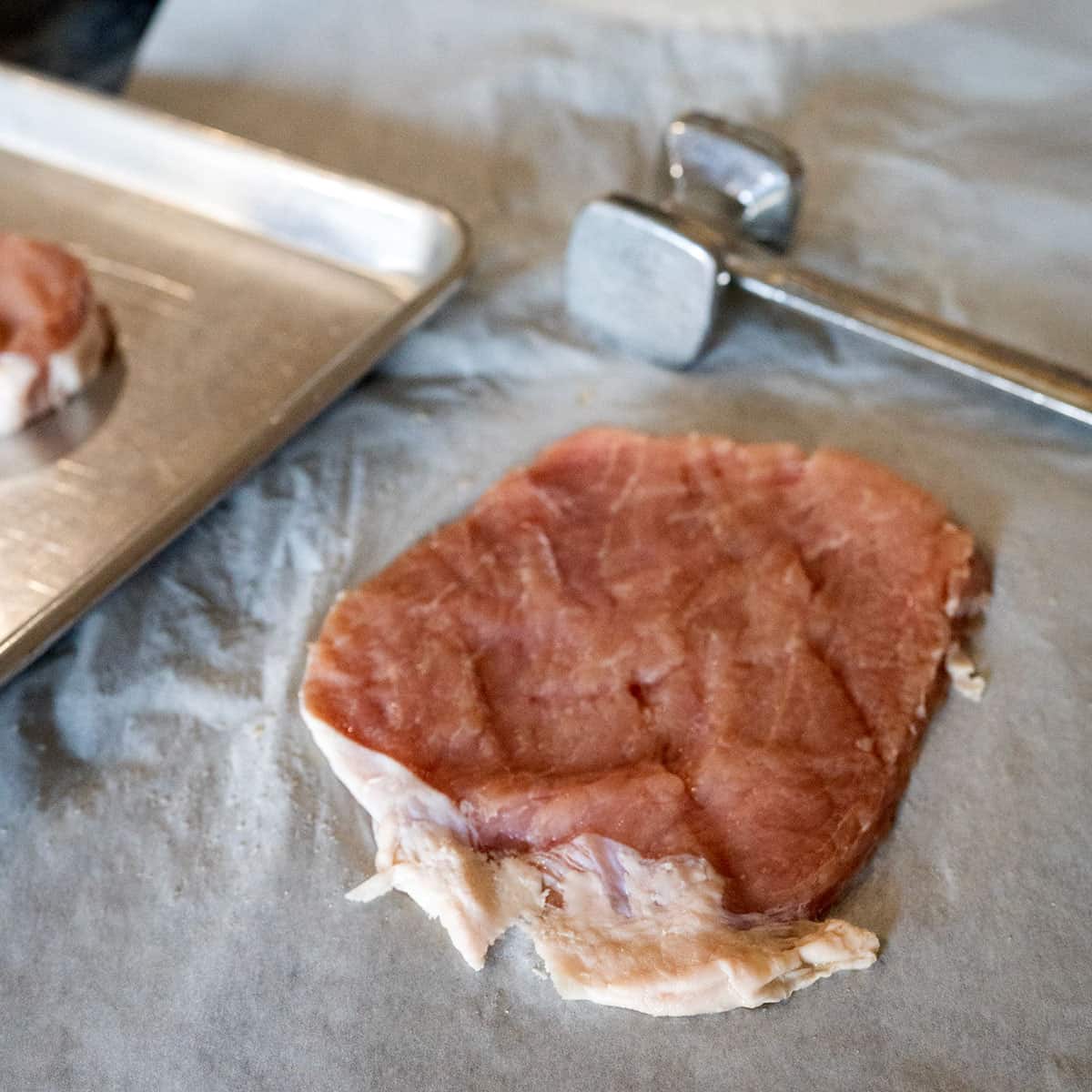
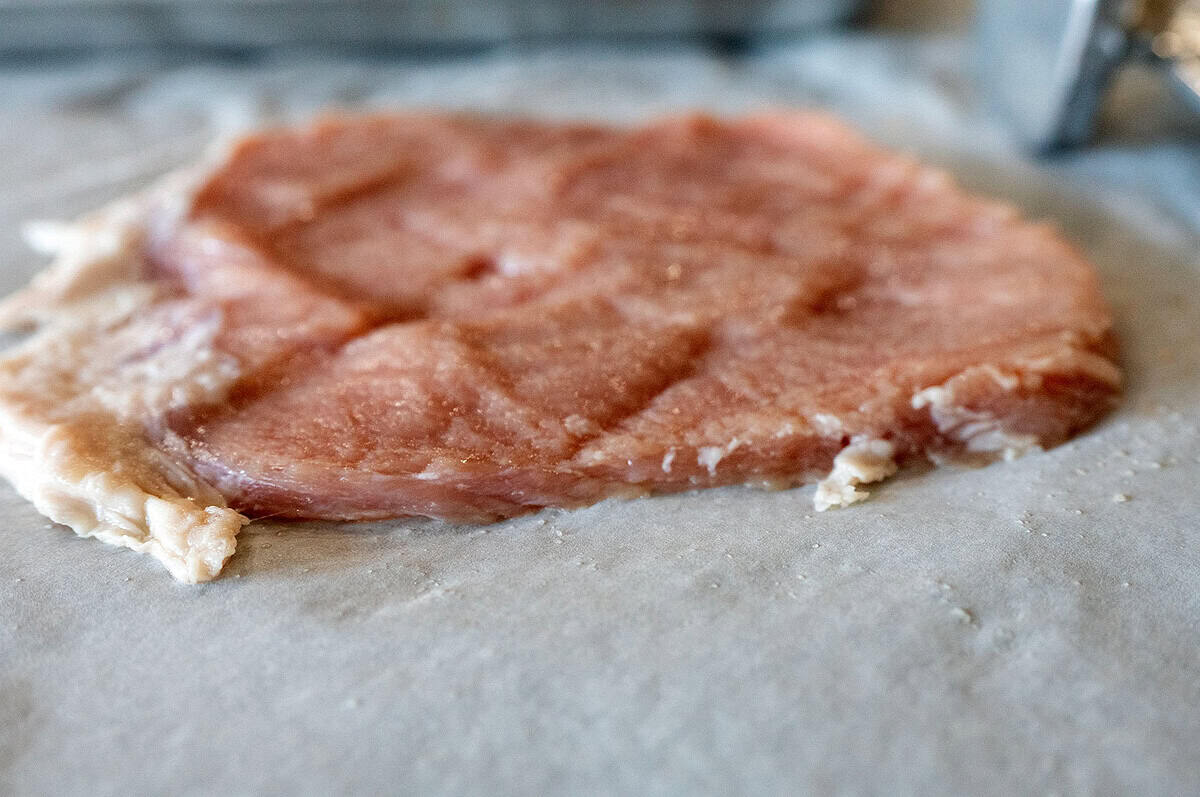
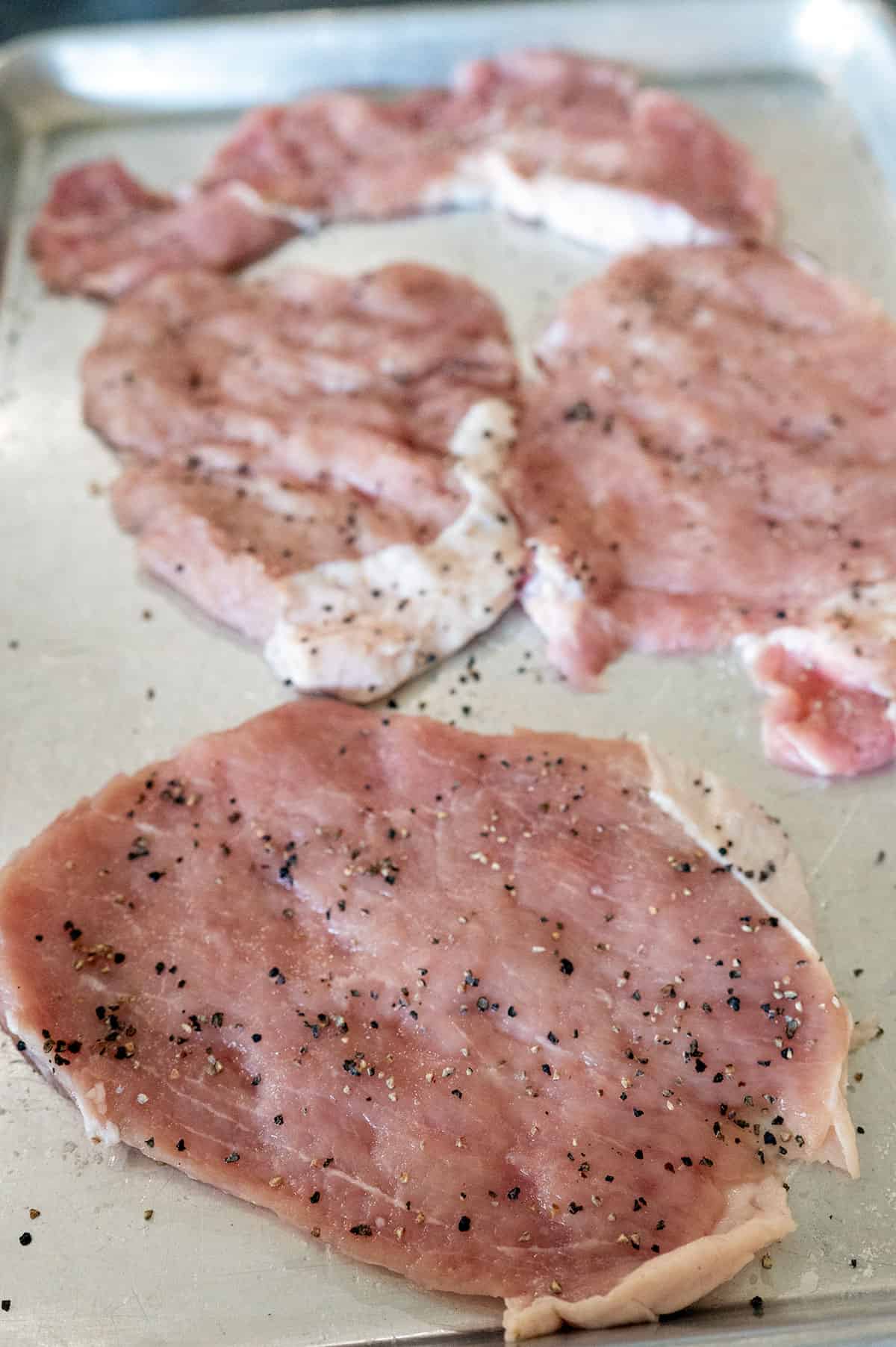
Place the pork chops between two sheets of plastic wrap and pound to an even thickness using the flat side of a meat mallet. I like it to be between 1/8-1/4 inch thickness. Season both sides with 1 tsp salt and 1 tsp pepper.
Step 2: Set up the dredge
In one shallow dish, place the flour. In a second dish, whisk the eggs. In a third dish, mix the panko with ½ tsp salt, ¼ tsp paprika and ¼ tsp garlic powder.
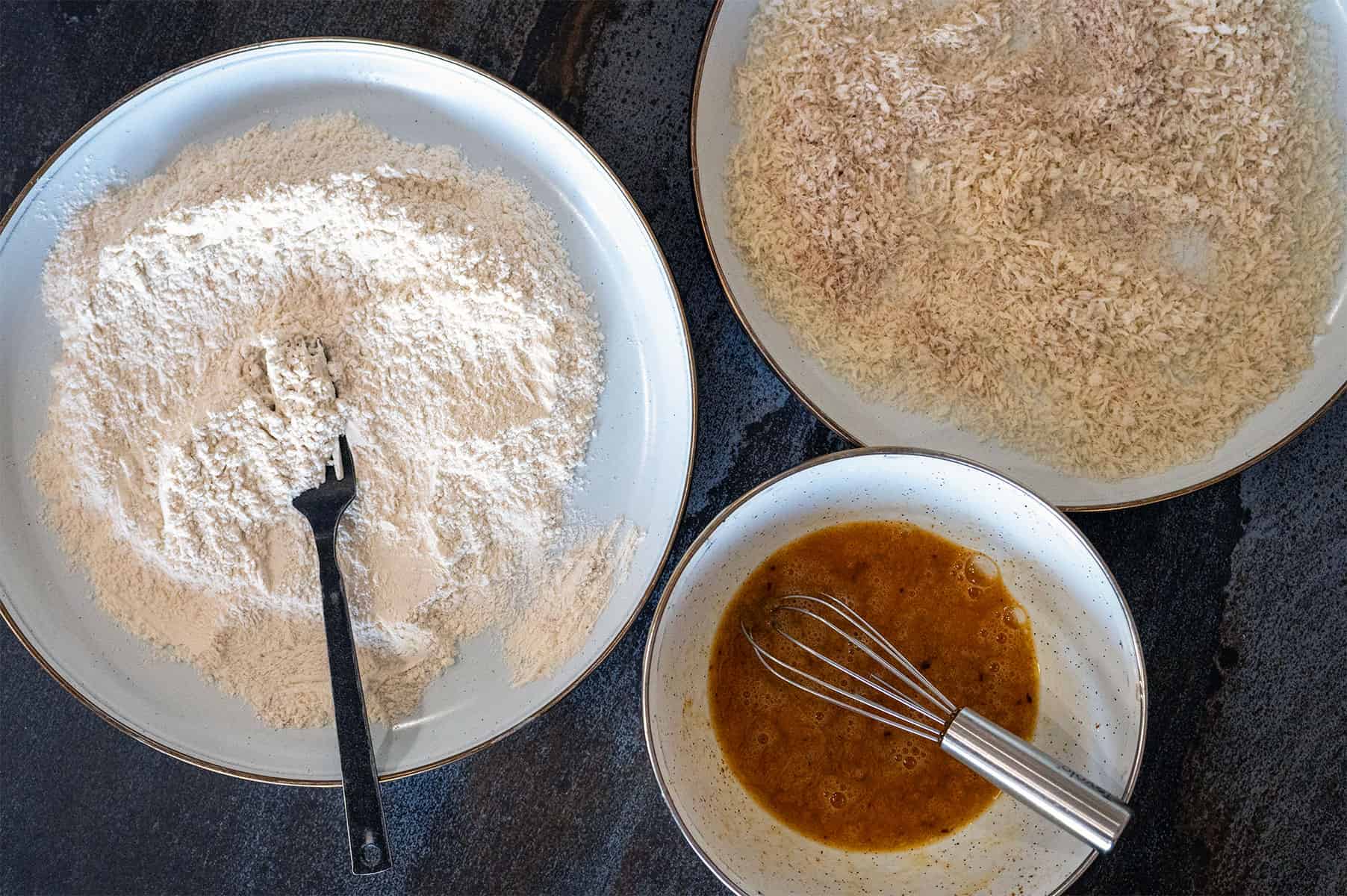
GCG PRO TIP: Season every layer of the dredge, not just the meat. The flour and egg wash are your only chance to season underneath the crust, so don't skip seasoning the pork itself before you start.
Step 3: Dredge the pork
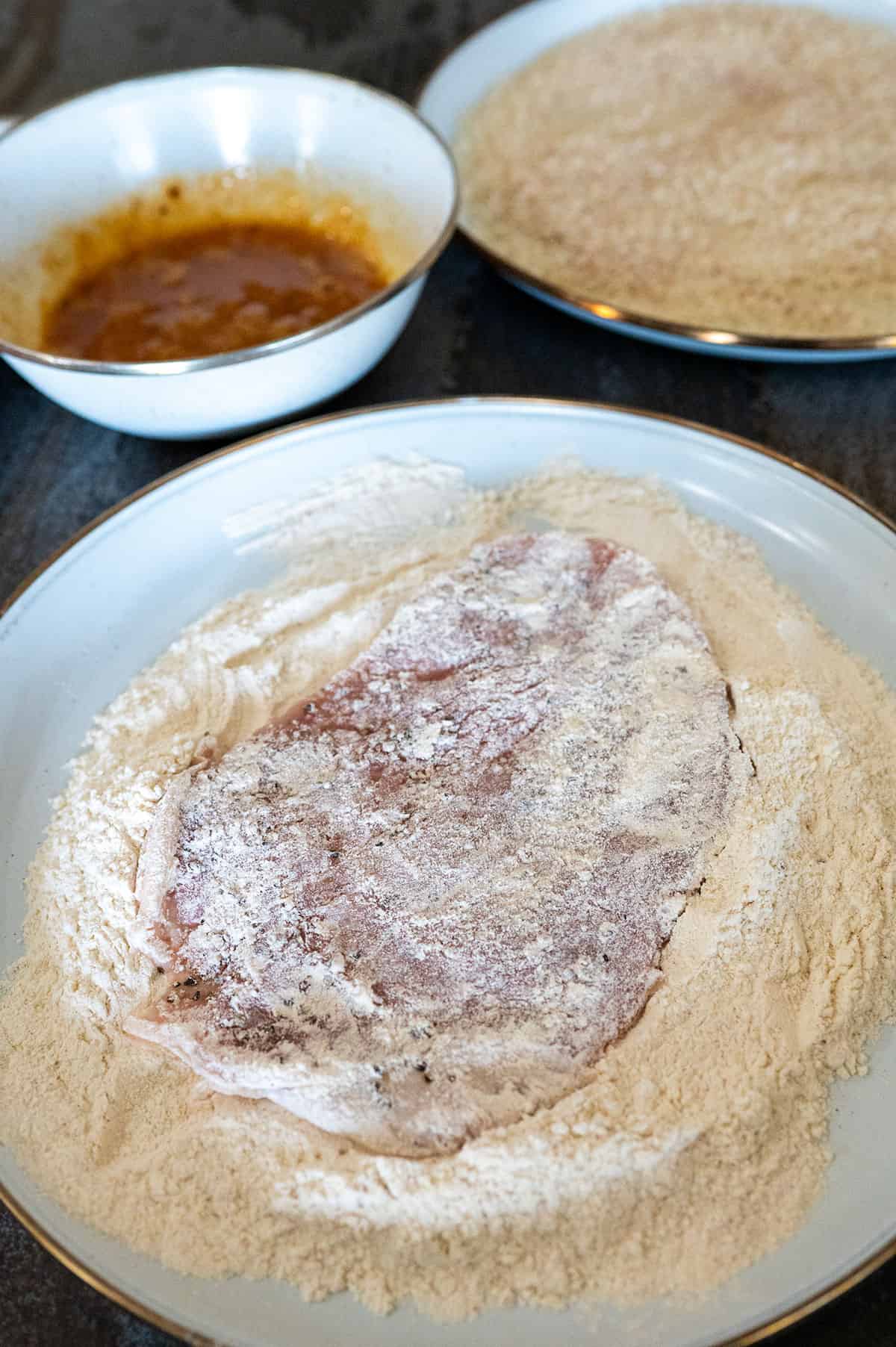
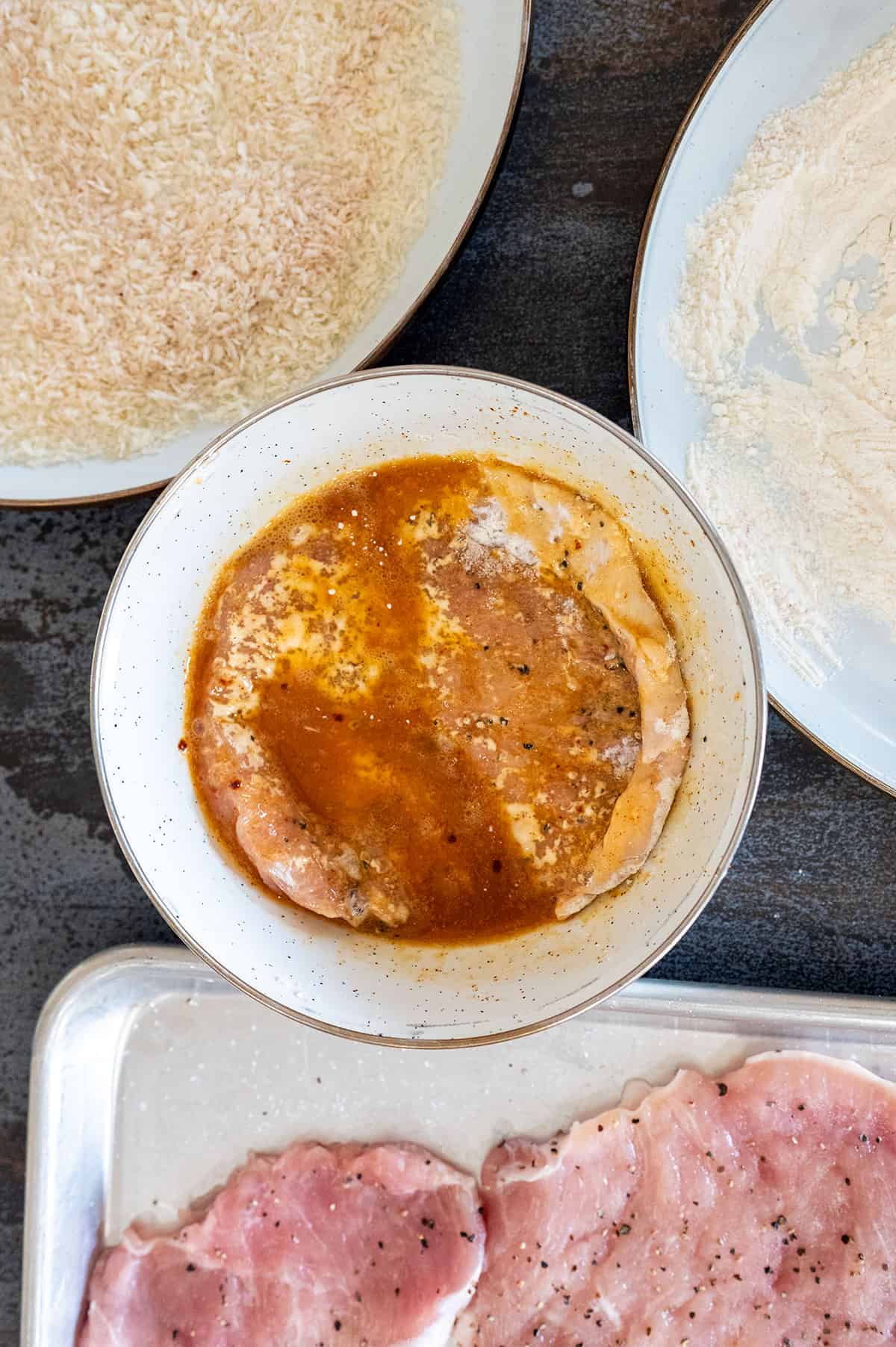
Coat each pork chop in flour, shaking off the excess. Dip into the egg wash, letting the excess drip off. Press into the seasoned panko, coating both sides evenly.
Step 4: Heat the oil
Heat the oil in a large skillet to 375F.
GCG PRO TIP: Use a thermometer to check your oil temperature. If it's too cool, the schnitzel will soak up oil and turn greasy instead of crispy. If it's too hot, the crust will burn before the pork cooks through.
Step 5: Fry the schnitzel
Cook the pork for 4-5 minutes per side, until golden brown and cooked through.
Step 6: Rest and season
Transfer the schnitzel to a plate or pan lined with paper towels. Season with a pinch of salt while it’s still hot for a pop of flavor.
How to serve schnitzel
Serve schnitzel hot, straight out of the pan, with a squeeze of fresh lemon and a simple side salad or roasted potatoes. For a heartier, classic plate, top it with my Mushroom Gravy recipe, which turns this into jägerschnitzel one of the most popular ways to serve schnitzel in German and Austrian cuisine.
For sides, serve it with butter noodles, German spätzle, mashed potatoes or a crisp cucumber salad.
Storage
Store leftover schnitzel in an airtight container in the refrigerator for up to 3 days. Reheat in a skillet, oven or air fryer to bring the crust back to crispy; the microwave may make it soggy.
You can also freeze cooked, cooled schnitzel for up to 2 months. Reheat from frozen in a 400F oven or air fryer until hot and crispy.
GCG Pro Pitmaster Tips
- Pound the pork to an even thickness so it cooks evenly and stays tender.
- Season every layer of the dredge (flour, egg and panko) not just the meat.
- Check your oil temperature with a thermometer. 375F is the sweet spot for a crispy, non-greasy crust.
Frequently Asked Questions
Schnitzel is the breaded, fried cutlet on its own. Jägerschnitzel is that same schnitzel topped with a mushroom gravy, sometimes called “hunter’s sauce.”
Yes. Boneless, skinless chicken breast makes a great substitute. Pound it to an even thickness the same way you would the pork.
This usually happens if the pork wasn’t fully coated in flour before the egg wash, or if the panko wasn’t pressed on firmly enough. Press the breadcrumbs onto the pork with your hands to help it stick.
Newest Recipes