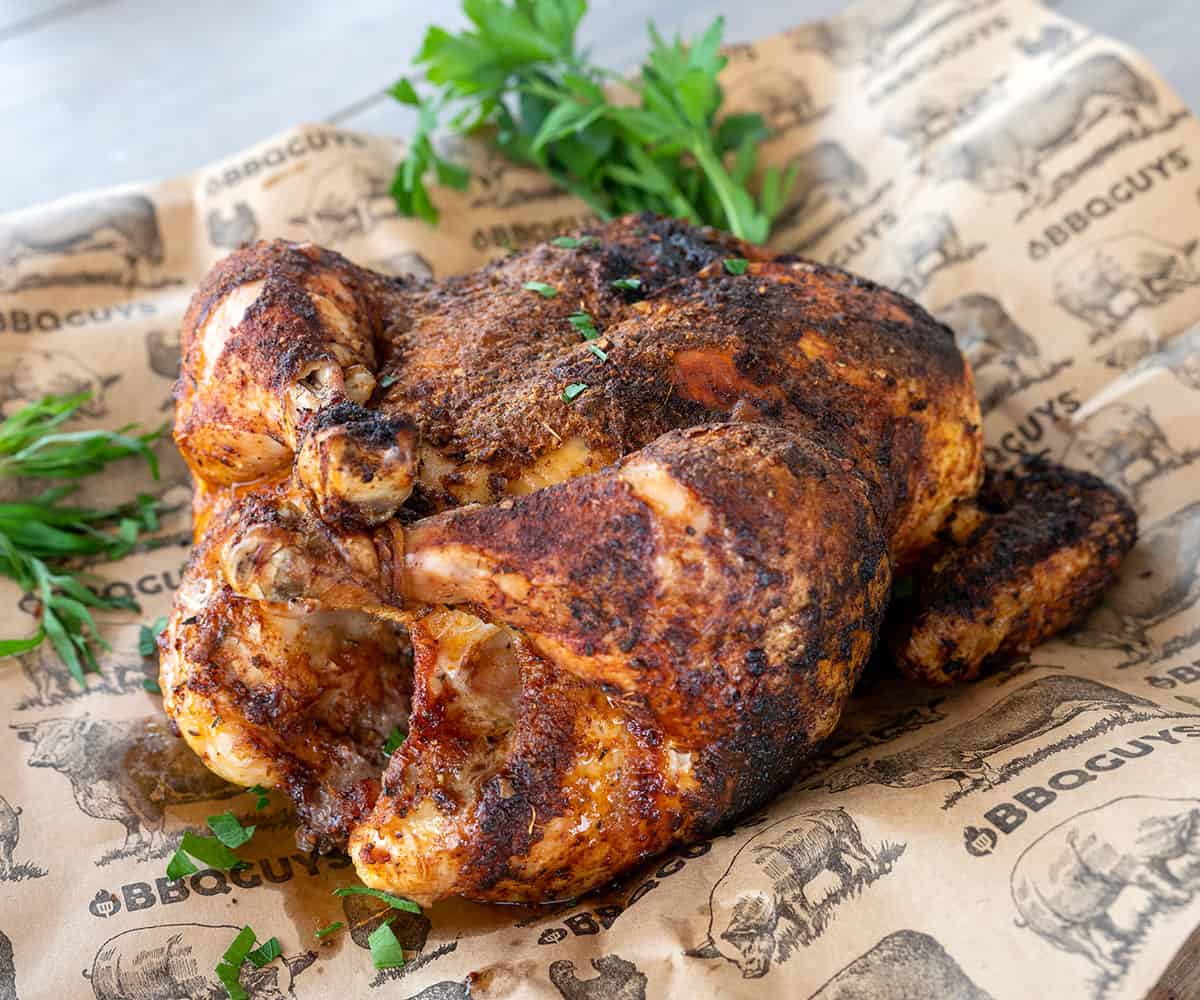
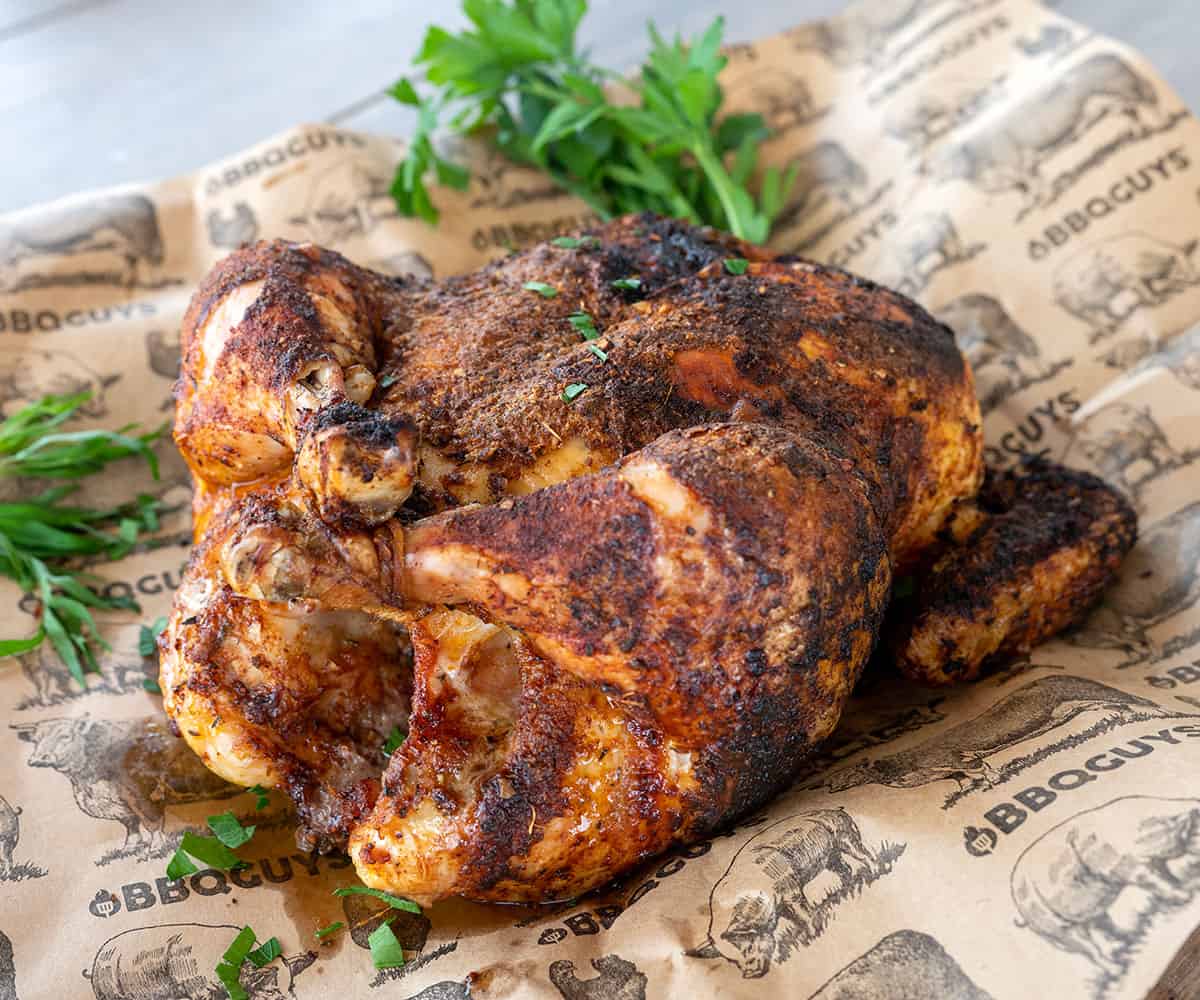
Grilled whole chicken turns three ingredients (chicken, butter and rub) into a smoky, juicy centerpiece you can make on a gas grill, charcoal grill or pellet grill. Cook it over indirect heat at 375-400F degrees and plan on 15-20 minutes per pound until the thigh hits 165F degrees.
If you’ve ever pulled a chicken off the grill with a dry breast and a thigh that’s still pink near the bone, the fix is almost always timing, not skill. Grilling by total minutes instead of minutes per pound is the most common reason a whole chicken cooks unevenly.
I’ve grilled whole chickens for years testing rubs and techniques for Girls Can Grill, and I’ve cooked this exact method on gas, charcoal and pellet grills so it works no matter what’s in your backyard.

Got a Ninja Grill instead of a traditional grill? My Smoked Whole Chicken on the Ninja Woodfire Grill and Whole Chicken on the FlexFlame Grill cover the setup and timing for those cookers.
At a Glance
- Method: Indirect grilling
- Grill Temp: 375-400F degrees
- Cook Time: 15-20 minutes per pound
- Doneness: 165F degrees in the thickest part of the thigh
- Rest Time: 15 minutes
- Works On: Gas, charcoal or pellet grill
Note: Actual cook time will vary based on the size of your chicken and how steadily your grill holds temperature. Always cook to the internal temperature, not the clock.
What Is Whole Chicken
Whole chickens come in various sizes and may be referred to as a roaster, a broiler or fryer chicken, a Cornish hen or a poussin.
Roaster and broiler or fryer chickens are usually anywhere between 4-7 pounds. That’s the type of chicken that’s used for this recipe. Cornish game hens and poussins are much smaller and are usually only found in the freezer section.
The advantage of buying and grilling a whole chicken is that the price per pound is less because you’re not paying a butcher to piece it out. Plus, the bones and chicken skin add more flavor to the meat as it is cooking.
Whole chickens usually come with giblets inside the cavity. Giblets can include organ meats like the gizzard, heart and liver. Sometimes they’re in a bag between the legs and sometimes they’re loose inside. You may also find a chicken neck inside.
These should all be removed before grilling. You can cook them down for gravy or broth, or discard them.
-
Prep Chicken: Remove the chicken from the packaging. Reach inside the cavity and remove and discard the neck and any organs that may be stuffed inside. Pat the chicken dry with paper towels.
-
Season: Take a stick of softened butter and smear it all over the chicken, including under the breast skin. Sprinkle rub all over the inside and outside of the bird.
-
Heat Grill: Place the chicken in the refrigerator while you heat your grill to 375-400F degrees with an indirect heat zone. (Read above for instructions)
-
Grill: Place chicken on the grill over indirect heat with the chicken breast side facing up. Close the grill lid and grill for 15-20 minutes per pound, or until the internal temperature reaches at least 165F degrees.
-
Rest: Remove from the grill and let it rest for 15 minutes.
-
Serve: Slice into pieces or pull the shredded meat from the bones and serve.
The calories and fat will be lower, if you discard the skin and only eat the meat.
Calories: 607kcalCarbohydrates: 1gProtein: 41gFat: 48gSaturated Fat: 19gPolyunsaturated Fat: 8gMonounsaturated Fat: 18gTrans Fat: 1gCholesterol: 204mgSodium: 274mgPotassium: 425mgFiber: 0.1gSugar: 0.1gVitamin A: 811IUVitamin C: 4mgCalcium: 42mgIron: 2mg
Nutrition information is automatically calculated, so should only be used as an approximation.
What You’ll Need
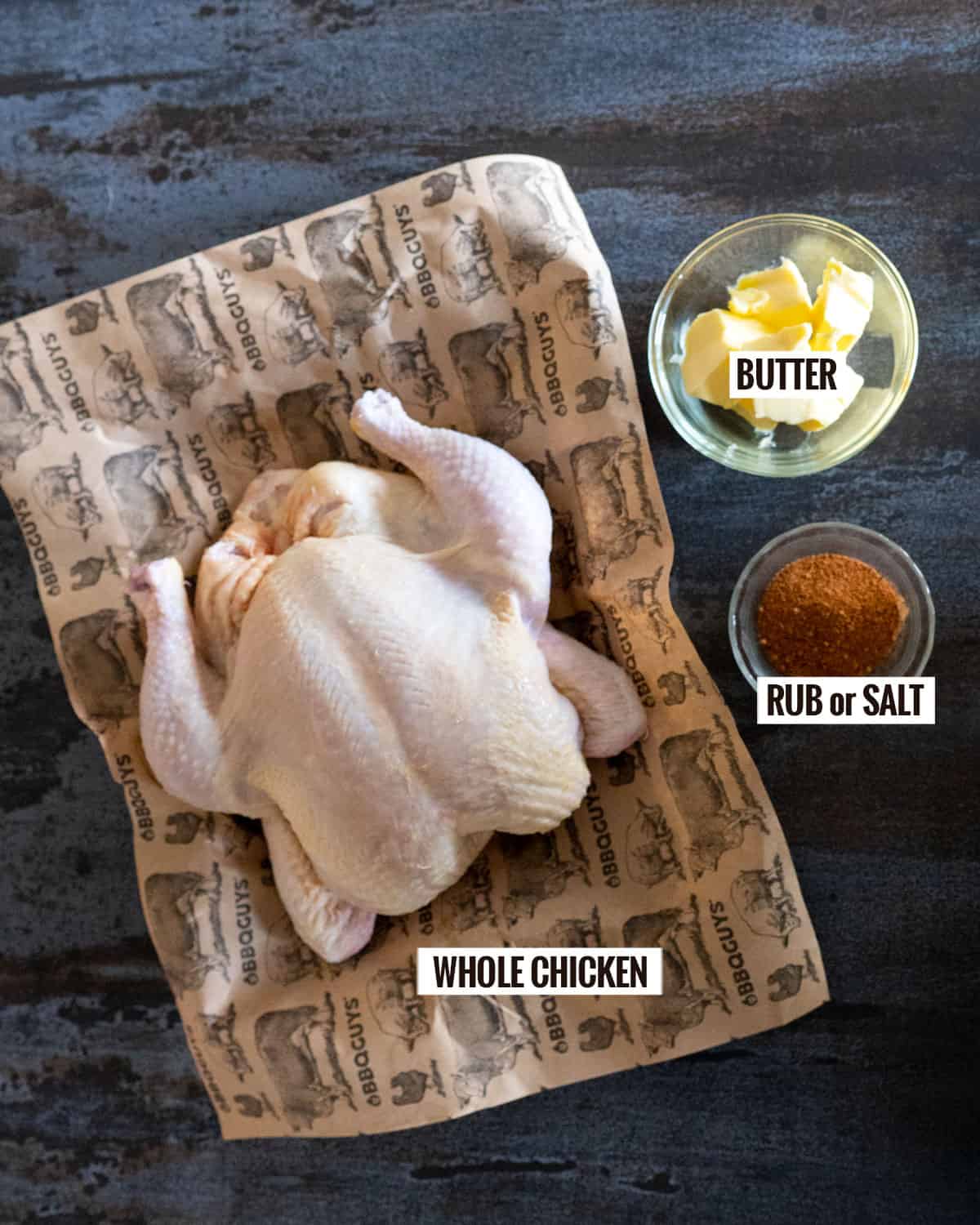
- Whole Chicken: I usually look for 5-6 pound birds, but check the FAQs below for guidance on picking the right size for your needs.
- Butter: For the best flavor, use real stick butter, not the spreadable stuff in a tub. That’s mostly oil.
- Rub: Any barbecue rub will work for this recipe. My Chicken Rub was made especially for recipes like this. It includes seasonings like rosemary, thyme, garlic, onion and lemon.
Substitutions: In place of butter, you can use olive oil or any other vegetable oil. You can also season simply with kosher salt, black pepper and garlic powder. Lemon pepper also tastes great on chicken.
See the full recipe card above for servings and a full list of ingredients.
How to Set Up Your Grill for a Whole Chicken
You can grill a whole chicken on a gas grill, charcoal grill or pellet grill. The key on every type of grill is indirect heat, so the skin doesn’t burn before the inside finishes cooking. Set your grill up for a temperature of 375-400F degrees with an indirect heat zone.
Grilling a Whole Chicken on a Gas Grill
Leave one burner off and turn on at least one other burner. Adjust the burner heat until the grill’s temperature gauge reads 375-400F degrees. Cook the chicken over the grate above the burner that’s turned off.
If you want to add smoke flavor, fill a smoke box with wood chips and set it over the lit burner.
Grilling a Whole Chicken on a Charcoal Grill
On a kettle-style charcoal grill, push the hot coals to one side and set the grate on top. Cook the chicken over the side without coals. On a drum smoker or ceramic cooker, use the diffuser plate to block direct heat instead.
Cooking a Whole Chicken on a Pellet Grill
Pellet grills come with a built-in indirect heat zone, thanks to the metal diffuser plate over the fire pot. Turn the grill to 375F degrees, let it heat up, then place the chicken anywhere on the grate.
How to Grill a Whole Chicken
Step 1: Prep and Butter the Chicken
Remove the chicken from its packaging. Reach inside the cavity and remove and discard the neck and any organs stuffed inside. Pat the chicken dry with paper towels, then smear a stick of softened butter all over the outside, including under the breast skin.
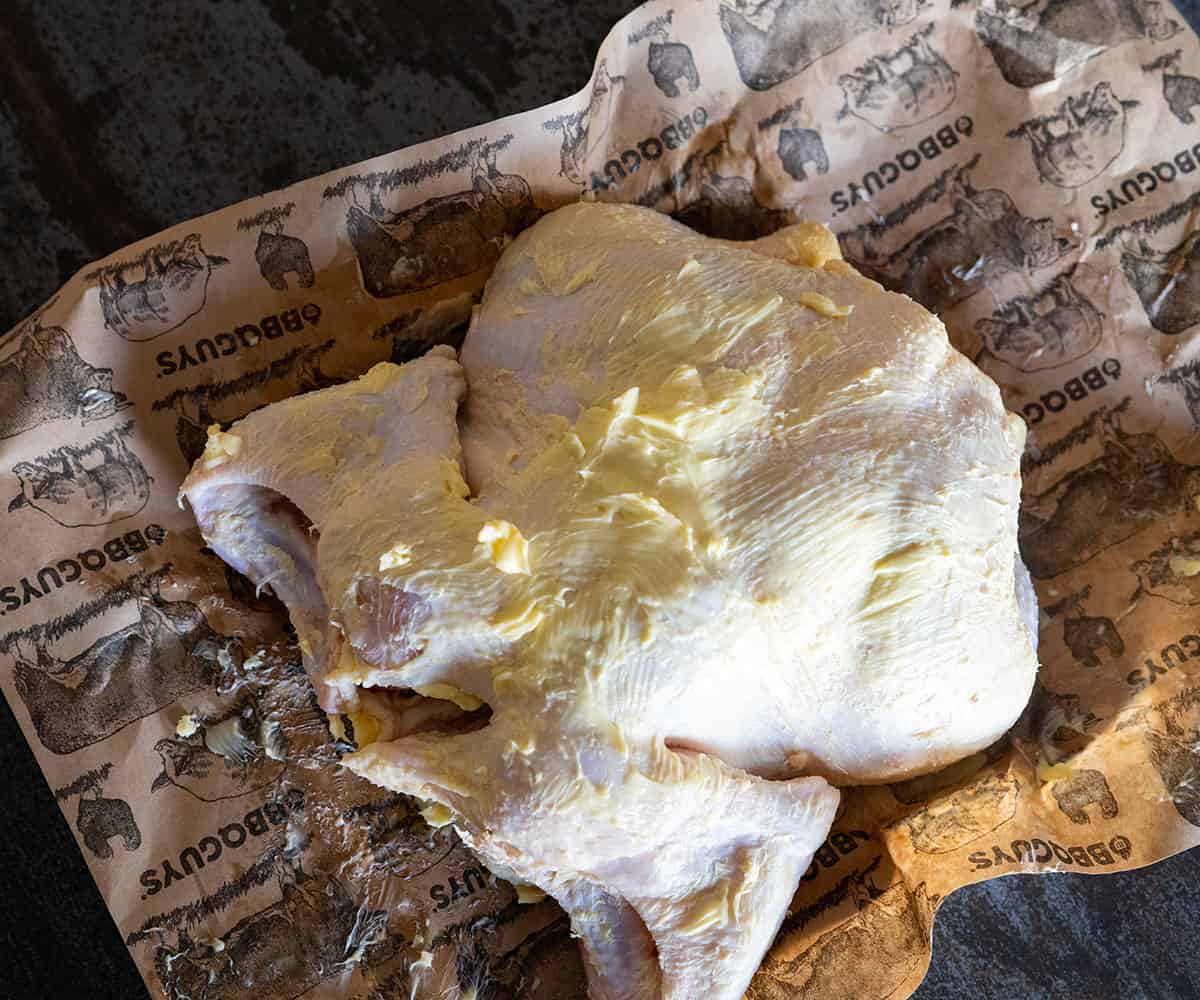
PRO TIP: Don't wash the chicken first. Washing raw poultry increases the risk of spreading juices around your kitchen, and the butter won't stick as well to wet skin.
Step 2: Season the Chicken
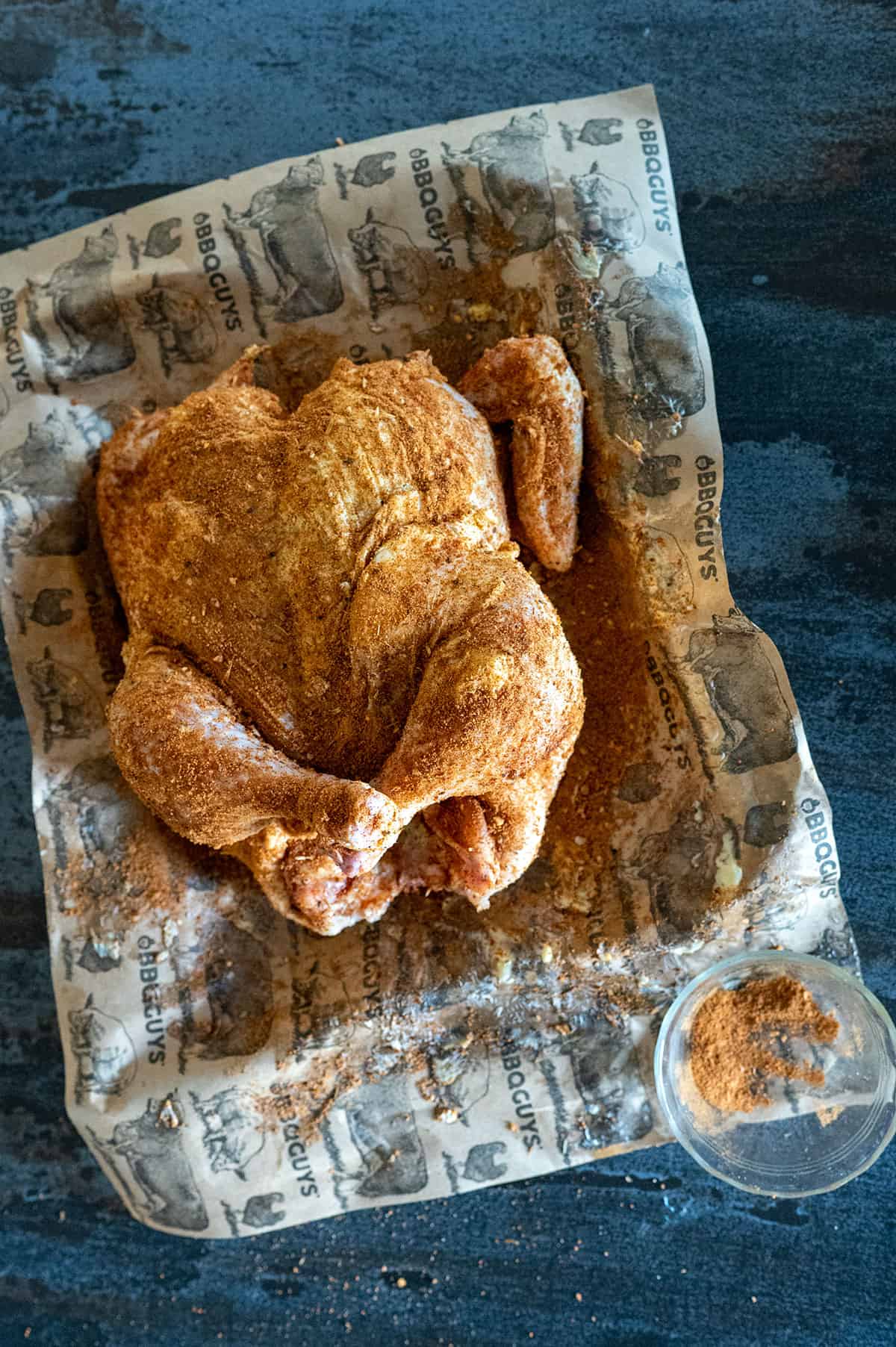
Sprinkle rub all over the whole bird. Lift the legs and wings to get seasoning into the joints, and sprinkle some rub inside the cavity too. For a neater presentation, tie the legs together with butcher’s twine. This step is optional.
VARIATION: For a compound butter, mix the softened stick of butter with a spoonful of your rub before smearing it on.
Step 3: Chill the Chicken
Place the seasoned chicken in the refrigerator, uncovered, while you heat your grill to 375-400F degrees.
PRO TIP: For even more flavor, leave the seasoned chicken in the refrigerator for 4-8 hours. This creates a dry brine, which helps produce juicier meat and crispier skin. Then light the grill when you're ready to cook.
Step 4: Place the Chicken on the Grill
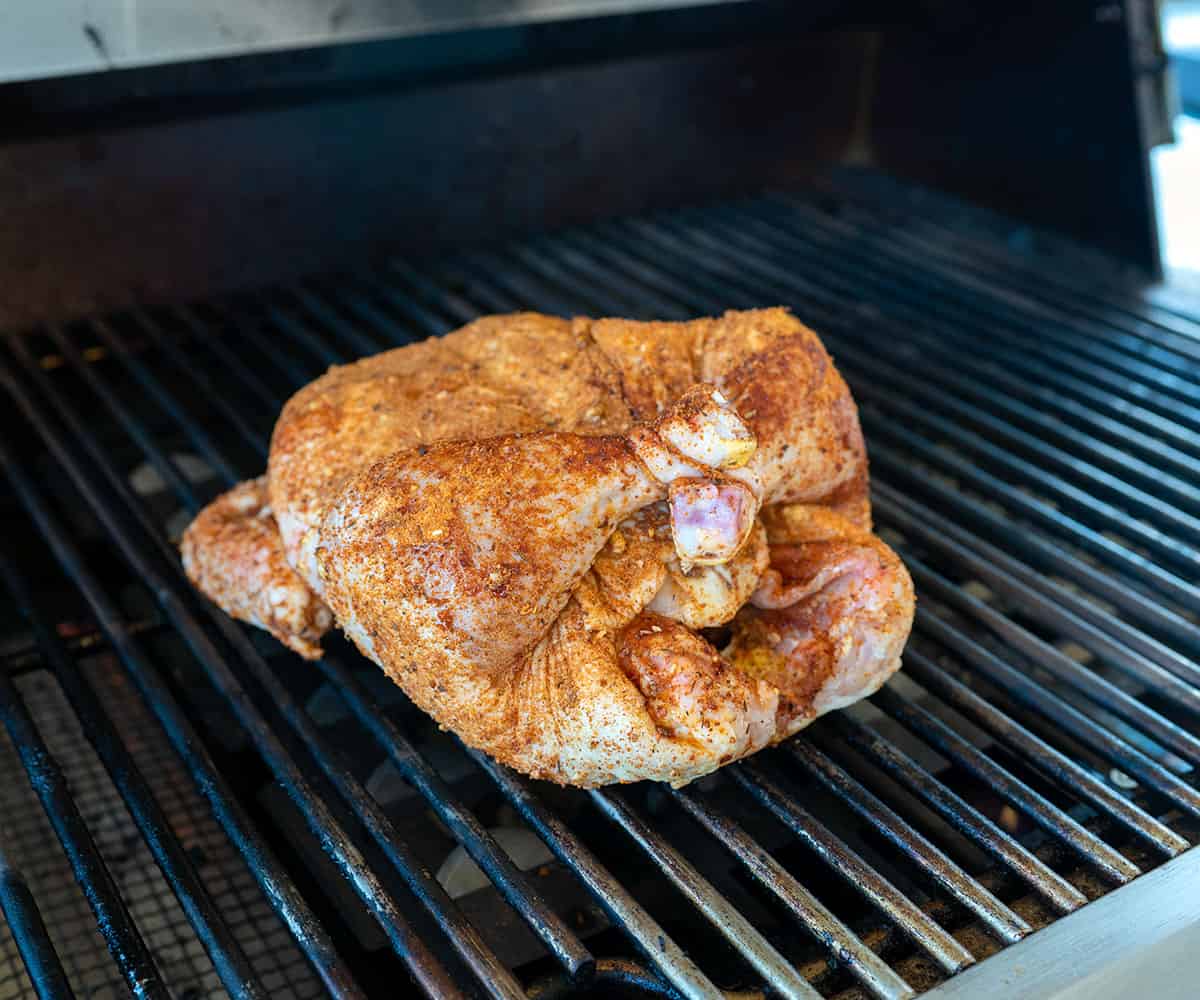
Place the chicken on the hot grill over indirect heat, breast side up. Close the lid.
Step 5: Grill to Temperature
Grill for about 15-20 minutes per pound, or until the internal temperature reaches at least 165F degrees. Insert an instant-read thermometer into the thickest part of the thigh, without touching the bone.
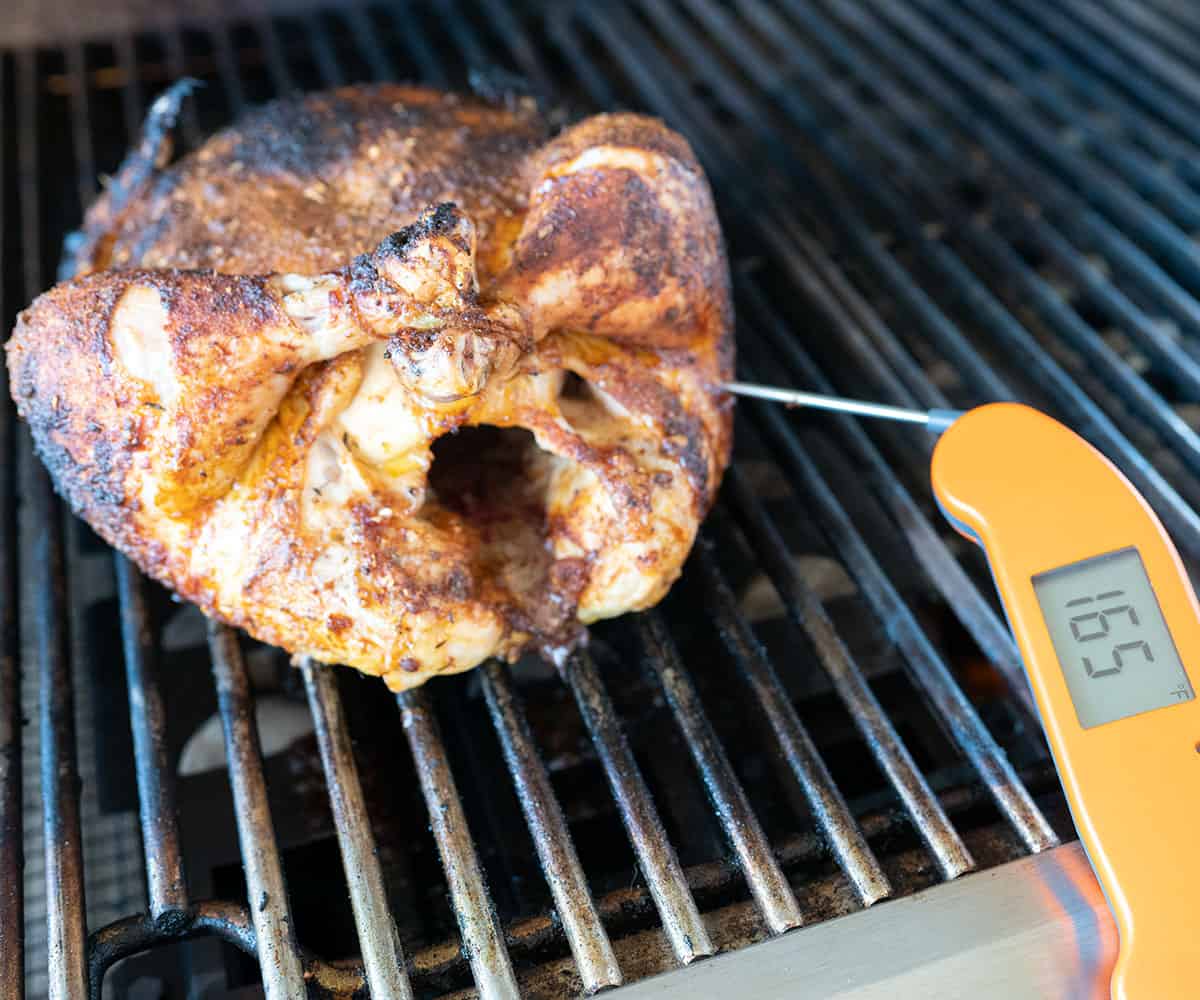
PRO TIP: If your heat source only comes from one side of the grill, rotate the chicken once or twice during the cook for more even results.
How to Serve Grilled Whole Chicken
Remove the chicken from the grill and tent it loosely with aluminum foil. Let it rest for at least 15 minutes so the juices settle back into the meat.
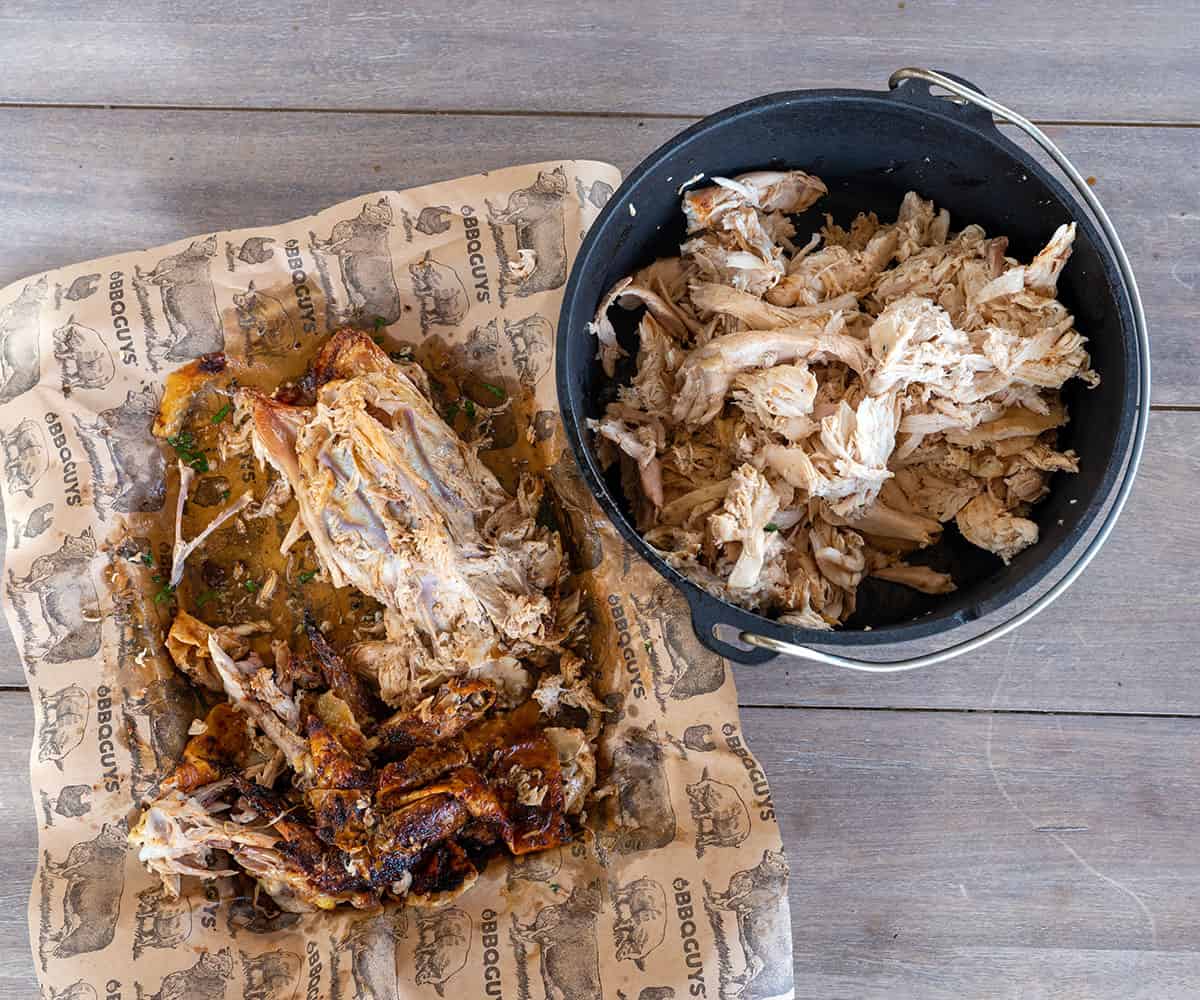
Just like a rotisserie chicken from Costco or the grocery store, you can cut the chicken into pieces — wings, thighs, breasts and legs — or pull the meat from the bones.
Shredded chicken works in a ton of recipes, like Southwest Chicken Chili, chicken enchiladas, chicken quesadillas, chicken taquitos or chicken sandwiches with barbecue sauce or Alabama white sauce.
Storage
Store pulled chicken in an airtight container in the fridge for up to five days, or freeze it for up to six months.
Don’t toss the bones. You can make homemade chicken broth by simmering them in a pot of water with diced onions, carrots and celery. Strain the broth and freeze it for up to six months.
GCG Pro Pitmaster Tips
- Pat the chicken fully dry before the butter. It sticks better and the skin crisps more
- Cook over indirect heat only. Direct flame burns the skin before the inside finishes
- Pull at 165F degrees in the thickest part of the thigh, not the breast
- Rest under foil for 15 minutes before carving or pulling
Frequently Asked Questions
A whole chicken with giblets can range anywhere from 4-7 pounds.
Rub the whole chicken with butter, season it with rub, then grill it over indirect heat at 375-400F degrees on a gas, charcoal or pellet grill. Cook it for 15-20 minutes per pound until the thigh reaches 165F degrees, then rest it for 15 minutes before serving.
On a gas grill set up for indirect heat at 375-400F degrees, plan on 15-20 minutes per pound. A 5-6 pound chicken will usually take about 75-120 minutes. Always confirm doneness with a thermometer in the thigh, not the clock, since it should read 165F degrees.
Push hot coals to one side of a kettle-style charcoal grill and set the chicken over the side without coals, or use the diffuser plate on a drum smoker or ceramic cooker. Keep the grill around 375-400F degrees and cook 15-20 minutes per pound until the thigh reaches 165F degrees. See the charcoal grill setup section above for full detail.
The amount of pulled meat you’ll get from a whole chicken will vary, depending on the size of the chicken. Plan on getting one loosely packed cup of pulled chicken for every pound the chicken weighs.
It depends on whether you plan to serve the chicken in pieces or pulled. Each chicken has 8 pieces – 2 legs, 2 wings, 2 thighs and 2 breasts. If you serve the grilled chicken in pieces, plan on giving each person 2 pieces, which equals 4 servings.
If you pull the meat from the bones, you can plan on 1 cup of shredded meat per person. Each raw pound of chicken equals about 1 cup of cooked chicken, so a 4-pound bird will serve 4 people and a 7-pound whole chicken will serve 7 people.
Spatchcocking means removing the backbone and flattening the chicken. It cooks faster and more evenly, but you lose the classic whole-bird presentation. This recipe grills the chicken whole and intact, which takes a bit longer but is worth it for the look on a platter.
Wet skin and low grill temperature are the two most common culprits. Pat the chicken fully dry before adding the butter, and confirm your indirect zone is actually holding 375-400F degrees, not lower. A dry brine in the refrigerator for 4-8 hours before grilling also helps the skin crisp up.
Yes. Mix the softened stick of butter with a spoonful of rub before rubbing it under the skin and over the outside. It adds flavor and bastes the meat as it cooks.
The chicken thighs and legs are considered dark meat and the breasts and chicken wings are white meat. According to the USDA, the muscles that are used more often (the legs and thighs) have more oxygen-storing myoglobin, which creates the darker color.
You can also cook a whole bone-in chicken upright by placing the cavity over a beer can or soup can filled with liquid. Check out my recipe for Beer Can Chicken with Beer Salt.
What to Serve with Grilled Whole Chicken
Newest Recipes