Whether Limitation for a Section 34 Application Runs from the Date of the Original Award or from Disposal of a Section 33 Application – Dr. Ananya Pratap Singh

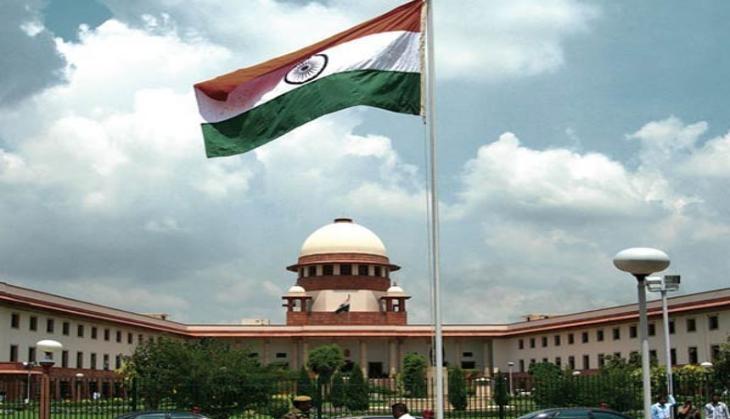

Supreme Court of India: Whether Limitation for a Section 34 Application Runs from the Date of the Original Award or from Disposal of a Section 33 Application
In National Highway Authority of India v T. Younis & Anr., 2026 INSC 616, the Supreme Court decided the issue of whether the limitation period under Section 34(3) of the Arbitration and Conciliation Act, 1996 for filing an application to set aside an arbitral award should be computed from the date of the original award, or from the date on which an application under Section 33 of the Act came to be disposed of by the Arbitral Tribunal including where such Section 33 application is ultimately dismissed.
Factual Matrix
On 15.12.2009, the Ministry of Shipping, Road Transport and Highways issued a preliminary notification under Section 3A(1) of the National Highways Act, 1956 for acquisition of land in Bellary District, which included land belonging to Respondent No.1.
By a declaration dated 14.12.2010 under Section 3D(2), the land vested in the Central Government, and the competent authority determined compensation by an Award dated 05.12.2011 under Section 3G(1).
The Appellant invoked arbitration under Section 3G(5), and the Deputy Commissioner-cum-Arbitrator, Bellary, by Award dated 16.02.2013, redetermined the market value of the agricultural and non-agricultural land. The High Court set aside this Award on 16.03.2019 and remitted the matter for de novo consideration.
Pursuant to remand, the Arbitrator passed a fresh Award on 03.02.2022, granting benefits under Sections 23(1-A), 23(2), 28 and 34 of the Land Acquisition Act, 1894.
On 08.03.2022, the Appellant filed an application under Section 33(1)(a) of the Act seeking correction of the Award, contending that the grant of additional market value and interest was not legally sustainable.
On 10.03.2022, Respondent No.1 filed an application under Section 33(4) seeking an additional award of 50% over the market value.
By a common order dated 04.07.2022, the Arbitrator dismissed both application. The certified copy was received by the Appellant on 15.09.2022.
On 29.10.2022, the Appellant filed applications under Section 34 along with applications for condonation of delay. Respondent No.1 objected that the applications were filed beyond the condonable period of 120 days under the proviso to Section 34(3).
The Principal District and Sessions Judge, Bellary, by order dated 05.08.2023, condoned the delay and allowed the applications. Respondent No.1 challenged this order in a Writ Petition.
The High Court of Karnataka, Dharwad Bench, by judgment dated 22.01.2024, held that the Appellant’s Section 33(1)(a) application did not fall within its purview since it sought modification rather than correction of computation, clerical, or typographical errors.
Consequently, the benefit of limitation under Section 34(3) was unavailable, resulting in dismissal of the Section 34 applications. Aggrieved, the Appellant approached the Supreme Court.
Parties’ Contentions
The Appellant submitted that since both parties had filed applications under Section 33, it could not have filed the Section 34 application before their disposal, and that the High Court erred in refusing to exclude the period spent on the Section 33 application while computing limitation, and in relying on State of Arunachal Pradesh v Damani Construction Co., (2007) 10 SCC 742.
It was contended that the Section 33(1)(a) application merely sought correction of clerical and typographical errors and did not amount to a review of the Award, and that the issue was no longer res integra in view of Geojit Financial Services Ltd. v Sandeep Gurav, 2025 INSC 1021.
Respondent No.1 submitted that the Appellant’s Section 33(1)(a) application was, in substance, an attempt to review the Award rather than correct clerical errors, since it sought modification of substantive findings falling outside the limited scope of Section 33(1)(a).
It was contended that only a maintainable Section 33 application could extend limitation under Section 34(3), and that relying on State of Arunachal Pradesh (supra), since the Appellant’s application was itself not maintainable, it could not claim exclusion of the time spent on it.
It was further argued that the Arbitral Tribunal had become functus officio after the Award, and that even assuming exclusion of time were available, the Section 34 applications were filed beyond the statutory outer limit.
Issue
Whether the limitation under Section 34(3) of the Act would commence from the date of the original award or from the date on which the application under Section 33 came to be disposed of, and whether this position is affected by whether the Section 33 application is ultimately held to be maintainable or is allowed or dismissed.
Findings of the Supreme Court
The Court held that Section 34(3), on careful scrutiny, does not distinguish between Section 33 applications that are ultimately allowed or dismissed, nor does it indicate that only a maintainable Section 33 application would defer the commencement of limitation under Section 34(3).
The Court held that had the legislature intended to restrict this benefit only to applications ultimately allowed or held maintainable, it would have expressly so provided, and that the Court cannot read into the provision a restriction the legislature has not consciously incorporated.
The Court held that once proceedings under Section 33 are initiated and entertained by the Arbitral Tribunal, the award remains subject to the tribunal’s limited jurisdiction for correction, interpretation, or supplementation, and that so long as such proceedings remain pending, parties cannot be compelled to institute Section 34 proceedings merely as a matter of abundant caution.
The Court held that parties can effectively pursue their remedy under Section 34 only upon conclusion of the Section 33 proceedings, and that limitation under Section 34(3) can accordingly start only from the date of disposal of the Section 33 proceedings.
The Court rejected the contention that only a “maintainable” Section 33 application can defer limitation, holding that whether the Section 33 application ultimately succeeds or fails, or whether the Tribunal finds no correction or modification warranted, is not determinative, what is relevant is whether the Tribunal’s jurisdiction under Section 33 had been formally invoked and remained pending consideration.
The Court distinguished State of Arunachal Pradesh(supra) on facts, holding that it arose in a context where there was no formal application under Section 33 invoking the Tribunal’s jurisdiction, but merely a letter in substance seeking review and ancillary clarifications beyond Section 33’s contours whereas in the present case, formal applications under Section 33 were admittedly filed by both parties within the statutory period and were entertained and disposed of by a common order.
The Court further held that the interpretation adopted by the High Court would defeat the scheme and object of the Act, since compelling parties to institute Section 34 proceedings during the pendency of Section 33 proceedings merely as abundant caution would result in multiplicity of proceedings and procedural uncertainty.
The Court clarified, however, that where Section 33 applications are found to be sham, frivolous, mala fide, or filed solely to defeat limitation under Section 34(3), courts would be justified in imposing exemplary and punitive costs, as maintaining the balance between preserving legitimate remedies and preventing abuse of process is fundamental to the administration of justice.
The Court held that the issue was no longer res integra, noting that this Court, in Ved Prakash Mithal and Sons v Union of India, 2018 SCC OnLine SC 3181, USS Alliance v State of U.P., 2023 SCC OnLine SC 778, and Geojit (supra), had already held that the date of disposal of the Section 33 application earmarks the starting point of limitation under Section 34(3), and the Court agreed with this line of authority.
Applying this to the facts, the Court held that since the certified copy of the common order dated 04.07.2022 was received by the Appellant on 15.09.2022, and the Section 34 applications were filed on 07.11.2022, they were within the period contemplated under Section 34(3), and the contention that they were time-barred did not merit acceptance.
Accordingly, the impugned judgment of the High Court was set aside, the order dated 05.08.2023 condoning delay was restored, and the Section 34 applications were directed to be decided on their own merits in accordance with law. The appeal was allowed.