Barcelona is a vibrant city in Catalonia Spain and one of my favourites to visit. Every time we visit Barcelona we like to try to find at least one new place! It is like stepping into a living masterpiece where history, art, and culture converge with everything from food markets to thousands of years of history at your feet. Finding Things to do in Barcelona is not that hard, as you will find there is so much on offer. You can explore the enchanting labyrinth of streets of the Gothic Quarter or the sun-kissed shores of Barceloneta Beach.

I personally love the wonder of Gaudí’s architectural wonders, from the iconic Sagrada Família to the Park Güell. Strolling around the bustling markets like La Boqueria, or the street market of Palo Alto are always top on my list. We visit Barcelona for weekends and regularly stop by whilst we are dropping in from a cruise port on driving past in our motor home.
Whether you are visiting Barcelona from your cruise ship in Barcelona port or spending a few days or a week here, this is everything you need to know about exploring the wonderful city of Barcelona. So Grab a map, and let’s discover Barcelona’s endless charms. Keep on reading as I show you everything that I love about Barcelonas and it’s top attractions as well as some hidden gems.
I could be compensated, if you click on a link in this post via a cash payment, gift or something else of value for writing this post. See our full disclosure policy and privacy policy for more details.

Everything you need to know about the Best Things to Do Barcelona Spain
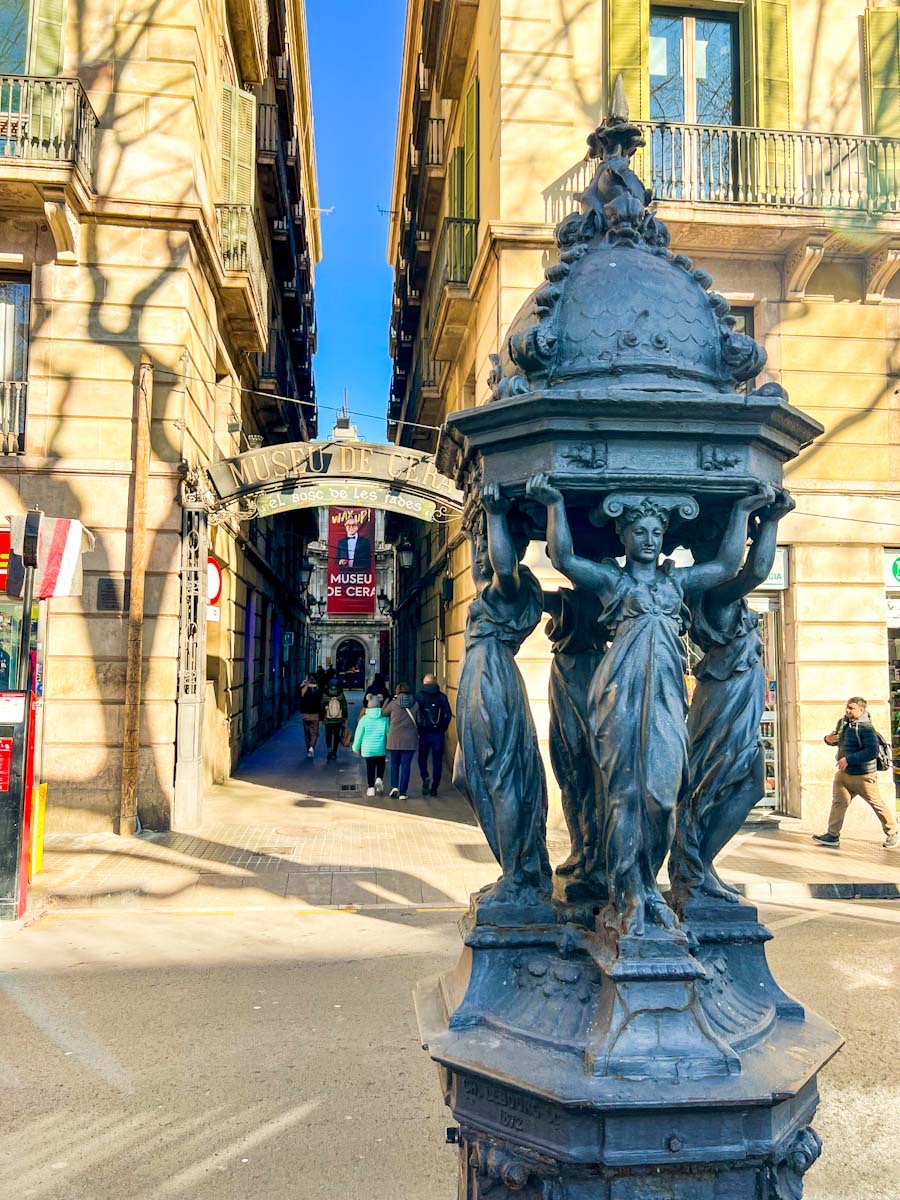
One of the best things about Barcelona is the fact that you can explore the area by yourself. There are endless museums, attractions and many restaurants to visit. Take a look at our things to do in Barcelona city with hidden gems to find and explore. Barcelona is easy to explore on foot or by the metro or bus.
Visit Sagrada Família

One of the most renowned and awe-inspiring works crafted by Spanish architect Antoni Gaudi is the Sagrada Familia cathedral. It is realy what everyone comes to see and I can still remember when I first saw it!
Its construction commenced in 1882 and remarkably, even after all these years, it remains unfinished. It is hoped to achieve completion by 2026, coinciding with the centenary of Gaudi’s passing.
Both the outer facade and inner sanctum of the cathedral are nothing short of breathtaking, eloquently showcasing Gaudi’s distinctive architectural flair. To gain access to the Sagrada Familia’s interior, procuring tickets is a necessity. However, we strongly advise securing your tickets well in advance. Acquiring them on the day of your visit can prove to be extremely challenging, especially if you want to go up the tower.
Take a Walk up to Park Güell

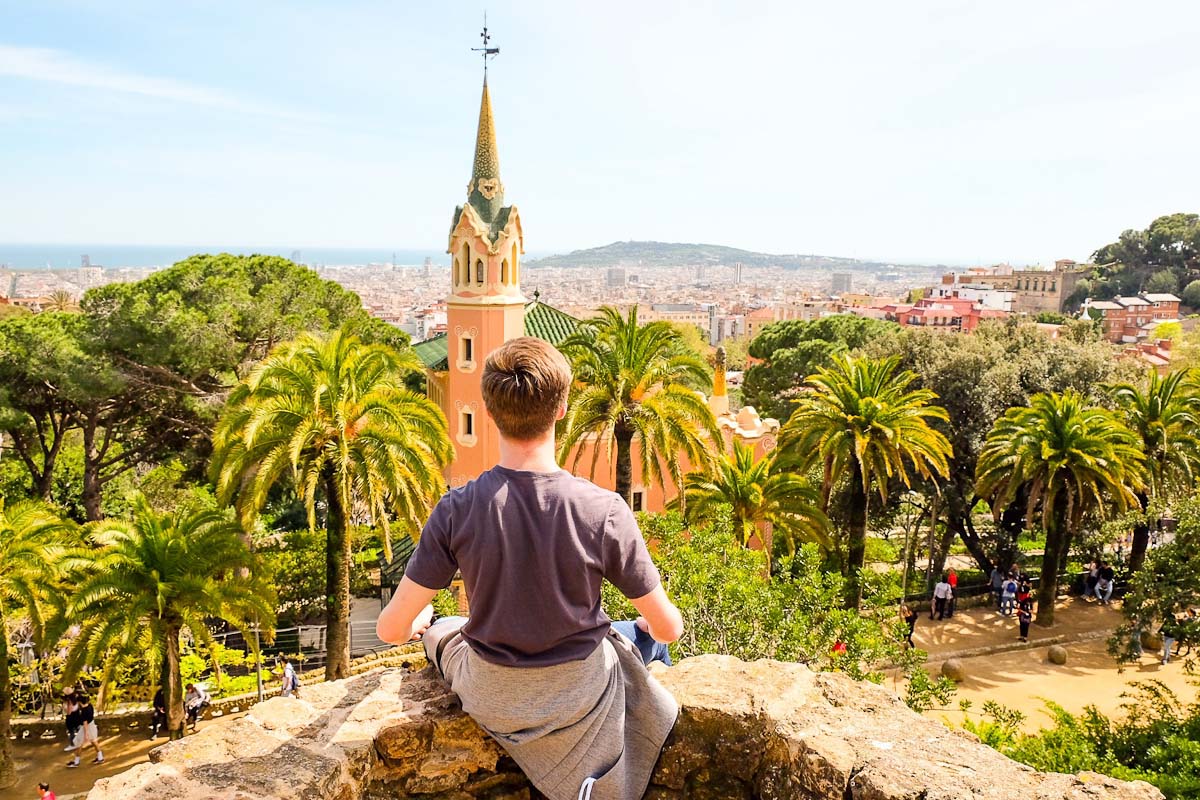
Another iconic architectural gem by Gaudi in Barcelona that holds immense appeal for tourists is Park Güell. The park boasts several captivating and distinct elements, most notably the main terrace, terrace walls, columned pathways, and adorned mosaics. While Gaudi didn’t directly build the residences within the park, it’s noteworthy that he resided in one of them. This house has since been transformed into a Gaudi museum.
Just like the Sagrada Familia, gaining entry into the central precinct of Park Güell requires a ticket. You will not be able to purchase on the day. If you can not get a ticket it is still worth the visit to the Gardens around it, which are still accessible. Without a ticket, you will not get into the walled area as seen in the photo above.
It’s worth noting that Park Güell is situated a considerable distance away from other prominent Barcelona attractions. It is also a very steep uphill walk so you may want to take a taxi. You can also access it via a hop-on-hop-off bus, which offers a scenic way to explore the city.
Stroll Along La Rambla

La Rambla is one of Barcelona’s most famous streets, it is filled with restaurants, bars ,souvenir shops, and pubs. It here you will find a busy bustling tourist area with lots going on such as street performers and sellers. You are a sitting target for food here so it may not be the cheapest. Consider popping around the back streets for some tapas where you will find it a bit cheaper.
La Rambla stretches for just under a mile long and you can walk the entire road of La Rambla in 30 minutes. Bear in mind it is a target place for pickpockets so hold on to your bag and keep your wits about you.
Experience the Vibrant Atmosphere of La Boqueria Market in La Rambla

Along La Rambla is a market called La Boqueria. We did’t visit this market untill a few years ago and we were amazed! The Market is filled with stalls selling fruit, meat, and delicious Spanish food. You couls easily eat your way around the market all day! The cultural atmosphere in La Boqueria bring Barcelona alive and it is filled with local’s getting their every day essentials.
Relax on the Beach at Barceloneta
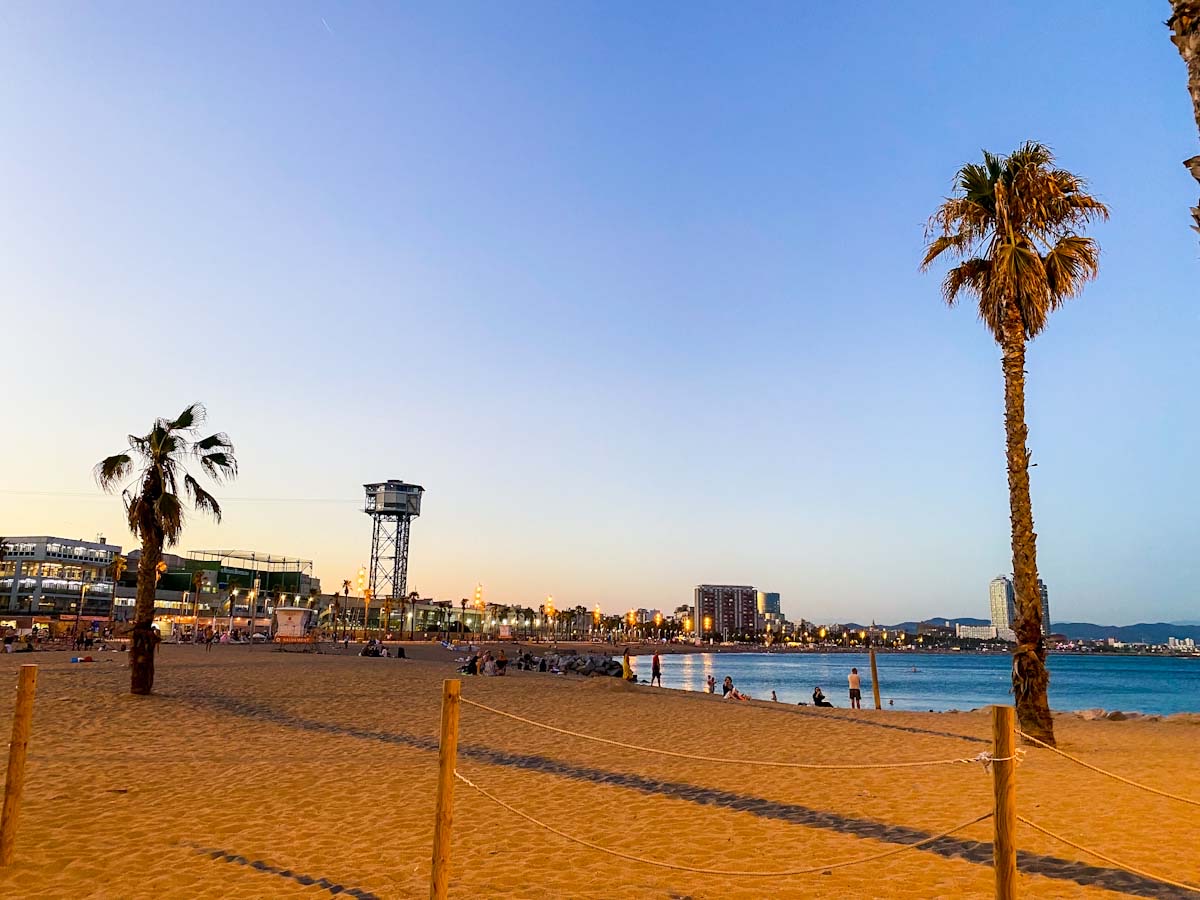
Yes Barcelona has a beach! Barceloneta Beach with its long promenade provides visitors with 2.5 miles of sand and sea, making it a popular spot for families visiting Barcelona. With bars, restaurants, and cafes lining the beach, Barceloneta Beach is a great spot for lunch. There is so much to do and many places to grab an ice-cream. It is easy to spend an hour or two here sunbathing here and relaxing.
Explore the Sant Pau Art Deco Museum Hospital

Every time I talk about Barcelona I tell people about the fantastic Sant Pau Museum! The Sant Pau Art Deco Museum Hospital is an amazing building that fuses art, architecture, and history. This captivating institution, once a working hospital, now serves as a museum that pays homage to the Art Deco movement while preserving its medical heritage. The hospital’s meticulously preserved interiors boast intricate details, elegant curves, and stunning mosaics.
Visitors are transported to the glamorous era of 20th-century Art Deco with its amazing interiors. As you explore its corridors and chambers, you’ll be immersed in another time zone where you will see the hospital’s past.
The museum’s exhibits and displays showcase the evolution of medicine and design incorporated. Visiting the Sant Pau Art Deco Museum Hospital is is a must do experience when in Barcelona.
Stroll Through the Gothic Quarter

The Gothic Quarter (Barri Gòtic in Catalan) is situated in the heart of Barcelona, Spain. It encompasses the area between La Rambla and Via Laietana. It stretches from Plaça de Catalunya to the Mediterranean Sea. This historic district is known for its medieval architecture, narrow winding streets, and a rich cultural and architectural heritage. The Gothic Quarter is mainly a pedestrian-only area with narrow streets amongst five-story buildings.
Here is what you can expect to find in the Gothic Quarter in Barcelona:
- Barcelona Cathedral (Catedral de Barcelona): A stunning example of Gothic architecture, the cathedral features intricate details, a beautiful cloister, and a serene courtyard filled with greenery and geese.
- Plaça del Rei: This square boasts historical significance and showcases medieval buildings, including the Palau Reial Major (Royal Major Palace) and the Chapel of St. Agatha.
- Museu d’Història de Barcelona (MUHBA): An archaeological museum that provides insights into the city’s history, with exhibits displaying ancient Roman ruins and artifacts.
- Plaça Sant Jaume: A central square where the Barcelona City Hall (Ajuntament) and the Palau de la Generalitat (seat of the Catalan government) are located.
- Plaça Reial: A lively square known for its vibrant nightlife, outdoor cafes, and a central fountain surrounded by palm trees.
- Santa Maria del Pi Church: A charming Gothic church with a distinctive façade and an impressive interior.
- El Call: The former Jewish quarter of Barcelona, featuring narrow streets and remnants of the old synagogue.
- Roman Walls: Sections of ancient Roman walls and structures are scattered throughout the district, offering a glimpse into the city’s past.
- Carrer del Bisbe: A picturesque street adorned with medieval architecture, leading to the Bishops bridge that connects the Palau de la Generalitat with Casa dels Canonges.
- Antic Hospital de la Santa Creu: A historic hospital complex that now houses the Library of Catalonia.

Marvel at Casa Batlló

An essential Gaudí marvel to explore is Casa Batlló, an epitome of the architect’s most iconic creations. In 1900, Josep Batlló acquired the property and entrusted Gaudí with carte blanche for its design a few years later. Josep’s vision was unequivocal: he sought a residence distinctively unparalleled in the city’s landscape. Gaudi, without a doubt, brought that vision to life.
Characterised by its irregular oval windows, intricate stonework, mosaic embellishments, and a rooftop reminiscent of a dragon’s back, Casa Batlló stands as an unequivocal masterpiece. Much like numerous other Gaudí marvels, Batlló proudly holds the title of a UNESCO World Heritage Site.
Climb to the Top of Barcelona’s Cathedral

The Barcelona Cathedral, a magnificent embodiment of Gothic grandeur. Standing as a timeless testament to the city’s rich history and architectural prowess. Located in the heart of Barcelona’s charming Gothic Quarter, this awe-inspiring cathedral beckons visitors with its intricate façade, soaring spires, and captivating sculptures.
Stepping into its hallowed halls is like entering a sacred realm where sunlight filters through majestic stained glass windows. Not only can you explore the cloisters with its gaggle of geese but you can also climb up to the roof for amazing views of the city.
Walk through Roman ruins at the Casa Padellàs (Barcelona History Museum MUHBA)
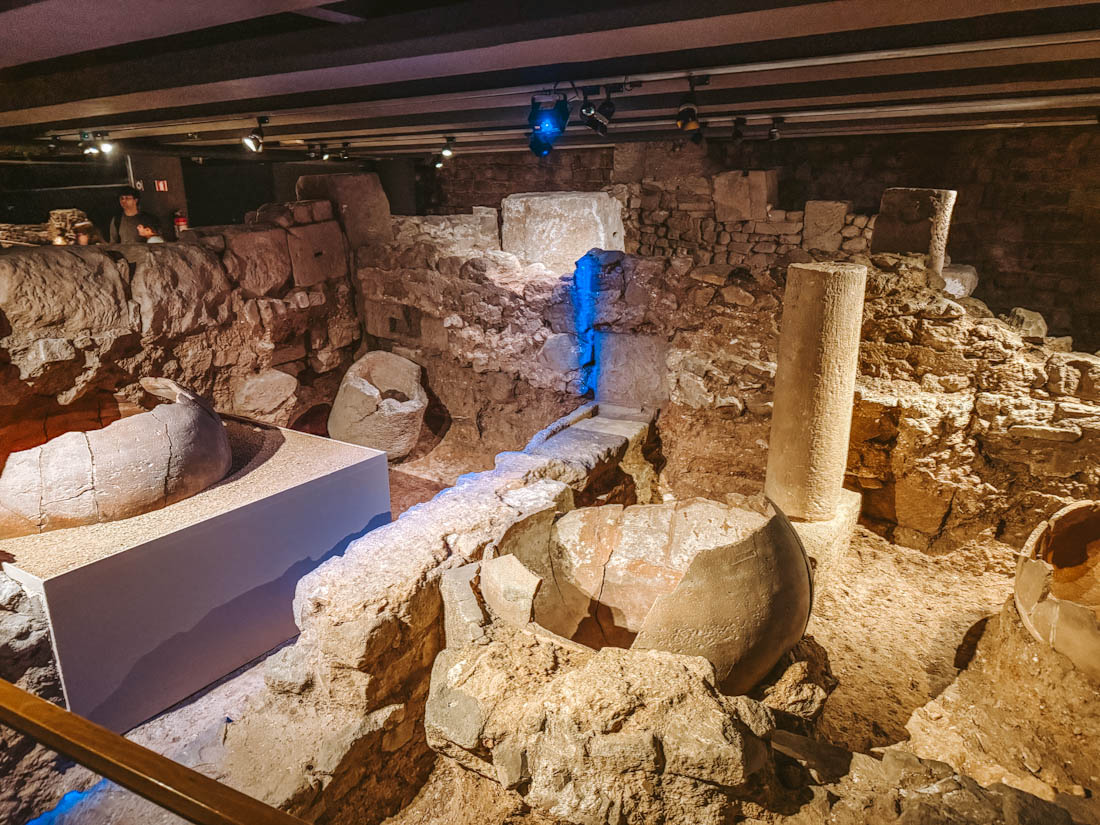
Step beneath the streets of Barcelona and walk through the remains of Barcino, the Roman city that once stood here. Beneath Casa Padellàs at the MUHBA, you can wander along ancient streets, see sections of the Roman city walls and discover workshops, laundries and other everyday spaces dating back almost 2,000 years. It is an incredible experience to stand where people lived and worked centuries ago and see Barcelona’s Roman history preserved beneath the modern city.
Take a Tour of Palau de la Música Catalana

One of the best places to visit is the Palau de la Música Catalana in Barcelona is a must for anyone who loves beautiful architecture, history and a touch of grandeur. This stunning Modernista concert hall, designed by architect Lluís Domènech i Montaner, is filled with colourful mosaics, intricate ironwork, stained glass and incredible decorative details. The highlight is the spectacular concert hall, where a huge stained-glass skylight floods the space with natural light, creating an almost magical atmosphere. Whether you visit for a guided tour or to see a concert, it is one of Barcelona’s most beautiful and fascinating hidden gems and a wonderful place to appreciate Catalan Modernisme.
Discover the Magic of Casa Milà (La Pedrera)

Casa Milà, also known as La Pedrera (which translates to “The Quarry” in English), is a renowned modernist building in Barcelona. It was designed by the famed architect Antoni Gaudí and it is considered one of Gaudí’s most distinctive creations.
Built between 1906 and 1912, Casa Milà was commissioned by Pere Milà, a businessman, as a combined apartment and commercial building. Gaudí’s design for Casa Milà is characterized by its organic forms, undulating façade, and innovative structural techniques. The building lacks traditional straight lines, and its exterior is adorned with intricate wrought-iron balconies and unique stone carvings.
One of the most notable features of Casa Milà is its rooftop, which is a masterpiece of sculptural design. The building’s interior is equally remarkable, featuring curved walls, creative use of space, and a central courtyard that provides natural light to the apartments.
Today, Casa Milà serves as a cultural centre and museum, offering visitors the opportunity to explore its unique architecture. You will Learn about Gaudí’s innovative concepts, and gain insights into early 20th-century Barcelona when you explore this stunning building.
The Case Mila is just a short walk from the Casa Batllo. So you can visit two Gaudi sites at the same time. It is also advisable to book tickets in advance.
Watch the Magic Fountain Show at Montjuïc
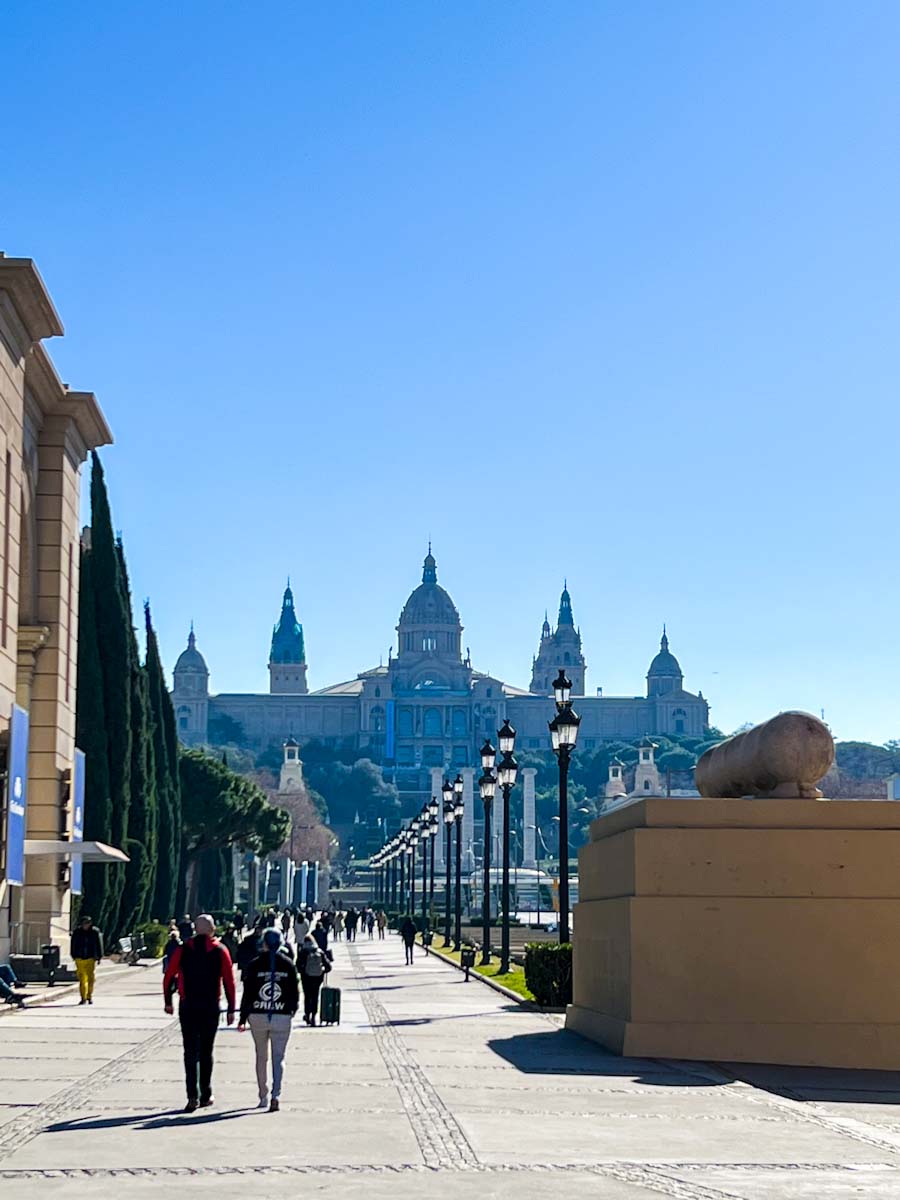
The Montjuic Fountain is Spectacular show of light, music and water. Initially constructed for the 1929 World Fair, the Montjuïc Magic Fountain orchestrates a captivating spectacle of vibrant hues, shimmering illuminations, and cascading water. With grand total of 3,620 jets and an impressive capability to conjure a staggering 7 billion combinations. This magic fountain stands as an extraordinary cost-free attraction within the city of Barcelona.
The hours and times of the fountain varies depends on the time of the year. During the summer season which is June to September, the magic fountain shows take place from Wednesday to Sunday. The rest of the year it is just on Thursday to Saturday. There are generally two shows a night that last about 15-20 minutes. Check out the show times here for more information.
Take a different route to Tour Around the City

There are plenty of ways to get around Barcelona from hop on hop off buses, local buses and trams but it all is by bike. Hiring a bike will make it a fun way see and learn all about Barcelona and its iconic landmarks. You even take a fun Segway around the city too. You can find Bike tours with English speaking guides that will take you all around Barcelona allowing you to see all of the city’s attractions in one go.
Admire the Picasso Works of Art in the Picasso Museum
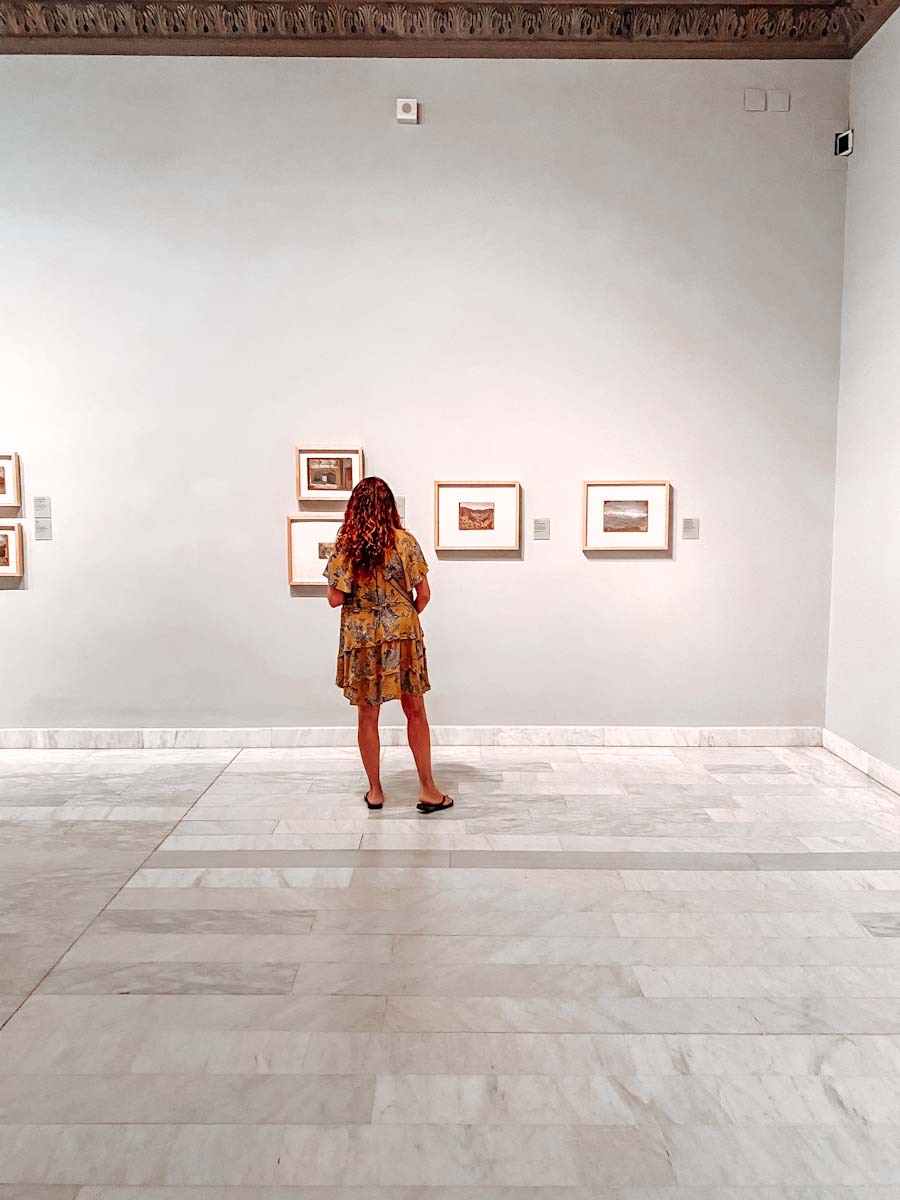
Picasso is one of the world’s most famous painters. And although he is known for his colourful abstract art, the Picasso Museum is actually home to some of his early realism pieces that he painted when he was just a teenager. The museum takes you on a journey through Picasso’s career, from his formative years to his revolutionary contributions to modern art. With a diverse collection spanning paintings, sculptures, ceramics, and sketches, visitors have the privilege of tracing the maestro’s creative trajectory.
The Picasso Museum not only showcases the artist’s profound impact on the art world but also provides a unique window into the vibrant cultural landscape of Barcelona during Picasso’s time.
Take a Cable Car to Montjuïc for Panoramic Views
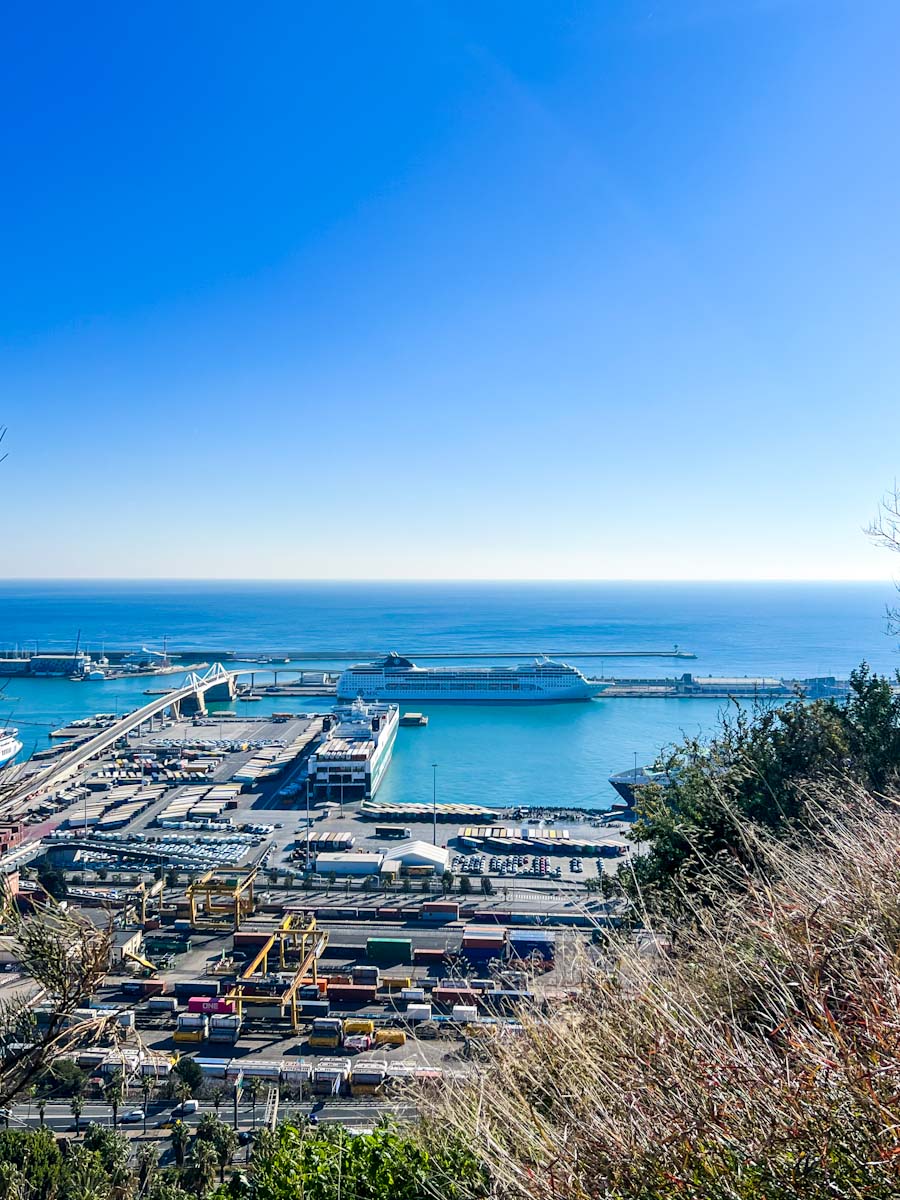
One of the best ways to see the city of Barcelona from afar is from the hilltops. You can take a cable car to Montjuïc castle from the port if you feel adventurous you can walk up in about 40 minutes. This takes you 270 feet up the hillside, the cable car offers panoramic views of the entire Barcelona region. There is a second cable car that takes you up to the castle itself too. You’ll also see iconic landmarks from afar like the Sagrada Familia and the port where you will the sweeping port.
Climb to the Top of Montjuïc Castle
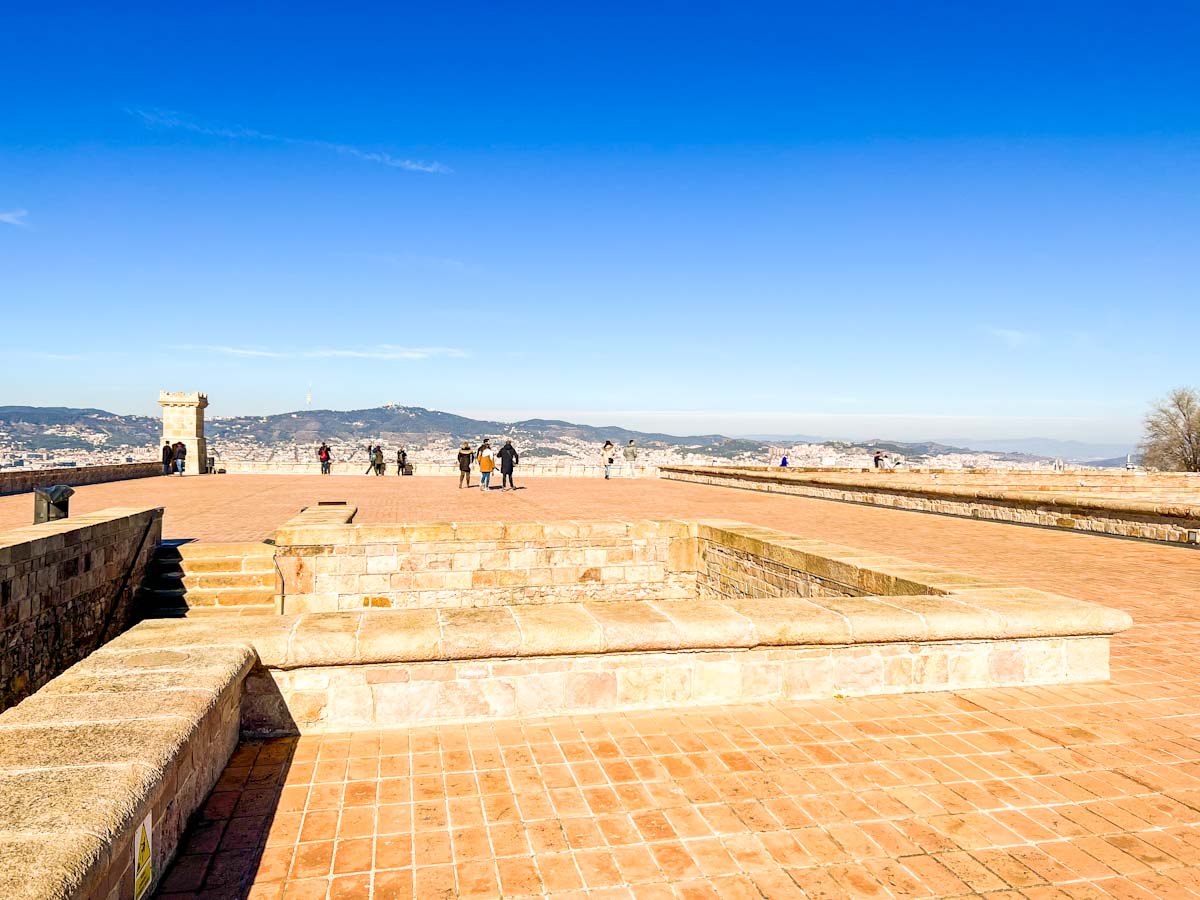
The Montjuïc Castle is a fortress on top of Montjuïc Hill with amazing views of the port. Dating back to the 17th century, the castle once played a significant role in Barcelona’s history. Now, however, it offers a glimpse into the city’s military heritage.
Aside from witnessing the beauty of the castle, climbing up Montjuïc Hill offers truly spectacular views of Barcelona and the Mediterranean Sea. The walk to the top should take you around 30 minutes or catch one or both of the cable cars. Buses also go to the top of the hill as well.
Eat some Local Tapas and Traditional Catalan Cuisine

Barcelona’s culinary scene is a blend of traditional Spanish flavour’s and modern gastronomic innovations. One must-try dish is “tapas,” a quintessential Spanish tradition where you can savor a variety of small plates, each with distinct flavours. From Spanish tortilla, patatas bravas, meatballs and calamares fritos, there are so many tapas options to try. Don’t miss the chance to indulge in “paella,” a rice dish often prepared with seafood or other ingredients, offering a taste of Spain.
Venturing into the charming backstreets, you’ll stumble upon “pintxos” bars, offering a Catalan take on tapas. These delectable morsels, often skewered with toothpicks, are an ideal way to sample a medley of flavors while mingling with locals.
Some of our favourites Tapas Places are!
Tapeo
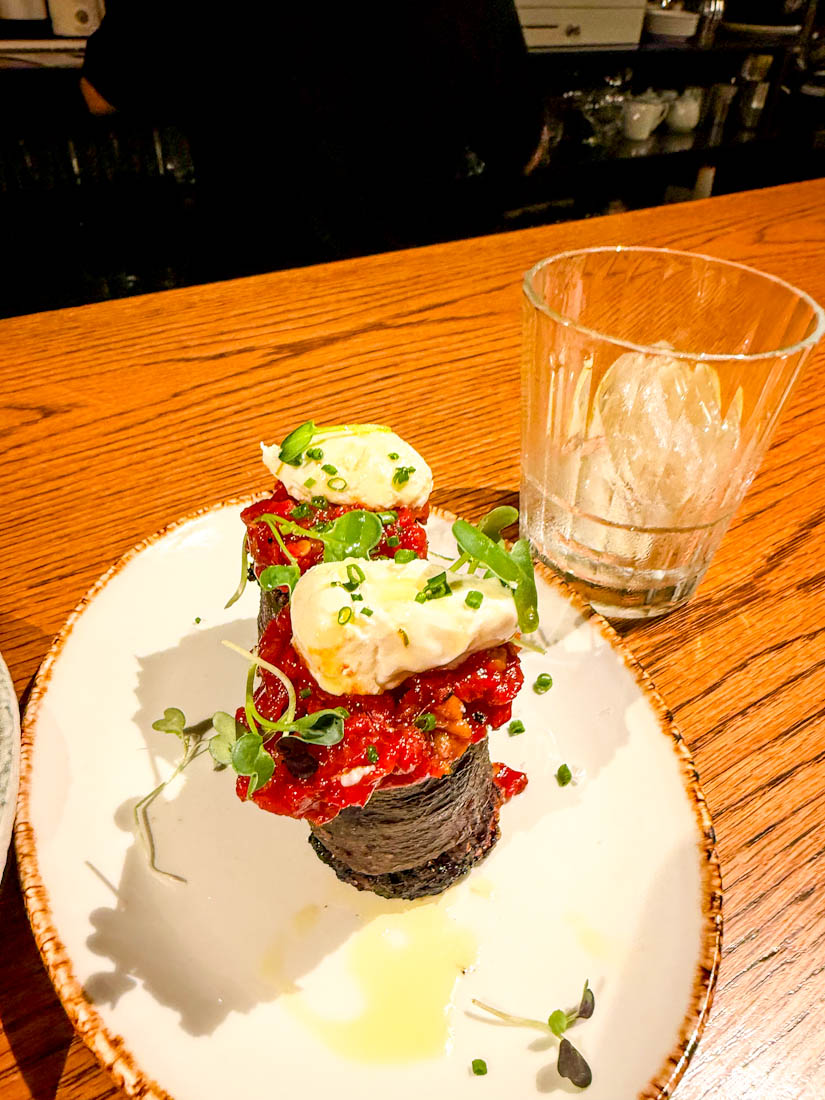
Babula

Shop at Passeig de Gràcia for High-End Fashion

If shopping is what you fancy head to Passeig de Gracia. With shops from some of the most well-known designer labels to smaller boutiques the Passeig de Gracia is perfect for shopaholics.
Passing de Gracia also has beautiful architecture and plenty of cafes and restaurants to frequent. There are also many roof-top bars in Barcelona to explore, so there is plenty to keep you entertained!
Visit the Palo Alto Market on the Outskirts of Town.

The Palo Alto market in Barcelona is s fun market on the outskirts of the city. The market is situated in he Poblenou area of Barcelona and is held the first weekend of every month Depending on the weather.
Palo Alto market is like a craft and street food market with and beer tents and music. The area was once a factory but now houses live bands, artisan stalls. The Palo Alto market costs around €5 to enter and tickets can be purchased on the door. The queue is well worth the wait though to enjoy a cool beer in the sunshine. There are also vintage stalls with homeware, clothes annd handmade jewellery. To get to the Market you take the metro out of Barcelona to the Selva De Mar stop. From there it is then just a 10 minute walk.
Where we Stayed in Barcelona

One of my favourite places to stay in Barcelona is Barcelona Hotel Colonial with amazing views of the city and close to the Gothic Centre.
In Barcelona the Mediterranean breeze carries a sense of endless adventure, so whether you visit with kids or a partner there is something for everyone.
Visit a quirky Museum in Barcelona
There are so many unique museums to visit in Barcelona.
- Museu El Rei de la Màgia – Step into the world of magic at this fascinating collection of historic magic tricks, posters and memorabilia.
- Museu del Perfum – A tiny but fascinating museum hidden behind a traditional perfumery, filled with thousands of perfume bottles and fascinating pieces from the history of fragrance.
- Museu de Cera de Barcelona – Barcelona’s wax museum is packed with famous faces and wonderfully eccentric displays.
- Museu de la Xocolata – Discover the history of chocolate and see incredible sculptures made entirely from chocolate.
- Museu del Rock – A must for music lovers, with guitars, memorabilia and pieces celebrating the history of rock.
- Paradox Museum Barcelona – Prepare to question your eyes and your brain with optical illusions and interactive exhibits.
- Hash Marihuana & Hemp Museum – Housed in the beautiful Palau Mornau, this unusual museum explores the history and cultural uses of cannabis and hemp.
- Museu de l’Eròtica – An unusual collection exploring the history and culture of eroticism, right on La Rambla.
- Museu de Carrosses Fúnebres – One of Barcelona’s strangest hidden museums, displaying elaborate historic funeral carriages and hearses.
- White Rabbit – The Off-Museum of Barcelona – An immersive experience exploring Barcelona through art, technology and unusual installations.
- Museu Alien – A niche stop for science-fiction fans, celebrating the world of the Alien films.
- Nightmare Horror Museum – For horror fans, this was one of Barcelona’s most unusual attractions: an interactive horror maze inside a historic building in El Born. However, it appears to have permanently closed in 2026, so check its current status before planning a visit.

For the Kids and Football Fans
Visit L’aquarium Barcelona
Positioned just a stone’s throw away from the beach, L’aquarium Barcelona stands as an aquatic marvel within Europe. This attraction offers an opportunity for families with children to immerse themselves in a world of captivating marine wonders. Boasting a diverse collection of marine life, the aquarium showcases over 11,000 animals representing around 450 species. From the awe-inspiring Oceanarium, one of the largest in Europe, to the mesmerizing underwater tunnel that allows visitors to walk through a marine ecosystem. L’aquarium Barcelona promises an enchanting and educational journey for all ages.
Camp Nou, the iconic stadium of Barcelona
For soccer enthusiasts, few experiences rival the thrill of witnessing a match at Camp Nou, the iconic stadium of FC Barcelona. While the availability of matches aligns with your specific arrival date and schedule in Barcelona, the allure remains undiminished. And even if match tickets prove elusive, a stadium tour coupled with a visit to the Barca Museum offers an enriching opportunity. The tour delves into the history and essence of this legendary club.
Parc de la Ciutadella
Parc de la Ciutadella is an impressive park in the centre of Barcelona. The park is a great place for visitors the chance to relax, walk, and picnic on the grass areas. The park is also home to the Zoo, the Museu d’Art Modern, and the Zoological Museum, which are all situated within the walls. It also is home to an impressive fountain loosely based on the Trevino fountain which is a massive structure in the north of the park. It was designed by Josep Fontsére with a some help from a young Gaudi.
FAQ About Barcelona

Can I visit Park Güell without entering the paid monumental zone?
Yes, the gardens surrounding Park Güell’s ticketed core remain completely free and accessible to all visitors. While you won’t access the famous mosaic terrace or columned pathways without a ticket, the free areas still offer excellent viewpoints overlooking Barcelona, walking paths, and the opportunity to appreciate Gaudí’s integration of architecture with natural landscape. Many visitors find the free gardens provide sufficient experience, especially if budget is a concern or tickets are sold out.
How far in advance should I book Gaudí attraction tickets during peak season?
For summer visits (June-September) and major holidays, book Sagrada Família tickets with tower access 3-4 months in advance, as these sell out fastest. Park Güell and Casa Batlló typically require 2-3 months advance booking during peak periods. Casa Milà generally offers the most flexible booking, sometimes available 2-4 weeks out. If you’re visiting multiple Gaudí sites in one day, book them all simultaneously to secure coordinated time slots that allow realistic travel time between locations.
Is the walk from the cruise port to Las Ramblas realistic, or should I take transportation?
The walk from Barcelona’s cruise terminal to the bottom of Las Ramblas covers approximately 2-2.5 kilometers (1.5 miles) and takes 25-35 minutes depending on which terminal your ship docks at. The route is straightforward along the waterfront, passing the Columbus Monument before reaching Las Ramblas. While walkable for most visitors, families with young children or those wanting to maximize sightseeing time often prefer the shuttle bus to the Columbus Monument or a taxi directly to their first destination.
What’s the best strategy for visiting both Montjuïc Castle and the Magic Fountain in one trip?
Visit Montjuïc Castle in the late afternoon (3-5 PM), allowing 1-2 hours to explore the fortress and enjoy sunset views over Barcelona and the Mediterranean. Then descend via cable car or bus to the Palau Nacional, arriving 30-45 minutes before the Magic Fountain show begins. This timing lets you secure a good viewing position on the Palau Nacional terrace, which offers the best elevated perspective of the fountain performance. The entire experience flows naturally from hilltop exploration to evening entertainment without backtracking.
Are there authentic local dining options near major tourist attractions, or should I venture into neighborhoods?
While Las Ramblas and the immediate vicinity of major attractions tend toward tourist-focused pricing and quality, authentic local dining exists surprisingly close if you know where to look. In the Gothic Quarter, venture two blocks off main thoroughfares into narrow side streets to find neighborhood tapas bars where locals eat. Near Sagrada Família, explore the residential streets of the Eixample grid just 3-4 blocks from the basilica. The El Born neighborhood, adjacent to the Gothic Quarter, offers excellent authentic restaurants within a 10-minute walk of central tourist zones while maintaining local character and reasonable prices.
MOST IMPORTANT INSIGHTS TO REMEMBER
1 Advance ticket booking is absolutely essential for Barcelona’s most popular Gaudí attractions including Sagrada Família (especially with tower access), Park Güell’s monumental core, Casa Batlló, and Casa Milà, with same-day tickets rarely available and booking windows of 2-4 months recommended during peak season.
2 Barcelona’s architectural story reveals itself through walking connections between Gaudí sites particularly the route along Passeig de Gràcia connecting Casa Batlló to Casa Milà (10 minutes) and continuing to Sagrada Família (20 minutes), which illustrates the tension between organic Modernisme design and the rational grid planning of the Eixample district.
3 The Gothic Quarter functions as Barcelona’s historic medieval core stretching from Plaça de Catalunya to the Mediterranean between La Rambla and Via Laietana, featuring pedestrian-only narrow streets, Roman walls dating to the 1st century BC, the Barcelona Cathedral with its cloistered courtyard and rooftop access, and remnants of the medieval Jewish quarter El Call.
4 Montjuïc Hill serves multiple functions as both cultural destination and viewpoint accessible by cable car from the port or walking (30-40 minutes uphill), featuring a 17th-century castle with 360-degree panoramas, the Palau Nacional museum, and the Magic Fountain show operating Wednesday-Sunday in summer and Thursday-Saturday off-season with performances lasting 15-20 minutes.
5 Barcelona’s authentic culinary experience centers on tapas and pintxos culture found in backstreet bars away from Las Ramblas tourist pricing, with essential dishes including patatas bravas, Spanish tortilla, calamares fritos, and pintxos served on toothpicks in Gothic Quarter establishments frequented by locals rather than visitors.
Explore some of my favourite places in Spain Here;