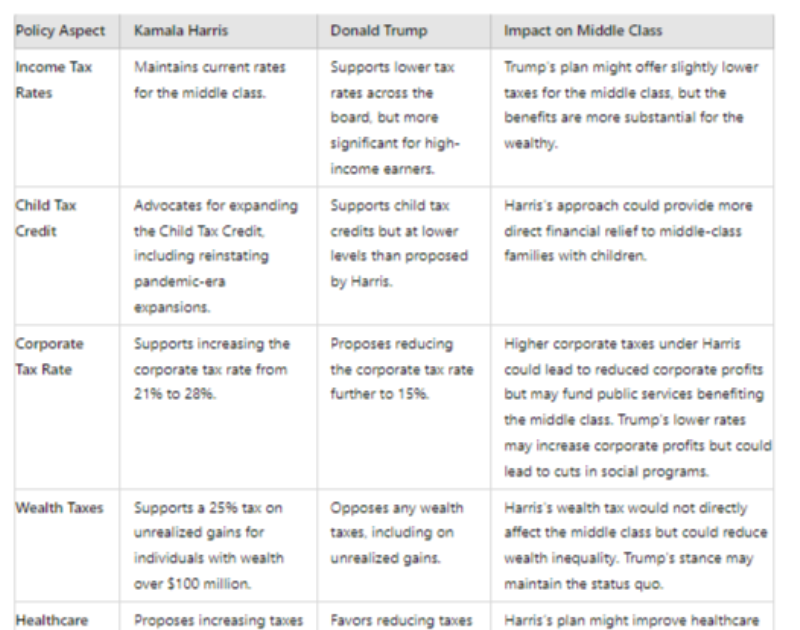
Kamala Harris has indicated her support for a 25% minimum tax on unrealized gains for individuals with wealth exceeding $100 million. This proposal is part of the broader tax plan championed by the Biden administration, aiming to ensure that ultra-wealthy individuals pay taxes on the appreciation of their assets even if those assets haven’t been sold. Harris’s endorsement is consistent with the Democratic Party’s platform, which seeks to address income inequality by targeting the wealth of the richest Americans.
In contrast, Donald Trump has pledged to lower taxes, particularly for corporations and wealthy individuals. He has criticized tax increases and has expressed strong opposition to any new taxes on wealth, including unrealized gains. Trump’s tax policies generally favor reducing the tax burden on the wealthy, maintaining that lower taxes promote economic growth and investment. Specifically, Trump has proposed lowering the corporate tax rate from its current level, further diverging from the tax policies supported by Harris and the Biden administration.

Summary of Impact:
Harris’s Policies: More likely to fund expanded public services, social safety nets, and healthcare, which could benefit the middle class through better access to resources and social services. However, increased taxes on corporations and the wealthy may have indirect effects, such as higher costs passed down from businesses.
Trump’s Policies: Focus on lowering taxes across the board, with the most significant benefits for the wealthy and corporations. This could lead to lower immediate tax burdens for the middle class but may also result in cuts to public services and social programs that the middle class depends on.
Trump’s “Project 2025” outlines significant changes to tax policy, which could have various implications for the American middle class.
Key Tax Proposals Under Project 2025:
Simplified Income Tax Rates: The plan proposes reducing the current seven income tax brackets to just two—15% and 30%. While this might simplify the tax code, it could also lead to higher tax burdens for middle-income earners, especially if deductions and credits are eliminated as suggested.
Capital Gains Tax: A flat 15% tax rate on capital gains and dividends is proposed. While this is lower than current rates and might incentivize investment, critics argue it disproportionately benefits wealthier individuals, as lower capital gains taxes typically favor those with substantial investments.
Corporate Tax Rate Reduction: The corporate tax rate would be reduced from 21% to 18%. This reduction could stimulate business investments, but it might also decrease government revenue, potentially leading to cuts in services or increased taxes elsewhere to balance the budget.
Extension of the 2017 Tax Cuts: The project supports making the Tax Cuts and Jobs Act (TCJA) permanent, which would continue the tax benefits for higher-income individuals and corporations. However, this could exacerbate income inequality and add significantly to the national debt.
Potential Elimination of Income Taxes for Social Security Benefits: Although not fully detailed, Trump has mentioned plans to eliminate income taxes on Social Security benefits, which could provide relief to retirees, but would need to be balanced by either cutting benefits or increasing revenue from other sources.
Tariffs and Trade Policy: The plan includes increasing tariffs, particularly on imports from China. While this could raise revenue, it may also lead to higher consumer prices and a potential trade war, which could negatively impact the economy and middle-class incomes.
Implications for the Middle Class:
Tax Burden: The simplification of tax brackets may result in a higher effective tax rate for many middle-class families, particularly if deductions and credits are eliminated.
Services and Benefits: Decreased government revenue from corporate and income tax cuts might lead to reductions in public services, which many middle-class Americans rely on.
Economic Uncertainty: The imposition of tariffs and potential trade wars could result in economic instability, which might lead to job losses and decreased wages, further impacting the middle class.
Overall, while the tax policies in Project 2025 aim to promote economic growth through lower taxes and simplified rates, they could also lead to increased income inequality, higher national debt, and reduced government services, potentially putting more pressure on middle-class Americans.