
How to Handle Noise Complaints in Apartments

Knowing how to solve common issues is crucial when you own rental properties. Whether you’re handling late payments, maintenance issues, or experiencing high turnover rates, you’ll want to have an action plan. Today, we discuss how to handle noise complaints in apartments. As one of the most frequent issues in rental housing, it’s essential to know how to navigate your tenant’s noise complaints. Read along to learn more.
Key Takeaways
- Not every noise complaint is a lease violation. Landlords should distinguish between normal household sounds and excessive or disruptive noise.
- Landlords should investigate noise complaints promptly, document recurring issues, and give tenants an opportunity to respond.
- Noise policies should focus on factors like volume, duration, timing, and frequency and should be enforced consistently among tenants.
- Tenants experiencing ongoing noise issues should document the problem, review their lease, and report unresolved concerns to their landlord or property manager.
Contents of This Article:
Examples of Common Noise Complaints
If you’re a landlord or a property management company in Philadelphia, you know that noise complaints are frequent, especially in apartment buildings. After all, sounds travel quite easily when you have several units next to one another. So, when someone’s playing loud music or a neighbor’s dog keeps barking, you might have a few complaints from surrounding tenants.
However, tenants and rental owners must understand the differences between reasonable noise complaints and normal apartment building noise. While all tenants have the right to quiet enjoyment, it’s nearly impossible to live in complete silence all the time. That said, here’s a list of some common noise complaints in apartment buildings. 
- Loud music or television
- Pet noises, like barking dogs
- Yelling, shouting, or loud singing
- Persistent or excessive noise from neighboring units
- Loud parties late at night
- Outdoor gatherings near apartment windows
- Jumping, running, or stomping from above
Some noises in apartments are unavoidable. For instance, walking, talking, and closing doors are all normal, everyday activities that everyone does. However, landlords should distinguish between excessive or disruptive noise and ordinary household sounds.
Noise policies should be based on the volume, duration, timing, and frequency of the disturbance rather than who is making the noise. They should also be enforced consistently among tenants.
What Can Tenants Do to Handle Noise Complaints?
If there’s excessive noise in a rental and a tenant feels that they don’t have the right to quiet enjoyment, it’s usually up to them to take the first action step. Here’s what tenants can do to handle noise complaints in apartment buildings.
- Document the Noise- It’s important to document the excessive noise when you experience it. Note when the noise happens, what it sounds like, and how often it occurs.
- Talk to Your Neighbor- Your landlord may ask that you talk to your neighbor about the noise issue. Sometimes, your neighbor may not realize that they’re causing excessive noise, and they stop immediately.
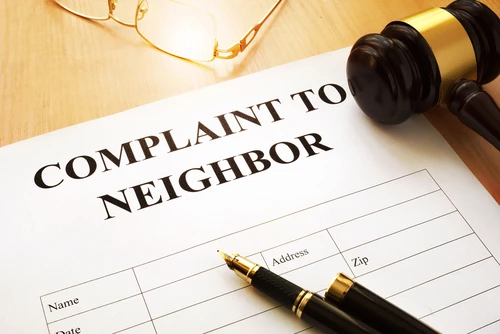
- Bring It up to Your Landlord- If the noise issues don’t get resolved or you don’t feel comfortable talking to your neighbor, bring it up to your landlord. Request that they address the problem (in writing) and remind them of any noise clauses in the lease to help your case.
- Explore Your Legal Options- If excessive noise continues despite repeated complaints, tenants may want to review their lease and speak with a qualified local attorney or tenant advocacy organization about their options. Tenants generally should not assume they can terminate a lease without consequences, as their rights and remedies depend on the circumstances and applicable law.
How Landlords Can Handle Noise Complaints in Apartments
Landlords should take tenant noise complaints seriously and investigate them promptly and consistently. Tenants have rights related to the quiet enjoyment of their rental homes, although whether a particular noise issue constitutes a legal violation depends on the circumstances, applicable law, and the terms of the lease. That said, here’s what to do if you get a noise complaint from one tenant about another.
- Identify the Noise- First and foremost, after evaluating your tenant’s complaint, identify the noise and where it’s coming from. Not every noise complaint indicates a lease violation, as some complaints may involve normal sounds associated with everyday apartment living.
- Inform the Tenant- If a tenant comes to you with a noise complaint, you’ll want to inform the tenant who’s causing the noise. Remember, it’s crucial to have written documentation of recurring noise issues and proof of notifying the tenant of noise complaints.
- Incorporate a Lease Clause- Noise may be regulated by local ordinances as well as the terms of the lease. Landlords can also establish reasonable noise policies, such as quiet hours, as long as those policies comply with applicable laws and are enforced consistently.
- Take Action- Even if the reported noise doesn’t appear to violate the lease or interfere with the tenant’s right to quiet enjoyment, it’s still a good idea to respond to the complaint. Inform the tenant of the results of your investigation and any appropriate next steps, then follow up if necessary.
What NOT to Do While Dealing With Noise Complaints
Ultimately, landlords need to act quickly to handle noise complaints in apartments. You don’t want to ignore tenant complaints or falsely assure them you’ll take care of a complaint.

For instance, if a tenant comes to you complaining about their upstairs neighbor constantly having people over for parties, and you don’t do anything to resolve the issue, your downstairs neighbor may end up moving out. This is an issue for several reasons–you lose some of your monthly income, and you may end up with bad reviews from that tenant.
Tenants should be able to reasonably use and enjoy their rental homes. As such, even if a complaint doesn’t ultimately involve a lease or noise-policy violation, it’s still a good idea to investigate the issue. Inform the tenant of the complaint, give them an opportunity to respond, review any available documentation, and determine whether the conduct violates the lease, applicable noise rules, or local law. Apply the same standards and enforcement procedures consistently to all tenants.
If you find that the tenant didn’t actually violate any noise policies, inform the complaining party that you’ve investigated the issue and found that the tenant didn’t violate the noise policy. Then, see what you can do to make them more comfortable and encourage them to bring any complaints to your attention.
Frequently Asked Questions
What is considered excessive noise in an apartment?
Excessive noise generally involves sounds that are unusually loud, frequent, prolonged, or disruptive. Examples may include loud music, repeated shouting, persistent barking, or late-night parties. However, applicable lease provisions and local noise ordinances may also determine what constitutes a violation.
Can a landlord evict a tenant for noise complaints?
Repeated noise violations may potentially lead to lease enforcement or eviction, depending on the lease, applicable law, and circumstances. Landlords should document complaints, investigate them, follow required notice procedures, and apply policies consistently before pursuing enforcement action.
What should a landlord do when a tenant makes a noise complaint?
Landlords should document the complaint, investigate the circumstances, and give the tenant who is the subject of the complaint an opportunity to respond. If the conduct violates the lease or applicable noise rules, the landlord can then take appropriate action consistent with the lease and local law.
Can a tenant break a lease because of excessive noise?
Not automatically. A tenant’s legal options depend on the severity and circumstances of the disturbance, the lease, and applicable state and local laws. Tenants dealing with persistent noise should document the issue, notify their landlord in writing, and consider seeking local legal guidance before terminating a lease.
Lessen Complaints With Property Management
Tenant complaints can happen for a number of reasons, and knowing how to handle noise complaints in apartments is crucial for property owners. After all, your reputation as a landlord is on the line, along with your rental income. So if you’re experiencing high tenant turnover due to noise complaints, it’s time to take immediate action.
However, if you live far from your rentals or you don’t have time to manage all the inquiries, complaints, or requests you have coming in, you’ll want to outsource some management tasks. At the end of the day, you don’t want any complaints to go ignored or unnoticed.
Need More Advice? contact us today!
Luckily, Bay Property Management Group can help with any rental issue you might have. We offer comprehensive rental management services, including rental marketing, tenant screening, maintenance, rent collection, and more. So, contact BMG today to learn more about how we can help your rental business improve, expand, and succeed.


