Are Termites Active in Winter in NC?

Are termites active in winter? The short answer is yes. In Raleigh and across the Triangle, termites stay active through the winter. You just see fewer of them.

That’s exactly what makes winter tricky. The swarmers disappear, the yard goes quiet, and plenty of homeowners assume the threat has passed until spring. Meanwhile, a colony that found its way to your foundation in July can keep feeding on the wood in your home in January. Here’s how termites handle cold weather in North Carolina, what to watch for, and what you can do before damage adds up.
Termites in Winter: What’s Really Happening Around Your Home
Termites are cold-blooded, so they can’t generate their own body heat. They respond to temperature by changing where they feed and how fast they move. Two types matter most for NC homeowners, and they handle winter differently.
Subterranean Termites Burrow Deeper
Subterranean termites are responsible for most termite damage in the Raleigh area. When temperatures drop, they burrow deeper into the soil where it stays warmer and more stable, then travel back up to wood through protected mud tubes. Our soil here rarely freezes deep enough to wipe out a colony, and a heated home sitting on that soil gives them a reliable food source and a warm environment right at the foundation.
Drywood Termites Stay Inside the Wood
Drywood termites live entirely inside the wood they eat, so cold air barely reaches them. They’re more common along the coast and farther south than in Raleigh, but they’re worth knowing about, since they don’t need contact with soil and can feed slowly all winter inside framing, trim, or furniture.
Why Milder Winters Matter
Raleigh’s winters are short, with plenty of mild stretches between cold snaps. Termites can briefly survive temperatures below 25 degrees, and our soil temperatures rarely stay low for long. The practical result is that outdoor foraging slows down in the colder months while feeding inside and beneath a structure carries on at a reduced pace.
Do Termites Hibernate?
No. Termites don’t hibernate. Instead, they adapt. They slow down, conserve energy, and concentrate their activity where conditions are most comfortable, which is usually deep in the soil or inside warm structural wood. If you’re picturing a colony asleep until spring, that’s not what’s happening. It’s closer to a slower shift schedule.
Do Termites Die in the Winter?
Individual termites near the surface can die during a hard freeze, but the colony as a whole rarely does. A mature colony includes thousands of workers, soldiers, and reproductives, and most of them are underground or inside wood, insulated from the worst of the cold. When the weather warms, the colony picks up where it left off. That’s why a termite problem doesn’t resolve itself over winter, and why the damage is usually still there when you start noticing it in spring.
Why Winter Is a Smart Time to Check for Termites
Winter gives homeowners a few advantages they don’t get in peak season.

- Crawl spaces are easier and more comfortable to inspect when it’s not 95 degrees and humid
- Termite damage keeps building quietly, so catching it now can limit repairs
- You can address moisture and entry points before the spring swarming season begins
- A winter treatment can put you ahead of termite season in NC instead of behind it
It’s also worth knowing that a run of warm winter days can trigger early swarmers. If you spot winged insects near a window in February, that’s not a fluke, and it’s worth reading up on why termites swarm and what to do next.
Signs of Termite Activity to Watch for in Cold Weather
Termites are good at staying out of sight, so you’re mostly looking for what they leave behind. These are the signs of termite activity we see most often in Triangle homes.
- Mud tubes along the foundation, in crawl spaces, or on pier supports. Active tubes are damp and intact when broken open.
- Wood that sounds hollow when you tap it, especially floor joists, baseboards, and window frames
- Small piles of dark, pellet-like droppings called frass, which are more typical of drywood termites
- Discarded wings near doors, windows, and light fixtures, a sign swarmers already came and went
- Bubbling or peeling paint, or soft, blistered wood that looks like water damage

Keep in mind that a quiet winter doesn’t mean a clear one. Fewer visible signs is not the same as fewer termites.
How to Lower Your Termite Risk Over the Winter Months
You can’t control the weather, but you can control what your home offers once it gets cold. Termites go where there’s moisture and wood, so these steps matter most.

- Fix leaky gutters, downspouts, and outdoor faucets, and direct water away from the foundation
- Keep crawl spaces dry with proper ventilation, and don’t let condensation sit on soil or wood
- Store firewood several feet from the house and off the ground
- Leave a few inches between mulch and your foundation, and keep wooden structures like decks and fences from touching the home
- Seal cracks and gaps around the foundation and where utility lines enter
- Replace water-damaged or rotting wood, since it’s far easier for termites to colonize
What a Free Termite Inspection With Stomp Includes
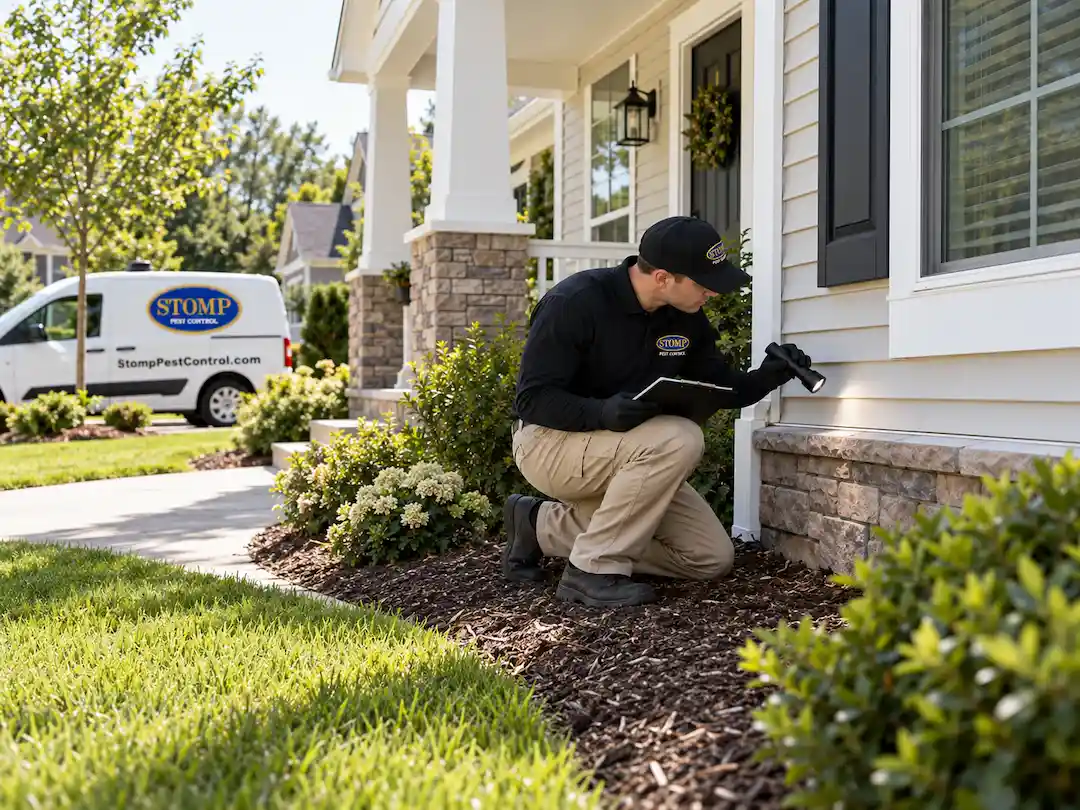
Stomp Pest Control offers free termite inspections throughout Raleigh and the Triangle, because termite work depends on your property and what’s actually found. A technician checks the wood structures on your property, the crawl space, and the foundation for signs of activity, moisture problems, and conditions that invite termites. If something turns up, we explain what we found, show you where, and lay out clear pricing and the treatment plan that fits your home. If nothing turns up, you’ve got peace of mind and a clearer picture of what to watch.
Every service is backed by a 100% satisfaction guarantee, and there’s no pressure to commit on the spot.
Frequently Asked Questions
Look for mud tubes, hollow-sounding wood, droppings, and discarded wings, and pay attention to bubbling paint or doors and windows that suddenly stick. Active mud tubes will have live termites or damp soil inside when broken open. Because so much activity happens out of sight, a professional inspection is the only reliable way to know for sure.
Rarely. Workers stay inside wood and mud tubes, and swarmers usually appear in spring. You may see them on an unusually warm winter day, or find them when you cut into damaged wood. Winter often means fewer visible signs, not less damage.
No. Termites live in the soil and inside the wood of your home, and neither gets cold enough in our climate to drive them off. Turning the heat down won’t help, and cold weather can actually increase condensation and moisture, which termites like.
Yes. Termite activity doesn’t stop in the colder months, and treating now puts protection in place before spring swarming season. Crawl spaces are also easier to inspect, and Raleigh’s mild winters generally don’t stand in the way of treatment. A technician can tell you whether you need treatment at all or simply need to keep an eye on things.
Nothing kills a termite colony instantly. Contact sprays and DIY products might kill the termites you can see, but the colony is usually underground or inside walls and keeps going. The fastest reliable route is a professional inspection that confirms the type of termite and how far activity has spread, followed by treatment that targets the colony itself. The sooner that happens, the sooner the damage stops growing.
It depends on the type of termite, how far activity has spread, and the size and layout of your property, so there isn’t one flat number. Stomp’s termite inspection is free, and afterward we give you clear pricing and explain which treatment plan fits your home.
Often it doesn’t. Many policies exclude termite damage, so repairs can fall to the homeowner. Check your policy, and keep in mind that catching activity early is usually far less expensive than repairing structural wood later.
Annually is a reasonable rule for most Triangle homes, and sooner if you notice any warning signs, buy a home, or have a history of moisture problems. Because our inspections are free, there’s little reason to wait.
Dry conditions, sunlight, and exposure. Termites need moisture and darkness to survive, so a dry crawl space, good drainage, and wood kept clear of soil all work against them.
Schedule a Free Termite Inspection in Raleigh, NC
Winter is quiet, but termites aren’t. If you’ve noticed mud tubes, hollow wood, or anything else that doesn’t look right, or you simply want to know where your home stands before spring, Stomp Pest Control is here to help. We’ve served the Triangle since 2008 and know how termites behave in this climate.
Call (919) 858-2213 or fill out the form below to schedule your free termite inspection in Raleigh, Cary, Apex, Wake Forest, Garner, and the surrounding area.