Toyota bZ vs Toyota C-HR+: Which electric Toyota should you buy?
Toyota may have been slower than other brands to enter the electric vehicle market, but in 2026 it’s making up for lost time with the arrival of three new EVs.
Irish buyers can now choose from the updated 2026 Toyota bZ, the new Toyota C-HR+ and the larger bZ Touring. Two of these models are definitely worth a comparison review, because the bZ and the C-HR+ are priced exactly the same in Ireland, from €42,160 in the well-equipped Sport grade.
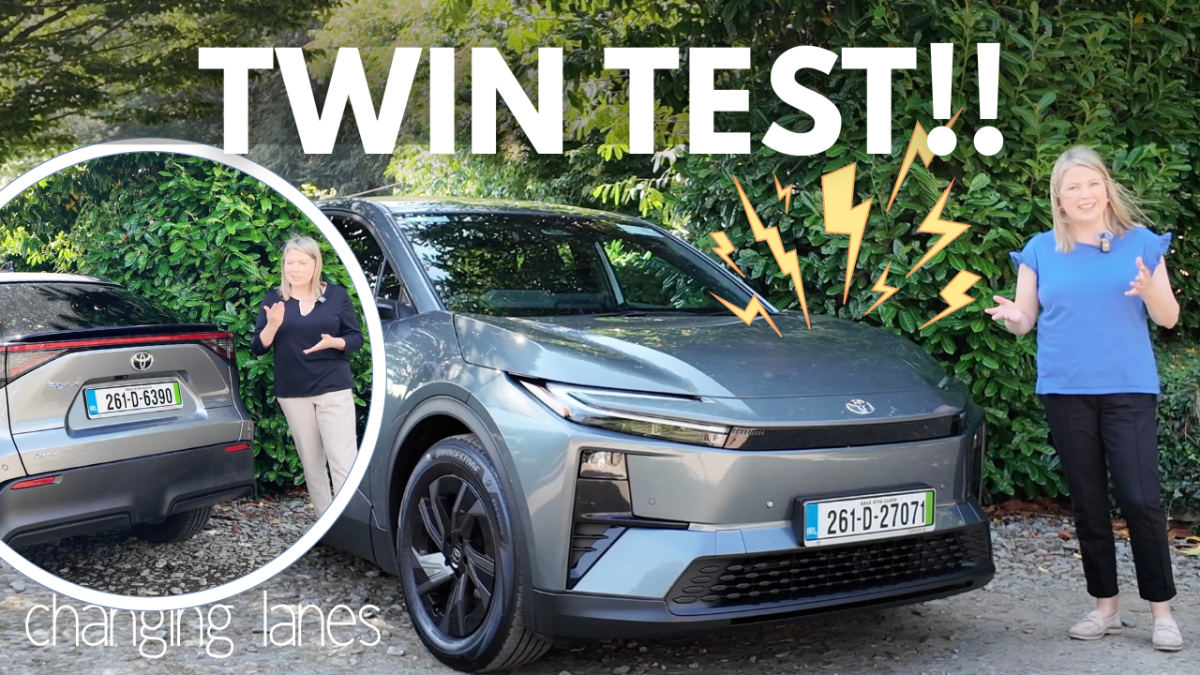
So, if you’ve already decided your next EV will be a Toyota, watch my video review to help you decide between these two cars.
Toyota bZ vs Toyota C-HR+: What are they?
Although they cost the same in Ireland, the Toyota bZ and the C-HR+are two electric SUVs that sit in different segments.
The Toyota bZ is the larger car going up against rivals like the Skoda Enyaq, Tesla Model Y and the Hyundai Ioniq 5, while the Toyota C-HR+ is more compact with sporty coupé-SUV styling and direct rivals including the Kia EV3 and the Skoda Elroq.
Both electric Toyota SUVs start from €42,160 in Ireland, placing them in one of the most competitive parts of the market but offering considerable value, space and battery range.
Toyota remains Ireland’s bestselling car brand in 2026, so these two models are likely to be on plenty of buyers’ shortlists. The bZ frequently appears among Ireland’s bestselling electric cars.

Toyota bZ vs Toyota C-HR+: Battery & range
Both the bZ and the C-HR+ use lithium-ion batteries with competitive range for their class of vehicle. The bZ also received a battery upgrade as part of the 2026 facelift, which sees range increased to 567 kilometres and numerous improvements to overall efficiency. However despite being the smaller car, the C-HR+ can actually travel further on a charge and is slightly more aerodynamic and efficient in real-world driving in my experience.
Toyota bZ
- 73kWh battery
- Up to 567km (WLTP)
Toyota C-HR+
- 77kWh battery
- Up to 607km (WLTP)
For anyone covering long distances regularly, the C-HR+ has the advantage here with an extra 40 kilometres of official range and better efficiency.

Toyota BZ vs Toyota C-HR+: Space & Practicality
If space and practicality is your priority, the bZ will be the best option as it offers more rear legroom, particularly for adults and a bigger boot thanks to its larger size. The bZ has a 452-litre boot compared with 416 litres in the C-HR+.
Worth noting if you are trading in from a Toyota C-HR Hybrid, the electric C-HR+ has a bigger boot and is more spacious inside!
Both cars feature 60:40 split-folding rear seats, making it easy to carry larger items when required. They also both have handy underfloor boot storage for charging cables and a three-point socket.


Toyota bZ vs Toyota C-HR+: Design & equipment
Both the C-HR+ and bZ have their own distinct styling, which manages to help both SUVs stand out from competitors. The bZ is the more conventional-looking SUV, while the C-HR+ leans into coupe-SUV styling with a lower, more dramatic roofline inspired by the C-HR Hybrid.
However they are quite similar when viewed head on as they both feature the brand’s “hammerhead” design language with thin-LED lighting for a smart and futuristic look.
Both are available in Sport and Premier trim levels, with a significant price jump to the higher specification. For most buyers the Sport grade is the sweet spot, offering the best value while also delivering the best efficiency thanks to 18-inch alloy wheels.
Neither car has a rear wiper, all in the pursuit of good aerodynamics, but you might miss one on a wet November morning in Ireland!
Toyota has generously equipped both cars in the Sport grade, including:
- 14-inch touchscreen
- Wireless Apple CarPlay and Android Auto
- Digital driver display
- Heated front seats
- Heated steering wheel
- Two wireless smartphone charging pads
- Dual-zone climate control
- Parking camera
- Blind Spot Monitor
- Adaptive Cruise Control
The only difference is that the bZ comes with electric adjustment for the driver’s seat, while the C-HR+ has manual adjustment.


Toyota bZ vs Toyota C-HR+: Interior
Step inside and you’ll notice that the bZ and C-HR+ share much of the same cabin design. Both feature Toyota’s latest 14-inch infotainment touchscreen with wireless Apple CarPlay and Android Auto, along with a digital driver’s display positioned above the steering wheel.
The overall quality is excellent in both cars. The materials feel solid and well put together, even if the design isn’t especially glamourous.
The updated bZ benefits from improved ergonomics, including two new wireless smartphone charging pads on the centre console. There are still a few unusual touches, however, such as the high seating position combined with a relatively low steering wheel and the absence of a traditional glovebox.
The main visual differences between the two interiors come down to upholstery choices and trim finishes. The C-HR+ has a slightly better driving position, feeling more natural and driver-focused.


Toyota bZ vs Toyota C-HR+: Driving them on Irish roads
Mechanically, these two EVs are very closely related as they are built on the same e-TNGA platform designed purely for electric vehicles. In Ireland most of the focus is on the single motor, front wheel drive versions, though some markets also have all wheel drive versions available with even more power and grip.
With one battery option per car, the range is simple and performance almost identical.
Toyota bZ
- 224hp
- 0-100km/h: 7.4 seconds
- Energy consumption: 13.9kWh/100km
Toyota C-HR+
- 224hp
- 0-100km/h: 7.3 seconds
- Energy consumption: 13.4kWh/100km
The C-HR+ has been tuned to feel a little sharper and more agile through corners, with suspension refinements and increased body rigidity giving it a more engaging character.
The updated bZ, meanwhile, focuses on comfort. Toyota has fitted a larger battery, improved motor efficiency, increased charging performance and added additional sound insulation to create a quieter, more refined driving experience.
Both feel good quality on Irish roads, being consistently comfortable and refined. Steering wheel paddles feature to adjust the strength of regenerative braking easily while driving. The C-HR+ proved to be the most efficient in real-world driving with consumption during my summer test between 12-13kWh per 100 kilometres making it a real range star.
Charging
Charging performance is identical across both models:
- DC rapid charging up to 150kW
- 10-80% charge in approximately 28 minutes
- 11kW AC charging
- Battery pre-conditioning
- Standard heat pump to improve winter efficiency


Toyota bZ or Toyota C-HR+: Which Should You Choose?
While these two electric Toyotas share much of the same technology, they appeal to slightly different buyers:
Toyota C-HR+
- The longest driving range, great for frequent motorway driving
- Sportier styling
- Sharper handling
Toyota bZ
- More rear passenger space
- A larger boot
- Better practicality for families
Verdict
After testing both the Toyota bZ and C-HR+ extensively on Irish roads, it’s clear that these are two very good cars that can compete with the best electric SUVs on sale.
However there are a few distinct pros and cons between them. The bZ has benefited greatly from its 2026 update and is best if you need the extra space it offers.
The C-HR+ feels like a slightly better car overall thanks to its longer driving range and greater real-world efficiency, as well as sharper driving dynamics and stylish good looks.
___________
Written by Caroline Kidd
Founder and Editor of Changing Lanes, Juror for Irish Car of the Year
The post Toyota BZ vs Toyota C-HR+ Review appeared first on Changing Lanes.