
From paddleboard to kayak: is your family ready to share a boat?

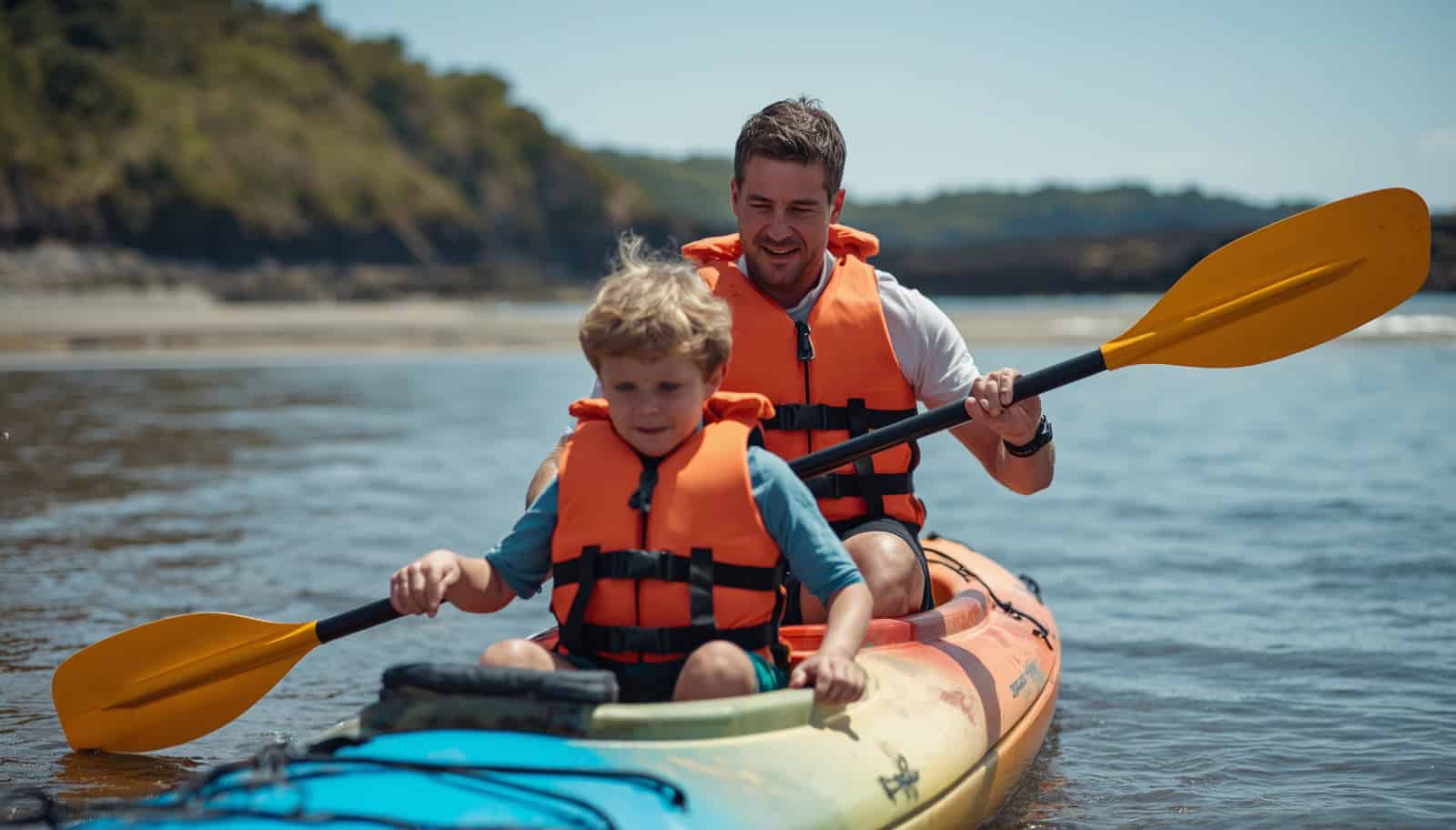
Plenty of families start out on paddleboards. They are easy to store, children pick them up quickly, and a calm morning on a board is hard to beat. After a few summers, though, something shifts. The kids want to go further than their legs will carry them, the wind picks up just as someone gets tired, and the grown-ups spend more time towing than paddling. That is usually the moment a kayak starts to make sense.
*Advertisement feature*
Here is how to tell whether your family is ready for the move, and what to look for in a boat two of you can share.
Why families move from boards to a kayak
Sitting down changes a lot for a child. The centre of gravity is lower, a gust is less likely to tip anyone in, and a tired seven-year-old can simply stop paddling and enjoy the view while an adult keeps the boat moving.
A kayak also keeps you together. On boards, a parent and child are two separate craft that tend to drift apart at exactly the wrong moment. In a two-person kayak the child sits within arm’s reach, and conversation happens on its own.
There is room for the things that make a day out work with children, too: a dry bag with spare layers, snacks and a flask.
And there is a practical bonus on inland water. Most rivers and canals in England and Wales need a waterways licence. With the licence that comes with Paddle UK membership, passengers in your craft are covered, while everyone paddling separately needs a licence of their own. Two boards mean two licences. One kayak with a child on board means one.
Is your child ready?
There is no magic age. Readiness depends more on temperament and water confidence than on birthdays. A few signs that it is time:
- They are happy in the water and don’t panic at a faceful of spray.
- They wear a buoyancy aid without a fight, and it fits.
- They can sit reasonably still for a stretch and follow a simple instruction the first time, such as “paddle on the left” or “hold on”.
- They know what to do if they fall in. A deliberate capsize in shallow water on a warm, calm day takes the fear out of it.
Start them as a passenger with a light paddle and let them join in when they feel like it. Nobody expects a child to power the boat. The point is that they enjoy being on the water and want to come back.
What to look for in a kayak two of you can share
Two-person inflatables are the natural next step for board families, mainly because they pack down into a bag and fit the same boot space your boards already use. When you compare models, these are the points that matter most with children on board:
- Load capacity. Add up the adult, the child and your kit, then leave a healthy margin. A boat close to its limit sits low and feels sluggish.
- Seats you can move. Many two-person kayaks let you shift the seats or paddle solo, which helps on the day a child decides to sit the trip out.
- Stability over speed. A wider hull feels steadier when a child leans over to look at a duck. Slimmer boats are quicker but less forgiving.
- A stiff floor. Drop-stitch floors take higher pressure and feel firmer underfoot, which helps when you climb in and out from a bank.
- Weight and packed size. Check that one adult can carry it from the car park to the water, because the other adult will be carrying everything else.
- Set-up time. Pumping and packing happen with children waiting. A boat that goes up quickly gets used more often.
If you want to compare models side by side, The Equipment Guide has a round-up of the best 2 person inflatable kayak options for UK paddlers that rates them category by category.
Kit for young paddlers
Buoyancy aids go on everyone, every time. The RNLI points out that they come in sizes from baby to adult, and a simple test tells you whether the fit is right: fasten and adjust it, then lift from the shoulders. If it slides up, go a size smaller or tighten it. A bright colour makes a small head easier to spot.
Dress for the water, not the air. According to the RNLI, cold water shock can set in at 15°C or lower, and British lakes and seas sit at or below that for much of the year. A wetsuit or quick-drying layers, plus a spare set in the dry bag, stop a good day ending early.
Keep a phone in a waterproof pouch on you, within reach, rather than buried in a bag.
First trips that work
Pick sheltered, shallow water with easy places to land: a small lake, a slow stretch of river, a quiet bay on a still day. Check the forecast before you go, and at the coast look at the Met Office inshore waters forecast and the tide times as well. Wind blowing off the land is the one to watch, because it can carry an inflatable further out than you meant to go.
Give each outing a goal a child cares about: a beach for lunch, an island to circle, a heron to spot. Keep the first few trips short and head back while everyone still wants more.
If you’d like a confidence boost, a taster session with a local club is worth a morning. Clubs run beginner courses, and learning how to get back into a kayak after a capsize is time well spent for the adults too.
Keep the boards
The boards don’t need to go. Plenty of families keep both: boards for warm days close to shore, the kayak for longer outings when little legs have had enough. What changes is that the whole family can go further, together.


