My Perfect 3 Day Porto Itinerary & Travel Guide (2026)

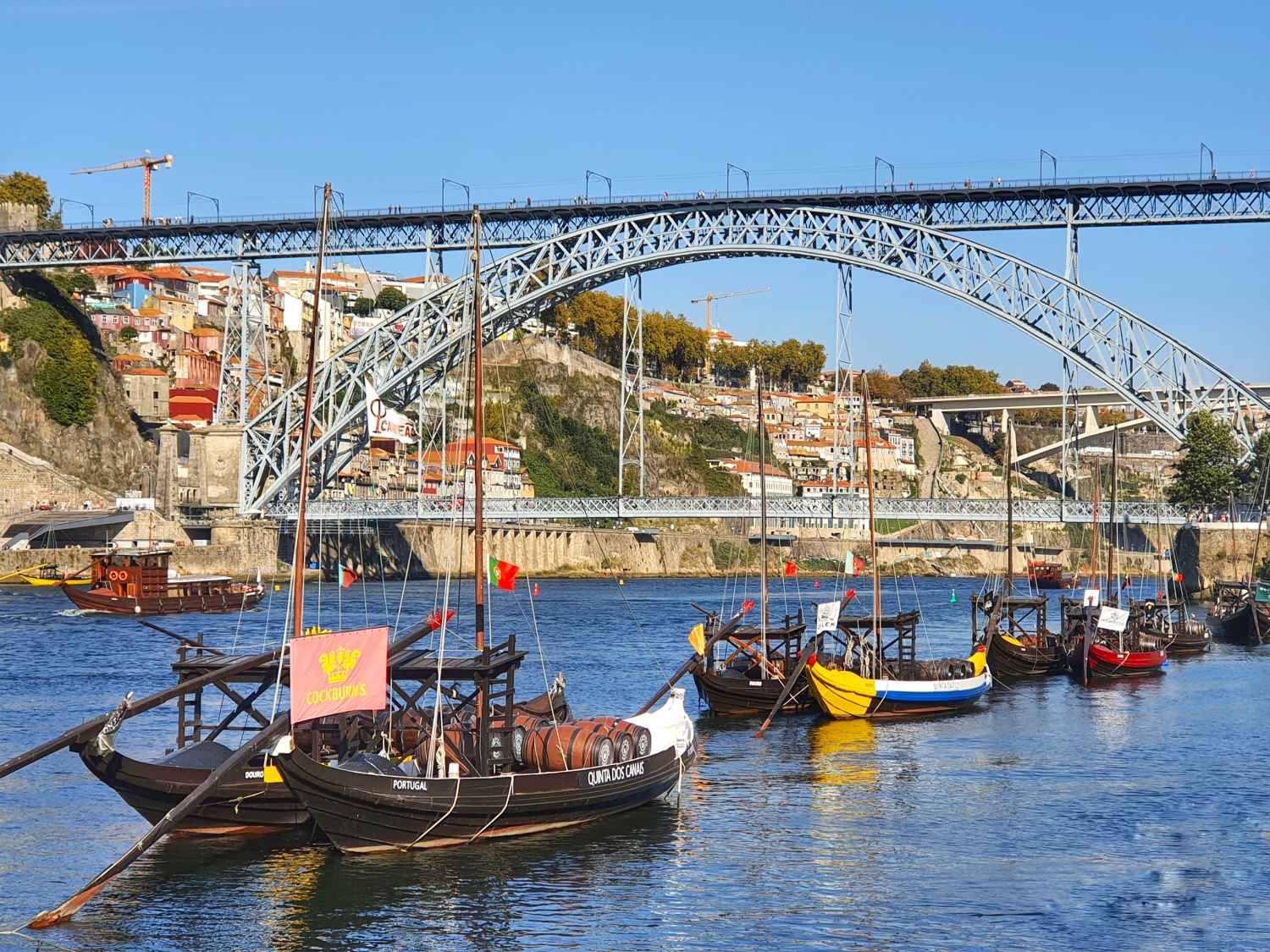
Portugal’s second city, Porto, is one of the most soulful, characterful and atmospheric cities in Europe and somewhere that completely won me over.
Tumbling down steep hillsides to the Douro River, with its colourful tiled houses, baroque churches, ornate azulejo panels and centuries-old port wine cellars lining the opposite bank, Porto has a gritty, lived-in charm that feels worlds away from polished European cities. It’s smaller and more compact than Lisbon, but no less captivating, and in many ways I enjoyed Porto just as much.
As I have family and friends living in Portugal, I’ve visited Porto several times over the years, often as part of longer trips around the country, and each visit revealed another layer to this fascinating city. So I’ve put together my ultimate Porto itinerary that will guide you through how to spend 2 – 3 days in Porto, Portugal. I think it’s perfect for first timers or anyone revisiting the city that wants to explore Porto in more depth.
This Porto itinerary combines all the iconic sights. Exploring the historic Ribeira waterfront, riding the rattling old trams along the river, sipping port in the cellars of Vila Nova de Gaia, and a day trip to the breathtaking terraced vineyards of the Douro Valley.
About Porto
Porto is Portugal’s second largest city, sitting on the north bank of the Douro River, just a couple of miles from where it meets the Atlantic Ocean. With a population of around 240,000 it feels notably smaller and more manageable than Lisbon, yet packs an extraordinary amount of history, beauty and character into its compact centre.
The city gave Portugal both its name (from the Roman settlement of Portus Cale) and its most famous export – port wine. The historic centre, the Ribeira, has been a UNESCO World Heritage site since 1996, and the British connection here runs deep. British merchants have traded in Portuguese wines since the 17th century, which is why many of the famous port houses in Vila Nova de Gaia still carry English names like Taylor’s, Graham’s and Sandeman.
Modern Porto is a city on the rise. It’s been named European Best Destination multiple times and a new generation of creatives is breathing life into neighbourhoods like Cedofeita and Bonfim but it still feels authentic and refreshingly down to earth.
Pin Me 😉
Quick Tips for Planning Your Porto Itinerary
Best time to go: Spring (April – June) or Autumn (September – October) for good weather and fewer crowds. Autumn is especially magical if you’re heading to the Douro Valley as it’s harvest season. Avoid peak summer (July and August) when it gets busy and hotter, though Porto stays cooler than Lisbon thanks to its Atlantic breeze.
How long to spend: At least 2 – 3 days for the highlights. 4 or 5 days if you want to explore at a slower pace and/or do more day trips from Porto.
How to get there: Fly into Porto Airport (OPO) and take the metro straight into the city centre, or arrive by train from Lisbon in around 3 hours. Find the best deals on Skyscanner.
Where to stay: Baixa and Aliados are central, well-connected and walkable, with plenty of hotels, restaurants and shops within easy reach of the main sights. The Ribeira is more atmospheric but hillier and noisier, while Vila Nova de Gaia across the river offers stunning views back at Porto.
$$$ The Yeatman – Spectacular 5 star wine hotel perched on the hillside in Vila Nova de Gaia with panoramic views over Porto, a Michelin-starred restaurant, vinothérapie spa, and infinity pool overlooking the Douro.
$$ PortoBay Flores – Beautiful 5 star boutique hotel in a restored 16th-century palace in the heart of the historic centre, with an indoor pool, lush garden and elegant rooms.
$ Hotel Carris Porto Ribeira – Charming 4 star hotel made up of five connected historic buildings right in the Ribeira, with a great location for exploring on foot.
$ The Passenger Hostel – Stylish boutique hostel inside the stunning São Bento train station with a sociable vibe, both dorms and private rooms, and arguably the most beautiful hostel location in Europe.
Unmissable Experiences:
- Touring a port wine cellar in Vila Nova de Gaia.
- Crossing the Dom Luís I Bridge on foot at sunset.
- Admiring the azulejo panels at São Bento Station.
- Climbing Clérigos Tower for panoramic city views.
- Stepping inside Livraria Lello, one of the world’s most beautiful bookshops.
- Trying a francesinha, Porto’s legendary sandwich.
- Riding the historic Tram 1 along the river to Foz.
- A day trip through the terraced vineyards of the Douro Valley.
Getting around: Pick up an Andante travel card for unlimited use of the metro, buses, trams and funicular. Porto’s historic centre is compact enough to explore on foot, but be prepared for steep hills. Uber and Bolt apps are affordable and work well too.
Booking attractions: Buy timed entry tickets in advance for Livraria Lello, Clérigos Tower and port cellar tours to avoid disappointment, especially in peak season. You can buy tickets, or join a guided tour that includes transport and tastings, on Get Your Guide.
How Long To Stay in Porto
The first thing to think about when planning your itinerary for Porto is how much time you have, as this will determine how much you can fit in.
You could easily spend a week in Porto without getting bored, but I know not everyone has that luxury, so in this Porto itinerary I’ll show you how to fit the highlights into just 3 days.
While it’s possible to see most of the city’s sights with just 1 or 2 days, I really recommend spending at least 3 days in Porto so that you also have time for a day trip to the Douro Valley – the world’s oldest demarcated wine region, with dramatic terraced vineyards tumbling down to the river, and one of the most beautiful areas in Portugal.
If you have more time, spending 4 or 5 days in Porto allows you to explore at a more relaxed pace, discover some less touristy neighbourhoods and enjoy a day at the beach in Foz do Douro, and another day trip to somewhere like Guimarães, Braga or Aveiro.
If you’re visiting Porto as part of a wider Portugal trip, it’s well worth adding on Lisbon too. The capital is just under 3 hours away by train and has a very different feel – grander, more cosmopolitan and sprawling, compared to Porto’s more intimate, lived-in charm.
Honestly, in many ways I enjoyed Porto just as much as Lisbon, and the two cities complement each other beautifully, so I’d recommend visiting both if you can. I’d suggest at least 2 – 3 days in each, plus extra time for the Douro Valley and Sintra day trips.
Read More: Check out my Lisbon itinerary for how to spend your time in the Portuguese capital.
Anyway, let’s get back to Porto!
How to Spend 3 Days in Porto – The Perfect 3 Day Porto Itinerary
- Day 1 – Historic Porto, Clérigos Tower, Livraria Lello, São Bento Station, Ribeira waterfront.
- Day 2 – Vila Nova de Gaia, port wine cellars, six bridges river cruise, sunset on Dom Luís I Bridge.
- Day 3 – Day trip to the Douro Valley – wine tastings, scenic drive/ride, lunch at a quinta, river cruise.
Carry on reading for my day-by-day itinerary that goes into all the details. If you have more time, I also have suggestions for more things to do in Porto and day trips from Porto after the itinerary.
Day 1 – Historic Porto
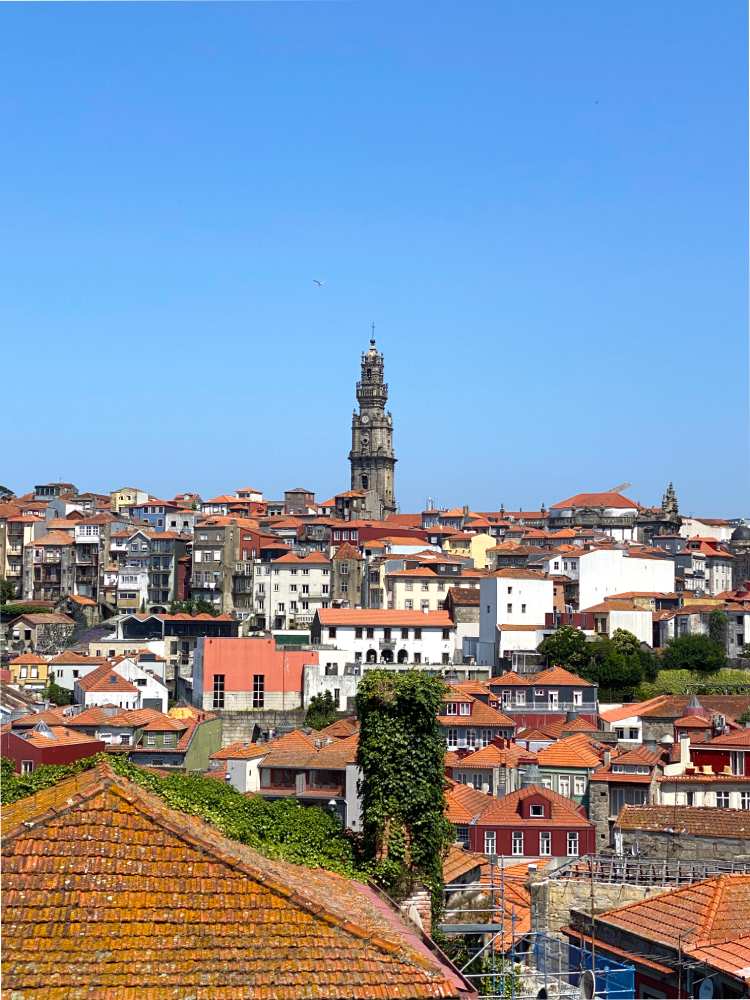
On your first day in Porto, explore the historic city centre, the azulejo-tiled facades, the baroque churches, the beautiful train station, the steep cobbled streets, and the world-famous Ribeira waterfront.
Morning – Historic Porto Walking Tour
Porto is a safe city to explore independently, but the older parts are built on steep hills with winding lanes and it’s easy to get lost, so if it’s your first time I highly recommend starting with a guided tour – either a walking tour or a tuk tuk tour are best. A local guide will also give you a much deeper feel for the city’s history and culture than you’d get alone. Wear comfortable shoes with good grip for the cobbles and hills.
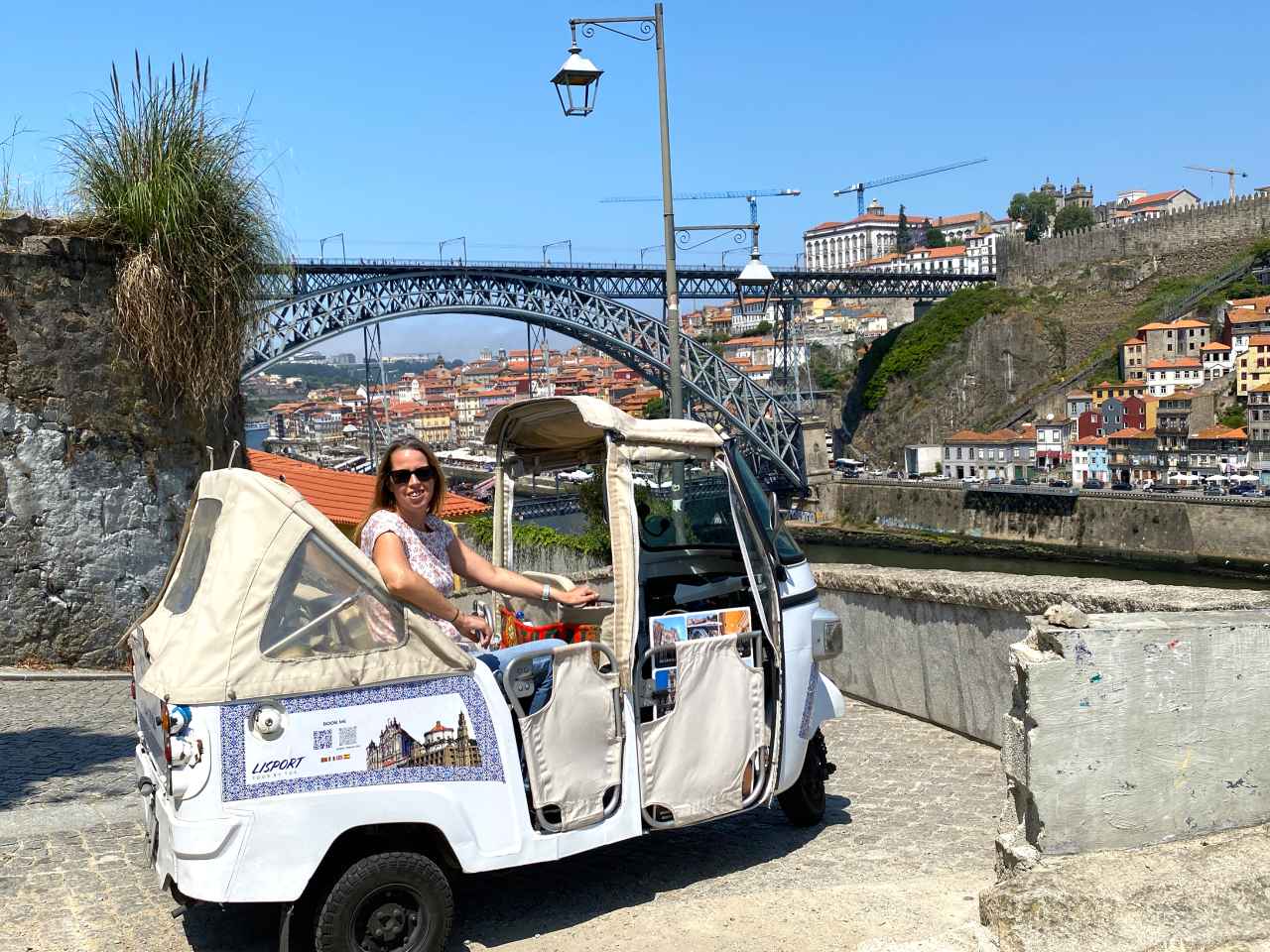
My top picks: the Porto Historic City Center Walking Tour, a 3 hour small group tour covering all the highlights and a great introduction to the city. Another option is a Tuk Tuk Tour which is a fun way to see the city without climbing the hills yourself – ideal if you are short on time or have mobility considerations.
DIY Walking Route
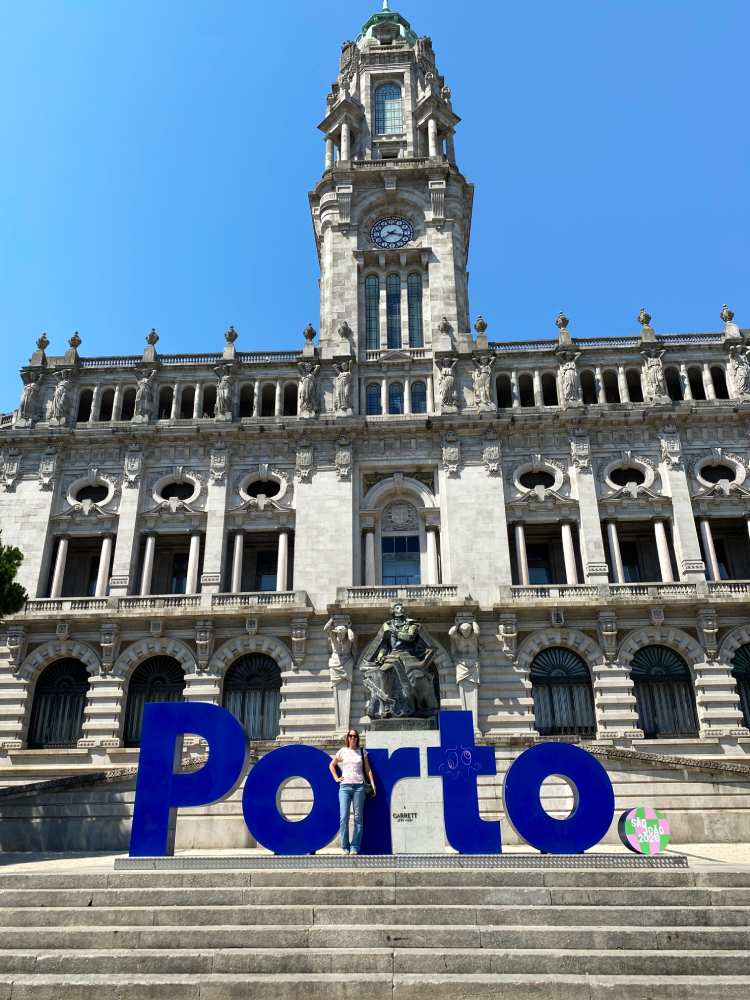
If you’d rather explore independently, start at Avenida dos Aliados, Porto’s grand main boulevard. Porto City Hall with it’s famous Porto sign sits at the top of the Avenida dos Aliados and is worth a quick photo stop.
You can grab a coffee at Café Guarany, a historic haunt of the city’s writers and artists since 1933. Walk down to Praça da Liberdade and on to São Bento Train Station – step inside (it’s free) for one of the most beautiful train stations in the world, its entrance hall covered floor to ceiling in hand-painted blue and white tiles.
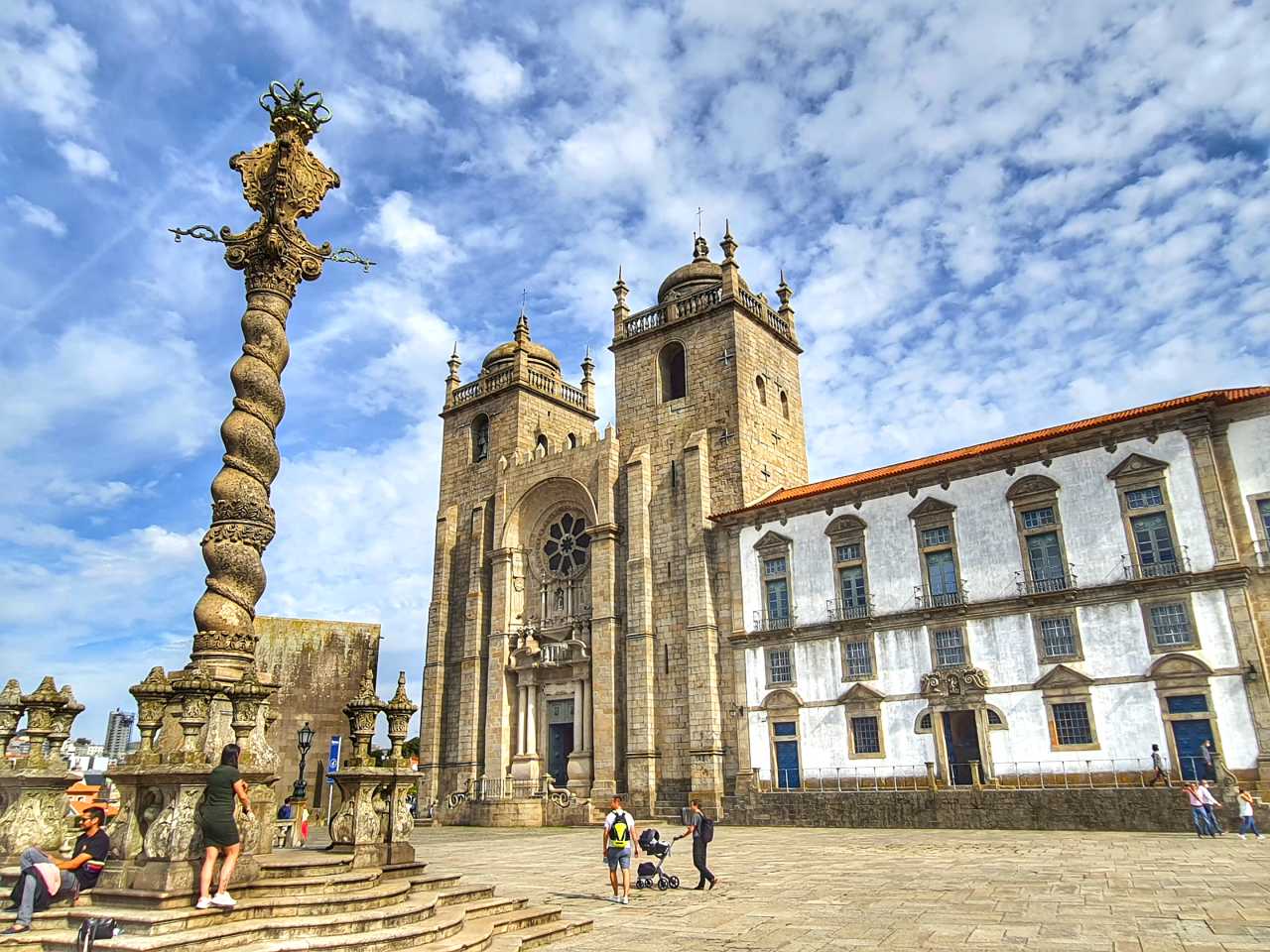
From São Bento, walk up to the Sé do Porto (Porto Cathedral), the city’s oldest religious building, where the terrace outside gives you your first sweeping view over the rooftops to the river. Entry is free, although there’s a small fee for the cloisters if you want to linger.
Late Morning – Clérigos Tower & Livraria Lello
Next, climb the Torre dos Clérigos (Clérigos Tower.) Climbing the 240 steps up this baroque bell tower reward you with one of the best panoramic views in Porto.
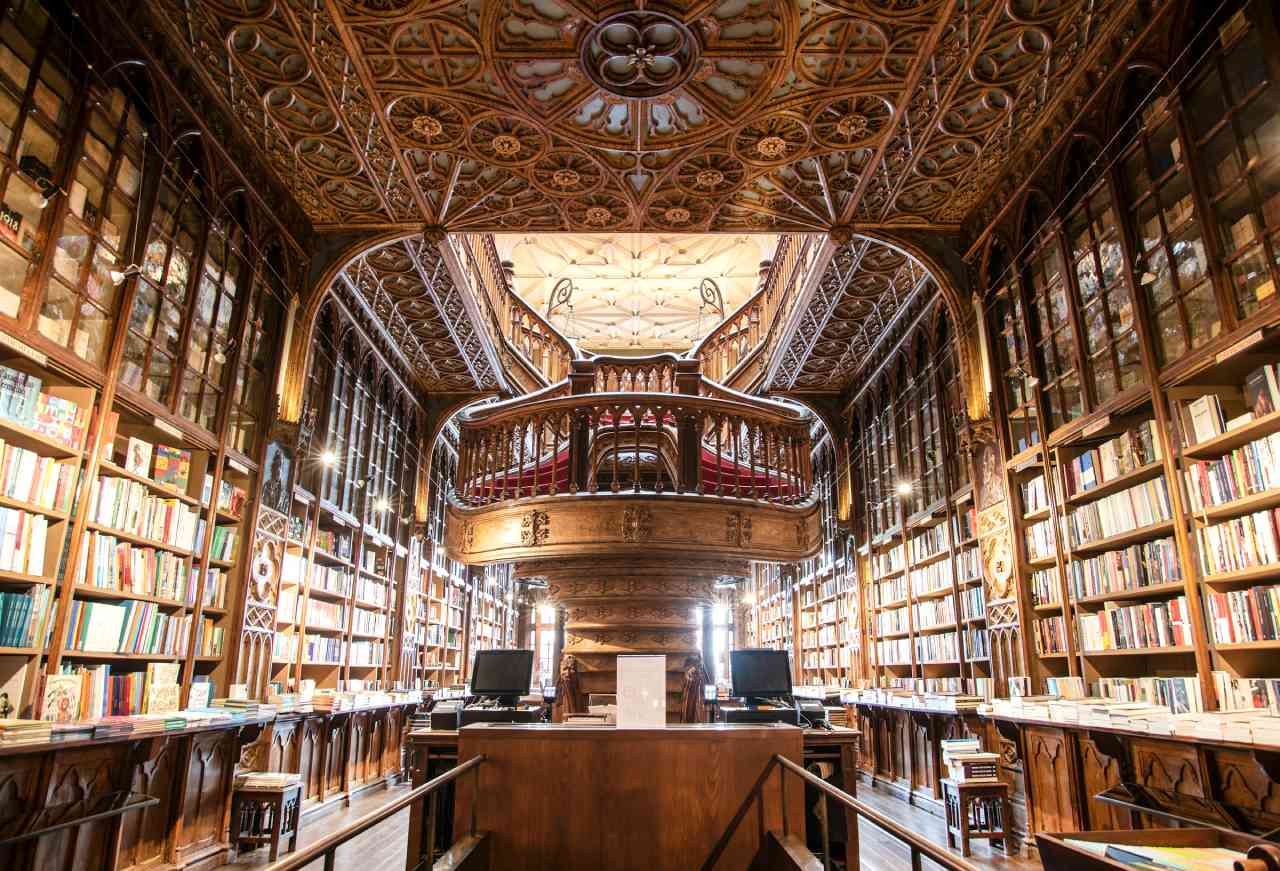
A short walk away is the world-famous Livraria Lello, often called one of the most beautiful bookshops on earth, with its sweeping forked staircase and stained glass ceiling. It’s rumoured to have inspired J.K. Rowling’s Harry Potter (she’s denied this), and yes, it’s busy and touristy, but it really is worth the visit. Book your timed entry ticket ahead – the admission fee is deducted from any book you buy.
If you are a Harry Potter fan then you’ll love the Harry Potter Porto Walking Tour where you can discover how J.K. Rowling’s life in Porto inspired parts of the Harry Potter story and the link between Livraria Lello and Hogwarts.
Right opposite, the twin churches of Igreja do Carmo and Igreja das Carmelitas look like one building but are actually two, squeezed either side of one of Portugal’s narrowest houses – worth a quick photo stop.
Afternoon – Bolhão Market, Santa Catarina & Down to the Ribeira
For lunch, head to Mercado do Bolhão, Porto’s historic market, recently reopened after a major renovation, with fresh produce stalls alongside food stalls and small restaurants – a fun, atmospheric spot to try some delicious Portuguese food.
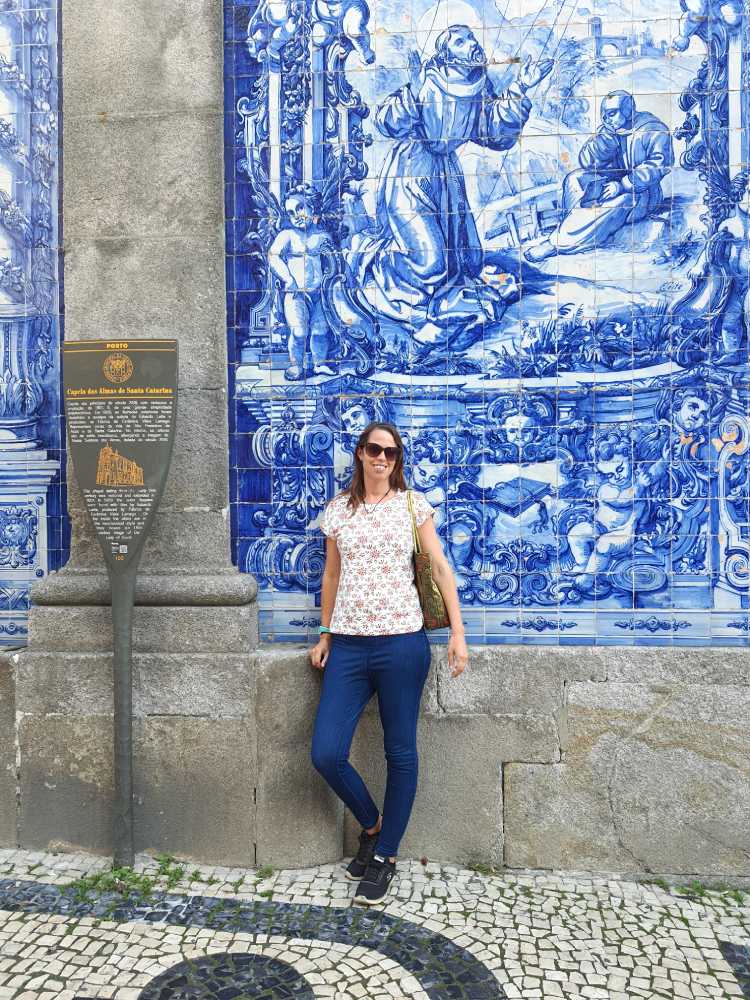
Afterwards, wander down Rua de Santa Catarina, Porto’s main pedestrianised shopping street. Along the way you’ll pass Capela das Almas, its exterior covered in striking blue and white tiles and one of Porto’s most photographed buildings, and further down Café Majestic, a gorgeous Belle Époque café that’s touristy but worth a coffee stop if you don’t mind queuing.
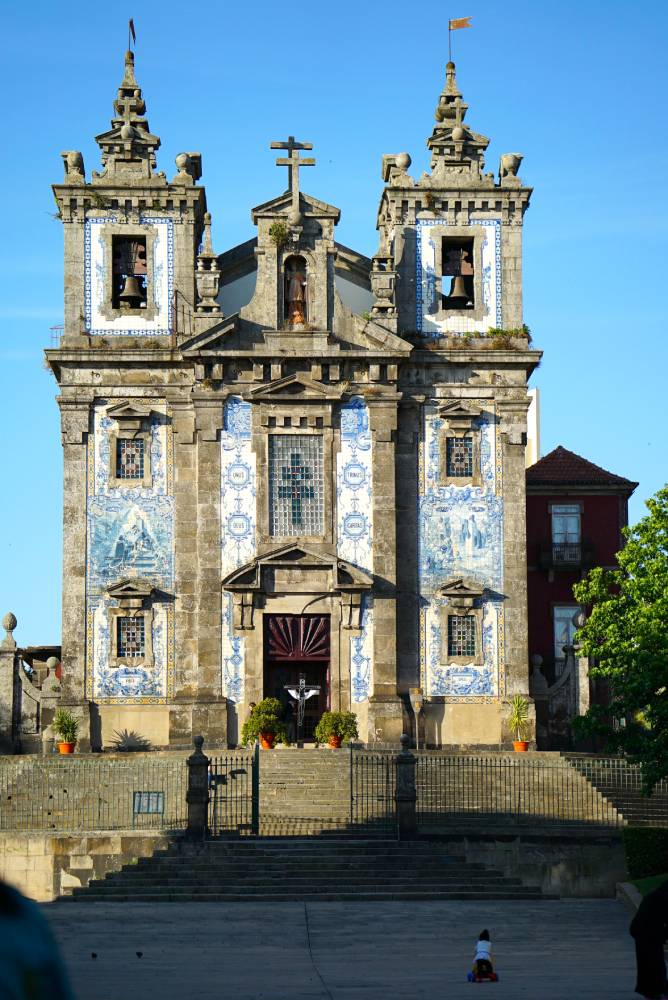
At the southern end of the street, Praça da Batalha is anchored by another beautifully tiled church, Igreja de Santo Ildefonso. It’s one of the most picturesque churches in Porto and well worth stopping for a look.
From there, slowly make your way down through the old streets towards the river and Ribeira. This is the most picturesque neighbourhood and the part of Porto I love most – narrow cobbled lanes, crumbling pastel-coloured buildings, laundry hanging from wrought iron balconies, locals chatting in doorways. Don’t follow Google Maps too strictly here; just let yourself get a little lost.
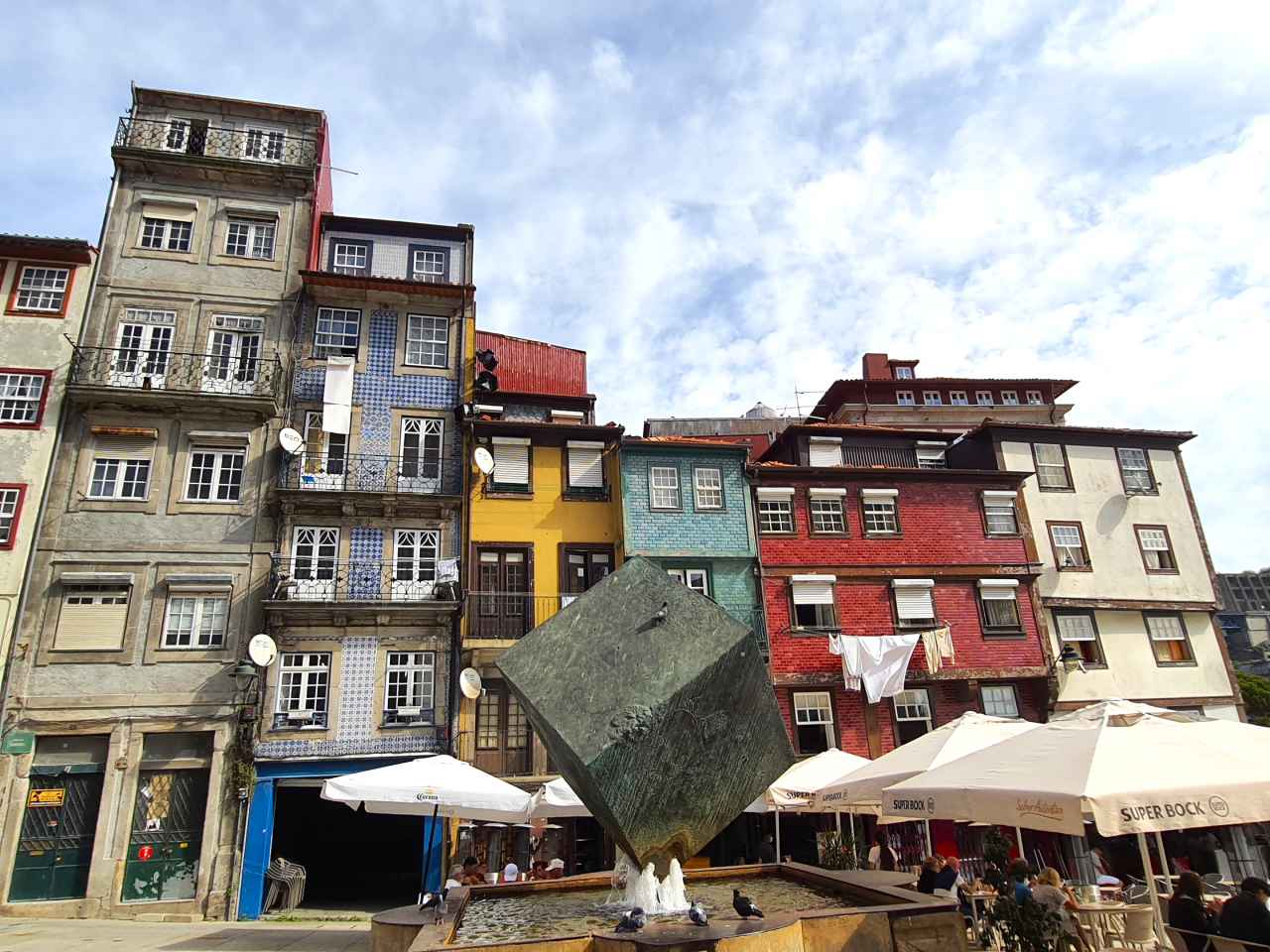
Make your way to the Ribeira, Porto’s UNESCO-listed riverfront and the most photographed part of the city, its colourful houses tumbling down to the water. Stroll the Cais da Ribeira waterfront, watch the wooden rabelo boats on the river, and grab a drink at one of the riverside cafés. Check out Praça da Ribeira, the main square, and Casa do Infante, the medieval building where Prince Henry the Navigator is said to have been born, now a small museum.
Evening – Dom Luís I Bridge & Dinner
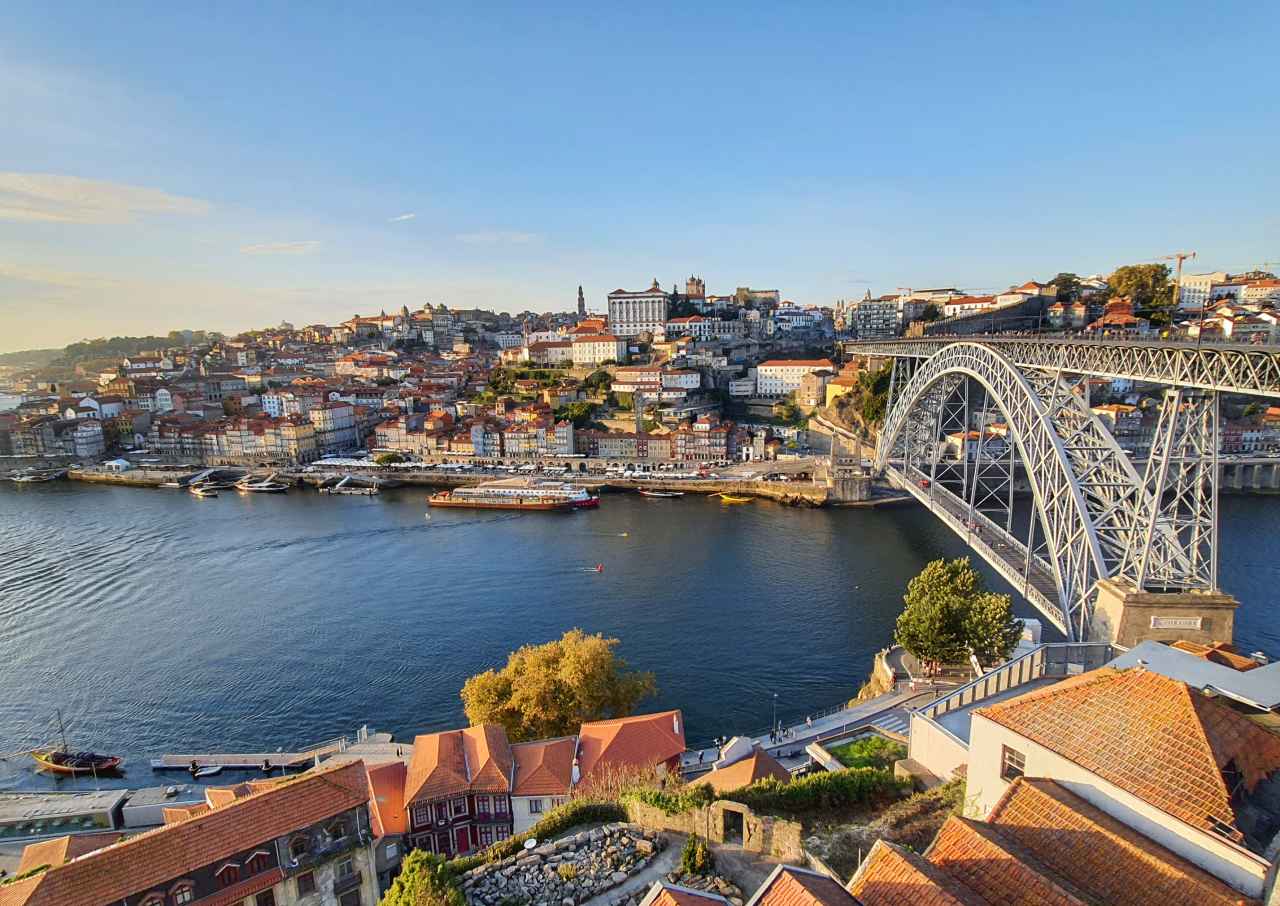
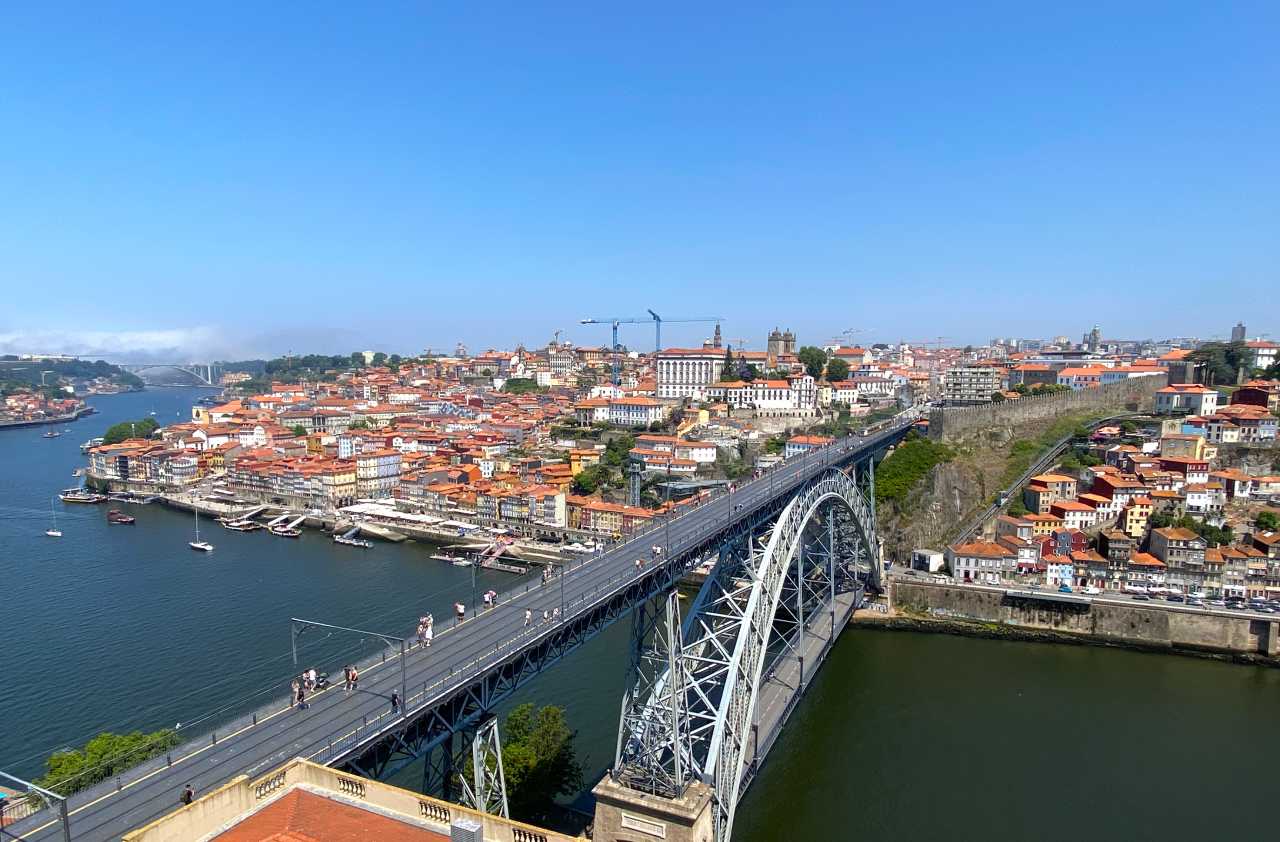
In the late afternoon, head to the Dom Luís I Bridge, Porto’s most iconic landmark, connecting the city to Vila Nova de Gaia. The lower deck is closer to the water and gives you the best view back at the Ribeira; the upper deck, where the metro runs, offers sweeping views across the whole city and is the spot for that classic Porto photo. Try to time it for sunset.
For dinner, stay on the Ribeira side at Taberna dos Mercadores for excellent local dishes (book ahead, it’s tiny), or cross to Gaia and dine at Dourum for refined Portuguese cuisine with views back at Porto’s twinkling lights.
Day 2 – Vila Nova de Gaia
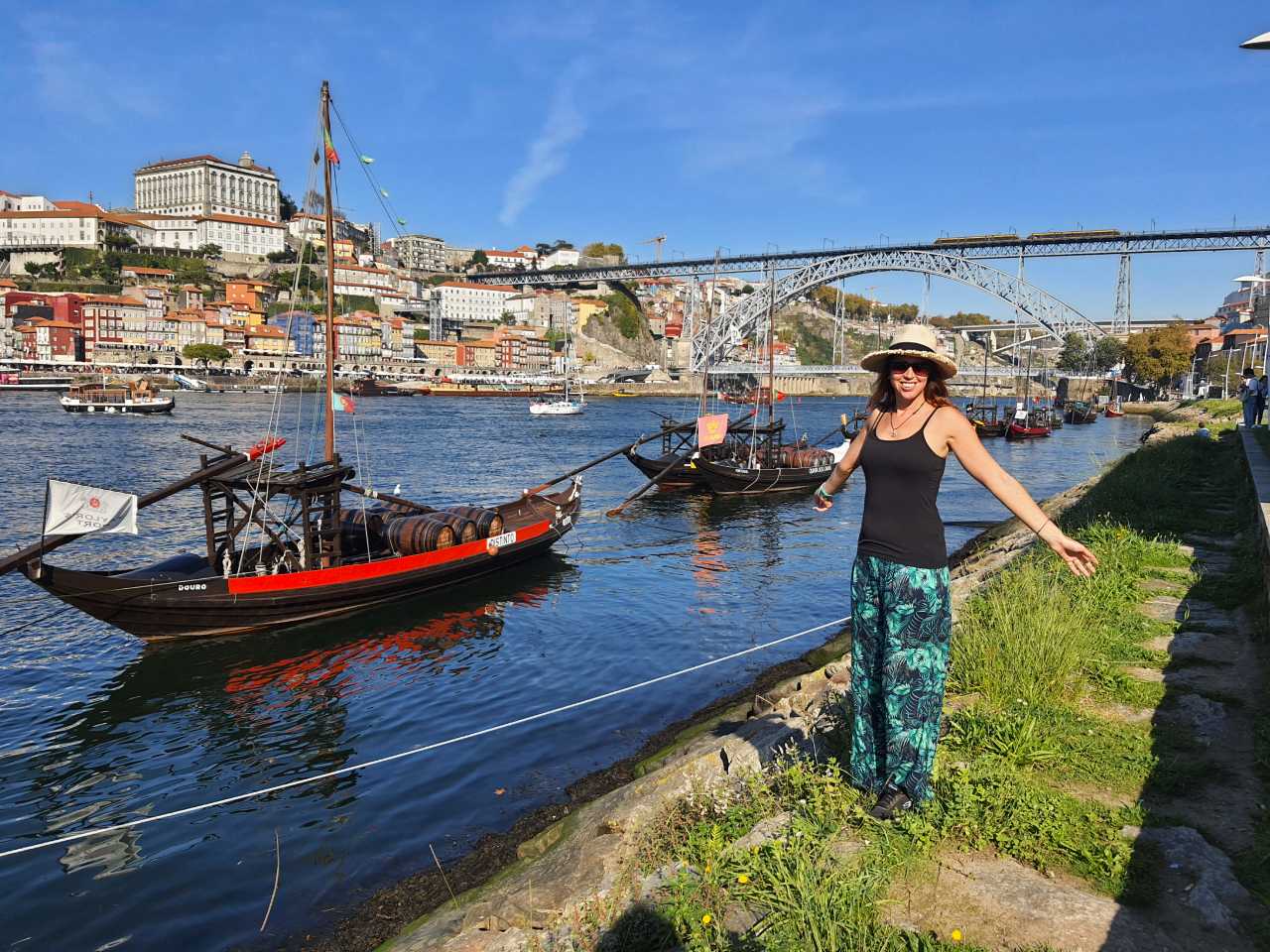
On your second day, cross the river to Vila Nova de Gaia, the historic home of port wine, where the famous port houses have stored and aged their wines for centuries, and where you’ll get the best views back at Porto’s Ribeira.
Morning – Cross to Gaia & Serra do Pilar
Cross the Dom Luís I Bridge to Gaia. If you didn’t walk the upper deck the night before, do it now for spectacular morning views. Before heading down to the cellars, detour up to Mosteiro da Serra do Pilar, a 16th-century monastery whose viewpoint offers, I think, the single best panorama of Porto.
From there, either walk down through the cellar streets (about 10 minutes) or take the Teleférico de Gaia cable car down to the riverfront in 5 minutes, with lovely views over the wine lodge rooftops on the way.
Late Morning – Port Cellar Tour
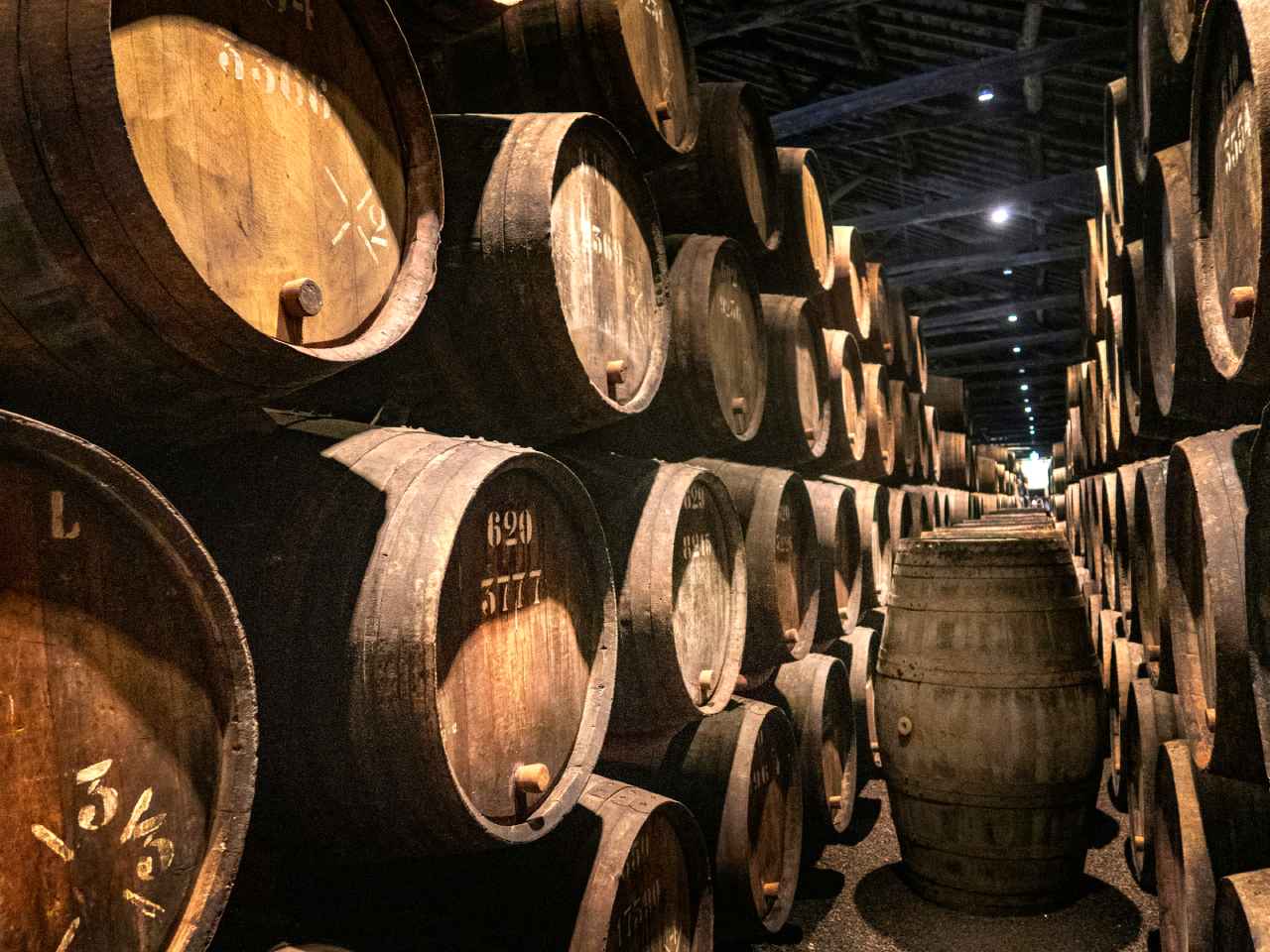
Now for the main event, touring a port wine cellar and tasting. Porto’s cool, damp climate on the Gaia side of the river made it the natural place to age port wine in oak barrels, and dozens of houses still do so today.
My top picks:
- Taylor’s – one of the oldest port houses, with an excellent self-guided audio tour and a terrace bar with stunning views;
- Graham’s – family-owned since 1820, perched high on the hill with beautifully done tours and tastings;
- Cálem – the most central and popular option, great for first-timers, with an interactive museum often combined with a fado show.
Most port tours run 45 minutes to an hour and include a 2-3 port tasting, from around €15 for a basic tour up to €40+ for premium vintage tastings. Book online in advance, especially in peak season.
Lunch – WOW or Riverside
WOW (World of Wine) is a large cultural complex on the Gaia hillside with several museums, restaurants and a panoramic terrace. It’s well done, if a little polished and corporate compared to the old cellars. Alternatively, head to the Cais de Gaia waterfront for a relaxed lunch with views back at Porto. Dourum or De Castro Gaia are both great for traditional Portuguese cuisine.
Afternoon – Six Bridges River Cruise
After lunch, take a Six Bridges Douro River Cruise. Enjoy a 50 minute ride on a traditional rabelo boat, passing under all six of Porto’s bridges, including the iconic Dom Luís I and the Eiffel-designed Ponte Maria Pia. Yes, it’s touristy, but genuinely one of the most relaxing ways to see the city. Booking ahead saves time and money. You can prebook tickets on Get Your Guide.
Evening – Sunset & Francesinha
For sunset, head back up to Serra do Pilar if you missed it in the morning, or try Miradouro da Vitória, my favourite hidden viewpoint, tucked into a little garden in the historic centre.
For dinner, you have to try francesinha, Porto’s legendary sandwich with layered cured meats and cheese under a fried egg, drowned in a rich, spicy beer-and-tomato sauce. It’s outrageous, and you should still order one. Café Santiago is often crowned the best in the city (expect to queue), while Lado B does one of the best vegetarian versions if meat isn’t your thing. Pair it with a cold Super Bock and you’ve had the true Porto experience.
If you’ve got energy for a nightcap, Galerias de Paris and the surrounding streets are the heart of Porto’s nightlife. It’s less polished than Lisbon’s Bairro Alto, but has its own gritty charm.
Day 3 – Day Trip to the Douro Valley
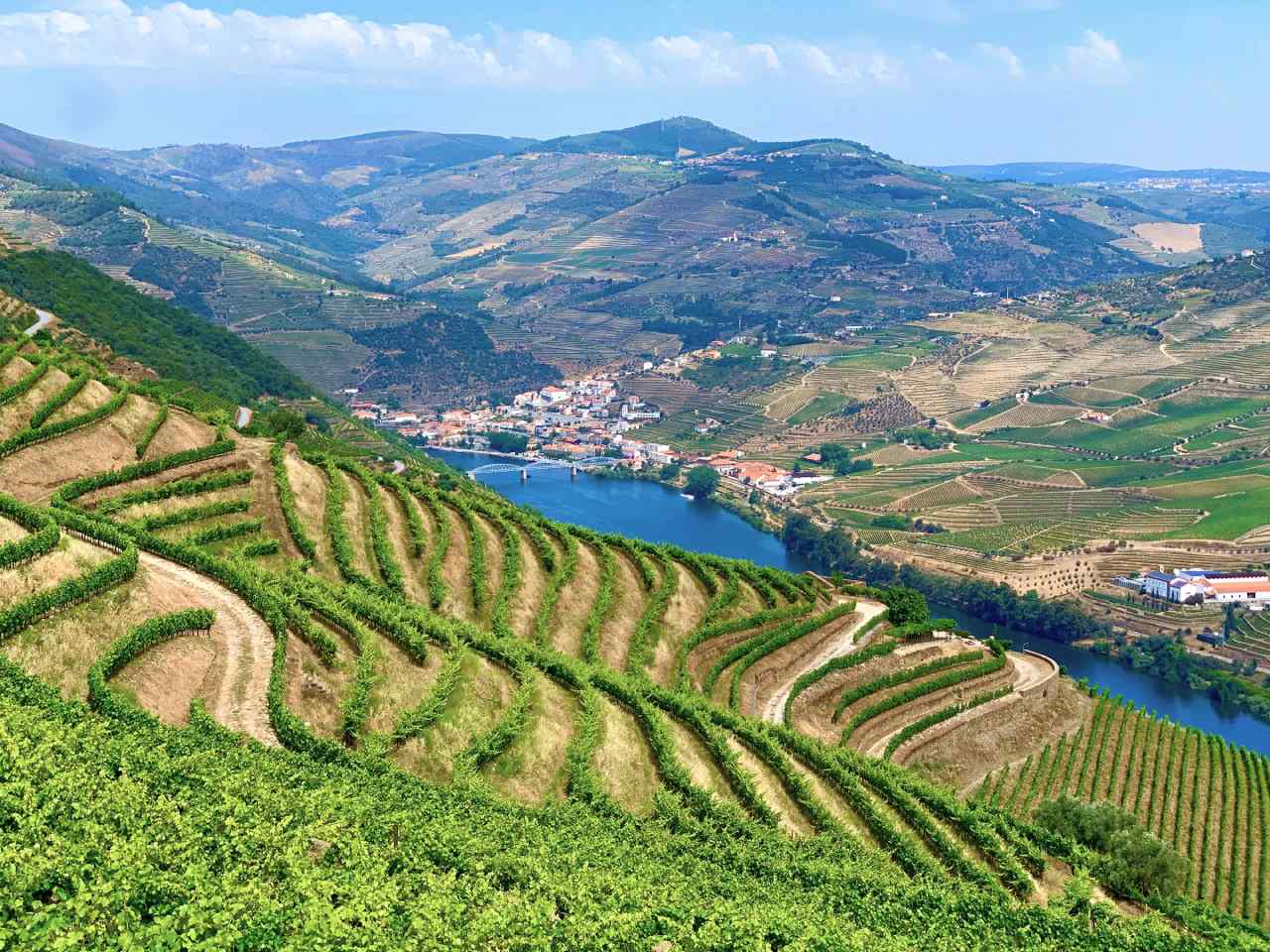
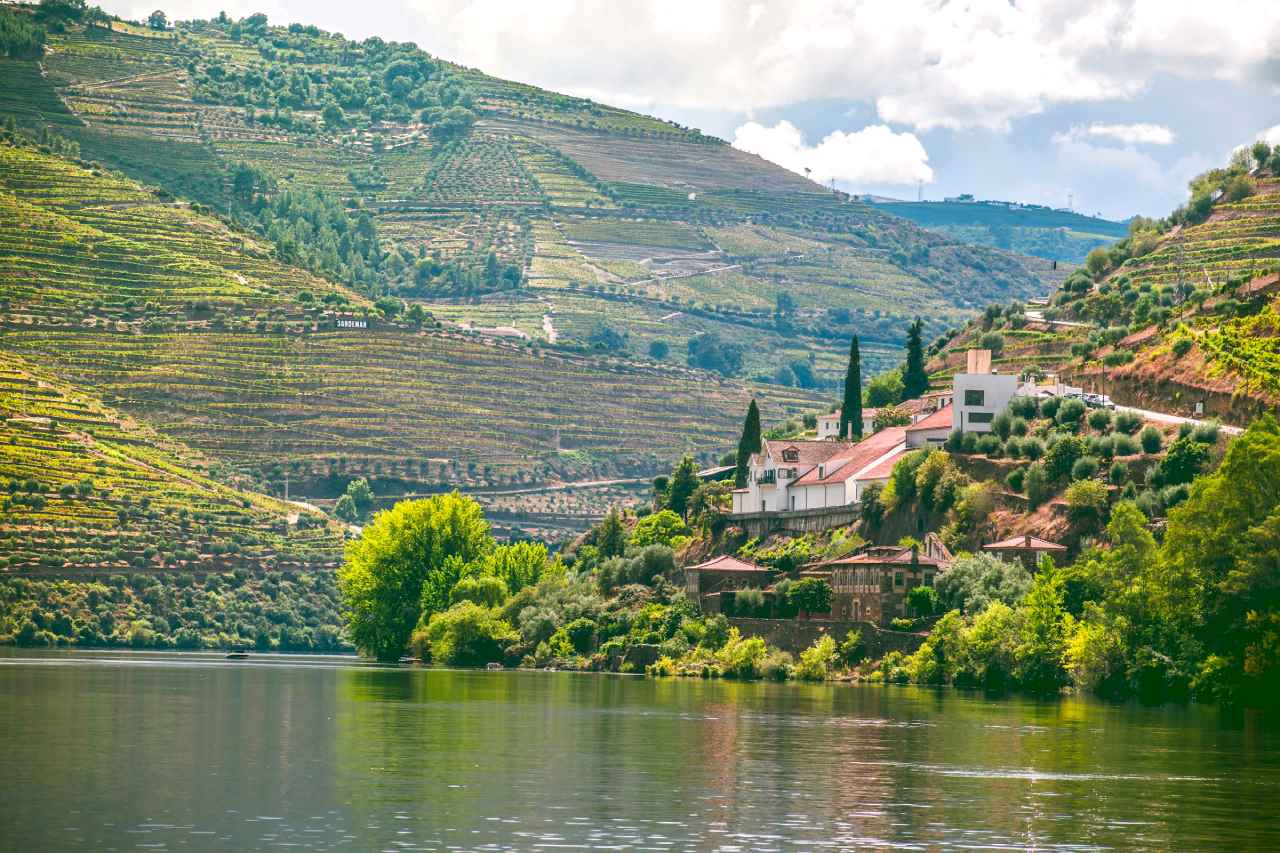
One of the absolute highlights of any Porto trip is a day out to the Douro Valley, the world’s oldest demarcated wine region. This is where the grapes that go into your glass of port are grown, on steep terraced vineyards carved into the hillsides by hand.
The Douro Valley is one of the most breathtaking landscapes I’ve ever seen. The river winding through dramatic gorges, terraced vineyards turning from green to gold to deep red through the seasons, tiny whitewashed quintas clinging to the hillsides. For me, it’s the equivalent of Sintra on a Lisbon itinerary – the must-do day trip that completes your visit.
How to Visit the Douro Valley
An organised tour is by far the easiest option, including transport, two quinta visits with tastings, lunch at a winery, and a short river cruise. You can also take the scenic train from São Bento to Pinhão (around 2 hours each way) and arrange quinta visits yourself, or drive the N222, though that means a designated driver who misses out on the tastings.
Unless you’re a confident driver happy to skip the wine, I’d recommend an organised tour because the roads are narrow, the quintas spread out, and coordinating it all yourself eats into your time at the wineries.
My top pick is the Douro Valley with Boat Tour, Wine Tasting & Lunch tour. It’s been running for years, has hundreds of glowing reviews, and covers all the highlights in one well-paced day, with small group travel by minivan and pickup and drop-off in central Porto.

You’ll be picked up early (around 8am) for the roughly 90 minute drive into the valley, usually with a scenic stop along the way. Your first estate visit is a guided tour covering the wine production process, from the terraced, century-old vineyards to the traditional methods that make Douro wines unique, followed by a tasting of the region’s best.
From there, you’ll take to the water for a one-hour boat trip along the Douro, taking in the vineyard slopes and famous terraces from the river. You follow a calm, scenic stretch that’s perfect for just sitting back and enjoying the views.
Lunch is a traditional Portuguese spread served at the table, featuring the region’s classic dishes. In the afternoon, you’ll follow the N222, often ranked among the most beautiful roads in Portugal, to a second vineyard with spectacular views over the river. Here you’ll enjoy a guided tour of the area’s first winemaking cooperative, founded in 1959, learning about the estate’s history and its wine production process from an expert guide before the drive back to Porto.
Evening – Back in Porto
You’ll arrive back tired, slightly tipsy and happy, so keep your last evening simple. For one final sunset, head to Jardins do Palácio de Cristal (Crystal Palace Gardens) it’s beautiful, free, and blissfully less touristy than the famous miradouros.
For your final dinner, Cantinho do Avillez does excellent modern Portuguese cuisine in the historic centre, or push the boat out at The Yeatman Restaurant in Gaia for a two-Michelin-starred send-off with sweeping views. For a last drink, head up to a rooftop bar like 17° Rooftop Bar at the Dom Henrique Hotel which has panoramic 360-degree views from the 17th floor. Order a glass of port to toast a memorable three days in Porto. Saúde!
More Things to Do in Porto – Options for Days 4 and 5
The first three days cover all the must-sees, but if you have more time, here are my favourite ways to fill it:
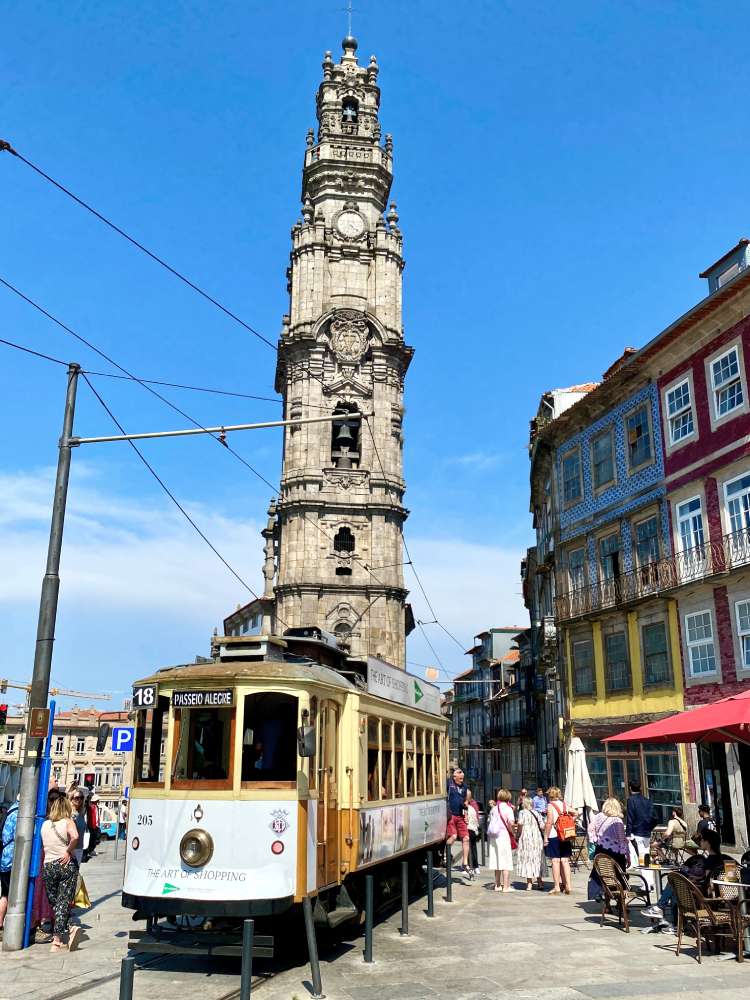
Ride the historic Tram 1 to Foz do Douro. This vintage 1872 tram line runs along the river from Infante out to Foz, where the river meets the Atlantic, a 20 minute journey and one of my favourite Porto experiences. Trams run every 20 minutes (single ticket €3.50; not covered by the Andante card). You can spend the day at Foz do Douro. This is where Porto meets the ocean with sandy beaches, a long promenade, and some of the city’s best seafood. It feels a world away from the city centre.
Visit Jardins do Palácio de Cristal. Beautiful 19th century terraced gardens with what I think are the best free panoramic views in Porto, plus roaming peacocks and a lovely spot to escape the crowds.
Explore Cedofeita and Bonfim. Up-and-coming neighbourhoods with independent boutiques, galleries and third-wave coffee shops, a more local feel than the historic centre.
Visit the Serralves Museum and gardens. Porto’s leading contemporary art museum, in a striking pink art deco mansion with 18 hectares of landscaped grounds. Great for art and architecture lovers.
Have lunch in Matosinhos. A working fishing port just north of the city, serving what locals consider the freshest grilled seafood in Portugal. It’s easy to reach on the metro Blue Line.
Day Trips from Porto
Porto makes a great base for exploring northern Portugal. The Douro Valley is the must-do, but here are other options if you have time to explore beyond downtown Porto.
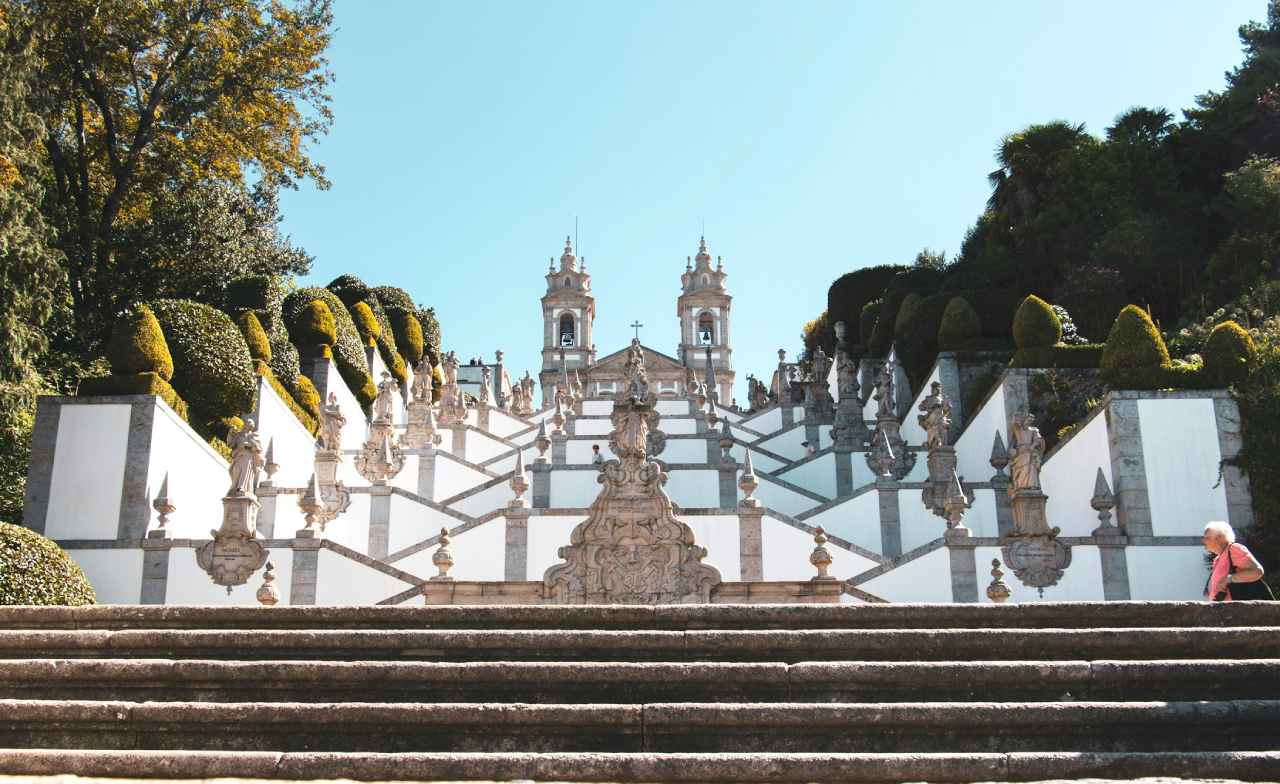
Braga and Guimarães are often combined into one day trip. Guimarães is the “birthplace of Portugal,” and has a beautifully preserved medieval old town, castle and Palace of the Dukes of Braganza. Braga is Portugal’s religious capital, is home to the Bom Jesus do Monte sanctuary with its famous zigzag baroque staircase and old funicular. Both are about an hour by train or you can join this organised Braga and Guimarães day trip.
Aveiro, the “Venice of Portugal,” is known for its canals and brightly painted moliceiro boats, plus the candy-striped houses of nearby Costa Nova, just 45 minutes by direct train.
Coimbra, halfway between Porto and Lisbon, is home to the historic University of Coimbra and its stunning Joanina Library. It’s about an hour on the high-speed Alfa Pendular, doable as a long day trip.
If you’re short on time, several tour operators combine Braga and Guimarães, or Aveiro and Costa Nova, into a single day. You can find day trips on Get Your Guide.
My Mini Porto Travel Guide
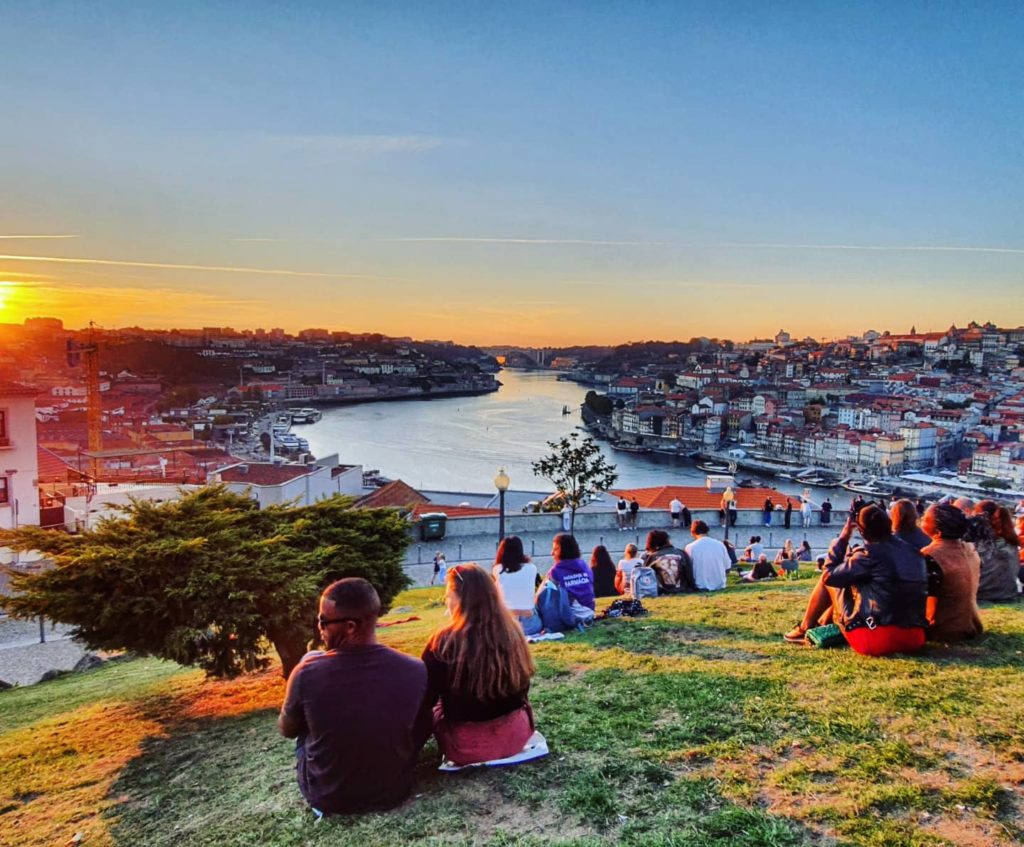
Before booking, here’s everything else you need to know: when to visit, how to get to and around Porto, where to stay, and my top travel tips.
When to Visit Porto
Spring (March to May) is one of my favourite times to be in Porto with pleasant temperatures (16-22°C), the gardens in bloom, and a city without summer crowds. You might catch some rain, but it’s a fair trade-off.
Summer (June to August) is peak season, with temperatures between 20-28°C, cooler than Lisbon thanks to the Atlantic breeze. The big draw is the legendary Festa de São João on 23 June (more below) so book accommodation well ahead if you’re visiting around then.
Autumn (September to early November) might be the best time to visit, especially for the Douro Valley, September is harvest season, and the terraced vineyards turn gold and red through October. Temperatures stay pleasant (13-24°C across the season), crowds thin out, and prices drop.
Winter (late November to February) is quiet, atmospheric and noticeably wetter than Lisbon, with temperatures between 5-14°C. The upside is lower prices, fewer crowds, and cosy restaurants full of hearty stews and port wine.
If you can time your trip for the night of 23 June, do it. São João Festival is Porto’s biggest party of the year. It’s a 600-year-old festival where the whole city grills sardines, drinks port and Super Bock, dances to folk music, and (most bizarrely) hits each other on the head with squeaky plastic hammers for good luck. There are fireworks over the Douro at midnight and celebrations carry on until a sunrise dip at Foz beach. Book accommodation months ahead, and note that many shops and museums close on 24 June to recover.
Getting to Porto
Most international visitors arrive by air into Porto Airport (OPO), just 11 km from the city centre. The metro (Violet Line) runs directly from the airport to Trindade station in around 30 minutes for about €2.75. Uber and Bolt cost around €15-20 into the centre, official taxis €25-30, and private transfers are available if you’d rather have someone waiting for you.
If you’re arriving by train, São Bento is right in the heart of the city (for regional trains from Guimarães, Braga and the Douro), while Campanhã, just outside the centre, handles intercity and international arrivals, including from Lisbon (2.5-3 hours on the scenic Alfa Pendular).
Getting Around Porto
Old town Porto is built on hills, arguably even more than Lisbon, so pack proper walking shoes with good grip; the historic centre is compact enough to explore mostly on foot, mixed with public transport for the steeper stretches.
Pick up an Andante Azul card (€0.60) from any metro station and top it up as you go. Single journeys start from €1.40, or get the Andante Tour 24h (€7.50) or 72h (€16) card for unlimited rides on the metro, buses and funicular. Note that the historic Tram 1, 18 and 22 aren’t covered by Andante so you’ll need to buy separate tickets from the driver (€3.50 single).
The Teleférico de Gaia cable car (€7 single, €10 return) links the Cais de Gaia riverfront to Jardim do Morro in about 5 minutes, with some of the best views in Porto. The Funicular dos Guindais connects the Ribeira to Batalha and is covered by Andante. Uber and Bolt both work well and are usually cheaper than taxis, especially for reaching Foz, Matosinhos or Serralves.
Where to Stay in Porto
Porto has accommodation to suit every budget, from luxury historic hotels to family-run guesthouses and creative hostels. To make the most of your time, base yourself in or near the historic centre.
Baixa and Aliados are my top recommendation for first-time visitors. These areas are central, well-connected and within walking distance of most major sights, with a good mix of hotels at every price point and generally flatter streets than elsewhere in the centre.
Ribeira is the most atmospheric area, with its colourful riverside houses and UNESCO-listed streets. It’s beautiful and Instagrammable, but noisy at night and full of stairs so it’s good if you want to be right in the heart of the action and don’t mind the hills.
Cedofeita and Bonfim have a more local, creative feel, with indie shops, cafés and a growing food scene. They’re a bit further from the main sights but well-connected by metro.
Vila Nova de Gaia sits across the river, with the port wine cellars on your doorstep and stunning views back at Porto. It’s slightly removed from the action but great for couples or anyone here primarily for the wine.
Foz do Douro is where the river meets the ocean with beaches, seafood restaurants and a relaxed, residential feel. Best for longer stays or repeat visitors after a quieter base.
Best Hotels in Porto
- $$$ The Yeatman – Spectacular 5 star wine hotel perched on the hillside in Vila Nova de Gaia with panoramic views over Porto, a Michelin-starred restaurant, vinothérapie spa, and infinity pool overlooking the Douro.
- $$ PortoBay Flores – Beautiful 5 star boutique hotel in a restored 16th-century palace in the heart of the historic centre, with an indoor pool, lush garden and elegant rooms.
- $ Hotel Carris Porto Ribeira – Charming 4 star hotel made up of five connected historic buildings right in the Ribeira, with a great location for exploring on foot.
- $ The Passenger Hostel – Stylish boutique hostel inside the stunning Sao Bento train station with a sociable vibe, both dorms and private rooms, and arguably the most beautiful hostel location in Europe.
My Top Porto Travel Tips
- Wear proper walking shoes. The hills and cobblestones are no joke, even for a short stay.
- Pack a light rain jacket, even in summer. Porto gets noticeably more rain than Lisbon year-round, and showers can roll in fast.
- Book major attractions in advance. Livraria Lello, Clérigos Tower, port cellar tours and Douro Valley day trips all benefit from booking ahead in peak season.
- Try a francesinha at least once. It’s outrageously rich, and you should still order one.
- Embrace the late dinner culture. Most restaurants don’t open until 7.30pm; if you’re hungry earlier, grab petiscos (Portuguese tapas) at a wine bar.
- Bring some cash. Smaller tascas, cafés and market stalls often prefer it. Look for Multibanco ATMs for lower withdrawal fees.
- Learn a few Portuguese words. Locals appreciate a bom dia, obrigado/a or por favor. There’s also Saúde! This is the Portuguese version of “cheers” and you’ll be using it a lot. Just don’t try Spanish, it’s a different language and can come across as rude.
And that’s a wrap! I hope you found my Porto itinerary useful and that it has helped you plan a trip to Portugal’s amazing second city. Hope you have an great time! Happy Travels 🙂