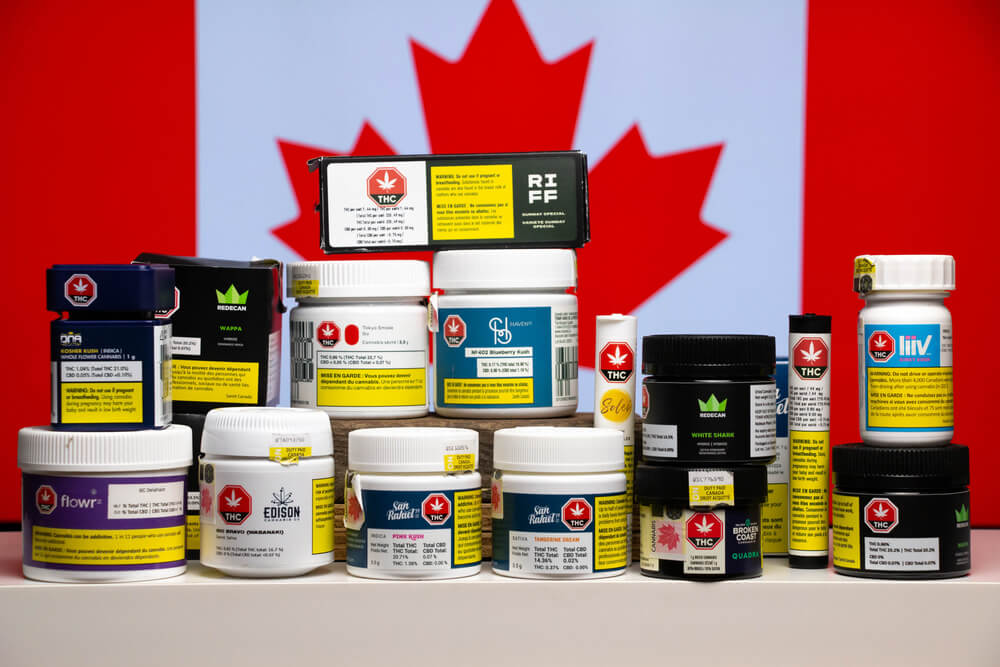
Canadian cannabis packaging regulations combine requirements set out in the federal Cannabis Act and Cannabis Regulations with detailed guidance published by Health Canada. The applicable requirements depend on the class and form of cannabis, the immediate container, any wrapper or outermost container, and whether multiple immediate containers are sold as a co-pack.
The federal requirements address child resistance, security features, contamination prevention, moisture protection, package appearance, bilingual labelling, THC and CBD information, health warnings, standardized symbols, quantity limits, and product-specific controls.
This guide focuses on cannabis products sold or distributed in Canada. It does not automatically apply to industrial hemp, cannabis intended for animals, drugs containing cannabis, or shipping containers used only to transport packaged cannabis products. Provincial and territorial laws and distribution requirements may also apply and should be evaluated separately.
The following information reflects Canadian federal law and Health Canada guidance available as of August 25, 2026. Cannabis requirements are time-sensitive and should be rechecked before they are applied.
This guide provides general information and is not legal advice. Licence holders remain responsible for confirming that their products, packaging, labels, testing information, and operating procedures comply with current federal, provincial, and territorial requirements.
Review Health Canada’s current Packaging and Labelling Guide for Cannabis Products and Part 7 of the Cannabis Regulations when developing or revising a cannabis package.
Canadian Cannabis Packaging Requirements at a Glance
A federal licence holder must not sell or distribute a cannabis product unless the applicable packaging and labelling requirements in Part 7 of the Cannabis Regulations have been satisfied.
For cannabis products other than cannabis plants and cannabis plant seeds, the immediate container must generally:
- Prevent contamination of the cannabis.
- Keep dried cannabis dry.
- Include a security feature that provides reasonable assurance that the container has not been opened before the consumer receives it.
- Meet the applicable child-resistant packaging requirements set out in the Food and Drug Regulations.
- Contain no more than the equivalent of 30 grams of dried cannabis.
- Be opaque or translucent, although dried cannabis and fresh cannabis may use transparent immediate containers under the current rules.
Cannabis plants and cannabis plant seeds are subject to separate container requirements and are excluded from the general child-resistant and security-feature provisions applying to other cannabis products.
The complete packaging and labelling system must also account for:
- Plain-packaging restrictions affecting colours, images, textures, branding, coverings, wrappers, and other design features.
- Prohibitions against packaging or representations that could appeal to young persons.
- Required information in both English and French.
- The mandatory health warning message.
- The standardized cannabis symbol when the product’s THC concentration exceeds the regulatory threshold.
- Total THC and total CBD information.
- The product class, brand name, quantity, lot number, packaging date, and licence-holder information.
- Product-specific THC limits and dispensing controls.
- Food-grade requirements for applicable edible and ingestible cannabis packaging.
- Requirements for wrappers, outermost containers, inserts, leaflets, peel-back or accordion panels, and barcodes.
- The conditions governing co-packs containing multiple immediate containers.
Packaging functions should be evaluated separately. A child-resistant feature does not automatically satisfy the security-feature requirement, contamination controls, moisture protection, plain-packaging rules, or labelling requirements.
Multilayered packaging should be reviewed as a complete system. The immediate container, wrapper, covering, outermost container, label, closure, liner, seal, panel, insert, and product can each be subject to different requirements.
Health Canada does not review or preapprove cannabis packages or labels. Licence holders are responsible for determining that the finished packaging and labelling system complies before the product is sold or distributed.
Immediate-Container Requirements
Every cannabis product sold or distributed in Canada must be packaged in an immediate container. The immediate container is the container in direct contact with the cannabis or cannabis accessory. When a wrapper is in direct contact with the product, the immediate container is the container in direct contact with that wrapper.
For cannabis products other than cannabis plants and cannabis plant seeds, the immediate container must:
- Prevent contamination of the cannabis.
- Keep dried cannabis dry.
- Include the required security feature.
- Meet the applicable child-resistant packaging requirements.
- Contain no more than the equivalent of 30 grams of dried cannabis.
- Be opaque or translucent unless an exception applies.
Dried cannabis and fresh cannabis may use transparent immediate containers under the current rules. Cannabis plants and cannabis plant seeds are subject to separate requirements. A container for cannabis plant seeds must keep the seeds dry, while a container for cannabis plants cannot contain more than four plants or plants that are budding or flowering at the time of packaging.
Additional product-specific requirements apply to edible cannabis, cannabis extracts, cannabis topicals, and certain cannabis accessories. For example, applicable immediate containers and wrappers for edible or ingestible products must satisfy the relevant food-grade packaging requirements.
The complete container should be evaluated for product compatibility, moisture and barrier performance, closure application, filling conditions, and expected storage and transportation. Meeting the child-resistant requirement does not establish that the package prevents contamination, keeps dried cannabis dry, or performs appropriately with the intended product.
Child-Resistant Cannabis Packaging
Except for cannabis plants and cannabis plant seeds, the immediate container must meet the child-resistant packaging requirements set out in subsections C.01.001(2) through (4) of the Food and Drug Regulations.
Child-resistant does not mean child-proof. A package should not be described as compliant solely because it is difficult to open, uses a familiar closure, or resembles another package that has been tested.
Licence holders should confirm:
- Whether the documentation applies to the exact container-and-closure configuration.
- Whether the package was evaluated as reclosable or single-use.
- Which container size, material, closure, liner, seal, and other components were included.
- How the container must be filled, assembled, closed, and sealed.
- Whether opening and closing instructions are required.
- Whether the product could interfere with the closure or child-resistant mechanism.
- Whether the package must maintain its child-resistant performance through repeated use.
Changing the container, closure, liner, seal, material, or any other component may result in a package configuration not covered by the original testing or documentation.
A wrapper does not replace the required immediate container. Wrappers may be used only when needed to maintain the quality or stability of the cannabis product, and they must remain inside the immediate container. The wrapper itself is not required to be child-resistant.
Security Features
The immediate container must also have a security feature that provides reasonable assurance to consumers that the package has not been opened before they receive it. Health Canada identifies a security seal as one possible example.
Child resistance and the security feature are separate requirements:
- Child resistance is intended to restrict access by young children.
- The security feature provides evidence or assurance concerning prior opening.
A child-resistant closure does not necessarily provide evidence that a package has not been opened. Similarly, a seal, band, film, or other security feature does not automatically make a package child-resistant.
The security feature may involve the closure, liner, seal, band, film, or another package component, depending on the configuration. Businesses should confirm that the selected feature performs as intended after filling and assembly and that it does not interfere with the child-resistant mechanism or other package requirements.
Plain-Packaging and Design Restrictions
The Cannabis Act and Cannabis Regulations require plain packaging and labelling and restrict features that could make a cannabis product appealing to young persons.
A package or label must not:
- Use a testimonial or endorsement.
- Depict a person, character, or animal, whether real or fictional.
- Associate the product or a brand element with a way of life involving glamour, recreation, excitement, vitality, risk, or daring.
- Include a brand element or other representation that could appeal to young persons.
- Contain false, misleading, or deceptive information.
- Create an unauthorized impression that the product provides health or cosmetic benefits.
- Associate the cannabis product with an alcoholic beverage, tobacco product, or applicable vaping product.
The Regulations also restrict the appearance and functionality of containers, coverings, wrappers, labels, and peel-back or accordion panels. Depending on the package component, the restrictions address:
- Images and brand elements.
- Metallic and fluorescent colours or inks.
- Decorative embossing, ridges, bulges, and other raised features.
- Hidden or technologically activated features.
- Features designed to change the package’s surface area.
- Scent-emitting or sound-emitting features.
- The use, placement, size, and appearance of optional brand elements.
- The contrast required for the health warning message and standardized cannabis symbol.
Features needed to open or close a package, or to assist a person with a visual impairment, may be permitted even when similar decorative features would otherwise be restricted.
The current rules provide more design flexibility than the original federal framework. Among other changes:
- A container and its lid or cap may use different colours.
- Different package surfaces and a peel-back or accordion panel may use different colours, provided each applicable surface remains one uniform colour and satisfies the other colour requirements.
- Dried cannabis and fresh cannabis may use transparent immediate containers.
- Containers for dried cannabis, fresh cannabis, and cannabis plant seeds may use qualifying cut-out windows.
- Peel-back and accordion panels may provide additional labelling space.
- Qualifying inserts and leaflets may accompany a product.
- A container may display up to two compliant barcodes, including QR codes.
These options remain subject to the Cannabis Act’s prohibitions, the detailed packaging and labelling rules, and the restrictions concerning appeal to young persons. A transparent container, cut-out window, QR code, insert, or peel-back panel is not automatically compliant merely because the format is now permitted.
Packaging artwork and structure should therefore be reviewed together. The container shape, colour, finish, closure, window, label, typography, brand name, optional brand element, barcode, panel, insert, and product presentation can combine to create an overall appearance that requires further review.
Review Health Canada’s current Packaging and Labelling Guide for Cannabis Products and its summary of the streamlining changes when evaluating an immediate container, security feature, child-resistant configuration, or package design.
Required Canadian Cannabis Label Information
The Cannabis Regulations prescribe what information must appear on a cannabis label, where that information must be placed, and how it must be presented.
Required label information must generally be:
- Presented in both English and French.
- Clear, prominently displayed, and legible under normal conditions of purchase and use.
- Printed on or securely applied to the package.
- Displayed against a white background using black type.
- Set in a regular-weight, standard sans serif typeface without italics.
- At least 6 points in size, subject to the special requirements for the health warning message, standardized cannabis symbol, brand name, and THC and CBD information.
- Provided with the prescribed spacing, leading, and contrast.
The exact information depends on the class and form of cannabis. Recurring requirements generally include:
- The licence holder’s name, telephone number, and email address.
- The applicable class of cannabis.
- A lot number.
- Recommended storage conditions.
- The packaging date.
- Net weight, net volume, or the number of plants or seeds, as applicable.
- Total THC and total CBD information.
- Product-specific ingredients, allergens, nutrition information, intended-use information, or dispensing information when applicable.
- A durable-life or expiry date when required or permitted by the applicable product provision.
The packaging date on the label may differ from the actual packaging date when the product is packaged within seven days before or after the stated date. A packaging date is not required on the label of an outermost container used for a qualifying co-pack.
A general label template should not be reused across different cannabis classes or product forms without confirming the applicable requirements. Dried cannabis, fresh cannabis, extracts, topicals, edibles, plants, and plant seeds have different labelling provisions.
Principal Display Panel Requirements
Every cannabis product label must have a principal display panel on the surface visible under normal or customary conditions of purchase or use.
The principal display panel must generally include:
- The standardized cannabis symbol when required.
- The applicable health warning message.
- Total THC and total CBD information.
- The product’s brand name.
- No more than one additional optional brand element.
- The international radiation symbol and applicable statement when required for irradiated edible cannabis.
The requirements apply to labels on immediate containers and outermost containers unless a specific exception provides otherwise. When separate principal display panels are used for English and French information, each panel must independently satisfy the applicable requirements.
Standardized Cannabis Symbol
The standardized cannabis symbol must appear on the principal display panel when the cannabis product contains more than 10 micrograms of THC per gram, taking into account the potential conversion of THCA into THC.
The symbol must:
- Use the official artwork and prescribed colours.
- Measure at least 1.27 centimetres by 1.27 centimetres.
- Appear within the upper-left 25% of the principal display panel.
- Include the required white border.
- Remain proportionate if its size is increased.
- Be oriented so that the “THC” text is readable from left to right under normal display conditions.
A package must not display another image, mark, sign, or symbol that resembles or could be mistaken for the standardized cannabis symbol.
The symbol may be used voluntarily on a product at or below the concentration threshold. Health Canada recommends considering voluntary use when a product contains another intoxicating cannabinoid or has a low THC concentration but still contains a potentially intoxicating total quantity of THC.
Cannabis Health Warning Messages
The applicable cannabis health warning message must appear on the principal display panel in the prescribed yellow box. The warning must use the required English and French wording, typography, spacing, border, and attribution.
Health warning messages are product-specific. The applicable messages must be rotated across each container type and brand name packaged during a year so that, to the extent possible, each applicable message appears on an equal number of containers.
Health Canada updated the incorporated cannabis health warning messages on March 12, 2025. The 12-month transition period has ended. Cannabis products newly produced and labelled after March 12, 2026, must use the current warning messages rather than the previous versions.
Existing products labelled with the previous messages during the transition period may continue to be sold or distributed. Businesses should therefore distinguish between applying an old message to a newly produced product and selling existing inventory that was properly labelled during the transition.
Because the warning document is incorporated by reference and may be updated, label-control procedures should include a process for:
- Confirming which messages apply to the product.
- Checking the current version of each message.
- Rotating the applicable warnings.
- Updating artwork within the permitted transition period.
- Preventing obsolete artwork from being applied to newly produced products after a transition period ends.
Review Health Canada’s current Cannabis Health Warning Messages before approving label artwork.
Total THC and Total CBD Information
Information on total THC and total CBD must appear on the principal display panel. The information must be presented in bold black type, use a type size of at least 6 points, and be separated from other information by the prescribed spacing.
The required units and statements depend on:
- The class of cannabis.
- Whether the product is in discrete units.
- Whether dried or fresh cannabis is intended for inhalation.
- Whether a cannabis extract is intended for inhalation or another use.
- Whether the package includes an integrated dispensing mechanism.
- Whether the product is an edible, extract, or topical.
Depending on the product, the label may need to state:
- Total THC and total CBD per unit.
- Total THC and total CBD per activation.
- Total THC and total CBD for the entire container.
- Total THC and total CBD as a concentration in milligrams per gram.
The current framework generally requires the total amounts or concentrations of THC and CBD. Optional cannabinoid information may be added when it is accurate, properly formatted, and does not create a false, misleading, or deceptive impression.
The labelled THC and CBD values must be based on the applicable cannabinoid testing. The calculation of total THC accounts for the potential conversion of THCA into THC, while total CBD accounts for the potential conversion of CBDA into CBD.
The use of a less-than symbol should not mislead consumers about the product’s cannabinoid content. Product testing, calculation methods, label values, and finished artwork should be reviewed together before the product is released.
Brand Name and Optional Brand Element
The cannabis product’s brand name must appear on the principal display panel. It cannot use metallic or fluorescent colours, and its type size cannot exceed the type size used for the health warning message.
The label may display one additional brand element, such as a logo or slogan, on the principal display panel. Its colour, size, and surface area are restricted.
If the additional brand element is an image or graphic, its surface area generally cannot exceed that of the standardized cannabis symbol. When the symbol is not required because the product is below the THC concentration threshold, a different size limitation applies.
Permission to display a brand name and one additional brand element does not override the prohibitions concerning youth appeal, testimonials, depictions of people or characters, lifestyle associations, misleading information, or unauthorized health and cosmetic claims.
Review the current Health Canada packaging and labelling guide before approving a principal display panel or complete label.
Product-Specific Packaging and THC Limits
Canadian packaging and labelling requirements depend on the class, form, intended use, and serving configuration of the cannabis product.
The applicable limits take into account the potential conversion of THCA into THC. These limits are regulatory ceilings rather than formulation or labelling targets. Licence holders must also account for the applicable variability limits, cannabinoid testing, and the accuracy of the finished label.
Before selecting a package, businesses should confirm:
- The applicable class of cannabis.
- Whether the product is in discrete units.
- Whether it is intended for inhalation, ingestion, topical application, or another permitted use.
- The total amount and concentration of THC in the immediate container.
- The amount of THC in each unit or dispensed activation when applicable.
- Whether food-grade packaging requirements apply.
- Which product-specific label information is required.
Dried Cannabis, Fresh Cannabis, and Pre-Rolls
An immediate container generally cannot contain more than the equivalent of 30 grams of dried cannabis.
The immediate container for dried cannabis must keep the product dry. Dried and fresh cannabis may use a transparent immediate container or a qualifying cut-out window under the current rules, provided that the package continues to satisfy all other design, performance, and labelling requirements.
Labels for dried or fresh cannabis may require different THC and CBD statements depending on whether the product:
- Is in discrete units.
- Is intended for inhalation.
- Is not intended for inhalation.
- Is packaged as a single quantity rather than separate units.
For example, a package of pre-rolls may need to identify the number of discrete units, the net weight of cannabis in each unit, the total net weight, the intended use, and the applicable total THC and total CBD information.
The container, closure, moisture barrier, security feature, child-resistant mechanism, product quantity, unit configuration, and label should be evaluated together.
Edible Cannabis
Subject to the applicable variability limits, an immediate container of edible cannabis cannot contain more than 10 milligrams of THC.
When the edible contains multiple discrete units, the total THC in the immediate container remains subject to the 10-milligram limit. The label must identify the total THC and total CBD in the container and, when applicable, the amount per unit.
Edible cannabis packaging must also account for:
- Child resistance.
- The required security feature.
- Prevention of contamination.
- Food-grade requirements for the immediate container.
- Food-grade requirements for any wrapper in direct contact with the edible.
- Net weight for solid products or net volume for non-solid products.
- The number of discrete units when applicable.
- A complete ingredient list.
- Sources of food allergens or gluten and added sulphites.
- The prescribed nutrition facts table.
- The product’s common name.
- Irradiation information when applicable.
- A durable-life date when the product’s durable life is 90 days or less.
An expiry date is not used for edible cannabis. When the product’s durable life is 90 days or less, the label must use the required “Best before” presentation. A durable-life date may be included voluntarily when the durable life exceeds 90 days.
Packaging development should therefore account for formulation, unit configuration, food-contact materials, shelf-life information, ingredient and allergen disclosures, nutrition information, bilingual text, and available label space before finalizing package dimensions.
Cannabis Extracts
An immediate container of cannabis extract cannot contain more than 1,000 milligrams of THC.
Each discrete unit intended for ingestion or nasal, rectal, or vaginal use cannot contain more than 10 milligrams of THC, subject to the applicable requirements. The label must present the applicable THC and CBD information per unit, per activation, by concentration, or for the complete container.
Additional controls apply to cannabis extracts that are not in discrete units:
- The container must not allow the extract to be easily poured or consumed as a beverage.
- A liquid cannabis extract cannot exceed 90 millilitres.
- A liquid extract containing more than 10 milligrams of THC that is not intended for inhalation must use an integrated dispensing mechanism.
- The dispensing mechanism cannot dispense more than 10 milligrams of THC per activation.
A pump, metered spray, or another integrated mechanism may be used when it satisfies the applicable dispensing requirement. A separate measuring accessory should not be assumed to replace a mechanism that must be integrated into the package.
Packaging and labels for cannabis extracts may also need to account for:
- The ingredient list.
- Applicable allergen disclosures.
- The product’s identity by common name or function.
- Its intended use.
- The number and net weight of discrete units when applicable.
- The quantity of THC and CBD delivered per activation.
- An expiry date for a stability period.
- Food-grade requirements for wrappers that come into direct contact with an extract intended for ingestion.
Representations concerning certain confectionery, dessert, soft-drink, and energy-drink flavours are restricted for cannabis extracts. A flavour name, illustration, brand element, or coordinated package design should be reviewed before it is used.
Cannabis Topicals
An immediate container of cannabis topical cannot contain more than 1,000 milligrams of THC.
The label must identify total THC and total CBD using the applicable amount or concentration and must include:
- A complete ingredient list.
- The product’s identity by common name or function.
- Its intended use.
- Net weight.
- The number and weight of discrete units when applicable.
- An expiry date for a stability period.
Ingredients for cannabis topicals must generally use the applicable International Nomenclature of Cosmetic Ingredients names, European Union technical names, or chemical names specified by the Regulations.
A topical remains subject to the child-resistant, security-feature, contamination-prevention, plain-packaging, health-warning, bilingual-labelling, and other requirements applying to cannabis products. A topical container should not be assumed to qualify merely because it resembles ordinary cosmetic packaging.
Cannabis Plants and Plant Seeds
Cannabis plants and cannabis plant seeds are excluded from the general child-resistant and security-feature requirements applying to other cannabis products, but they remain subject to separate packaging and labelling provisions.
At the time of packaging:
- A cannabis plant cannot be budding or flowering.
- A container cannot hold more than four cannabis plants.
- A container for cannabis plant seeds must keep the seeds dry.
- The seed container cannot hold more than the equivalent of 30 grams of dried cannabis.
Labels must include the applicable class, plant or seed count, licence-holder information, lot number, storage conditions, packaging date, warning, and other required information.
These exceptions should apply only to qualifying cannabis plants and seeds. A package developed for plants or seeds should not automatically be used for another class of cannabis.
Review Health Canada’s current Packaging and Labelling Guide for Cannabis Products when determining a product’s packaging, THC, dispensing, food-grade, or labelling requirements.
Co-Packing Multiple Cannabis Containers
The current Cannabis Regulations permit multiple immediate containers to be sold together inside an outermost container as a co-pack. This option is available for all classes of cannabis except cannabis plants and cannabis plant seeds.
A co-pack is essentially a multi-pack of the same product. The cannabis in the immediate containers must have consistent product properties. Co-packing should not be treated as a general pathway for combining unrelated products, different cannabis classes, or an assortment of independently packaged products.
Each immediate container inside the co-pack must:
- Meet the applicable child-resistant requirements.
- Include the required security feature.
- Satisfy the contamination, moisture, and other performance requirements.
- Meet the plain-packaging and design requirements.
- Carry a compliant immediate-container label.
- Remain within the applicable maximum THC quantity.
- Remain within the other product-specific limits.
For example, each immediate container of edible cannabis remains subject to the 10-milligram THC limit, while each immediate container of cannabis extract or cannabis topical remains subject to the 1,000-milligram limit.
The outermost container must:
- Contain only one class of cannabis.
- Contain no food.
- Contain no more than the equivalent of 30 grams of dried cannabis in total.
- Contain the same number of immediate containers stated on its label.
- Satisfy the applicable plain-packaging and labelling requirements.
The outermost container does not need to be child-resistant. This exception does not remove the child-resistant requirement from any immediate container inside the co-pack.
Co-Pack Label Information
The outermost label must identify the number of immediate containers inside the co-pack and provide either:
- The lot number of each immediate container.
- A master lot number that can be traced through the licence holder’s records to every immediate-container lot number.
A master lot number must still allow consumers and retailers to identify a product affected by a recall.
The outermost label must also include the applicable:
- Brand name.
- Cannabis class.
- Licence-holder information.
- Recommended storage conditions.
- Standardized cannabis symbol.
- Health warning message.
- Total THC and total CBD information.
- Net weight or net volume.
- Ingredients, allergens, and nutrition information.
- Product identity and intended use.
- Product-specific information required for the cannabis class and form.
The outermost label’s weight, THC, and CBD information generally refers to the complete co-pack. Depending on the product, it may also need to identify the net weight or cannabinoid content of each immediate container or discrete unit.
The outermost label does not need to state the packaging date of every immediate container. A packaging date may be included voluntarily.
Health Canada recommends identifying the package as a “multi-pack” using the applicable label formatting. Licence holders should also confirm the separate federal excise-stamp requirements that apply to co-packed cannabis products.
The immediate-container labels and outermost label should be developed together. Adding an outer carton or other container after the immediate-container artwork has been approved can introduce new requirements for quantity, traceability, cannabinoids, design, and label space.
Labelling Options When Space Is Limited
The Canadian framework permits peel-back or accordion panels, barcodes, QR codes, inserts, and leaflets. These options can provide additional space, but they do not eliminate the information that must remain on the physical package or label.
Peel-Back and Accordion Panels
A qualifying peel-back or accordion panel may be applied to an immediate container to provide space for required information.
The panel must:
- Be resealable.
- Withstand repeated opening and closing.
- Remain attached during customary use.
- Not display a brand element.
- Present information using the formatting required for a label.
The exterior label must include a statement directing the consumer to the information inside the panel, such as “lift panel.” A qualifying black-and-white instructional image may also show how to open it.
Certain required information may appear on either the panel or the exterior display surface, including:
- The cannabis class.
- Recommended storage conditions.
- The packaging date.
- Net weight or net volume.
- Net weight per discrete unit.
- An applicable expiry or durable-life date.
- Ingredients and allergen information.
- The nutrition facts table.
- THC and CBD quantities dispensed per activation.
Other information must remain on the exterior display surface, including:
- The licence holder’s contact information.
- The lot number.
- The brand name.
- The number of discrete units when applicable.
- The required child-safety warning.
- The cannabis health warning message.
- The standardized cannabis symbol.
- Total THC and total CBD information.
- The product identity or function when applicable.
- The intended use when applicable.
A peel-back panel does not provide unrestricted design space. The panel remains subject to the applicable colour, image, texture, formatting, youth-appeal, and promotional restrictions.
Barcodes and QR Codes
A cannabis container may display up to two barcodes, including QR codes. Each barcode must:
- Be printed in black and white.
- Appear only once on the container.
- Satisfy the applicable placement and design requirements.
A QR code may direct consumers to additional information such as:
- A Certificate of Analysis.
- A terpene profile.
- Additional cannabinoid or composition information.
- Product-use information.
- Traceability or inventory information.
A QR code does not replace any information required on the physical label. Information available through the code remains subject to the Cannabis Act and Cannabis Regulations, including the restrictions concerning youth appeal, testimonials, health or cosmetic claims, dietary claims, and associations with alcohol, tobacco, or vaping products.
The destination page should be reviewed whenever the physical package is reviewed. A compliant printed QR code can still lead to noncompliant digital content.
Inserts and Leaflets
A cannabis package may include or be accompanied by one or more inserts or leaflets, provided they do not pose a contamination risk.
Information on an insert or leaflet must generally be presented in both English and French. Inserts and leaflets are not subject to every formatting restriction in Part 7 of the Cannabis Regulations, but they remain subject to the broader packaging, labelling, and promotional prohibitions.
An insert or leaflet must not:
- Appeal to young persons.
- Include a testimonial or endorsement.
- Depict a person, character, or animal.
- Use prohibited lifestyle associations.
- Contain false, misleading, or deceptive information.
- Make an unauthorized health or cosmetic claim.
- Associate the product with alcohol, tobacco, or applicable vaping products.
- Use product-specific claims or representations prohibited for extracts or edibles.
An insert may provide factual information about ingredients, cannabinoids, terpenes, product characteristics, use, or the business. It does not replace the information the Regulations require to be on the label or on a qualifying peel-back or accordion panel.
Businesses should evaluate whether an extra panel, insert, leaflet, wrapper, or outer container is necessary. Additional components may create more space but also increase material use, assembly steps, artwork control requirements, and the number of elements that must be reviewed.
Review the co-pack, panel, barcode, QR-code, insert, and leaflet provisions in Health Canada’s current Packaging and Labelling Guide for Cannabis Products before approving a multilayer package or space-limited label.
Responsible Cannabis Packaging Materials in Canada
The federal cannabis packaging requirements reviewed for this guide do not prescribe a particular packaging material or establish a universal recycled-content requirement for every cannabis package.
Health Canada encourages environmentally sound packaging approaches when all applicable requirements are met. The Regulations permit materials other than plastic and provide options such as wrappers and peel-back labels that may help businesses manage packaging material and label space.
Separate provincial, territorial, municipal, waste management, recycling, and producer responsibility requirements may also apply. Those obligations should be evaluated independently from the federal requirements for an individual cannabis package.
A Canadian cannabis package may incorporate post-consumer recycled plastic, reclaimed ocean-bound plastic, plant-based materials, recycled glass, metal, paperboard, or other responsible materials when the complete packaging system satisfies the applicable regulatory and product-performance requirements.
When comparing material options, businesses should consider:
- The amount and source of material used.
- The use of virgin, recycled, reclaimed, or plant-based inputs.
- Product and material compatibility.
- Contamination prevention and moisture protection.
- Barrier and seal performance.
- Whether child-resistant documentation covers the exact package configuration.
- How the required security feature will be incorporated.
- Whether food-grade requirements apply.
- The number and type of separate packaging components.
- Whether the package can realistically be reused, recycled, or otherwise recovered.
- The collection and recovery systems available where the product will be sold.
- Whether labels, inks, liners, seals, or decorations affect the intended recovery pathway.
- The evidence supporting environmental claims.
Terms such as recyclable, recycled, reclaimed, plant-based, biodegradable, compostable, reusable, and plastic-free are not interchangeable. Each describes a different material attribute or end-of-life pathway.
Environmental claims can appear through words, images, symbols, or the overall presentation of a product and package. Claims should be truthful, specific, and supported by appropriate evidence or testing. Businesses should consider both the literal wording and the overall impression created by the package as a whole.
Review the Competition Bureau’s current Environmental Claims and Greenwashing Guidance before making or approving environmental representations.
A responsible material does not make an otherwise noncompliant package acceptable. The finished system must still satisfy the applicable child-resistant, security-feature, contamination, moisture, plain-packaging, labelling, quantity, and product-specific requirements.
Manufacturing origin also does not determine compliance or environmental performance. Origin may affect lead times, freight, traceability, availability, and sourcing strategy, but it does not, by itself, establish that a package complies with Canadian law or has a lower environmental impact.
Choosing Cannabis Packaging for the Canadian Market
Start with the cannabis product rather than the container. The product’s class, form, composition, THC content, intended use, unit configuration, and sales pathway determine which packaging and labelling requirements apply.
Before selecting a package, establish:
- The applicable class of cannabis.
- Whether the product is in discrete units.
- Whether the product is intended for inhalation, ingestion, topical application, or another permitted use.
- The total quantity of cannabis expressed as the dried-cannabis equivalent.
- The total THC in the immediate container.
- The THC delivered per unit or activation when applicable.
- Whether the product requires an integrated dispensing mechanism.
- Whether food-grade packaging requirements apply.
- Whether the immediate container must be opaque or translucent or may be transparent.
- Whether a cut-out window is permitted.
- Whether the exact container-and-closure configuration has appropriate child-resistant documentation.
- How the security feature will be incorporated.
- Whether the package prevents contamination and provides the required moisture protection.
- Whether the product is compatible with the container, closure, liner, seal, and wrapper.
- How much space is needed for the bilingual label, health warning, standardized symbol, cannabinoid information, and product-specific disclosures.
- Whether a peel-back or accordion panel is needed.
- Whether an insert, leaflet, barcode, or QR code will be used.
- Whether multiple immediate containers will be sold as a qualifying co-pack.
- Whether federal excise-stamp requirements affect the package configuration.
- Which provincial or territorial requirements apply to the intended market.
- Which material and manufacturing priorities are relevant to the project.
When comparing suppliers and packaging options, businesses should also consider:
- Product specifications and certification documents.
- Samples and filled-package testing.
- Closure application and seal requirements.
- Food-contact and material documentation.
- Label size, shape, and application method.
- Compatibility with automated or manual filling equipment.
- Minimum order quantities.
- Customization and production lead times.
- In-stock availability and reorder planning.
- Cross-border freight and inventory requirements.
- The evidence supporting performance and environmental claims.
Packaging development should involve the container, closure, security feature, label, product, and filling process from the beginning. Selecting a container before confirming label space, product classification, THC limits, or dispensing requirements can lead to redesigns later.
Sana Packaging offers child-resistant packaging options for flower, pre-rolls, cannabis extracts and concentrates, edibles, and other cannabis products. Explore Sana Packaging products or review options with the sales team. In-stock blank products ship the next business day, while minimum order quantities and lead times for custom packaging vary by product and decoration method.
A packaging supplier can provide product specifications, child-resistant documentation, samples, and guidance on customization. The licence holder remains responsible for confirming that the complete packaging, labelling, testing, excise, and distribution system complies with current Canadian requirements.
Contact Sana Packaging to discuss your product, order volume, customization needs, and Canadian packaging requirements.
Frequently Asked Questions About Canadian Cannabis Packaging
What are the primary cannabis packaging requirements in Canada?
For most cannabis products, the immediate container must prevent contamination, meet the applicable child-resistant requirements, include a security feature providing reasonable assurance that it has not been opened, and contain no more than the equivalent of 30 grams of dried cannabis. A container for dried cannabis must also keep the product dry.
The complete package must satisfy the applicable plain-packaging, bilingual-labelling, health-warning, cannabinoid-information, quantity, and product-specific requirements. Cannabis plants and plant seeds are subject to separate rules.
Does Canadian cannabis packaging have to be child-resistant?
Except for cannabis plants and cannabis plant seeds, the immediate container must meet the applicable child-resistant packaging requirements in the Food and Drug Regulations.
The documentation should cover the exact container-and-closure configuration being used. Changing a closure, liner, seal, container size, material, or another component may result in a configuration not covered by the original testing or documentation.
Does Canada require tamper-evident cannabis packaging?
The Cannabis Regulations use the term “security feature.” Except for cannabis plants and plant seeds, the immediate container must have a feature that provides reasonable assurance to consumers that the container has not been opened before they receive it.
Child resistance and the security feature are separate requirements. A child-resistant closure does not necessarily show whether a package was previously opened, and a seal, band, film, or other security feature does not automatically make the package child-resistant.
Can cannabis packaging be transparent in Canada?
Dried cannabis and fresh cannabis may use transparent immediate containers under the current rules. Qualifying cut-out windows may also be used for dried cannabis, fresh cannabis, and cannabis plant seeds.
Other cannabis products generally require opaque or translucent immediate containers. Permission to use transparency or a window does not override the requirements concerning child resistance, security features, contamination, moisture protection, package design, labelling, or appeal to young persons.
What information must appear on a Canadian cannabis label, and does Health Canada preapprove labels?
Required information generally includes the licence holder’s contact information, cannabis class, lot number, storage conditions, packaging date, product quantity, total THC and total CBD, brand name, applicable health warning, and standardized cannabis symbol when required.
Additional information depends on the product. Ingredients, allergens, nutrition information, intended use, dispensing information, expiry dates, durable-life dates, unit quantities, and irradiation information may also be required.
Required information must generally appear in both English and French and follow the prescribed placement, type, colour, spacing, and legibility rules. Health Canada does not review or preapprove cannabis packages or labels. The licence holder is responsible for confirming compliance before selling or distributing the product.
How much THC may a Canadian edible, extract, or topical contain?
Subject to the applicable variability limits:
- An immediate container of edible cannabis cannot contain more than 10 milligrams of THC.
- An immediate container of cannabis extract cannot contain more than 1,000 milligrams of THC.
- An immediate container of cannabis topical cannot contain more than 1,000 milligrams of THC.
Additional limits apply to certain extract units and dispensing mechanisms. For example, a qualifying integrated mechanism cannot dispense more than 10 milligrams of THC per activation. These limits are regulatory ceilings and should not be treated as formulation or labelling targets.
Does Canada allow cannabis co-packs or multi-packs?
Yes. Multiple immediate containers may be sold together in an outermost container as a qualifying co-pack for cannabis classes other than plants and plant seeds.
Each immediate container must independently satisfy the applicable child-resistant, security-feature, performance, quantity, design, and labelling requirements. The outermost container does not have to be child-resistant, but it must meet its own plain-packaging and labelling requirements, contain only one cannabis class, and remain within the 30-gram dried-cannabis-equivalent limit.
The cannabis in the immediate containers must have consistent product properties. A co-pack should not be treated as a general assortment of unrelated products or cannabis classes.
Does Canada require sustainable, biodegradable, or recycled cannabis packaging?
The federal cannabis packaging requirements reviewed for this guide do not prescribe a particular packaging material or establish a universal recycled-content requirement.
Businesses may use post-consumer recycled plastic, reclaimed ocean-bound plastic, plant-based materials, recycled glass, metal, paperboard, or other responsible materials when the complete package satisfies all applicable regulatory and performance requirements.
Environmental claims should be accurate, specific, and supported by appropriate evidence or testing. Recyclable, recycled, reclaimed, plant-based, biodegradable, compostable, reusable, and plastic-free describe different attributes and should not be used interchangeably.
Official Canadian Cannabis Packaging Sources
Cannabis laws, regulations, incorporated documents, and guidance can change. Businesses should confirm that they are consulting the current version of every applicable source, including:
This guide provides general information and is not legal advice. Licence holders and other regulated businesses should review current federal, provincial, and territorial requirements and consult qualified compliance or legal professionals before manufacturing, packaging, labelling, distributing, or selling a cannabis product.