Episode 46: What Is The Best Method for Language Learning for Travel? – The Wandering Daughter

In this episode of the Worldschooling Q&A Podcast, Astrid and Clint answer the question of what the best method is for language learning for travel.
Worldschooling Q&A Podcast – Episode 46
Hosts: Astrid & Clint, creators of The Wandering Daughter
Title: Episode 46: What’s the best method for language learning for travel?
This post may contain affiliate links. That means I may receive a small commission if you click on the link and purchase something. But don’t worry, this will not result in any extra costs to you.
Worldschooling podcast episode summary
In this episode, we dig into a question we get asked constantly: what actually works for language learning for travel? Before we get into methods, we talk about why it matters at all. For us, language learning for travel is less about fluency and more about showing respect and humility to the places we visit.

We have spent four years traveling full time, and language learning for travel has been part of nearly every country we have lived in. From Indonesia to Spain to Mexico, we have leaned on different tools depending on how long we were staying and what our kids needed.
We walk through the practical side of language learning for travel: the apps we actually use, the podcasts we listen to before a trip, the books and phrasebooks we pack, and the in-person classes that became part of our weekly routine. We also talk about movies, restaurants, and tours as everyday practice.

Worldschooling consultations
Meet with Clint and Astrid for personalized help with your worldschooling plan.
This episode is for any family wondering where to even start with language learning for travel. Whether you have a few months of lead time or you are already on the road, there is a method here that fits your family’s pace.
Recommended books for language learning for travel
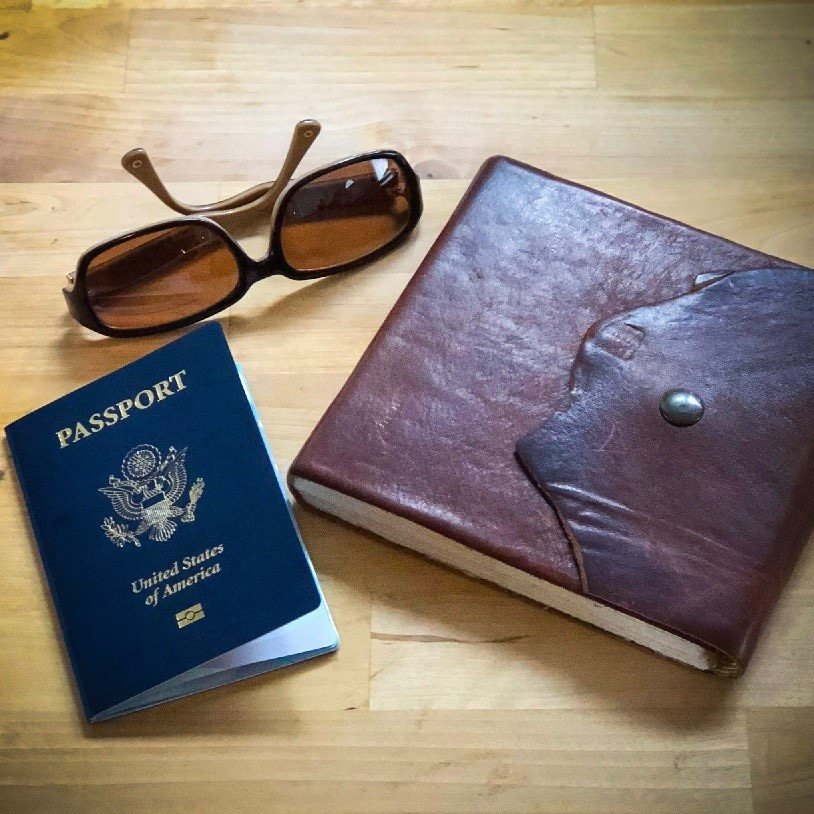
Before any trip, it’s good to prepare by learning some phrases in the language of that country. Here are some of our recommended language learning for travel books to help you get ready for your upcoming trip.
Why language learning for travel starts with respect
Before we get into tools, we talk about why language learning for travel matters in the first place. We do not think every local should be expected to speak English just because we showed up.
Taking the time to learn even a little of the local language is a form of humility. It shows we are willing to meet people on their own terms, regardless of whether they speak English.
Respect and empathy as the real goal
For us, language learning for travel is an extension of empathy. Attempting someone else’s language, even badly, communicates effort. It shows we care about understanding the culture we are visiting rather than expecting it to adapt to us.
Ready for a change? Take the first step to living a life of full time travel.
Even just learning basic sentence structure and grammar gives us insight into how a culture thinks. That insight is often more valuable than the vocabulary itself.
Building humility into how we travel
Language learning for travel keeps us humble in a way that pure sightseeing does not. When we struggle to order food or ask directions, we are reminded that we are guests. That mindset shapes how our kids experience every country we visit.
Apps and structured tools for language learning for travel
Apps are usually the easiest entry point for language learning for travel, and we have tried a long list of them over the years. Some have become daily habits, others we use only before a specific trip.

Duolingo as our daily habit
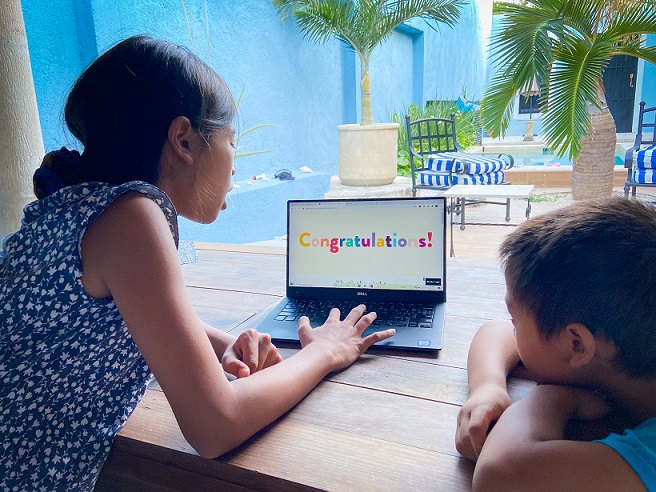
Duolingo is Clint’s go-to for language learning for travel, with a current streak of almost 1,500 days, close to four years. He likes it for the sheer volume of vocabulary it covers, though he wishes it explained grammar more clearly rather than just drilling it.
Astrid uses Duolingo in bursts, ramping up for five minutes a day in the weeks before visiting a new country like Indonesia or Japan, then tapering off once the trip ends.
Get weekly worldschooling tips sent to your inbox with my Worldschooling Wednesday email series.
Babbel, Busuu, and Lingopie for extra practice
Babbel is another app we have used for language learning for travel, and we like that it offers one-on-one speaking practice with tutors. Busuu is a similar option that rounds out vocabulary and grammar practice.
Lingopie takes a different approach to language learning for travel by connecting lessons to movies. We can watch a film in Spanish with subtitles and pick up vocabulary in context, which works well for listening comprehension.
JumpSpeak and Conjugato for specific gaps
JumpSpeak is useful for language learning for travel because it focuses on situational learning, like ordering at a restaurant or checking into a hotel, rather than isolated vocabulary lists. Conjugato fills a different gap for us. It is built entirely around Spanish verb conjugations, with drills that reinforce the grammar Duolingo tends to skip.
Beyond apps: everyday language learning for travel
Apps only go so far. Some of our most effective language learning for travel has happened away from a screen entirely, through podcasts, books, classes, and everyday situations.
Podcasts that build listening comprehension
Before a trip, we listen to language-specific podcasts as part of our language learning for travel routine. Speak Like a Mexican is one we use for Spanish, and Little Talks is a French-language podcast Astrid follows. For Indonesian, Astrid listens to Bahasa Indonesia Bersama Winda because the hosts use local vernacular and idioms at a slower pace.
Learn more about the amazing family travel resources we use for worldschooling!
Clint’s pick is the Mexican Fluency Podcast, hosted by an American who married a woman from Mexico. It is especially good for listening comprehension if you are new to Spanish.
Books, dictionaries, and phrasebooks
For language learning for travel with younger kids, we borrow picture books in the target language from the library, often on Kindle so they travel well. Astrid also collects illustrated dictionaries, including ones for Indonesian and Tagalog, where objects are paired with their words.
When we want to understand grammar rather than just memorize vocabulary, we turn to dedicated language-learning books. Astrid also publishes free Spanish and Indonesian phrasebooks on her own site with 20 to 21 essential travel phrases for each.
In-person classes and family routine
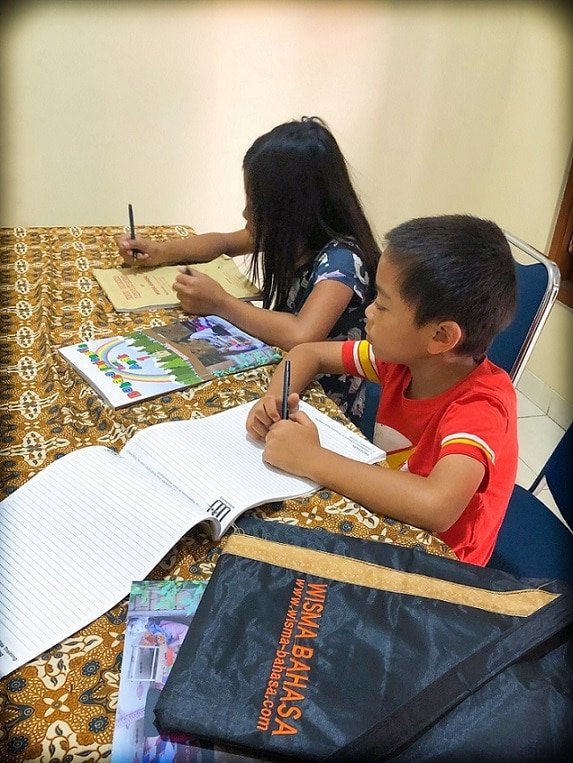
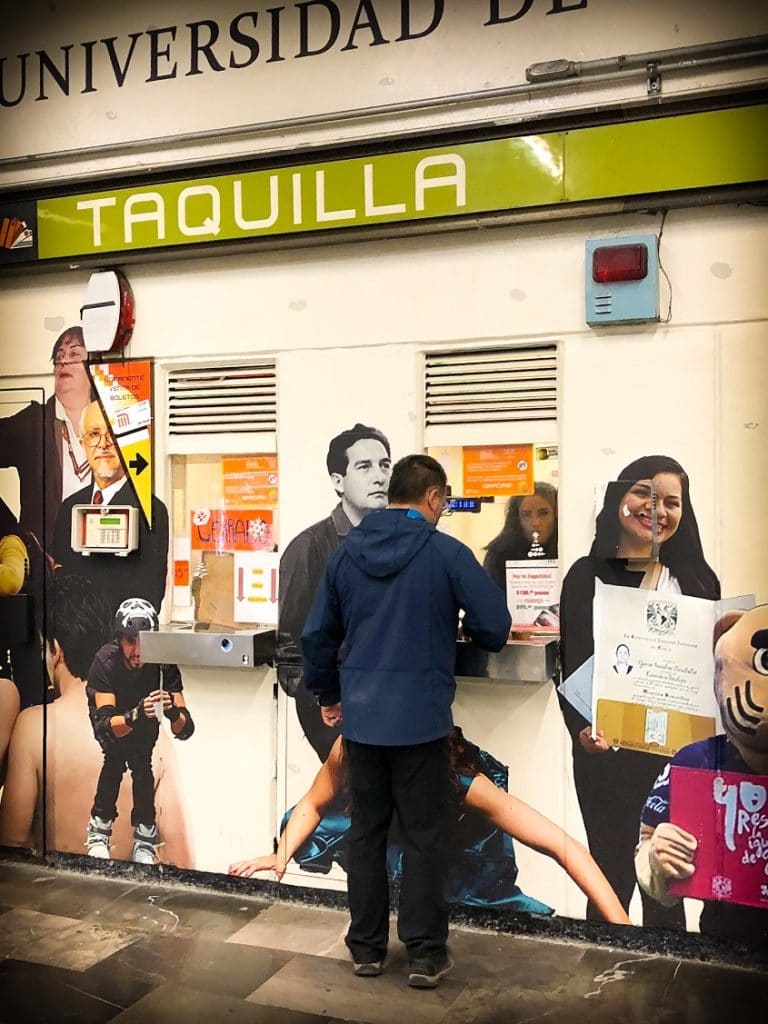
Some of our favorite language learning for travel has come from in-person classes rather than virtual ones. We have taken lessons in Indonesia, Spain, and Mexico, usually with the kids and parents in separate classes at the same time.
In Spain, we saw a tutor twice a week for about two months, followed by pizza afterward. That routine gave our kids a sense of stability, and it turned language learning for travel into something that felt like living somewhere rather than just passing through.
Movies, restaurants, and language tours
Watching movies with subtitles, ordering our own food, and asking where the bathroom is are all small but real forms of language learning for travel. We once accidentally watched a dubbed Spanish version of an American movie in Mexico and still followed most of the plot.
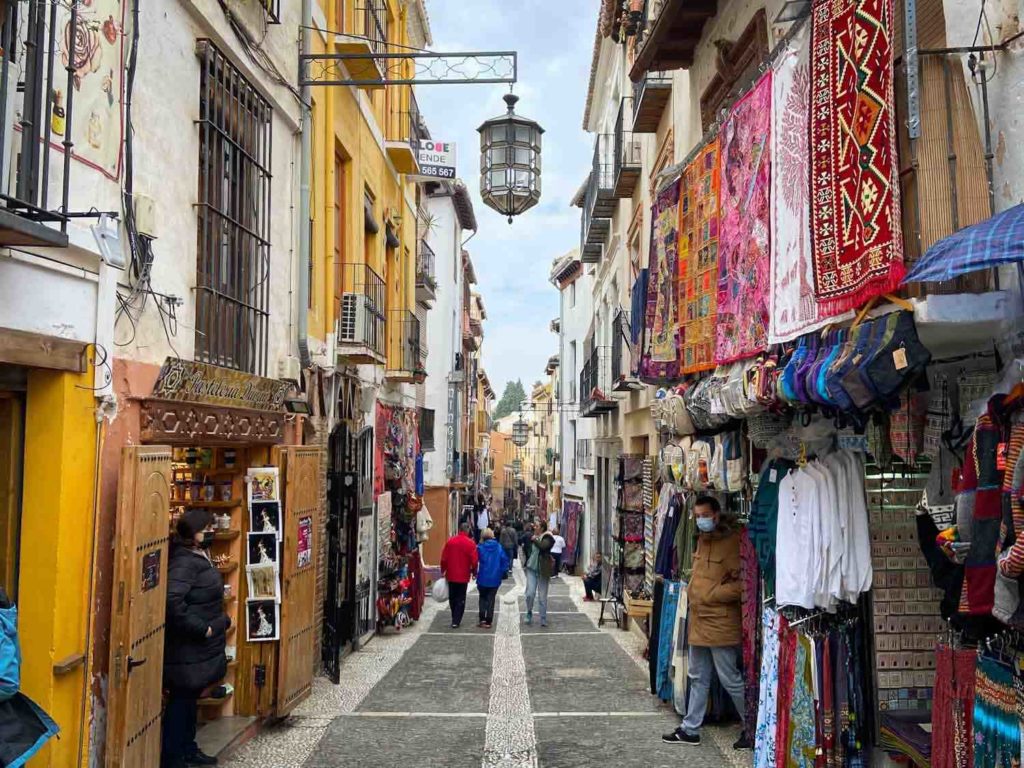
Language tours have also pushed our language learning for travel further. A Spanish-only trolley tour in San Miguel de Allende and a troubadour tour in Guanajuato both forced us to tune in closely, even when we only caught part of what was said.
Submit your worldschooling questions here!
Key topics covered in this episode
Why language learning for travel matters
- Shows respect and humility toward the cultures we visit
- Avoids the “everyone should speak my language” mindset
- Provides insight into a culture through its grammar and sentence structure
- Functions as an extension of empathy, not just communication

Get ready for your trip to Indonesia with my FREE 25 Essential Indonesian Words and Phrases!
Apps for language learning for travel
- Duolingo is a long-term daily habit for Clint, nearly four years running
- Astrid uses Duolingo in short bursts before specific trips
- Babbel offers one-on-one tutor sessions; Busuu rounds out grammar and vocabulary
- Lingopie pairs language learning for travel with watching movies and shows
Get prepared for any emergency with the insurance made for digital nomads!
Niche apps that fill specific gaps
- JumpSpeak focuses on situational, real-life conversations
- Conjugato drills Spanish verb conjugations specifically
- Bilingual offers leveled reading practice
- Lyrics Training uses song lyrics and karaoke-style games for listening comprehension
Podcasts for listening comprehension
- Speak Like a Mexican for Spanish learners
- Little Talks for French learners
- Bahasa Indonesia Bersama Winda for Indonesian learners
- Mexican Fluency Podcast for Spanish listening comprehension
Books, dictionaries, and phrasebooks
- Library picture books in the target language, often available on Kindle
- Illustrated dictionaries for less common languages like Indonesian and Tagalog
- Grammar-focused books for learners who want to understand the “why”
- Free phrasebooks with essential travel phrases
In-person classes and everyday practice
- Tutors and local language schools in Indonesia, Spain, and Mexico
- Twice-weekly lessons created routine and stability for the kids
- Restaurants and shopping as low-pressure, real-world practice
- Movies with subtitles reinforce vocabulary in context
Start speaking Spanish with my FREE 25 Essential Spanish Words and Phrases!

Language tours and embracing mistakes
- Spanish-only trolley tour in San Miguel de Allende
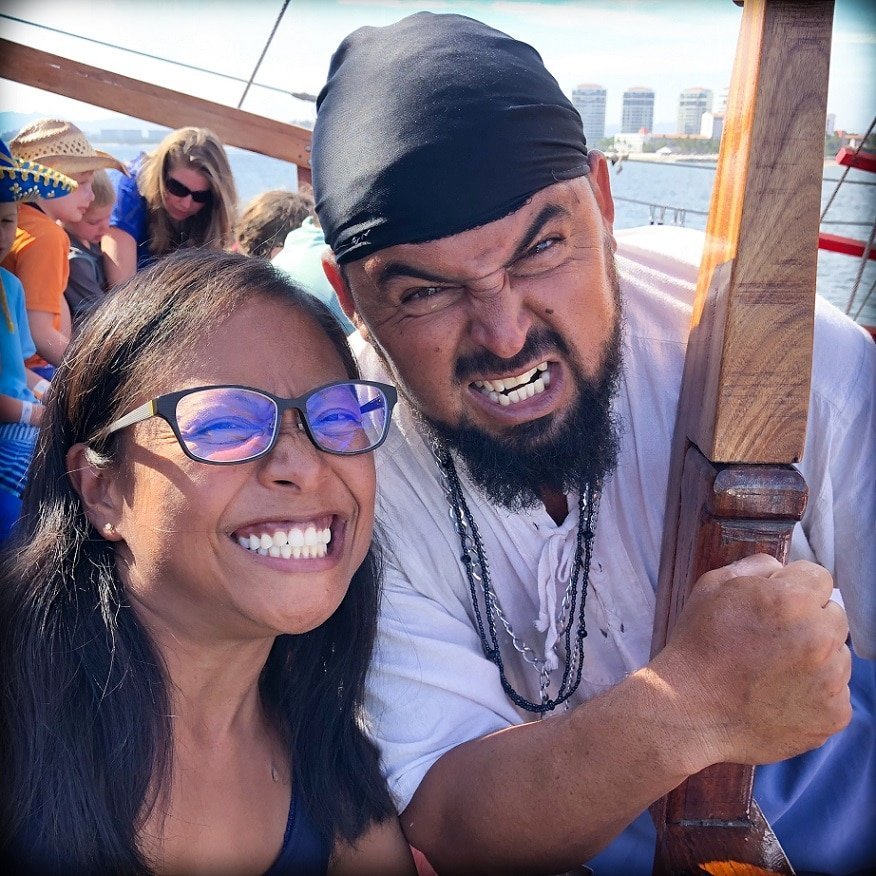
- Troubadour tour in Guanajuato City
- Camera Obscura tour in Seville taken entirely in Spanish
- Don’t be afraid of situations where your language isn’t spoken; mistakes are part of learning

Episode chapters
00:00:00 – Introduction
00:00:28 – Astrid Welcomes You to Worldschooling Q&A
00:00:57 – Today’s Question: How Do I Teach My Kids Languages While Traveling?
00:01:03 – Why Learning a Language Matters
00:02:16 – Language Learning Apps: Duolingo and Beyond
00:05:41 – ↩ Source of Intro Clip: The “Dirty Spanish” App Debate
00:06:13 – Language Learning Podcasts
00:07:10 – Books, Dictionaries, and Phrasebooks
00:07:54 – In-Person Language Classes and Family Routine
00:10:00 – Movies, Restaurants, and Everyday Practice
00:11:03 – Language Tours and Embracing Mistakes
00:15:10 – Outro
Further worldschooling resources