10/1/2026
Artificial intelligence has moved far beyond buzzwords and futuristic speculation. Today, it is one of the most transformative technologies since the advent of the internet, reshaping how people work, communicate, consume information, and engage with brands. For enterprise marketers and experiential teams, AI represents a powerful opportunity to strengthen human connection, enhance creativity, and make smarter decisions through data-driven insights.

While generative AI tools such as ChatGPT and Claude brought AI into the mainstream during the early 2020s, the concept itself has existed for centuries. Early myths and philosophical ideas imagined artificial beings capable of thought, while nineteenth-century innovators laid the groundwork for modern computing.
BEFORE AI TOOK THE STAGE

Among the most influential pioneers was Ada Lovelace, whose work with Charles Babbage’s Analytical Engine introduced concepts that would eventually become computer programming. Later, Alan Turing advanced the field by proposing the Turing Test, a framework for evaluating whether machines could exhibit human-like intelligence.
The formal birth of artificial intelligence occurred in 1956 at the Dartmouth Summer Research Project, where researchers first coined the term “artificial intelligence.” Early systems focused on rule-based reasoning and symbolic logic, but technological limitations led to periods of slowed progress known as AI winters.
Advances in computing power, machine learning, and neural networks reignited development during the 1990s and 2000s. By the 2010s, deep learning enabled significant breakthroughs in speech recognition, image analysis, and natural language processing. The introduction of transformer architecture in 2017 accelerated progress even further, paving the way for today’s powerful generative models and positioning AI as a foundational technology across industries.
AI is now deeply integrated into everyday life, often operating behind the scenes. Search engines use AI to understand user intent, personalize results, and improve information discovery. Voice assistants process natural language to answer questions and complete tasks. Streaming platforms and e-commerce websites rely on recommendation engines to deliver personalized experiences based on individual preferences. Productivity tools automate routine tasks such as meeting transcription, email organization, and document summarization, helping employees focus on higher-value work. Beyond consumer applications, AI also supports healthcare diagnostics, transportation systems, logistics optimization, and infrastructure management.
INFLUENCE ON MODERN EXPERIENCES
The impact is equally significant in experiential and event marketing. AI-powered technologies can analyze attendee behavior, track foot traffic, personalize content in real time, and measure engagement more accurately than ever before. Interactive experiences such as augmented reality activations, intelligent photo booths, and adaptive digital displays are increasingly common in modern exhibits and brand activations. These innovations help organizations create more meaningful, personalized experiences while improving operational efficiency and performance measurement.
Successful AI adoption, however, depends on thoughtful implementation. Effective prompting is essential for achieving quality results. Users should provide clear objectives, audience context, style guidelines, and examples to help AI produce outputs aligned with business goals and brand standards. Rather than replacing human expertise, AI works best as a collaborative tool that accelerates creativity, reduces repetitive work, and supports informed decision-making. Strong outcomes result from knowledgeable users who combine technological capabilities with strategic oversight and professional judgment.
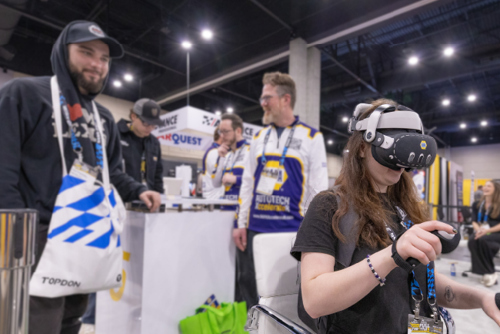
Practical applications for events and marketing span the entire customer journey. Before events, AI can personalize outreach based on attendee interests and behaviors. During planning phases, generative tools can support concept development, messaging creation, and design exploration. Onsite, AI can analyze visitor movement and engagement data in real time, helping teams optimize staffing, content delivery, and experience flow. After events, AI can automate content repurposing, summarize sessions, generate follow-up communications, and provide detailed performance insights that inform future programs.
As AI capabilities expand, responsible use becomes increasingly important. Privacy, ethics, transparency, and environmental sustainability must remain central considerations. Organizations should implement robust data protection practices, maintain compliance with privacy regulations, and minimize unnecessary data collection. AI systems must also be monitored for potential bias, ensuring fairness across decision-making processes. Transparency about when and how AI is used builds trust with customers and stakeholders. Additionally, leaders should recognize the environmental impact of large-scale AI models and prioritize efficient technologies whenever possible.
FINAL TAKEAWAY
For enterprise marketers and experiential teams, the path forward requires balancing innovation with responsibility. AI is not simply a technology trend; it is a new framework for enhancing human experiences and strengthening meaningful connections. Organizations that embrace AI thoughtfully, ethically, and strategically will be best positioned to build trust, drive growth, and create lasting impact in the years ahead.
To receive a copy of the full white paper, you can download it here.
ABOUT EXHIBITUS
Exhibitus is an award-winning experiential marketing agency creating immersive brand experiences to drive impact via strategy, design, fabrication, and activations. Learn more at www.exhibitus.com and www.ex-studios.com.