How to Become A Section 8 Landlord in Washington, DC

Housing Choice Vouchers are an important part of the rental market in Washington, D.C. For landlords and property managers, understanding how the program works is especially important because D.C. law protects source of income, including housing vouchers. Read on to know what to expect when becoming a Section 8 landlord in Washington, DC.
Main Takeaways
- Washington, D.C., protects source of income under its fair housing laws, which means landlords generally cannot reject an applicant simply because they use a Housing Choice Voucher.
- Before a voucher-assisted tenancy begins, landlords must complete the required DCHA process, which includes submitting paperwork, having the proposed rent reviewed, and passing a property inspection.
- DCHA pays the approved housing assistance portion directly to the landlord, while the tenant is responsible for paying their portion of the rent.
What is Section 8 Housing?
The Housing Choice Voucher (HCV) Program, commonly known as Section 8, is a federal HUD program that helps eligible households afford rental housing in the private market.
The program assists people nationwide who need help with some or all of their rent. For a voucher-assisted tenancy in D.C., the rental property must meet DCHA’s program requirements and pass the required inspection. D.C. landlords must also follow local source-of-income discrimination laws when considering applicants who use housing vouchers.
As a landlord or property management company in Washington, DC, knowing about Section 8 housing and how a tenant may qualify is important. In rare cases, the voucher program covers the entirety of rent, but more commonly, a tenant will still be responsible for 30-40% of the rent on average, according to ProPublica.
DCHA determines whether an applicant qualifies for the Housing Choice Voucher Program based on several federal and local program requirements. These include household composition, income, citizenship or eligible immigration status, and other eligibility criteria.
Family Status
A tenant must qualify for HUD’s definition of a family. The family description, as explained on their website, includes:
- Being with or without children
- One or more household members have a disability
- Someone 65 or older is part of the household
- The family has been displaced
- The tenant remains in the home after the family moves out and was previously receiving section 8 as a household
- A single individual who doesn’t meet any of the above information
Income
Household income is one of the main factors DCHA considers when determining eligibility for the Housing Choice Voucher Program. Generally, applicants must have income at or below 50% of the HUD-defined area median income limit. However, income limits vary based on household size and are updated periodically, so applicants should check current HUD and DCHA requirements.
Citizen Status
Eligible immigrant statuses for federal housing assistance include some of the following.
- Legal Permanent Residents (LPRs)
- Long-term residents since 1948.
- Refugees or Asylees
- Parolees
- Human trafficking victims
- Violence Against Women Act self-petitioners
There may be other instances where a non-citizen qualifies for federal housing assistance, so it’s best to double-check with laws regarding eligibility.
Other Eligibility Requirements
Depending on the circumstances, previous evictions don’t automatically make a tenant ineligible. DCHA also considers other HUD and program requirements when determining eligibility, including certain past conduct that may affect an applicant’s eligibility. Because these rules can change and may depend on individual circumstances, applicants should review DCHA’s current eligibility requirements for more information.
Benefits and Considerations of Renting to Voucher Holders
Renting to Housing Choice Voucher holders comes with some unique benefits and program requirements. D.C. landlords should understand these requirements while also keeping in mind that source of income, including housing vouchers, is protected under District law.
Benefits of Renting to Voucher Holders
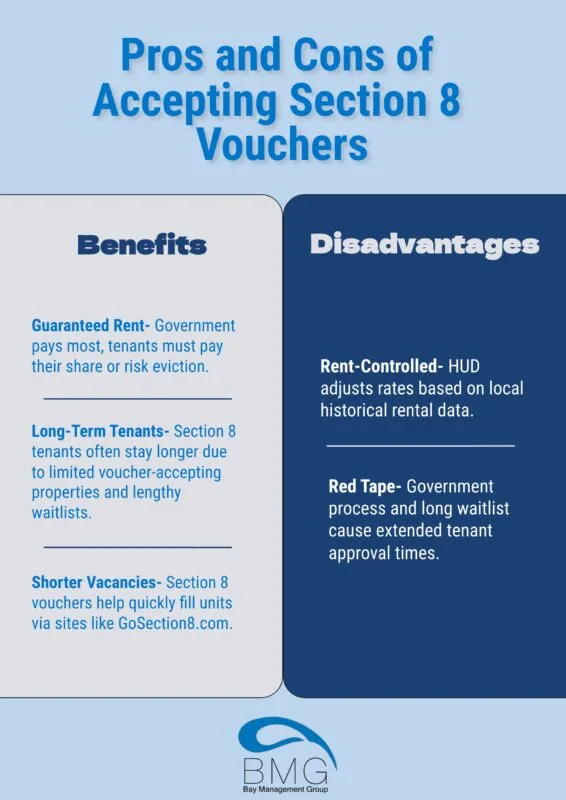
- Direct Housing Assistance Payments- DCHA pays the approved housing assistance payment directly to the property owner, while the tenant remains responsible for their portion of the rent.
- Potential for Reduced Vacancy- Housing Choice Vouchers are in high demand, and landlords may have access to a larger pool of prospective renters when marketing an available property.
Program Requirements to Consider
- Rent Approval Requirements- Landlords can propose the rental rate, but DCHA must determine that the rent is reasonable before approving the tenancy. This may limit the amount a landlord can charge under the voucher-assisted lease.
- Additional Program Requirements- Voucher-assisted tenancies involve additional steps, including paperwork, rent review, and property inspections. Landlords should account for these requirements when preparing for a new tenancy.
How to Become a Section 8 Landlord in D.C.
Are you interested in becoming a Section 8 landlord in D.C.? Here are some tips to consider. The following information comes from the D.C. housing website:
- Market the rental property in compliance with D.C. fair housing and source-of-income requirements.
- Screen the applicant using lawful, consistently applied criteria that comply with D.C.’s special protections for subsidy recipients.
- Complete the Request for Tenancy Approval (RFTA) packet once a voucher holder wants to rent the property.
- Complete DCHA’s rent reasonableness review.
- Have the rental property inspected and make any required repairs.
- Complete the lease and required program agreements so housing assistance payments can begin.
Remember, D.C. landlords should be especially careful when applying income, credit, and rental history requirements to voucher holders. Certain screening practices that may be used for unsubsidized applicants are restricted when an applicant uses an income-based housing subsidy, so landlords should review current D.C. source-of-income requirements before screening.
FAQs About Section 8 Landlords in Washington, D.C.
Becoming a Section 8 landlord comes with a few extra steps, especially when it comes to inspections, rent approval, and paperwork. Here are answers to some common questions landlords may have about renting to Housing Choice Voucher holders in Washington, D.C.
Can a Landlord Refuse Section 8 in Washington, D.C.?
Generally, no. Washington, D.C., protects source of income under its anti-discrimination laws, and those protections include Housing Choice Vouchers. This means landlords cannot reject an otherwise qualified applicant simply because they use a voucher to help pay their rent.
How Do You Become a Section 8 Landlord in D.C.?
The process generally starts when a voucher holder wants to rent your property. The landlord completes the required Request for Tenancy Approval paperwork, DCHA reviews the proposed rent, and the rental unit must pass an inspection. Once the requirements are met and the necessary agreements are signed, housing assistance payments can begin.
Does a Section 8 Rental Need an Inspection in D.C.?
Yes. A rental property must pass the required inspection before DCHA approves it for a voucher-assisted tenancy. Landlords may need to make repairs if the unit does not initially meet the required housing standards.
How Do Section 8 Landlords Get Paid?
DCHA pays the approved housing assistance portion of the rent directly to the landlord. The tenant is responsible for paying the remaining portion of the rent according to their lease and voucher requirements.
Can a Section 8 Landlord Set Their Own Rent?
Landlords can propose a rental rate, but DCHA must determine that the requested rent is reasonable. The agency compares the proposed rent with similar unassisted rental properties and considers other program requirements before approving it.
How Long Does It Take to Become a Section 8 Landlord in D.C.?
There is no single timeline that applies to every rental. The process can depend on how quickly the required paperwork is completed, the rent is approved, and the property passes inspection. Repairs or missing documents can extend the process.
 Manage Your DC Property With Ease
Are you a landlord looking to turn your Washington, DC, investment property into Section 8 housing? Contact a Washington, DC, property management company to help cut through the red tape and get started today.
Our team of highly skilled property managers at Bay Property Management Group Washington, D.C., will help with everything from marketing your property to screening applicants and navigating the Housing Choice Voucher leasing process.
BMG proudly offers full-service property management in Northern Virginia, Washington DC, Baltimore, and Philadelphia. Ask us how we can help your rental business succeed today!