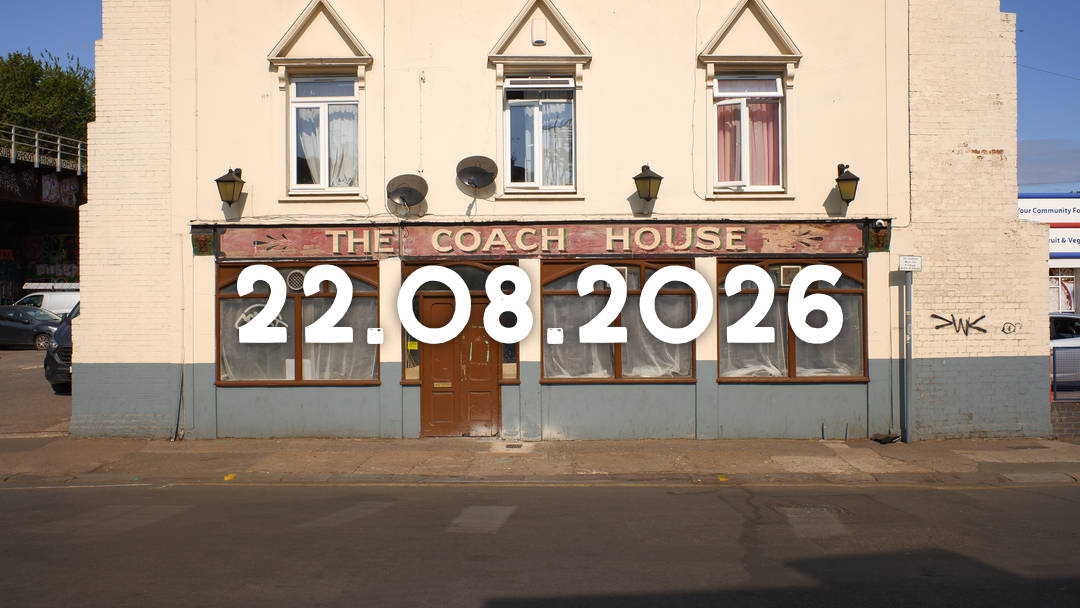
Every Saturday we round up the best writing about beer from the past week. This time, we’ve got bottle shops, pickle beer and cocktail lounges.
First, some news: the Wetherspoon pub chain has decided enough is enough and banned customers from using the loudspeaker mode on their phones. If, like us, you find the scratchy squawking of TikTok videos or calls to the proctologist playing out loud in the pub intolerable you might think, well, it’s about time someone made a stand. Commenters online have questioned the assertion that Wetherspoon pubs are “an oasis of tranquillity and contemplation” as Tim Martin has claimed but, honestly, we’ll take a bit of boisterous behaviour over phone speaker noise anyway.
The next question is, how do you enforce it? You’re asking bar staff to have difficult conversations with people who might well turn nasty when challenged. A perennial problem for pubs in re: all sort of behavioural issues, we suppose.
Also, it strikes us as interesting that Tim Martin would be willing to engage in this kind of micromanagement of customer habits given how irritated people were by the late Humphrey Smith doing similar things.

For Pellicle David Jesudason has profiled Stirchley Wines & Spirits in Birmingham, a pioneering craft beer bottleshop run by Krishan Rajput:
“He doesn’t get enough respect for what he has done for the beer industry,” says Steve Sailopal, a low-and-no-alcohol brewing consultant and the founder of Desi snack brand Curry Smugglers. “There’s a lot of small breweries that he’s championed from their launch, and he’s a beer fan who loves the industry. His father did a superb job with the shop, and he’s taken it to the next level.” … To know Krishan is to know that this is an understatement, because what may have started as a tiny off-licence opened by a Punjabi family has not only blossomed into one of the country’s most expansive beer shops but has also become a wider base of influence. In many ways, Krishan has pushed the Midlands into becoming a more diverse space for drinkers.
It also gets into the politics of the language: how is a ‘bottle shop’ different to an ‘off licence’? Jesudason suggests the former is a term used by gentrifiers to make a distinction between white run businesses and Asian-run shops that have been there for years. It’s interesting that Rajput disagrees, and this debate gives the article an added frisson.

We always enjoy reading tasting notes from The Beer Nut and this week he gave us a run down of some of the small batch beers being produced at Guinness’s Open Gate Brewery in Dublin. He’s no mindless booster of Guinness so when he finds positive things to say about these beers, you tend to pay attention. And some of them really do sound fascinating:
“the classic deli pickle flavor” is the oddly Americanised rationale behind Pickle Sour, arriving at the taproom in time for the late-June heatwave. It’s 5% ABV, a pale gold and, shortly after pouring, quite headless. I understand that this is an established style of beer, though not one I’ve tasted before, so I don’t know how accurately this example represents it. First off, it’s not at all sour: no mixed-fermentation acidity nor kettle-soured yoghurt twang. It’s light and refreshing, though, and while it’s predominantly a sweet beer, it’s far from the dessertishness of all those fake-sour candy fruit beers. Instead, it delivers the pickle element very successfully. At the centre there’s the real green, almost crunchy, bite of gherkin, seasoned subtly and respectfully with herbs — dill and fennel, says the menu. The accuracy of this serves as a reminder that quite a few spoonfuls of sugar have gone into your wholesome jar of cornichons. This wasn’t what I expected, but I liked it. While not a vinegar delivery system like real pickles, it does channel their flavour competently. Of course it’s a daft novelty beer, but I have respect for daft novelty when it’s done this well.

Neil Reid, AKA The Beer Professor, has written about what he calls ‘drinkflation’ – a booze-specific version of ‘shrinkflation’ which has seen the alcoholic strength of various beers reduced over the years:
A spokesperson for the aforementioned Greene King noted that reducing a beer’s ABV “lowers the amount of tax we pay without noticeably affecting the beer’s flavour.” Whether consumers share that assessment remains an open question… The question… is not whether reducing a beer from 5.0% to 4.8% ABV will noticeably change its character. The more interesting question is what happens when thousands of similar decisions accumulate across an industry over many years. If drinkflation becomes widespread, British consumers may one day look back and wonder whether their favorite beers were once a little stronger, a little more distinctive, and perhaps a little more memorable.

At Daft Eejit Brewing Andreas Krennmair has been archive digging again, exploring the early history of the beer style we know today as Munich Helles:
This is not the story of the earliest Munich Helles, an apparent hype of pale lager beer from the 1820s until the early 1840s, during which most of the Munich breweries brewed a relatively pale lager… Instead, this is the story about modern Munich Helles, the stuff that’s popular these days and has become the standard beer of Munich and really, much of Bavaria. This beer style can be traced back to a very specific brewery and a very specific date: it was Spaten Helles Lagerbier, first released in Munich on 20 June 1895… The 1898 edition of Brockhaus Encyclopedia contains some analytical data, and if we believe it, this Helles was a quite odd: with an OG of 11.7°P (1.047), it only had 2.69% ABW (3.36% ABV) and a meagre 45.7% real attenuation. Compared to Munich Helles nowadays, it must have been very sweet.

We’re pleased to have prompted Jeff Alworth to reflect on the nature of pubs and, more specifically, the different types of drinking establishment found in the US:
American drinking establishments have had many different names over the years, and they all have a slightly different meaning. During the second half of the past century, “lounges” were the most upscale… Bars, meanwhile, have always been low and common. They would once have been expected to contain pool and shuffleboard tables, the stink of smoke and spilled beer, and lots of flannel. Prior to craft beer, those regular neighborhood joints were just bars. Now the exact same places are “dive bars.” In the 21st century we also have “wine bars.” See how a modifier changes everything? … Pubs were quite uncommon and European—English or Irish pubs, gussied up to evoke foreign lands. “Saloons” were obsolete relics of the frontier, except for rare cases where obsolescence was part of the draw. Now we have “taproom,” which is reserved for places focused on craft beer, and brewpub.
Finally, from BlueSky, a gorgeous pub frontage – and what more can anybody ask for?
Portsmouth has the best pub frontages of any place in the UK
— pubmeister.bsky.social (@pubmeister.bsky.social) 18 August 2026 at 22:27
For more good reading check out our Patreon-exclusive ‘Footnotes’ to this post and Alan McLeod’s round up from Thursday.