
Wrexham Lager’s name and brewery have been revived, and the story is a rather fascinating one.
The revival began in 2011, when the Roberts family brought thehistoric brand back to life after its original brewery closed in 2000 and production ceased
entirely in 2002. The
historic Wrexham Lager name
was rescued, the brewery rebuilt, and production restarted using original
recipes. But what about the history of the original Wrexham Lager Brewery, and
its pioneering beer?
Wrexham Lager isn’t just a local beer; it’s a piece of
British brewing history. It was
founded in 1881, by German immigrants Ivan Levinstein and Otto Isler, and was Britain’s first lager brewery.
In the beginning, the pair attempted traditional cold‑fermentation techniques,
using ice banks, but early batches suffered because temperatures couldn’t be
kept low enough. Then a chance partnership with German engineer Robert Graesser, introduced mechanical refrigeration,
solving the temperature problem and enabling consistent lager production.
Graesser was a German‑born
industrialist living in North Wales in the late 19th century.
He owned a chemical works in Acrefair,
Denbighshire, and was known for his engineering expertise —
particularly mechanical refrigeration,
which was cutting‑edge technology at the time. His background made him uniquely
positioned to solve the technical problems that plagued early lager brewing in
Britain. He was not one of the original founders, but without him,
Wrexham Lager would almost certainly have disappeared in the 1880’s. Graesser met Levinstein by chance, reportedly on
a train from Liverpool, and realised his industrial refrigeration system
could fix the problems being experienced by Levinstein and Isler

Graesser’s innovations enabled
Wrexham Lager to be brewed properly for the first time and led to Wrexham Lager
becoming the first commercially successful lager brewery in Britain. He
later took a major share in the company in exchange for the technology
and gained full ownership after the original company collapsed in
1886–1892. At the time Wrexham was home to around
nineteen breweries, but the Ace of Clubs brand, with its distinctive symbol
became the most famous, and was recognised far beyond Wales. The beer was
exported across the British Empire and was reportedly the only lager served on the Titanic.
There are accounts of Wrexham Lager being consumed
by British troops overseas, including during the Siege of Khartoum
(1884–85). These stories highlight how the beer travelled with soldiers across
imperial postings.

The brand’s exports decreased during World War II, leading
to its purchase by Ind Coope, and later Carlsberg-Tetley, after a series of convoluted
mergers and takeovers. In 2000, the original brewery was closed by Carlsberg – a
brewery that definitely doesn’t brew the best beer in the world! Then in 2011, former
MP Martyn Jones,
once a microbiologist at the brewery, acquired the rights to the brand, for
just £1, a sum that shows how little the Danes regarded the heritage of Wrexham
Lager. The brand itself was revived by the Roberts family, using a recipe from
the Wrexham archives.
Local businessmen Mark and
Vaughan Roberts rebuilt the brewery, using older recipes and
original ingredients to recreate the classic lager. As part of this exercise, they
consulted former Wrexham brewing staff and used archival brewing notes to ensure
authenticity. The revival restored a
brand with deep cultural ties to Wrexham AFC,
local pubs, and Welsh brewing heritage. The revived brewery is located in Bangor-on-Dee, near Wrexham,
and not at the original Central Road site, which was demolished and replaced by
a retail park. However, the original
brewhouse survives as a Grade II listed building.
Wrexham Lager is historically
significant because it is:
Britain’s first lager brewery
A pioneering user of mechanical
refrigeration
A major Victorian export
brand
A cultural symbol of Wrexham
and Welsh brewing heritage
A rare example of a historic
beer brand successfully revived after total closure.

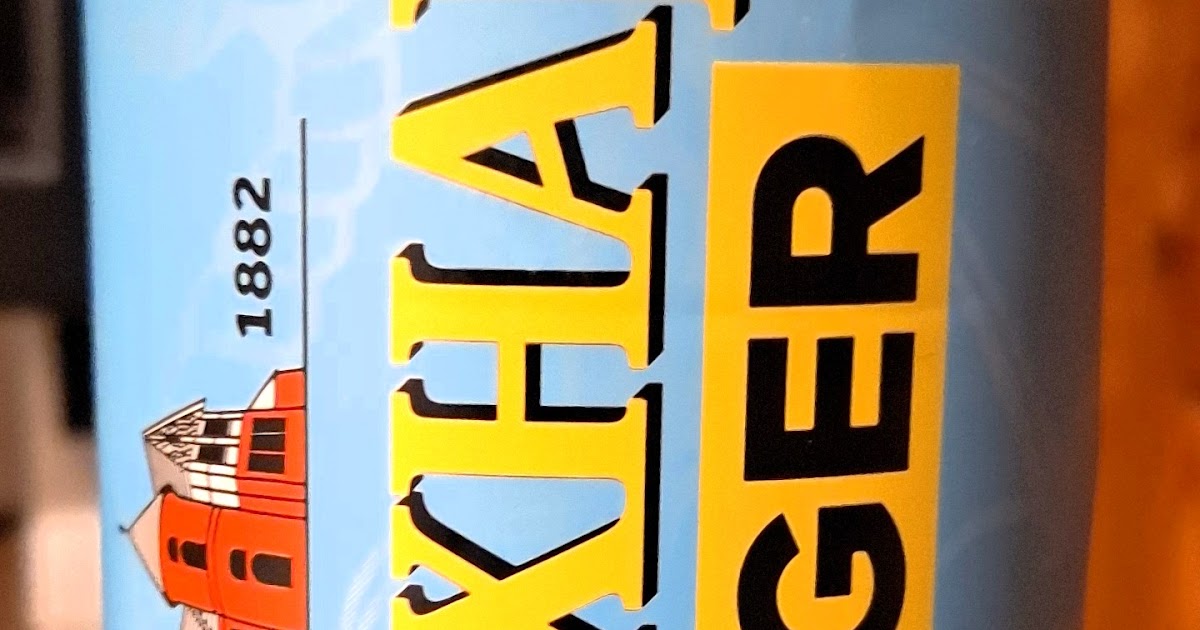
The other week I picked up a
4-pack of Wrexham Lager cans, at our local branch of Home Bargains. Regrettably,
despite all the history, the pedigree and the kudos associated with the relaunched
brand, I found the beer lacking in bitterness, and at just 4.0% ABV, the beer
was rather weak for my tastes.
However, seeing as the revived
brand is based on a recipe that is over half a century old, it might well be that
Wrexham Lager 2026 is very much the authentic taste, of the cold-fermented
beers that were being brewed in the UK, at the end of the last century, so do give the
beer a try and let me know what you think.
Finally, although AI played a role
in the research for this post, the narrative is very much my own!