Rethinking Magnet Designation – Emerging Nurse Leader

By Rose O. Sherman, EdD, RN, NEA-BC, FAAN
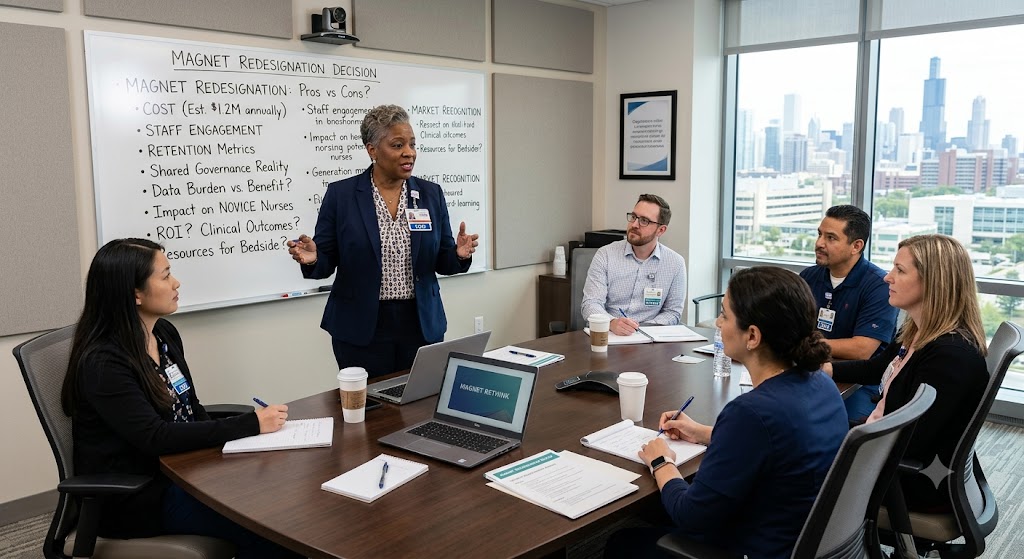
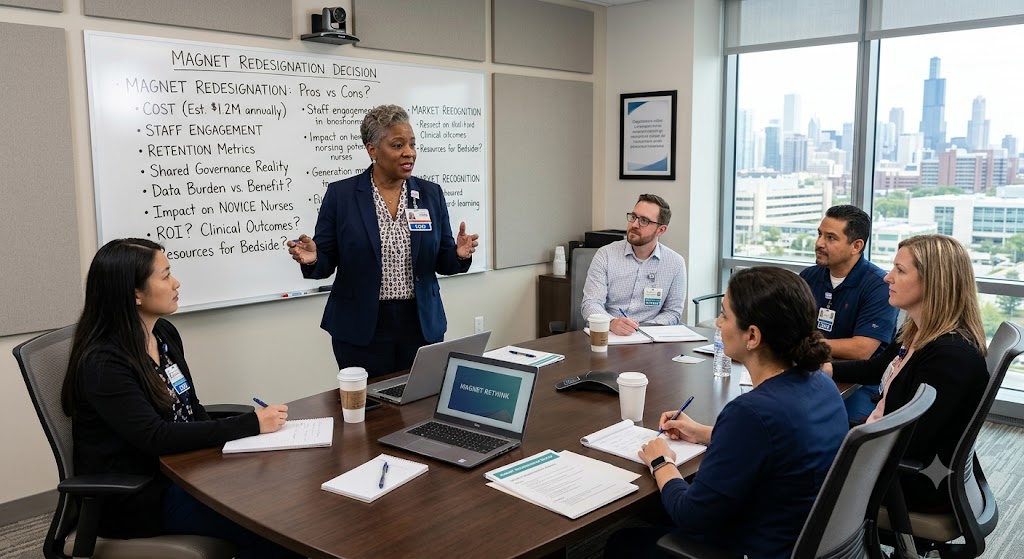
I have been asked the same question numerous times over the past 6 months by nurse executives: Are we the only ones rethinking Magnet Program Designation®? The answer is no – I am hearing this come up pretty frequently in conversations with CNOs as their organizations scrutinize every budget item and assess the actual return on investment. With today’s razor-thin operating margins, nurse leaders in many (but not all) organizations are struggling to maintain safe staffing and respond to rising workforce salary demands.
Some of the discussion is also driven by the changes nurse leaders now see in their younger workforce. Acute care nursing looks fundamentally different from what it was when Magnet came of age in the early 1980s (author note: research is currently underway to assess these changes). Clinical environments today are novice-dense, dominated by Generation Z. These early-career nurses are vocal about their career aspirations, don’t plan to stay long-term in acute care environments, and express far less interest in professional governance.
While having a Magnet environment was once a source of strength in preventing unionization – that too has shifted as more Magnet facilities become unionized and their nurses sometimes even go on strike. So, the question for some CNOs seems to be whether Magnet is still the Gold Standard or a financial burden that may no longer make sense. There are no easy answers to this question, and it is not surprising that it creates a moral dilemma for those in this conundrum.
The Dilemma
Nurse leaders understand that decades of data show lower 30-day mortality, lower hospital-acquired conditions (CAUTIs, falls, pressure injuries), and higher safety scores. But at the same time, they struggle with application fees, consultants, NDNQI software, and dedicated Magnet FTEs that cost hundreds of thousands (or millions) of dollars plus RN time devoted to Magnet activities that could directly fund bedside educators, bonuses, or flexible staffing. Some organizations are projecting massive budget shortfalls once the reimbursement effects from HR-1 are fully implemented. There simply won’t be enough to fund everything so there are tough decisions that need to be made.
The Current Reality
While it is true that shared governance, clinical ladder progression, and unit councils give nurses a structured voice in practice and have been shown to be key to long-term engagement, the picture is shifting in many organizations. The novice-dense workforce is struggling with basic clinical mastery and reports feeling overwhelmed by expectations to serve on unit councils, conduct research, or write exemplars. Magnet status has long been a key differentiator for top-tier clinical talent, medical staff recruitment, and national rankings. On the flip side, the massive administrative lift of collecting narrative exemplars can feel performative to staff who see a gap between official designation and daily unit stress.
The Tough Decision
Deciding what to do can be challenging. Some health systems are choosing alternatives such as Pathways to Excellence or practicing the components of the Magnet Model (transformational leadership, shared governance, evidence-based practice) internally, without paying for the official ANCC designation process or third-party database dependencies.
A CNO recently told me that she had put the redesignation application on hold because she felt it had become a compliance exercise and that fewer of her staff each year seemed invested in it. Her own nursing leadership team has begun to question the value. I started us on this journey initially, she noted, and I may be the one who ends it. She doesn’t see this as a failure but rather a courageous move to protect her staff and place her resources where they are needed most right now. Pivoting, while not easy, may be the best decision for her organization.
Questions to Ask Yourself
Like any other budget decision that involves programmatic cuts, the decision to stop something that you have been highly invested in is challenging. Economists would say there are many “sunk costs” that leaders have to be willing to move past.
While it is true many newer staff may not care that much, some experienced nurses will grieve the changes. Once you stop a program like Magnet, it can be very difficult to re-initiate it. Resources get reallocated, momentum is lost and nurses are less invested when they see it as something that could be stopped at any time. Even given these challenges, it still might be the right decision to make. Some good reflective questions to ask include the following:
- If we were not currently Magnet and were facing the budget constraints we have today, would we make a decision to pursue designation knowing the costs and benefits?
- What is the true all-in annual cost of maintaining our designation?
- If we redirected these dollars directly to the bedside, what specific gaps could we fill?
- Does our current practice environment reflect a “Magnet culture” every day, or mostly during site visit years?
- Is our shared governance structure meeting the needs of our novice nurses, or overwhelming them?
- Are our frontline managers energized by the Magnet journey, or suffering from documentation fatigue?
- Is Magnet cited as a differentiator in our recruitment interviews and retention STAY interviews?
- Does Magnet designation impact patient choice, or are there other more important factors?
- Are our nursing-sensitive quality indicators driven by our Magnet preparation, or by our core operational discipline?
- Is our current quality benchmarking system providing timely, actionable data, or is it a lagging indicator because the data isn’t real-time?
- Can we sustain a “Magnet Mindset” without paying for designation?
A Path Forward
There is no one right decision here. Whether your organization decides to double down on designation or step back to focus on a self-sustained “Magnet Mindset,” the goal remains unchanged. You want to create an environment where nurses feel supported, safe, and empowered to deliver excellent care. If the formal designation helps you get there, then you should pursue it. But if you need to make a different choice and decide the administrative burden pulls resources away from the very nurses you are trying to retain, remember that a strong, supportive bedside culture will always matter far more to your staff.
© emergingrnleader.com 2026
To effectively lead through these challenges and others, nurse leaders need new tools and strategies. Let me help you as I have helped hundreds of organizations over the past five years. Please contact me at [email protected] to book a workshop or keynote for your team. Not seeing what you want on this list? Feel free to reach out, and I am happy to design a custom program to meet your needs.
Brand New For 2026 and Already Receiving Rave Reviews – Staying Power Building a Culture of Retention in the New World of Work
Brand New for 2026 and Already Popular – The Inverted Pyramid: Leading Teams of Novice Nurses The Inverted Pyramid WS Information Sheet
Our Most Popular Right Now –The New World of Work Workshop
A Leader Favorite – Building Bridges Not Walls: Leading Multigenerational Work Teams – Click Here for More Information Building Bridges Not Walls
A Must-Read Book in 2026 – Click Here to Buy