If you own a century-old bungalow in Grant Park, a Craftsman in Inman Park, or a Victorian in Virginia Highland, chances are there is old-growth heart pine under your feet. When you pull up the tired carpet or peel back the layers of paint and polyurethane that previous owners left behind, you may find something remarkable: tight, honey-colored grain that no modern lumber yard can replicate. These floors were milled from trees that had already been alive for two hundred years before your house was built. They deserve a careful hand.
Restoring historic floors is not the same project as refinishing the engineered oak in a new-construction townhome. The wood behaves differently, the subfloor has its own history, and the standards you are trying to meet are higher. Here is what to understand before you start getting quotes.
First, Know What You Actually Have
Atlanta-area historic homes most commonly feature one of three species on the main floor:
- Longleaf heart pine. The prize. Dense, resinous, with tight growth rings from slow-growing virgin forests. Color ranges from amber to deep red-brown. Often used in homes built before 1920.
- Southern yellow pine. Softer and less dense, with wider grain. Common in secondary spaces, sleeping porches, and early-20th-century bungalows. Still beautiful, but behaves differently under the sander.
- Quarter-sawn white oak. Found in higher-end Craftsman and early Tudor homes. Not pine at all, but often mistaken for it when darkened by a century of oxidation and old finish.
You can usually identify heart pine by the concentration of dense late-wood rings, a slightly sweet resin smell when freshly sanded, and small pitch pockets that bleed amber when warmed. If you are unsure, a small test sand in a closet corner tells the story quickly. Species matters because it determines sanding strategy, stain behavior, and whether patching is realistic.
Refinish or Replace: How to Decide

The default answer for a historic floor should always be refinish. Old-growth heart pine cannot be sourced new at any reasonable price, and replacement lumber, even when labeled “reclaimed,” rarely matches the original grain and density. That said, there are cases where full replacement in a specific room is the honest call:
- Structural rot in the floorboards from long-term moisture, typically near exterior doors or under radiators.
- Fire damage or deep stains that have penetrated more than a quarter inch.
- Boards that have already been sanded so many times that the tongue and groove are exposed. A floor has roughly three to four full refinishes in it over a hundred years. If you are looking at silver-thin boards, another aggressive sanding will destroy them.
Most of the time, the right plan is a careful refinish with selective board replacement using salvaged material from a closet, an attic knee wall, or a reclaimed lumber supplier. In Atlanta, there are several yards that stock heart pine pulled from demolished warehouses and mills. Expect to pay a premium: reclaimed heart pine typically runs 15 to 30 percent more than standard oak of the same dimension, and the labor to blend patches invisibly adds more.
The Sanding Is Where Most Contractors Go Wrong
Heart pine is soft. Southern yellow pine is softer. When a crew shows up and runs the same grit progression they would use on red oak, two things happen: the sander chatters and leaves drum marks, and the softer early wood cuts away faster than the dense late wood, leaving a washboard texture that only becomes visible once stain is applied.
A proper heart pine refinish uses fewer aggressive passes and a more conservative grit progression. Skilled finishers start higher on the grit scale than they would on oak, often beginning at 36 or 40 grit only if there is an old finish to remove, and moving quickly to 60, 80, and 100. They also favor a belt sander with variable pressure over a traditional drum in the hands of anyone who has not spent serious time on pine. Edgers need a light touch for the same reason.
The test of a good sanding job on heart pine is not how smooth it feels, but how even the wood looks when you wipe it down with mineral spirits before the finish goes on. If the wet surface shows inconsistent darkness, the floor is not ready for staining.
Stain Is a Risk, Not a Requirement
Here is the uncomfortable truth about staining heart pine: the wood does not want to be stained. Resin pockets repel pigment, dense late-wood takes color differently than early-wood, and the natural amber of a hundred-year-old floor is often more beautiful than anything you can add with a can.
Before committing to a color, ask your contractor for a large sample in the actual room, at least two feet by two feet, done on the real floor after final sanding. Lighting matters. A stain that looks perfect in a showroom or on an iPhone photo can read orange or muddy in the afternoon Georgia sun. If you are set on a darker look, water-popping the grain before stain application helps heart pine accept color more evenly, but it adds a day to the schedule and requires a contractor who understands the technique.
Many experienced finishers working on historic homes in Atlanta recommend skipping the stain entirely on heart pine and letting the natural patina show through a clear finish. It is the most honest choice for the wood, and it ages gracefully. For homeowners weighing options, a conversation with a specialist in hardwood floor refinishing in Atlanta who has actually worked on pre-1920 homes is worth more than any online color chart.
Finish: Go Matte, Go Period-Correct
Modern high-gloss polyurethane looks wrong on a historic floor. It reads plastic, it highlights every minor imperfection, and it fights the character of the wood. The two defensible choices for a 100-year-old floor are:
- Penetrating hardwax oil finishes. These soak into the wood rather than coating the surface. They produce a matte, natural look that is period-appropriate and easy to spot-repair. The tradeoff is more frequent maintenance, typically a light recoat every three to five years, depending on traffic.
- Waterborne polyurethane in matte or satin sheen. More durable than oil, low odor, fast-curing, and when chosen in a matte sheen it reads appropriately quiet. A quality commercial-grade waterborne will outlast an oil-based finish on a busy family floor.
Oil-based polyurethane still has defenders, but it ambers over time, off-gasses heavily, and adds days to the project. For most historic homeowners, waterborne matte is the practical answer.
What to Expect During the Project
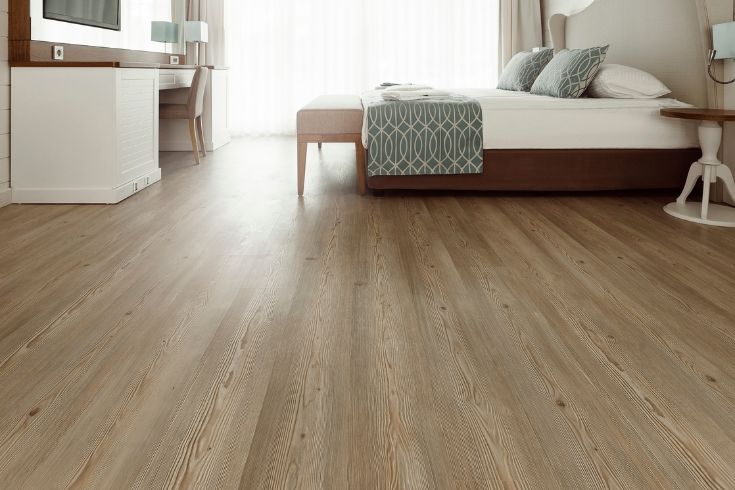
A full refinish on a typical historic Intown home runs three days: sanding on day one, two coats of polyurethane on day two, and a third coat on day three. Small jobs can finish in a day, and larger or more complex layouts can stretch to five or seven days. Sanding generates fine dust even with modern vacuum-assisted equipment, so plan to cover art, books, and electronics with plastic, and consider boarding pets elsewhere during the work. You can walk on the floor in socks 24 hours after the final coat, and furniture and pets can return at that same 24-hour mark. Rugs should stay off for two to three weeks so the finish can fully cure.
Budget-wise, refinishing a historic heart pine floor in Atlanta ranges from a few thousand dollars for a small project to the low five figures for a whole house with patching and color work. Expect to pay more than the headline rate you see advertised for standard oak refinishing.
Red Flags to Watch For
Before the crew starts, make sure you and your contractor have addressed:
- Cupping or crowning. Signals a moisture problem underneath. Refinishing over it just locks the problem in.
- Subfloor rot. Common in bathrooms, kitchens, and exterior door thresholds. Fix it before refinishing, or you will be tearing up a fresh finish in a year.
- Lead paint near baseboards. Any home built before 1978 needs an EPA RRP-certified contractor if sanding will disturb painted trim. This is not optional.
- Prior shellac or wax finishes. Common in pre-1940 homes. These need to be chemically removed or fully sanded through before the modern finish will adhere.
A hundred-year-old floor has survived two world wars, countless parties, and probably a few leaking radiators. With a careful refinish, it will outlast the next owner, too. That is the real luxury of historic wood: the story stays in the grain.
Conclusion
Restoring 100-year-old heart pine floors is a meticulous process that preserves the irreplaceable character of historic architecture. Success begins with identifying the specific wood species and prioritizing a careful refinish over replacement to save the dense, resinous grain found in old-growth timber.
Because heart pine is softer than modern oak, contractors must use a conservative sanding progression and specialized equipment to avoid creating an uneven texture. Opting for matte waterborne finishes or hardwax oils rather than high gloss polyurethane allows the natural amber patina to shine while ensuring the aesthetic remains period-appropriate.
By addressing structural integrity and safety standards upfront, you protect the wood and your investment for the next century. Your floors are a legacy that deserves expert care. Don’t let decades of history remain hidden under tired carpet or outdated finishes. Connect with an Atlanta flooring specialist today to schedule a professional assessment and reveal the original beauty of your heart pine floors.