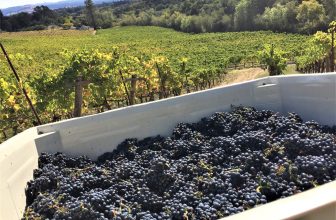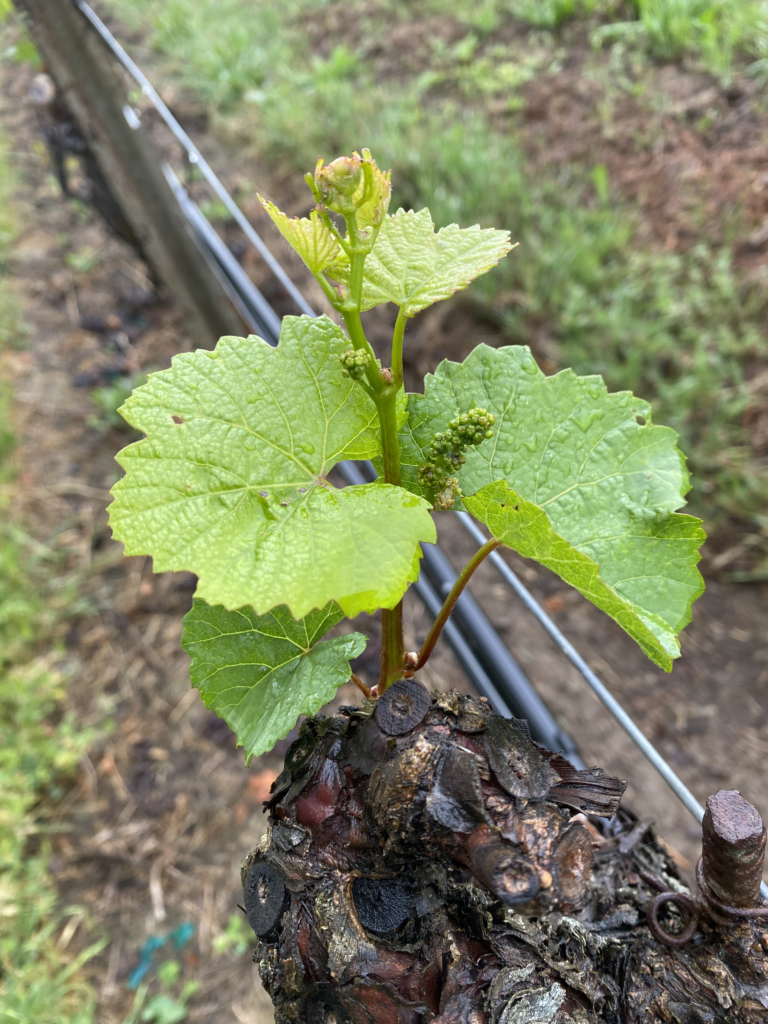
Budbreak came early to California this year, which by itself isn’t that strange. There are years when we’ve seen buds start to push by the end of February. But then what started as a warm February gave way to abnormally warm temperatures in March and early April. This accelerated phenological development even more. Traditionally, April 1st is the day when the count starts for growing degree days accumulation. But this year vines in many parts of the state already had more than a foot of growth by then, rendering this yearly measurement fairly useless as a comparison tool. By May 1st, I noticed bunch closure in a Central Coast vineyard…which in the words of the great Stephen Colbert, is just booboo banana bonkers.
So what does a crazy early start mean for the vintage? What can we expect and why am I …cautiously optimistic?
Water water everywhere…
In truth, the growing season for grapes starts well before any buds push at all. I’m talking about winter rainfall, or more importantly, late winter/early spring rainfall. In wet climates, this sets the stage for early growth but more importantly, the vines’ ability to reach water stress targets as we get into lag phase and veraison later down the road. Very wet years in the north coast on heavy soils with high water-holding capacity, don’t often dry out in time to get anything lower than a -6 on a pressure bomb. For varieties like Cabernet Sauvignon, you’re aiming for something closer to -13 by the time veraison hits. This year, the north coast got some high rainfall throughout the winter and into early spring. I therefore expect that some vineyards may never reach those target stress zones, especially if veraison hits a month sooner than expected.
Where I am in Paso Robles, rainfall is usually a small fraction of what the North Coast gets. We actually got upwards of 23 inches with a whopping 5 inches of it falling in mid-February. That’s a lot when you consider that this area is lucky to get 6 inches all year. And it shows! Central coast canopies that are normally skimpy and weak, depending solely on winter drip-irrigation in this part of the state look full. Rain always wets a much larger surface area (and hence soil volume) than do drip emitters, so both the hydric state and the nutritional state of these vineyards markedly improves in years that are wet, especially if canopy development is early enough to take advantage of it before the cover crop and gravity gobble it up.