MORE FREQUENT FIRES
Authorities are attempting to make contact with 14 people whom they have failed to reach by cell phone but are not yet presumed missing, Nowels said.
“I think the estimate is potentially up to 65,000 people we had to move out of these areas, and if you think about what that entails, the fact that we were able to get people out of those areas within several hours in an active fire zone is pretty incredible,” the sheriff said.
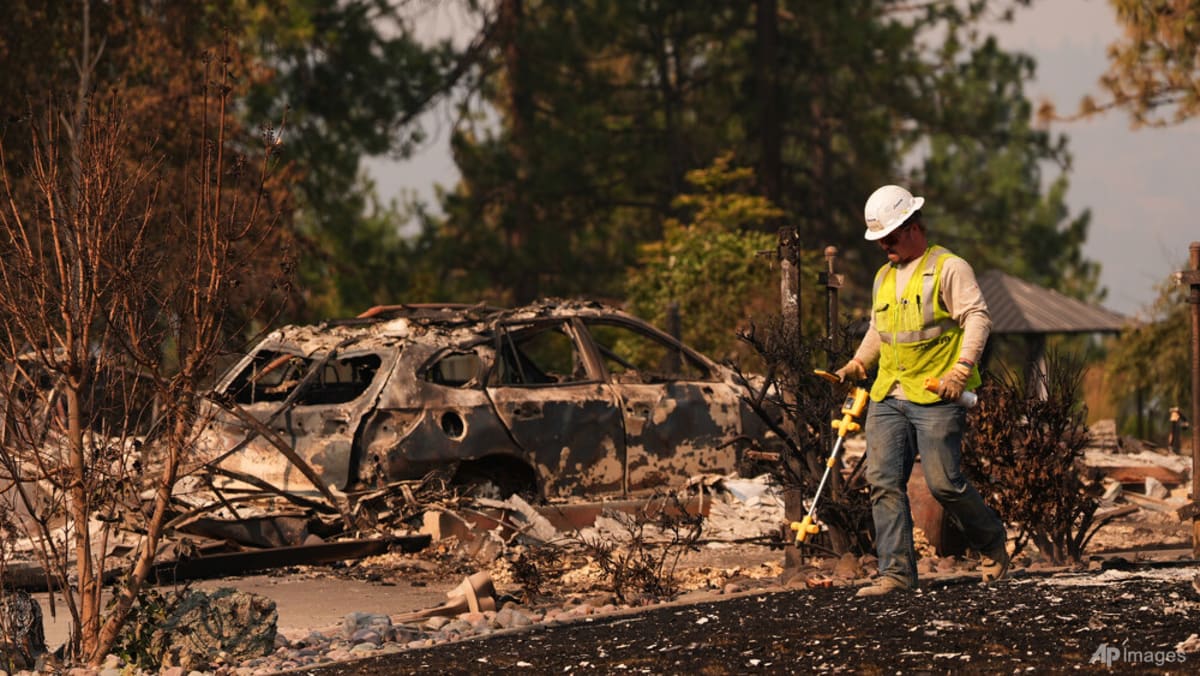
Mayor Lisa Brown said authorities were combing the city block by block to assess damages and potential reignition, and couldn’t tell people yet when they could return home.
“It could be weeks, depending on where your home and property is,” she said.
“I think from a historical standpoint, this is likely the worst natural disaster in Spokane’s history,” Washington Governor Bob Ferguson added.
Ferguson declared a state of emergency on Aug 1, citing drought conditions and high temperatures exacerbating wildfires.
The Washington State Department of Natural Resources also asked people to stop flying personal drones over the blazes.
“They can ground or collide with our firefighting aircraft” and cause disruptions to emergency efforts, the state agency said on X.
“Your photos are not worth someone’s home.”
Human-caused climate change is increasingly creating conditions for more frequent and intense wildfires, through increased heat, extended drought, and a “thirsty” atmosphere that enhances the drying of organic matter.
The Spokane fires follow “one of the warmest winters on record for eastern Washington,” which led to a severe snow drought, said Daniel Swain, a climatologist at the University of California, Los Angeles.