Introducing my new Children’s book series – Sarah Ockwell-Smith

Book number one is out next month!
I’m often asked to recommend books for children, about all sorts of issues. I do have a list of my favourite books that help children with different emotions (see HERE if you’re interested), but I’ve always struggled with recommendations for older children, especially tweens.

I really strongly feel that a lot of the ‘coming of age’/puberty/growing up books on the market are problematic. First up I dislike the idea of gendered books. Boys need to understand what happens to girls as they grow, and vice versa. I also find the tone of many of these books to be quite patronising. Children of this age are really capable of understanding and assimilating more than we think and I find a lot of information ‘dumbed down’ and I think these books can tackle meatier topics than they do. Finally, I think there’s a real missed opportunity for communication and collaboration between children and their parents and carers.
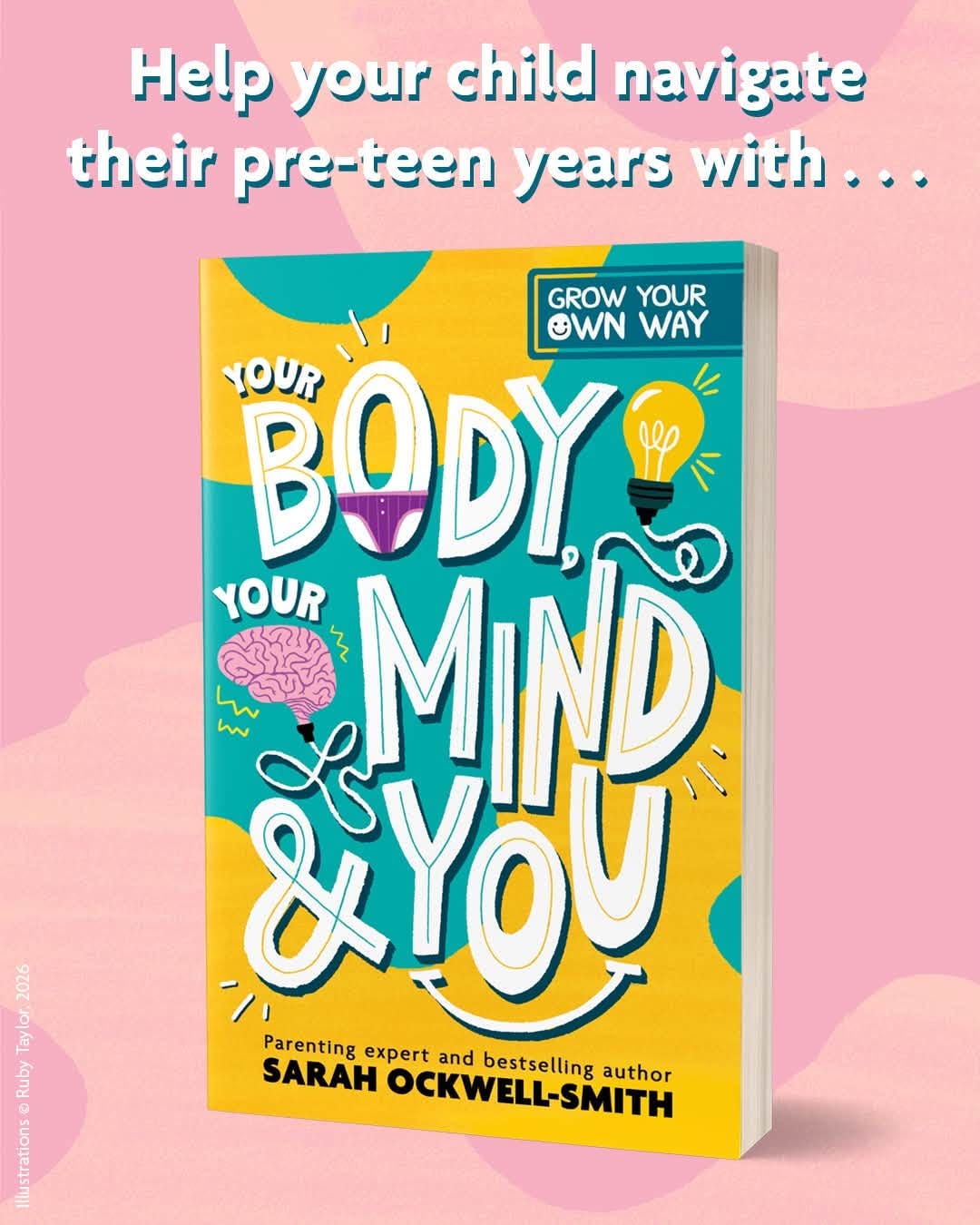
With all of this in mind, I’m incredibly proud to introduce: Grow Your Own Way. A series of books for 8-13 year olds. The first of these books is called “Your Body, Your Mind, and You” and it’s all about puberty and growing up in body and mind. I thought you might like to read “the bit for parents and carers” that I’ve included at the back of the book:
“The bit for parents and carers
Hello, and thanks for buying or borrowing this book for your child. Whether you’ve come to this book because you’ve read some of my parenting books, watched my videos, follow me on social media or you’re brand new to my work, I really appreciate your trust in me.
I wrote this book because in the two decades I’ve been consulting with parents I’ve been asked hundreds of times if I can recommend a book for tweens that summarises my approach to growing up (something I call gentle parenting – which, if you’re new to the idea, is just raising children with empathy, respect, understanding, boundaries and mindful discipline). While there are some brilliant books about puberty and the like for children, I couldn’t find anything that really fit with my ideas, so I wrote the book that I wanted to recommend.
First up, I think it’s really important that we treat children as equals (that’s the respect part of gentle parenting). They are not mini adults, or ‘human becomings’, they are human beings. They deserve the same respect as we do, as adults. I want them to feel empowered. To this end, it was incredibly important to me to write a book that wasn’t patronising or somehow dumbed down. For instance, I feel all children should know the anatomical names for their genitals and be able to use them without embarrassment. I also believe that all children should have a basic knowledge of neuroscience, or specifically how their brain works and develops. I can’t imagine how much easier childhood would have been for us if somebody had told us that how we were feeling or behaving wasn’t a problem and wasn’t our fault. I want this new generation to grow up embracing everything about themselves, not being afraid to be authentic, or feeling that they have to hide parts of themselves away in order to fit in more, or be more accepted by their peers, or their families.
Talking about authenticity, I think all tweens should know about neurodivergence and neurodiversity and understand the challenges some children (and adults) face daily. In early 2026 I released a book called How to Raise a Gentle Man, written for parents raising boys who are keen to avoid the effects of the manosphere, toxic masculinity and the worrying new incel movement. This book continues the messages in that book but presents them in a way that young boys feel that they are part of the solution, not the problem.
What else will your tween learn about? Well, there’s the obvious puberty bits; what happens to their bodies as they grow, when it will happen and how they can feel best prepared. We talk about periods, which is incredibly important for boys to read too (I have never understood why so many puberty books are written solely for boys, or girls; both need to understand what is happening to the other!), we talk about normal bodily fluids and processes and yes, we talk about sex and masturbation too. We also discuss pornography because an alarming percentage of tweens have already stumbled across it. We can’t pretend it doesn’t exist; that doesn’t help anybody. Instead we should inform, educate and teach how to keep safe.
There’s also information about keeping healthy, in body and mind. We discuss screentime and safer internet usage. We talk about the risks of diet culture and the importance of body positivity and acceptance. We discuss sleep (how much they need and what they’re probably doing wrong to inhibit it), skincare (and how to avoid the alarming rising trend of tween skin influencers and products), dental care, braces, vaping (because again, an alarming number of tweens have tried them already), plus we talk about the fight or flight response, mindfulness, anxiety, growth mindset and emodiversity (the idea of accepting all emotions) and perhaps most importantly of all, for you anyway, how to talk to your parents about how you’re feeling, especially if you’re struggling. Throughout I’ve kept a focus on how wonderfully unique your child is, how it’s good to be different, and – as the title suggests – to ‘grow your own way’.
Heads up: at the end of each chapter, I’ve asked your tween to write down any questions that they may still have in a notebook or on some other paper (it would be great if you could give them a notebook for this purpose, alongside this book), so that they can pass the questions to you when they’ve finished. You can then go away and research (because, wow, some of their questions are DEEP!) and then get back to them with answers and honest and open conversations.
Some tweens (and parents) will welcome open and honest conversations about these questions, while others would prefer to communicate in writing. I’ve asked your tween to let you know which they’d prefer. As much as anything, I’ve written this book to be a communication tool between the two of you, because I’ve raised four children and I know how tricky the tween years can sometimes be as a parent. I hope this book makes them a little easier for you too, as well as for your child.
Thanks for reading
Sarah”
You Body, Your Mind and You is full of gorgeous, inclusive, illustrations to keep it as engaging as possible, you can see an example below:
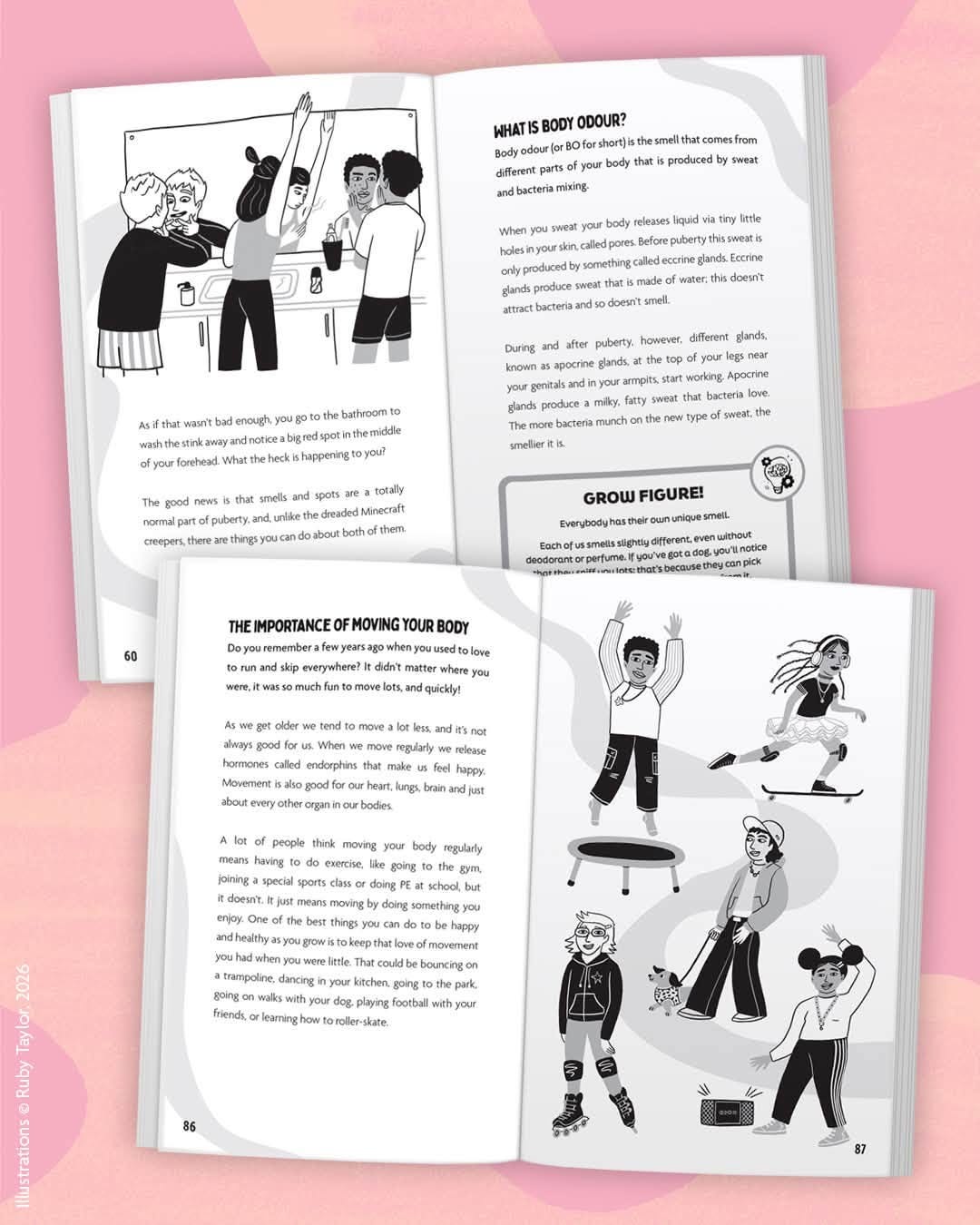
Your Body, Your Mind, and You is out next month, in paperback, ebook and audiobook (read by me). It’s available for preorder now. I hope you and your child(ren) love it as much as I do!
By the way, if you have any other topics you’d love to see included in a book for pre-teens/tweens, please let me know!
Oh, and news about my next parenting book coming soon (hint – it’s for parents and carers of girls!).
Sarah