Like many states, Indigenous groups led the way of Nevada’s agriculture and natural resources in the beginning. The harvested native seeds, pine nuts, and plants across the Great Basin. Agriculture changed drastically in the mid-1800s when the Comstock Lode mining boom brought tens of thousands of prospectors to the region. Early agricultural pioneer families built ranches in fertile valleys to supply mining towns with fresh meat, grain, and vegetables.
To tackle the arid environment, farmers quickly formed water districts and constructed canal networks. Nevada’s farming sector saw a massive leap forward in 1902 with the Newlands Reclamation Project. It was one of the first federal water diversion initiatives in the United States. It redirected water from the Truckee and Carson Rivers to transform high-desert shrubland into productive agricultural fields.
Today, Nevada’s agricultural industry remains an economic foundation for rural communities across the state. Local farmers and ranchers operate roughly 3,500 individual farm holdings averaging around 3,500 acres each. Livestock ranching leads the state’s agricultural output.
Modern Nevada agriculture faces significant challenges as water scarcity, climate shifts, and urban expansion strain traditional farming practices. In response, modern growers actively adopt precision irrigation technology, drop-line sprinklers, and drought-tolerant crop varieties to conserve every drop of water.
Through a balance of historic grazing practices and high-tech water management, Nevada producers continue to deliver food and livestock to regional and global food supplies.
About the Nevada Department of Agriculture
Established in 1915, the Nevada Department of Agriculture operates with a clear, focused mission: to preserve, protect, and promote Nevada agriculture. The department serves as the primary governing body supporting the state’s growers, ranchers, and agribusinesses while safeguarding consumer interests and public health.
Through educational outreach, market development initiatives, and state-wide grant programs, the agency works to strengthen rural economies and connect Nevada-grown commodities with domestic and international buyers.
To fulfill its mission, the department manages five core divisions:
- Administration
- Animal Industry
- Consumer Equitability
- Food & Nutrition
- Plant Industry.
Its staff, led by the Director, oversees a wide spectrum of daily operations, ranging from monitoring animal health, livestock identification, and plant disease control to inspecting weights, measures, and petroleum pumps for fair trade. The agency also administers crucial state and federal nutrition initiatives, such as school meal programs and food distribution networks, ensuring local agricultural resources actively feed Nevada families and communities across the state.
Learn more at https://agri.nv.gov/.
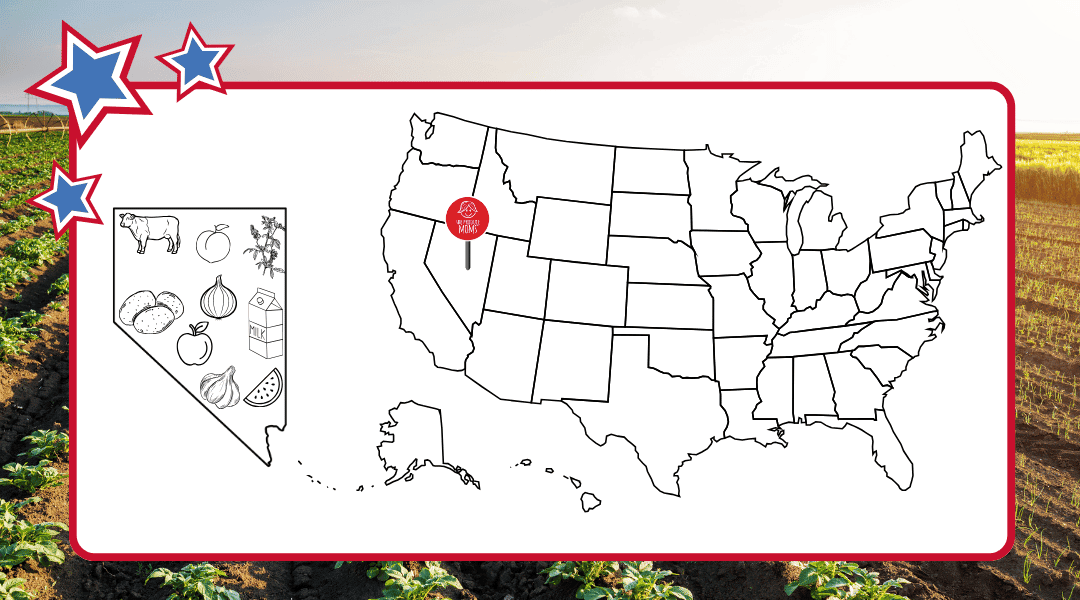
Top 5 Agricultural Commodities in Nevada
While Nevada is famous for its glowing neon strip and vast desert expanses, the Silver State holds a rich agricultural industry. Nevada anchors its rural economies and fuels food systems far beyond its borders. According to the USDA’s Census of Agriculture, Nevada’s farmers and ranchers generate nearly $1 billion in total market value of agricultural products sold each year. Across the state there are nearly 5.9 million acres of farmland. Despite high-desert temperatures and low annual rainfall, Nevada producers leverage high-tech water management, vast natural rangelands, and warm sunlit days to generate some of the nation’s highest-quality agricultural goods.
Cattle and Calves
Range livestock production stands as Nevada’s primary agricultural industry. It generates over half of the state’s total livestock cash receipts. Ranches dot every single county in Nevada. They support rural communities, feed stores, and local processing operations. Nevada cattle ranches supply high-quality beef stock to feedlots and processors across the Western United States.
Alfalfa Hay
Alfalfa hay reigns as Nevada’s top cash crop. It generates well over $160 million to $200 million annually. High-desert sunshine, combined with crisp mountain runoff, allows Nevada farmers to harvest dense, nutrient-packed bales that feed local beef herds and regional dairies. Nevada farmers harvest more than 1 million tons of alfalfa hay each year. Nevada-grown alfalfa is famous worldwide for its exceptionally high protein content and premium quality. It serves as a vital feed source for California’s massive dairy industry and is exported in large quantities to overseas markets, including East Asia and the Middle East.
Dairy Products (Milk)
Concentrated primarily in northern and southern valleys, dairy farms provide fresh fluid milk and dairy goods to urban Nevada centers. It also sustains regional bottling plants and creameries. Nevada dairies consistently produce hundreds of millions of pounds of milk each year. They supply major regional processors and contribute to fluid milk, cheese, and milk powder production distributed throughout the Pacific Southwest.
Onions
Nevada specializes in high-quality dry bulb onions (yellow, red, and white varieties). They are shipped directly to major grocery chains, restaurant suppliers, and food processing plants across North America due to their long shelf life and sweet, crisp profile. They are grown heavily in fertile valleys. Commercial onion farming brings substantial seasonal employment and packing infrastructure to northern Nevada’s agricultural valleys.
Potatoes
Nevada’s sandy loam soils and cool high-desert nights create optimal conditions for growing potatoes. Local potato processing and cold-storage facilities provide stable agricultural jobs and anchor rural supply chains. Nevada potatoes, particularly Russets and specialty chip varieties, frequently enter national supply chains for seed potatoes, fresh market retail, and major snack food manufacturers (such as potato chip processors).
Fruits and Vegetables from Nevada
Nevada’s high-desert climate is characterized by alkaline soil, low humidity, and hot summer days coupled with cool mountain nights. And it creates a distinct environment for specialty crops. While vast rangelands and forage hay dominate the state’s total agricultural acreage, commercial and localized fruit and vegetable production plays an essential role in diversifying Nevada’s agricultural output. By tapping into snowpack irrigation and modern groundwater systems, Nevada producers grow specialized, high-value crops that thrive in dry, pest-resistant conditions.
Top Fruits
- Apples: Apples are the most widely grown and reliable tree fruit across Nevada. While commercial orchard acreage is smaller than field crop acreage, local apple orchards drive vibrant direct-to-consumer agritourism
- Melons: Melons are the standout commercial fruit crop in central and southern Nevada. The intense summer heat combined with controlled irrigation yields fruits with exceptionally high sugar content.
- Peaches: Peaches, along with nectarines and apricots, thrive in southern Nevada’s warmer valleys. Local orchards supply regional farmers’ markets and specialty fruit stands. Because peach trees bloom early in the spring, Nevada’s unpredictable spring freezes mean orchard harvests vary from year to year.
Top Vegetables
- Onions: Because onions require precise moisture management, local growers rely heavily on drip irrigation lines installed directly beneath the soil beds to conserve water while delivering targeted nutrients. The low humidity and high altitude of northern Nevada act as a natural defense against fungal diseases (like downy mildew) that plague humid onion-growing regions. This allows growers to produce exceptionally clean crops using fewer pesticide applications.
- Potatoes: Nevada potato growers regularly harvest between 2.5 million and 4.5 million hundredweight of potatoes a year. Beyond seed stock, Nevada grows significant quantities of Russet potatoes for table stock and frozen fry processing. They also grow high-solid white potatoes, which are grown specifically under contract for national potato chip manufacturers.
- Garlic: Commercial garlic production is another signature crop for northern Nevada valleys. Nevada growers produce both culinary garlic and specialized garlic seed stock. They take advantage of the region’s cold winters and hot summers to develop strong bulb structure and rich flavors. Much like potato farming, Nevada’s garlic growers specialize in certified disease-free seed garlic. The state’s dry atmospheric conditions help protect garlic crops from white rot, making Nevada-grown garlic seed highly prized by commercial growers across California and the Pacific Northwest.
Visit our Produce Directory and learn how to Select, Store and Serve these fruits & vegetables.
About 50 States of Agriculture
In celebration of 250 years of the United States, The Produce Moms is proud to present 50 States of Agriculture. This is an educational and free resource that celebrates the bounty of America. We utilized USDA and State Department of Agriculture data (Nevada) for the content in this series.
Agriculture is the foundation of freedom. Food security is national security. This content series is a celebration of United States culture and the hard-working farmers who feed, fuel & clothe our nation and the world.
Visit another state from our 50 States of Agriculture.