Beneath a Corset? Teaching Anthropology Through Biocultural Research on Intimate Partner Violence


By Griffin Hickman, Undergraduate student, University of Toronto Mississauga
In ANT441: Advanced Bioarchaeology, taught by Dr. Creighton Avery at the University of Toronto Mississauga, students are encouraged to do more than learn about past populations, they are invited to interpret them. The culminating assignment in the course, a research poster presentation, challenges students to take previously collected data and reimagine it through new questions or frameworks. This structure captures what teaching anthropology at its best can achieve: allowing students to experience what real anthropological research feels like.
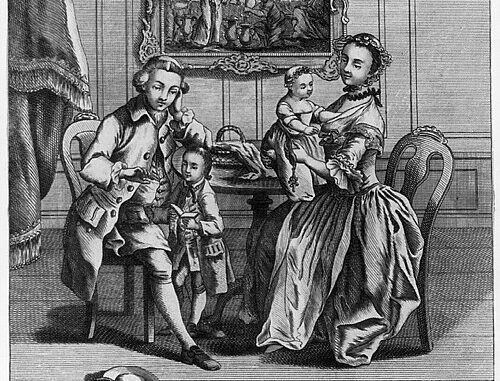
When I began the course, I knew immediately what I wanted to explore, intimate partner violence (IPV) in the past. Specifically, I aimed to apply a new osteological framework to historic populations, integrating theory, data, and ethical reflection. My project, “Beneath a Corset? A Biocultural Study of Intimate Partner Violence in St. Bride’s Lower Churchyard (1770–1849)”, sought to assess sex based differences in IPV scores in an 18th–19th century London skeletal assemblage.

The study used trauma data from St. Bride’s Lower Churchyard (Kausmally, 2008), assessing fractures on the face, cranium, ribs, and ulna using the Spigelski and Rogers’ (2024) IPV Scoring System. This method quantifies trauma patterns consistent with intimate partner violence, producing a numerical “IPV score” that can be statistically compared between sexes. I hypothesized that biological females would show higher IPV scores as compared to biological males, reflecting historical patterns of domestic abuse.
As in any research project, challenges quickly arose. I reached out to international researchers seeking comparative datasets, but I encountered several dead ends. Despite these setbacks, the process became a lesson in perseverance and adaptation, skills essential to both research and anthropological teaching. By navigating data access issues, revising hypotheses, and re-evaluating methodology, I came to appreciate how uncertainty and iteration are integral to the learning process in anthropology.
When analysis was completed (N = 284), the results surprised me. Males, not females, exhibited slightly higher average IPV scores (mean = 0.0169 vs. 0.0088 for females), though this difference was not statistically significant (p > 0.05). This finding initially contradicted my expectations, but deeper contextualization revealed a crucial point about how we interpret the past. In Georgian and Victorian London, many forms of violence against women, such as slapping, hair-pulling, burning, or deprivation, left no skeletal traces (D’Cruze, 1998; Foyster, 2005; Gowing, 2014). The discrepancy between documentary records of pervasive marital violence and the skeletal data underscores the limits of osteological visibility.
For me, this project became more than an analysis, it was a case study in the biocultural nature of teaching anthropology. The process of interpreting bones required constant negotiation between quantitative data and historical context, between evidence and empathy. As an undergraduate, being trusted to independently conduct, analyze, and present research cultivated not only technical skills but also a sense of belonging within the discipline.
Dr. Avery’s course exemplifies a pedagogical approach that treats students as emerging researchers rather than passive learners. Allowing undergraduates to design and present authentic projects encourages creativity, critical thinking, and resilience, qualities that mirror professional anthropological practice. Whether our hypotheses are supported or refuted, what matters most is the process of inquiry itself: asking meaningful questions, wrestling with imperfect data, and situating findings within their broader human context.
In reflecting on this experience, I have come to see that teaching anthropology is not about transmitting static knowledge but about creating spaces where students can contribute to it. By guiding us through real data and real uncertainty, courses like ANT441 transform classrooms into collaborative research communities, where curiosity, critical engagement, and compassion for past lives are all part of learning what anthropology truly means.
References
D’Cruze, S. (1998). Crimes of Outrage: Sex, Violence and Victorian Working Women. UCL Press.
Foyster, E. (2006). Marital violence: An English family history, 1660- 1857. Cambridge University Press.
Gowing, L. (2005). Domestic dangers: Women, words, and sex in early modern London. Clarendon Press.
Kausmally, T. (2008). St. Bride’s Lower Churchyard cemetery: Osteological database. Centre for Human Bioarchaeology, Museum of London.
Spigelski, S. A. (2024). Behind Closed Doors: An Osteological Analysis of Intimate Partner Violence (Order No. 31143127). Available from Dissertations & Theses @ University of Toronto; ProQuest Dissertations & Theses Global. (3119373638). http://myaccess.library.utoronto.ca/login?qurl=https%3A%2F%2Fwww.proquest.com%2Fdissertations-theses%2Fbehind-closed-doors-osteological-analysis%2Fdocview%2F3119373638%2Fse-2%3Faccountid%3D14771