Dan Shreve’s Triple Modular Recovery: Defeating Addiction Using the First Comprehensive Recovery Framework Just Went Live!

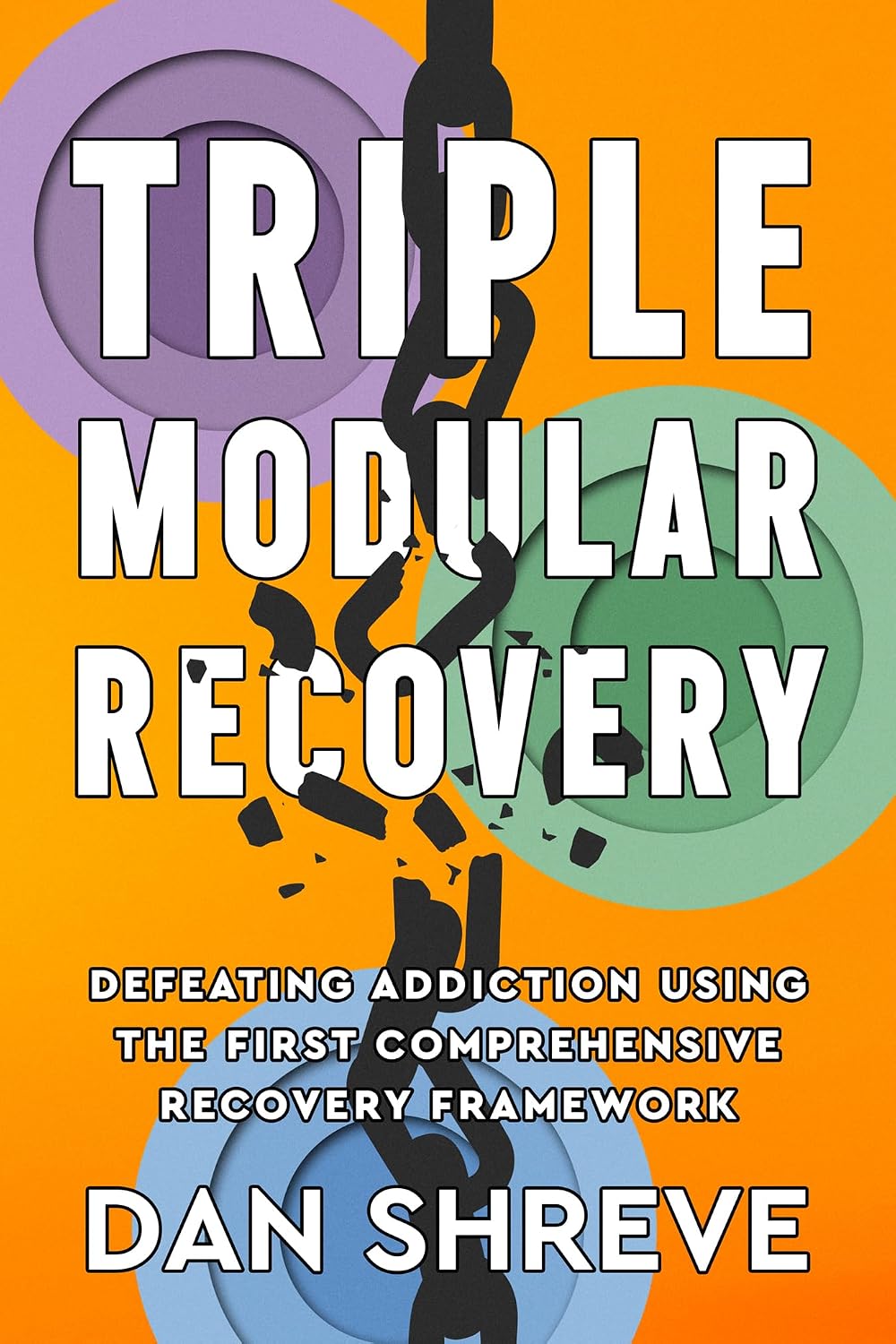
 Triple Modular Recovery: Defeating Addiction Using the First Comprehensive Recovery Framework & the author is today’s newsletter sponsor!
For Decades, Addicts Have Been Told They Failed Recovery. What If Recovery Has Been Failing Them?
I’m Dan Shreve, MBA, PMP, a process improvement expert and project manager with over twenty years of experience updating outdated systems to make them more practical, efficient, and effective. I have written an irreverent book that offers an individualized approach to addiction recovery rooted in the best scientific studies of addiction treatment. Triple Modular Recovery is for people new to recovery, those working in the recovery industry, and especially those people failed by traditional recovery methods.
…If you’re ready for a transformative journey beyond outdated methods, Triple Modular Recovery is your essential roadmap to a brighter, addiction-free future.

Triple Modular Recovery talking points
• Addiction recovery is a design problem. Because every person is different, effective recovery should be individualized rather than one-size-fits-all.
• Triple Modular Recovery is more than a memoir. It challenges the assumptions that have shaped addiction treatment for generations and offers a practical alternative.
• Build a recovery plan around what actually works for you. The framework combines the strongest tools from multiple recovery programs and treatment approaches.
• Written by one addict for another. The book uses plain, direct language rather than clinical jargon or empty inspiration.
• Grounded in major addiction research. It examines landmark studies and explains what they reveal about recovery outcomes.
• Questions the disease label. The book explores whether addiction is better understood as a syndrome and why that distinction matters.
• Includes step-by-step guidance. Readers learn how to create, test, and improve their own recovery framework.
Priority talking points
• Recovery is not one-size-fits-all.
• Build a recovery framework designed around you.
• Evidence-based, practical, and written in plain language.
About the book:
Addiction treatments have historically emphasized adapting individuals to a predetermined recovery model, most commonly 12-step methodology. Triple Modular Recovery argues that addiction treatment has been missing something more fundamental than a singular recovery method: its first comprehensive recovery framework.
Ultimately, recovery is a design problem.
Drawing on more than twenty years of experience redesigning complex systems, Author Dan Shreve approaches addiction from an engineer’s perspective. Triple Modular Recovery reverses the recovery equation by presenting a comprehensive framework designed to help individuals build an effective strategy tailored to their unique needs using the best available scientific evidence.
Addressing both substance and behavioral addictions, the Triple Modular Recovery framework is intended to complement, rather than replace, existing recovery tools by helping readers identify which approaches are most likely to work for them.
Recovery methods already exist in abundance. What’s been missing is a framework that explains how to choose, combine, and adapt those methods based on an individual’s challenges, preferences, and circumstances. Rather than asking readers to adopt a single philosophy or program, Triple Modular Recovery examines the science of addiction and explores the strengths and limitations of today’s most common recovery approaches, organizing evidence-based strategies into a powerful customizable framework.
As you’ll soon learn, recovery is a twisty and often surprising ride. So strap in, because we’re doing sober s**t today!
About the author:
Dan Shreve, MBA, PMP, lives next to a friggin’ volcano in Washington state with his beautiful wife and two acceptable sons. For over 20 years he has been a project manager and expert in process improvement, the latter of which current addiction recovery treatments desperately need. That doesn’t necessarily qualify Dan as an author but apparently we live in an indifferent universe where everybody can do any damn thing that comes into their head, so here we are.
Review Excerpts:
“Just as some people learn in different ways, some people need help recovering from addiction in different ways, and the author does a brilliant job of offering a unique, data-driven solution.”
– Anthony A.“Where this book stands out is in two places. 1) it covers what is known to work, and why 2) the author’s willingness to be vulnerable about the struggles of addiction.”
– Mark G.
Book Excerpt:
“If no problem is recognized, there is no recognition of the need for improvement.”
– Masaaki Imai
Life — like the people who live it — can be complex and simple, beautiful and ugly, wondrous and maddening, all at the same time. Reality is both absolute and absolutely confounding. For example, it’s natural to think that falsehoods hide the truth while facts reveal it, but sometimes the inverse is true: falsehoods can reveal the truth while facts can create a falsehood.
Everyone has heard this notorious untruth: “You don’t have to get me anything for Valentine’s Day.” Translation: “Technically you don’t have to do anything, but if you truly care about me you’ll want to make my Valentine’s Day special.” That’s a falsehood revealing the truth. One person is being false in order to determine how the other person truly feels. In other words, what is literally being said is different from what is actually being said. Is that fair? Debatable. Is that wise? Highly debatable. Is that reality? Great friggityf**k yes.
Here, then, is an example of facts creating a falsehood:
Leading causes of death in the US in 2021
• Heart disease: 695,547
• Cancer: 605,213
• COVID-19: 416,893
• Accidents (unintentional injuries): 224,935
• Stroke (cerebrovascular diseases): 162,890
• Chronic lower respiratory diseases: 142,342
• Alzheimer’s disease: 119,399
• Diabetes: 103,294
• Chronic liver disease and cirrhosis: 56,585
• Nephritis, nephrotic syndrome, and nephrosis: 54,358
The data above came from the Centers for Disease Control and Prevention (CDC) and it is a simple statement of fact. No reasonable person would debate it, yet it’s a perfect example of life’s duality. It is literally correct, but it completely obscures the actual truth. Here’s another simple statement of fact from the CDC:
Deaths due to excessive alcohol use in the US in 2021
• As of 2021, excessive alcohol use was responsible for 178,000 deaths per year in the US.
• Two thirds of the deaths (about 117,000) are due to chronic conditions that develop from long-term alcohol use, including various types of cancer, heart disease, liver disease, and alcohol use disorder (AUD).
• One third of these deaths (about 61,000) happen from drinking too much on one occasion, such as from motor vehicle crashes, poisonings involving substances in addition to alcohol, and suicides.
Something is wrong with this picture. If the CDC says that in the US excessive drinking was responsible for 178,000 deaths in 2021, why doesn’t excessive drinking appear on the CDC’s 2021 list of leading causes of death in the US? How can two sets of seemingly contradictory data from the same source both be true?
This is another example of the literal truth and the actual truth being different. Drinking was the root cause of 178,000 deaths in 2021, not the direct cause. Liver disease killed your uncle, but he got liver disease from years of excessive drinking. A car accident killed your coworker, but the accident was caused by a drunk driver. When the alcohol-related deaths due to heart disease, cancer, and accidents are removed from those categories in the CDC’s leading cause of death chart and properly attributed to addiction, a shocking reality becomes clear: in 2021 excessive drinking was the fourth leading cause of death in the US, and the true scale of the addiction problem is even greater. Alcohol abuse is just one form of substance addiction. According to the CDC, 2021 also saw 106,699 deaths from drug overdoses, primarily fentanyl and methamphetamine. Drug overdose deaths have quadrupled in the last 20 years, and this trend is accelerating rapidly.
Like I said, life can be both wondrous and maddening. Truth can be obscured by facts. Addiction and addiction treatment are both complex and simple. What is addiction, how do we treat it, and how successful are our treatments? More to the point, how the hell can I save my own life or the life of my loved one from addiction? These are basic questions with surprisingly complex answers. The good news is that sobriety — like truth — can be found if you’re willing to wade through the misconceptions and falsehoods that flood the world of recovery.
SELF HEP!!
Triple Modular Recovery: Defeating Addiction Using the First Comprehensive Recovery Framework
As an Amazon Associate I earn from qualifying purchases.