BooKecCenTriC
was privileged to welcome Author Michelle Labine to
our virtual couch for an interview about her latest book, Her Face of Autism. Be inspired!
——-

What’s your book about, and what inspired you to write
it?
Her Face of Autism is about what it
means to discover you’re Autistic later in life particularly as a woman who’s
spent decades masking, adapting, and trying to make sense of a world that often
felt just out of reach. The book explores the intersection of autism, identity,
sexuality, and self-acceptance through a neurodiversity-affirming,
trauma-informed lens. It blends personal narrative, clinical insight, and the
shared experiences of women who’ve lived unseen for far too long.
I was inspired to write it after my own late diagnosis. Like
so many women, I had spent years helping others find their voice while
struggling to understand my own. When everything finally “clicked,” I realized
how many women had similar stories full of brilliance, burnout, and resilience.
I wanted to create the book I wished I’d had at that moment something that
says, you’re not broken, you’re seen.
Who is your target audience, and why do you think this
book will appeal to them?
Her Face of Autism is written for late-diagnosed Autistic women and
for anyone who has ever felt misunderstood, misdiagnosed, or invisible. It’s
also for clinicians, educators, partners, and allies
who want to better understand the emotional world of Autistic women beyond the
stereotypes and diagnostic checklists.
This book will resonate with readers who are seeking both recognition and relief the “oh,
it’s not just me” moment. It speaks to women who’ve spent years masking,
overachieving, or people-pleasing, and are now ready to unlearn shame and
reclaim their wholeness. What makes it especially appealing is that it’s not
just another clinical text it’s a compassionate, lived-in conversation. It
blends the heart of a memoir with the grounding of professional insight,
offering readers a mirror, a map, and a sense of belonging they may never have
felt before.
What’s the one thing you hope readers will remember or
take away from your book long after they finish reading it?
I hope readers walk away knowing that they were never broken they were simply unseen.
So many late-diagnosed Autistic women spend their lives trying to fit into
spaces that were never designed with them in mind. I want this book to help
them lay down the self-blame and see their sensitivity, intensity, and depth as
strengths rather than flaws.
More than anything, I hope it invites a gentler kind of
self-understanding — one where readers can stop performing and start belonging,
both to themselves and to a community that truly gets them.
You must answer a minimum of 8 questions in this
section. (You don’t have to answer all 13 questions.)
Can you share a surprising or little-known fact about
your writing process or research for this book?
A surprising part of writing Her
Face of Autism was how emotional the research became. I began with
the intention of writing something academic and structured — but the more I
read, the more I saw how absent women’s voices were from the research on
autism. That realization shifted everything. The book evolved from analysis
into reclamation.
Another little-known part of my process is that I wrote many
sections in sensory-friendly spaces dim lighting, soft music, and long
stretches of quiet where I could unmask completely. I needed to experience the
same kind of safety I was writing about. In that sense, the book became both
research and self-discovery an unmasking in real time.
What’s the most memorable or impactful response you’ve
received from a reader, and how has it affected you?
One of the most powerful messages I received was from a
woman in her fifties who said, “Your
book put words to a lifetime I could never explain.” She told me
she read it in tears, stopping to underline sentences that felt like they’d
been written straight from her own journals. She said for the first time, she
felt understood not by a clinician or a diagnosis, but by another woman who had
lived it.
That message stayed with me because it reminded me why I
wrote this book in the first place. It’s not just about autism it’s about
recognition, relief, and belonging. Every time I hear from a reader who finally
sees herself reflected on the page, it reinforces that this work matters.
What’s the one question you wish readers would ask you
about your book, and how would you answer it?
I wish readers would ask, “How has
writing this book changed you?”
Because it truly has. Writing Her
Face of Autism wasn’t just about sharing information it was an act
of integration. For years, I carried the divide between who I was
professionally and who I was personally, between the therapist and the woman
still learning to unmask. Through writing, those parts of me finally met each
other.
It’s changed how I show up in my practice, in my
relationships, and in my own self-compassion. I no longer see autism as
something to explain or justify, but as a way of being that holds its own
beauty, wisdom, and rhythm. That’s what I hope readers take with them too: that
embracing our truth is the beginning of healing, not the end of it.
What’s the most embarrassing thing that’s happened to you
as an author?
One of my most embarrassing moments happened during an early
virtual talk about Her Face of Autism. I was so
focused on getting the slides and tech right that I didn’t realize my
microphone was on while I muttered to myself about a typo on the opening slide.
The audience heard the whole thing and kindly pointed it out in the chat with
laughing emojis.
In the moment I wanted to disappear, but afterward I
realized it was a perfect example of what my book is about: dropping the mask
and letting our humanity show. It ended up breaking the ice and making the
session even warmer and more real but it definitely wasn’t how I’d planned to
start!
What’s the most challenging part of the writing process
for you, and how do you overcome it?
The hardest part for me was writing about my own experiences
with the same compassion I extend to my clients. As a therapist, I’m used to
helping others hold their stories with gentleness — but turning that lens
inward required a different kind of courage. There were moments when old doubts
crept in, and I questioned whether my story was “too much” or “not enough.”
What helped me move through it was remembering why I was writing — to make sure
other women wouldn’t have to feel as alone or unseen as I once did. I also gave
myself permission to write slowly, in sensory-safe spaces, and to pause when
something felt too raw. The process became its own kind of healing — proof that
we can hold both our vulnerability and our strength at the same time.
How do you stay motivated and focused during the writing
process?
What kept me motivated was remembering who I was writing for the women
still searching for themselves in stories that don’t reflect who they are.
Every time I felt stuck or overwhelmed, I’d think of those moments of
recognition I’ve seen in my clients that deep exhale when everything finally
makes sense and remind myself, this is
for her.
Focus came through creating safety and leaning into my
natural wiring. As an Autistic and ADHD woman, I can struggle with shifting
attention, but when something deeply matters to me, I can also hyperfocus for
hours in complete flow. I built my writing process around that working in
sensory-friendly spaces, writing at night when the world is quiet, and allowing
myself to follow the pull of inspiration rather than forcing a schedule.
I treated writing the way I encourage my clients to treat
healing with gentleness, pacing, and permission to rest. When I honoured both
my rhythm and my intensity, the words came with clarity and heart.
If you could go back in time and give advice to your
pre-published self, what would it be?
I would tell her to trust
her voice even when it shakes. For so long, I second-guessed
myself, worrying about how my words would be received or whether I was
“qualified” enough to tell this story. But the truth is, authenticity is what
connects us, not perfection.
I’d remind her that this book didn’t need to prove anything
it needed to speak to the women who would see
themselves in its pages. I’d tell her to write bravely, rest often, and
remember that vulnerability isn’t weakness it’s the bridge between isolation
and belonging.
And maybe most of all, I’d tell her: you don’t have to mask here. The
world you’re writing for is ready to meet you as you are.
Your favorite quote/saying to live by?
One of my favorite quotes is by Glennon Doyle: “We can do hard things.” It’s
simple, but it captures so much of what I believe about healing and
self-discovery. It’s not about perfection or constant strength it’s about
courage, honesty, and taking one small step at a time toward your truth.
I also hold close a line I often share with my clients: “You were never too much you were just in the
wrong room.” It’s become a reminder for me, too that finding
belonging isn’t about shrinking ourselves but about finding spaces where we can
finally expand.
Do you have any more books in the works?
Yes absolutely. I’m already working on two follow-up
projects that expand on the world of Her Face
of Autism. One focuses more deeply on the lived experience of late-diagnosed Autistic women
the layers of identity, grief, and growth that continue long after diagnosis.
The other explores neurodivergent
relationships the beautiful complexity, communication patterns,
and emotional intimacy that emerge when we begin to understand each other
through a neurodiversity-affirming lens.
Both projects are close to my heart and continue the
conversation I began in Her Face
of Autism: what it means to be seen, to belong, and to build
relationships rooted in authenticity and understanding.
++++++++
What others are saying about Her Face of Autism
“The most resonant moments in the book occur when the author
steps away from the how-to structure to instruct through storytelling,
particularly when connecting her own experience of diagnosis or sharing the
many stories of women who never had a vocabulary to assign to their loneliness.
These vignettes give the book texture and heart, transforming theory into
personal experience.”
– Kirkus Reviews
“The autism diagnosis of Labine’s child made her reflect on her own experiences
with social anxiety, routine rigidity, and sensory issues. She was herself
diagnosed with autism in middle age. She draws upon that personal knowledge in
this guide for women who were also diagnosed late in life or who suspect they
are autistic. Her Face of Autism is a humane and encouraging guide for autistic
women who want to reframe
– Foreward Clarion Review
“This book serves as a guide for women diagnosed with autism later in life,
who’ve spent years navigating confusion and isolation without a clear
explanation for it. As a psychotherapist, the author blends research, personal
reflection, and case vignettes to outline the signs and symptoms of autism.
Specifically, it addresses how it may manifest in women, offering tools for
self-recognition and coping. She educates her readers on common misconceptions
and examines the social politics that contribute to delayed diagnosis,
including the infantilization of autistic individuals and the cultural pressure
to ‘mask.’ The result is a comprehensive, accessible, and empathetic
resource.”
– Kirkus Reviews
“Michelle has written a valuable addition to the literature by and for autistic
women/AFAB. Combining her story and that of other autistics, she educates and
encourages us to reflect on our thoughts and experiences through a series of
insightful questions. Throughout the book, the autistic reader will identify
and resonate with what they read, saying ‘Yes, that’s me!’ time and time again.
Thank you, Michelle, for seeing us and hearing us in this great book.”
– Sarah
Hendrickx, renowned author, consultant, and speaker specializing in Autism with
a particular focus on the experiences of women and girls.
“Her Face of Autism is a much-needed guide to navigating relationships,
sexuality, and self-concept as a late-diagnosed Autistic woman. Labine delivers
both a warm hug and empathetic guidance, and the book is packed with useful
prompts and exercises to help late-diagnosed autistic women more deeply accept,
understand, and love themselves. It’s the tender and insightful guide I wish I
had when I was diagnosed in my early thirties, and one I’m excited to be able
to point newly diagnosed Autistic women to it moving forward.”
– Melanie Deziel,
Autistic Author and Speaker, and Creator of The Late Diagnosed Diaries
newsletter
“As a late-identified Autistic woman who also realized my queerness
later-in-life, I can honestly say that Her Face of Autism is both incredibly
relatable and affirming. However, what sets it apart is the sex-positive focus
on the complex intersections of Autistic identity and sexuality. Through a
blend of psychology, reflection questions and exercises, as well as multiple
vignettes of Autistic women, and personal stories of her own, Michelle Labine
explores how being Autistic in a world that wasn’t created for us shapes our
experiences of identity, sexuality, and self-trust. If you’re ready to embrace
your Autistic identity and explore your sexuality with compassion, this book is
a must-read!”
– Oralie Loong, a late-identified AuDHDer and Registered Clinical
Counsellor offering affirming support for neurodivergent adults across British
Columbia Canada
“This book propelled my knowledge surrounding the challenges and obstacles that
late-diagnosed Autistic women are faced with in day-to-day life. The author’s
openness about their own stories and lived experiences provided a humanizing,
validating, and warm tone throughout each chapter. I would recommend this book
to not only late-diagnosed Autistic women but also to their support network
(e.g. partners, family members, and friends) to gain insight on how they can
offer care and compassion to their loved ones.”
– Hayley Wills, Registered
Counselling Therapist Candidate in Nova Scotia Canada
“Her Face of Autism is a beautiful and powerful read for anyone discovering
autism later in life, or for those who love and walk alongside them. Michelle
writes with such honesty and tenderness, offering a deeply personal glimpse
into her own journey and the experiences of other autistic women as they
explore identity, sexuality, and well-being through the lens of late diagnosis.
Her words are both validating and eye-opening. With a trauma-informed,
neuroaffirming approach, Michelle captures what it feels like to go through
life, not knowing you are autistic, and how that unknowing can quietly shape
one’s sense of self and lead to layers of both small and significant trauma.
As a mother of late-diagnosed AuADHD adult children, I found myself pausing
again and again, moved by her insights and filled with moments of recognition,
relief, and self-compassion. Michelle’s reflections about her own child’s
exploration of being autistic were especially meaningful; they softened shame
and brought so much clarity to my own experiences.
This book doesn’t just tell stories; it offers gentle guidance, reflection
questions, and affirmations that invite readers to explore who they are with
greater understanding and grace. Her Face of Autism is a heartfelt companion
for anyone reclaiming their identity and sense of belonging in life.” –Mary
Roberston, Registered Counselling Therapist Candidate in Nova Scotia Canada
Her Face of Autism offers a deeply compassionate and nuanced exploration of the
experiences of late-diagnosed Autistic women, particularly in the realms of
self-advocacy and relationships. It sheds light on the challenges of
communication differences, sensory needs, emotional regulation, and
boundary-setting while honoring the resilience and authenticity of Autistic
women. The discussion of unmasking, consent, and relational safety is
especially thoughtful and empowering. Overall, the book is an insightful,
validating, and essential read for anyone seeking to understand or support
Autistic women on their journey toward genuine connection and self-alignment.
– Lori Dawn Swimm, Registered Counselling Therapist Candidate in Nova Scotia
Canada
It is a beautifully written work, with a warm, inviting and intimate tone. Very
approachable, particularly for women. I have no doubt that this book, written
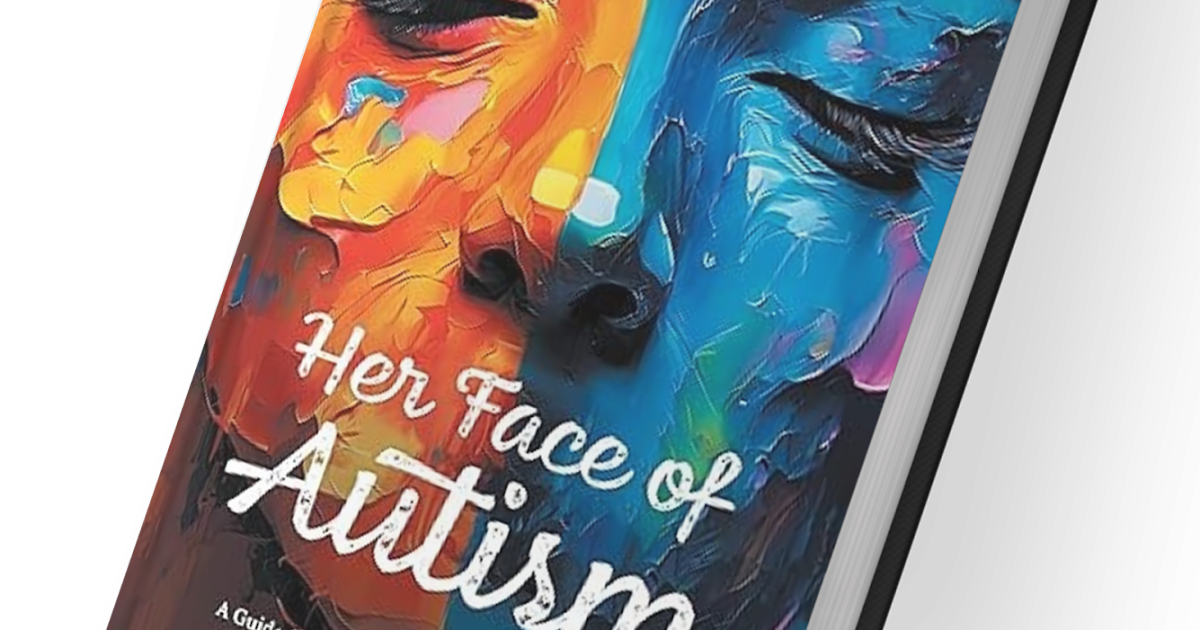
by a woman with lived and clinical experience, and its gorgeous cover will be
read, reread and loved by many – both Autistic women and the people who love
them. – Sherie Hodds, Leadership Coach
“Through anonymous stories and guided reflections, this book illuminates the
diverse experiences of women exploring autism as part of their identity,
whether formally diagnosed or still questioning. Its compassionate approach
brings forward the subtle, often overlooked layers of neurodiversity and
self-understanding. As I read, I was struck by how powerfully identity can take
shape later in life when language and context finally align. A key takeaway for
me was the reminder that self-awareness is not linear, it’s revealing,
liberating, and deeply personal. I highly recommend this work to anyone
interested in the intersection of gender, neurodiversity, and lived
experience.” – Kylee Smith, Canadian Certified Counsellor
“Weaving personal lived experience and insights from her clinical practice,
[Michelle] offers a welcome counter to rigid, male-centric, and deficit-based
perspectives of the Autistic experience. Reflective questions, composite
vignettes, and first-voice quotations throughout Her Face of Autism provide
accessible opportunities for introspection and connection to the complexity of
many women’s experience of autism.”
– Maria Nemis, Registered Counselling
Therapist Candidate
“This book fills a significant gap in the literatures engaging with gender and
autism, emotional burnout and their foundations in psychosexual identity. It is
a foundational resource for autistic women as well as for professionals working
to dismantle the harmful knowledge systems/practices undermining autistic
women’s right to self-determination, dignity and emotional thriving in all
areas of our lives.”
– Dr. Jackie F. Steele, Intersectional Feminist Law &
Political Scientist, CEO & Founder enjoi Innovation Inc, Former Associate
Professor, University of Tokyo.
——-

Michelle Labine is a psychotherapist, sex therapist, and
late-diagnosed Autistic woman. Her work centers on helping neurodivergent women
make sense of identity, burnout, relationships, and the quiet cost of lifelong
adaptation. Her writing blends lived experience, clinical insight, and
compassion for the women who were missed.