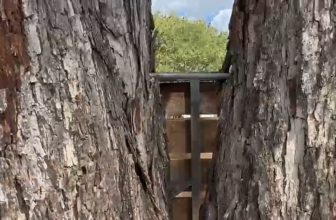
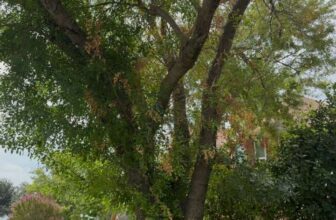
Today we’re here in Southlake, Texas, inspecting several recently planted Southern Magnolias (Magnolia grandiflora). At this stage, I’m not primarily looking for insects or disease. I’m looking at something much more fundamental:
Water.
These trees are in the establishment phase, and the most important objective right now is getting the root system successfully established into the surrounding native soil.
When a new tree is planted, the canopy may look finished, but biologically the tree is nowhere close to established.
Most of its functioning root system is still concentrated inside the original root ball. That creates a very small reservoir of available water supporting an entire canopy during North Texas conditions.
This is why the first several months after planting are so critical.
Today I’m physically checking the soil from approximately 2 inches down toward 12 inches, looking at moisture conditions within the root ball and immediately surrounding soil.
I’m trying to answer a simple question:
Is this root ball holding adequate plant-available moisture without remaining saturated?
Getting that balance right can determine whether these Magnolias establish successfully or spend the next several years struggling.
Planting the Tree Is Only the Beginning
One of the biggest misconceptions in landscaping is that once a tree is installed, the difficult part is finished.
Biologically, that’s when the difficult part begins.
A field-grown or container-grown Magnolia has experienced significant disruption to its root environment. Until new roots expand from the original root ball into the surrounding soil, the tree remains dependent upon a relatively limited volume of soil for water.
The canopy continues transpiring.
The leaves continue intercepting sunlight.
Temperatures continue changing.
Wind continues removing moisture from foliage.
But the root system hasn’t yet expanded enough to access the volume of soil available to an established tree.
That’s why establishment irrigation is so important.
The First Three Months Are Critical
The first several months after planting deserve extremely close attention.
This doesn’t mean every Magnolia should receive the same amount of water on the same schedule.
Quite the opposite.
Water requirements change with:
- Temperature
- Rainfall
- Humidity
- Wind
- Soil texture
- Drainage
- Root-ball size
- Sun exposure
- Season
- Canopy size
A Magnolia planted during cool, rainy weather may require dramatically different irrigation than the same tree during a hot, dry Southlake summer.
That’s why I don’t want to manage these trees based solely on an irrigation timer.
I want to know what the soil is actually doing.
Why I’m Physically Checking the Soil
Sometimes one of the best diagnostic instruments an Arborist has is simply their hand.
By carefully examining soil at different depths, we can learn a tremendous amount about the moisture profile.
The surface can be misleading.
The top two inches may appear completely dry while deeper portions of the root ball still contain adequate moisture.
The opposite can also happen.
The surface may appear moist because irrigation recently ran, while deeper portions of the root ball remain dry because water never penetrated effectively.
That’s why I’m checking progressively deeper.
I’m evaluating the actual root environment rather than judging moisture from what I see at the surface.
Understanding Field Capacity
One of the concepts we’re trying to manage is field capacity.
After soil has been thoroughly wetted and excess gravitational water has drained away, the moisture remaining within the soil is approximately what we describe as field capacity.
This is generally a favorable condition for roots because the soil retains useful moisture while also recovering air-filled pore space.
That’s important because roots require both water and oxygen.
The objective is not keeping the root ball soaking wet.
The objective is maintaining adequate plant-available moisture while allowing the root environment to breathe.
Too Little Water Creates Establishment Failure
When a newly planted Magnolia becomes too dry, the limited root system cannot replace water being lost through the canopy.
The tree begins experiencing hydraulic stress.
Stomata may begin closing to conserve water.
Photosynthesis decreases.
Shoot growth slows.
Leaves may wilt.
Leaf margins may become necrotic.
Premature leaf drop can occur.
If drought stress becomes severe enough, fine absorbing roots can die.
Now establishment becomes even more difficult because the tree has lost some of the very roots it needs to recover.
Too Much Water Can Be Just as Dangerous
The opposite extreme is equally important.
A newly planted tree should not remain chronically saturated.
Healthy soil contains pore spaces occupied by both water and air.
When excessive irrigation continuously fills those pores with water, oxygen diffusion becomes restricted.
Roots require oxygen for cellular respiration.
Without adequate oxygen, root metabolism becomes less efficient.
Prolonged saturation can eventually contribute to root-zone hypoxia, root dysfunction, and conditions favorable to certain root pathogens.
That’s why I don’t tell homeowners:
“Just water it more.”
I tell them:
“Let’s find out what the root ball actually needs.”
The Root Ball and Native Soil Can Behave Differently
This is one of the most important issues with newly planted trees.
The root ball and surrounding native soil may have completely different physical properties.
A container-grown Magnolia may arrive in a highly organic growing medium.
Then we install that root ball into North Texas clay.
Those two materials can hold and move water very differently.
The surrounding soil might be wet while the root ball is dry.
Or the root ball might remain saturated while surrounding soil drains differently.
That interface is exactly where establishment can become complicated.
We need roots to transition from the original growing medium into the surrounding soil.
Why Root Establishment Is the Real Goal
The objective during the first year isn’t simply keeping the foliage green.
We’re trying to produce new roots outside the original root ball.
As those roots extend outward, the tree gains access to a much larger reservoir of:
- Water
- Oxygen
- Mineral nutrients
- Rooting space
Every successful flush of new roots makes the tree less dependent upon intensive establishment irrigation.
That’s the transition we’re trying to create.
From newly planted tree to functioning landscape tree.
Root Elongation Requires the Right Environment
At the tips of actively growing roots, cells divide and then move into the zone of elongation, where they increase in length.
Farther behind the root tip, those cells begin differentiating into specialized tissues.
Young absorbing portions of the root system interact directly with soil water, oxygen, and mineral nutrients.
For those roots to expand successfully beyond the root ball, the surrounding soil must provide suitable moisture, oxygen, and physical space.
Too dry and root growth slows.
Too wet and oxygen becomes limiting.
Severely compacted soil creates physical resistance.
Successful establishment depends upon balance.
Why Weekly Monitoring Can Be So Valuable
During the critical establishment period, monitoring can be just as important as treatment.
For these Magnolias, I want the property revisited frequently during the early establishment period—potentially weekly when conditions justify it—so we’re not waiting until severe canopy symptoms appear before discovering a watering problem.
We’re checking:
- Soil moisture
- Root-ball moisture
- Irrigation performance
- Drainage
- Leaf condition
- New growth
- Root-flare condition
- Signs of overwatering
- Signs of drought stress
Every visit gives us additional information.
Irrigation Should Change With the Weather
One of the biggest mistakes with newly planted trees is establishing an irrigation schedule and never changing it.
Weather changes.
The irrigation program should respond.
If Southlake receives several inches of rain, the tree may not need supplemental irrigation on the same schedule.
If temperatures suddenly climb and rainfall disappears, moisture may need to be checked more frequently.
The calendar doesn’t know whether the root ball is wet.
The soil does.
That’s why monitoring matters.
Deep Watering Does Not Mean Constant Saturation
When we talk about proper watering, we’re trying to wet the root environment effectively rather than applying tiny amounts of water only to the surface.
But once adequate moisture has been delivered, the soil needs an opportunity to drain and restore oxygen.
The cycle should support both:
Hydration and respiration.
Mulch Can Help Establishment
That balance is fundamental to root health.
Proper organic mulch can be extremely beneficial around newly planted Magnolias.
A broad layer approximately 2 to 4 inches deep can help:
- Moderate soil temperature
- Reduce evaporation
- Reduce turf competition
- Protect soil structure
- Add organic matter
But mulch should remain away from direct contact with the trunk.
We want the root flare visible.
Never solve a watering problem by burying the tree beneath a mulch volcano.
Keep Turf Away From the Root Flare
Turfgrass competes aggressively with newly establishing trees.
The grass wants the same water.
The same nutrients.
And the same upper soil space.
Creating a broad mulch zone around a newly planted Magnolia reduces competition while giving us easier access to monitor soil moisture.
It also prevents lawn equipment from repeatedly damaging the trunk.
Why the First Year Determines Future Maintenance
This is where good establishment becomes an investment.
If we manage these Magnolias correctly during their first year, the root systems should progressively expand beyond the original planting area.
As rooting volume increases, the trees become more resilient.
They gain access to more moisture.
They become less dependent upon frequent supplemental irrigation.
They become better equipped to tolerate environmental fluctuations.
In other words:
The work we do now can reduce the amount of intervention required later.
Don’t Fertilize Your Way Out of a Watering Problem
Another common mistake is seeing a newly planted tree struggle and immediately adding fertilizer.
If the root ball is dry, fertilizer doesn’t correct the problem.
If the root ball is saturated and oxygen deficient, fertilizer doesn’t correct that either.
Before adding additional products, establish the fundamentals.
Is the tree planted correctly?
Is the root flare visible?
Is the soil draining?
Is the root ball receiving adequate moisture?
Is oxygen available?
Once those questions are answered, we can determine whether supplemental nutrition is appropriate.
Monitoring Is Plant Healthcare
Plant Healthcare isn’t always about applying something.
Sometimes the most valuable service we provide is measurement and observation.
Checking soil.
Watching canopy response.
Adjusting irrigation.
Finding problems early.
That may sound simple, but during establishment it can be the difference between preserving a valuable new tree and replacing it.
Southern Magnolias Need Time to Establish
Southern Magnolias are capable of becoming tremendous landscape trees.
But a newly planted Magnolia isn’t yet functioning like the mature specimen it may eventually become.
The tree needs time to establish a broader root system.
During that transition, consistency matters.
Avoid severe drought.
Avoid chronic saturation.
Avoid unnecessary root disturbance.
Protect the root flare.
Monitor moisture.
Let the roots expand.
Final Thoughts
These newly planted Southern Magnolias in Southlake, Texas are at one of the most important stages of their entire lives.
The planting is finished.
Establishment is not.
Right now, the root ball is still responsible for supplying much of the water needed by the canopy.
That’s why I’m checking the soil from approximately 2 inches down toward 12 inches, physically evaluating whether moisture is actually present where the roots need it.
We’re trying to maintain appropriate moisture near field capacity without creating chronic saturation.
During the first three months, monitoring becomes especially important.
During the first year, irrigation management remains one of the biggest factors influencing establishment.
If we get the water right, protect the root flare, reduce turf competition, maintain oxygen in the soil, and allow new roots to expand into the surrounding landscape, these Magnolias become progressively more self-sufficient.
At Arborist USA, that’s the objective.
Not simply keeping a newly planted tree alive.
We want to establish it.
Because once the root system becomes established, everything above ground has a much stronger foundation for the decades ahead.
For general tree-care best practices, homeowners can also reference guidance from the Texas A&M Forest Service, https://tfsweb.tamu.edu/trees/, a trusted authority on Texas tree health.
Schedule a professional inspection. Early detection and scientific intervention are the difference between preservation and loss. If you’d like to speak to an arborist, please call us at 817-880-6130 or visit https://www.arboristusa.com
Today we’re in Southlake, Texas, monitoring several newly planted Southern Magnolias (Magnolia grandiflora) during one of the most critical periods of their lives—the establishment phase.
When a Magnolia is newly planted, the job isn’t finished just because the tree is in the ground.
The real work is getting the root system established.
Right now, much of each tree’s functioning root system is still concentrated inside the original root ball. Until new roots begin expanding into the surrounding native soil, that relatively small volume of soil has to supply enough moisture to support the entire canopy.