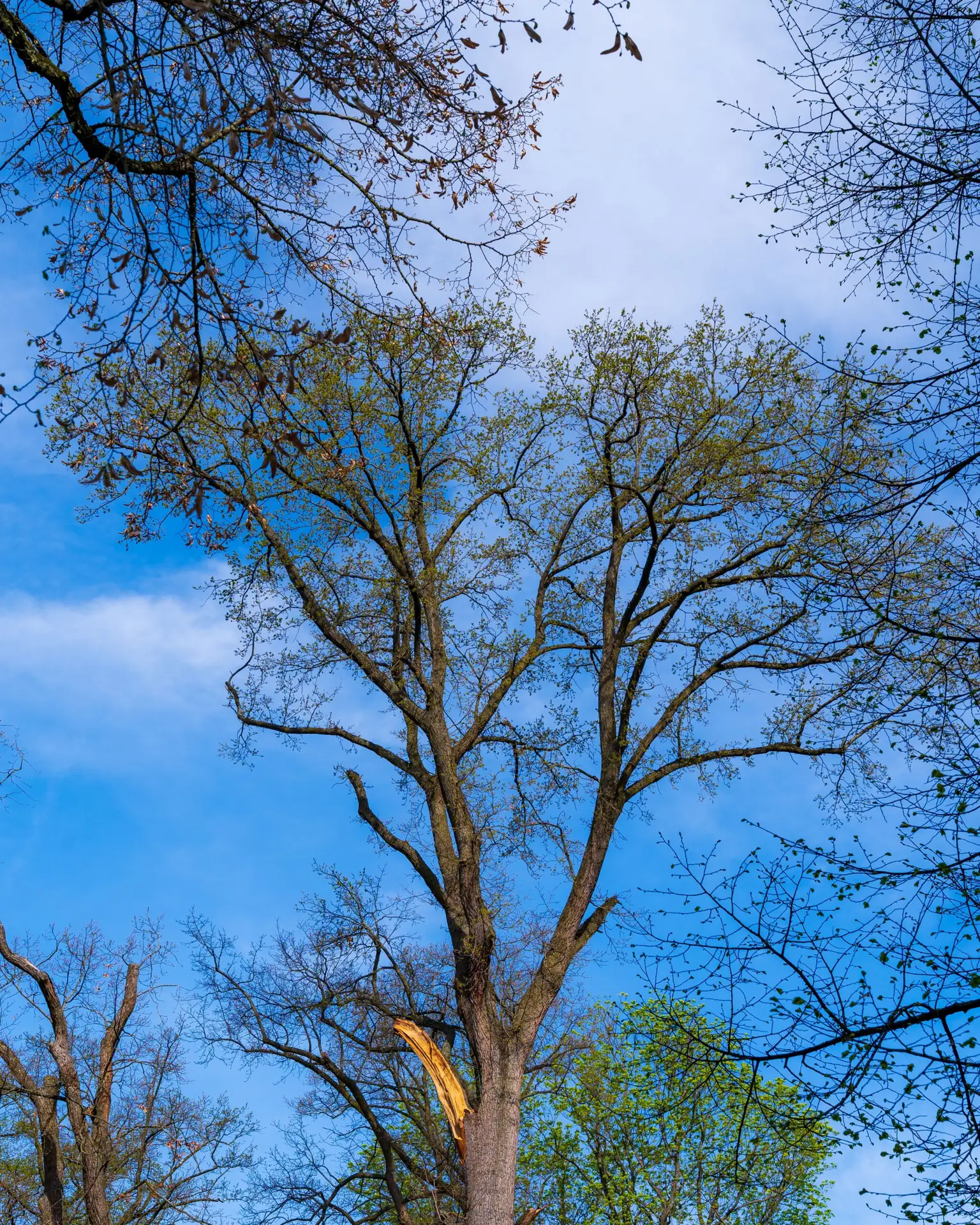
After a strong summer storm moves through Cincinnati, the first thing most homeowners look for is obvious damage: a tree on the ground, a large limb across the driveway, or branches scattered throughout the yard.
If everything is still standing, it can be easy to assume your trees made it through just fine.
Unfortunately, storm damage isn’t always that obvious.
High winds, heavy rain, and saturated soil can leave behind cracked limbs, weakened branch attachments, root problems, and other structural issues that may not become noticeable until weeks or even months later. A tree can look perfectly normal from the ground while still having damage that increases the risk of future limb or tree failure.
That’s why a professional tree inspection in Cincinnati can be valuable after severe summer weather. At Ahlum & Arbor, our ISA Certified Arborists evaluate trees throughout Cincinnati and Northern Kentucky, helping property owners identify potential hazards and determine what, if anything, needs to be done next.
Why Storm-Damaged Trees Aren’t Always Easy to Spot
Not every damaged tree falls during the storm.
Trees are designed to move with the wind, but extreme weather can place tremendous stress on trunks, branches, and root systems. A limb may bend far enough to develop an internal crack without breaking completely. Roots can shift beneath saturated soil while the tree remains upright. A weakened branch can stay suspended high in the canopy long after the storm passes.
That creates a difficult situation for homeowners: the storm is over, but the risk may not be.
When evaluating storm damaged trees in Cincinnati, an arborist looks beyond whether the tree is simply standing. The goal is to determine whether the storm changed its structure or created weaknesses that could lead to problems later.
Hidden Tree Damage to Watch for After a Storm
You don’t need to climb into the canopy to know when a tree deserves a closer look. There are several warning signs homeowners can watch for from the ground.
Cracked or Split Branches
A branch doesn’t have to fall to be damaged.
Strong winds can create cracks where large limbs connect to the trunk or another branch. Some splits are easy to see, while others may be hidden by leaves or located high in the canopy.
A partially attached limb can remain in place for some time before eventually failing, particularly when it’s exposed to another round of wind, rain, or snow.
Hanging or Broken Branches
Storms can leave broken branches caught in neighboring limbs rather than bringing them immediately to the ground.
These hanging branches can be difficult to see from certain angles, especially in large, densely leafed trees. They can also pose a serious concern when located over driveways, sidewalks, patios, play areas, or other frequently used parts of the property.
Root and Soil Movement
Some of the most important storm damage may be happening underground.
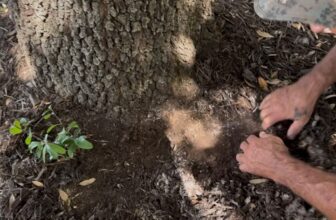
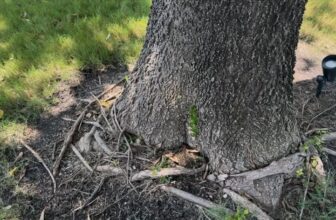
Heavy rain can saturate the soil around a tree’s root system. When strong winds push against the canopy at the same time, the root plate can shift.
Homeowners should watch for newly exposed roots, cracking or lifting soil around the base of the tree, or a tree that appears to be leaning differently than it did before the storm.
Changes in the Trunk or Main Branch Structure
Storms can also expose structural weaknesses that may have already been developing.
Cracks in the trunk, cavities, decay, weak branch unions, and other defects can become more significant after a tree has been subjected to severe weather. A storm may not have created the original problem, but it can increase the stress placed on an already vulnerable area.
What Happens During a Tree Risk Assessment?
A tree risk assessment is really about figuring out what changed during the storm and whether those changes could create a problem later.
An experienced arborist in Cincinnati, Ohio will look at more than the branches you can see from the ground. They’ll evaluate the trunk, major limbs, branch connections, visible roots, and the soil around the base of the tree. They’ll also consider where the tree is located. A weakened branch hanging over a driveway, roof, sidewalk, or play area deserves different attention than one hanging over an unused part of the yard.
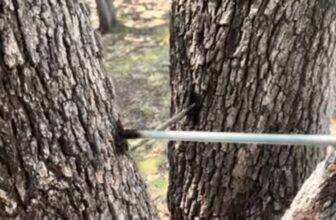
Some problems are easy to spot. Others aren’t. If there’s reason to suspect decay or weakness inside the tree, Ahlum & Arbor can use additional diagnostic methods to get a better understanding of what’s happening beneath the surface.
Most importantly, a tree safety inspection doesn’t automatically mean a recommendation for removal. Often, the question is whether the tree can be made safer while keeping it healthy.
That might mean removing a damaged limb through proper tree pruning, keeping an eye on a questionable area, or taking additional steps to manage the tree over time. When the damage is severe and the risk can’t be reasonably reduced, removal may be the safest option.
Don’t Overlook the Trees That Still Look Fine
After a storm, it’s natural to focus on the obvious mess.
If there’s a large branch lying in the yard, that’s probably where your attention goes first. Meanwhile, the mature tree next to the house may still be standing, fully leafed out, and look exactly the way it did the day before.
That doesn’t necessarily mean it came through the storm untouched.
The same wind that brought down one branch may have cracked another higher in the canopy. Saturated soil may have allowed roots to shift slightly without causing the tree to fall or develop an obvious lean.
Once the storm has passed, walk around your property and look at your trees from a few different angles. Keep an eye out for branches that seem out of place, new gaps in the canopy, cracks, exposed roots, lifted soil, or a lean that wasn’t there before.
It’s also worth checking again over the following days and weeks. Some storm damage simply becomes easier to notice with time.
When Should You Call an Arborist After a Cincinnati Storm?
You don’t need to call an arborist every time a thunderstorm rolls through Cincinnati. But if a strong storm has moved through your neighborhood and something about one of your trees looks different, it’s worth having it checked.
Cracked or hanging limbs, newly exposed roots, disturbed soil, a change in the tree’s lean, or damage to a large structural branch are all good reasons to schedule a professional tree inspection.
It’s especially important to have trees evaluated when they’re close to your house, driveway, sidewalk, or other areas where people regularly spend time.
Ahlum & Arbor’s Cincinnati and Northern Kentucky team includes ISA Certified Arborists who can take a closer look, explain what they’re seeing, and recommend what makes sense for the tree rather than jumping straight to the most drastic solution.
Make Sure Your Trees Are Ready for the Next Storm
Once the branches are cleaned up and the yard looks normal again, it’s tempting to consider the storm a problem of the past.
Your trees may tell a different story.
Finding a cracked limb, weakened branch connection, or root issue now can give you a chance to deal with it before another round of high winds and heavy rain puts additional pressure on the tree.
If you’re concerned about storm damaged trees in Cincinnati, or you have a mature tree that simply doesn’t look quite right after a storm, contact Ahlum & Arbor’s Cincinnati tree care team to have it evaluated by a certified arborist.