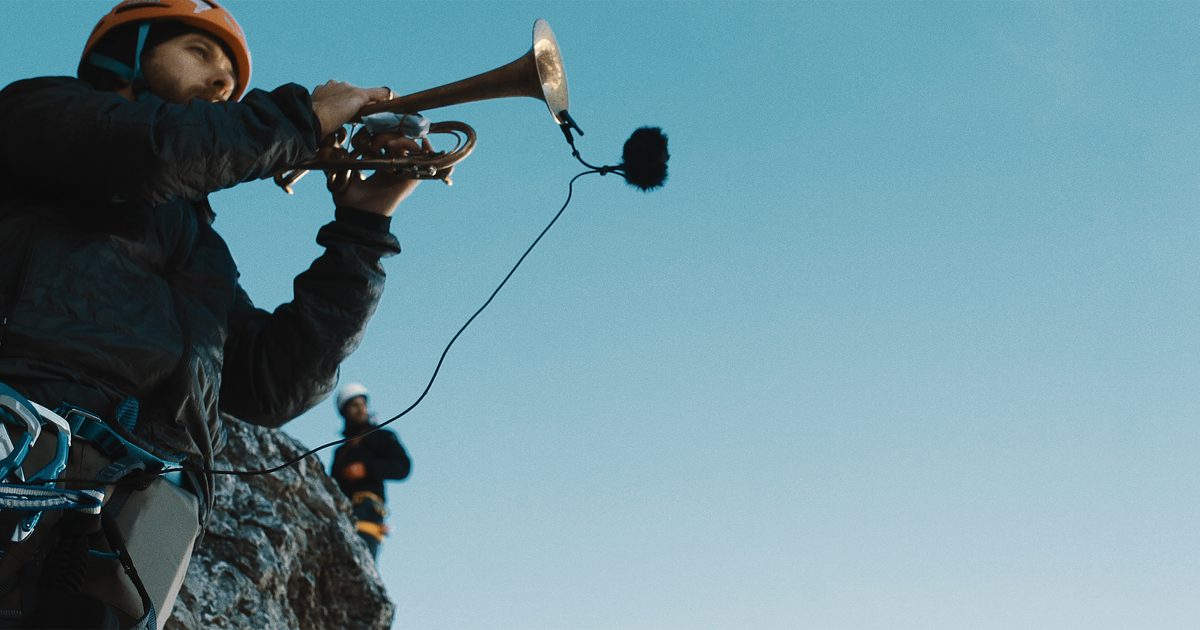
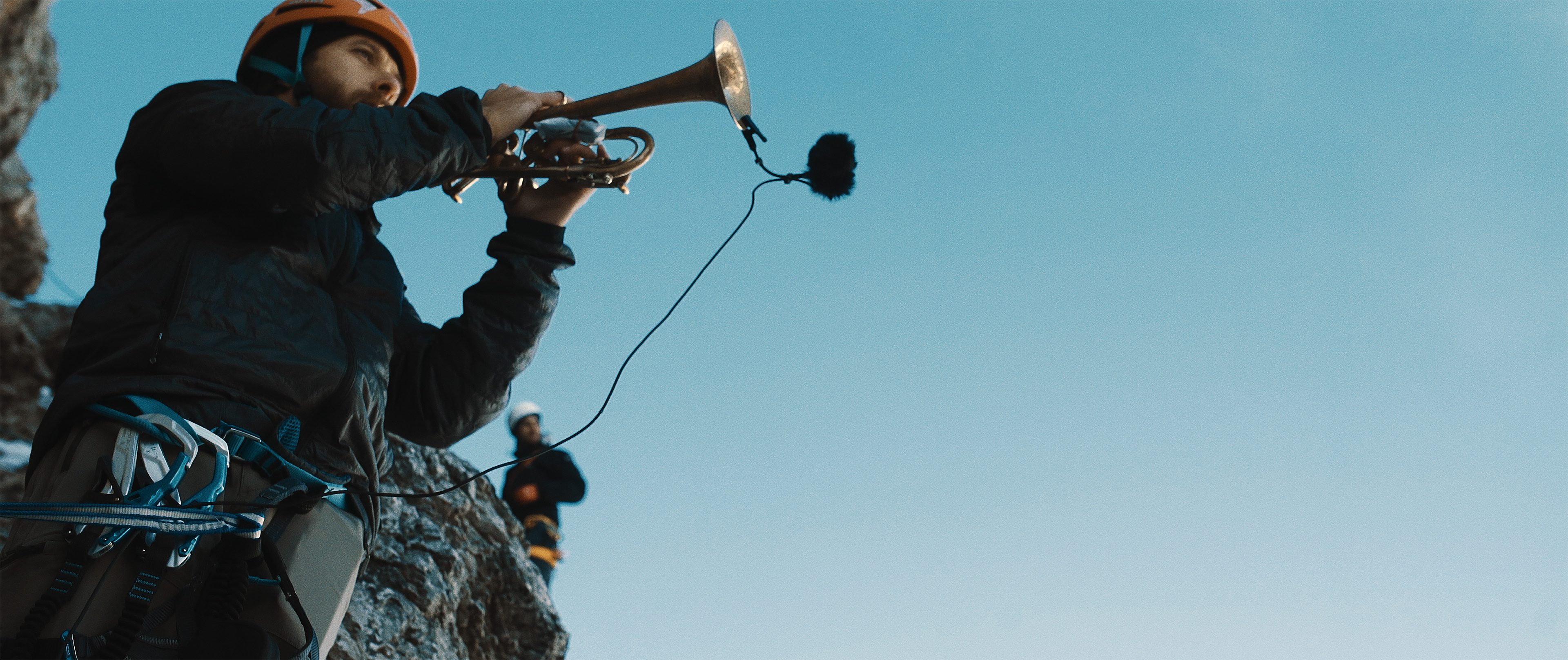
When Austrian percussionist, composer and producer Manu Delago was living in London, he started to miss the rivers and mountains he grew up around. Feeling disconnected from the electronic music he was making indoors, he decided to go back to his roots and record an album where the mountains themselves became the studio. During the creation of his 2018 album, Parasol Peak, Delago took seven musicians on a mountaineering expedition to various locations in the Tyrolean Alps, recording eight tracks that featured field recordings of their natural surroundings. The resulting album blends ambient sounds and modern classical with dynamic, experimental percussion and swelling orchestral compositions that evoke sprawling valleys, glaciers and exposed mountain ridges. The unpredictable landscape shaped the record, forcing the musicians to pay attention. “There’s a little bit of suffering involved when you’re playing in those conditions,” Delago recalls. “It was snowing which made it even more of a strong experience.”
The natural environment also shapes the work of artists at international art residency sommer.frische.kunst. which brings together artists, collectors, gallery owners and art lovers in the imposing Alpine scenery of the Gastein Valley. This year’s theme, Between Waters, invited painters, sculptors and filmmakers to engage with the element of water “as a resource, myth, healing substance and ecological system.” Bad Gastein is a town where the power of water is deeply felt. Artists worked on their projects in the depths of a valley with 17 thermal springs on one side and the majestic Bad Gastein waterfall on the other. “Everything is fluid,” says founder Andrea von Goetz. “Artists feel really free here. I think nature gives you the power to feel free and open your mind and they reflect that in their work.” For von Goetz, water is political.
This idea of water as both a creative collaborator and a powerful ecosystem runs throughout Austria’s alpine art scene. The River Lech starts in Voralberg and is one of the last wild river landscapes in Europe. Artists and scientists are now exploring how paying attention to natural rhythms can change our understanding of place. In mapping the river through field recordings, research and satellite imagery, the FLOW project seeks to readdress our relationship with rivers, reflecting on climate change and how water can both safeguard communities and challenge them.